amiga4ever
Members
-
Joined
-
Last visited
Everything posted by amiga4ever
-
So, das Problem scheint sich aufgelöst zu haben. Ich hatte meiner Test Instanz mit --hostname einen anderen Namen verpasst. Damit wurde mir nach dem Backup der Zugriff auf die Adminoberfläche verweigert. Mit dem gleichen Hostnamen klappt jetzt (fast) alles. Bis auf den dunklen skin, den ich eingestellt habe, wird alles so wieder hergestellt, dass ich bisher keine Abweichungen feststellen konnte. Ich konnte aber auch so die Option für den dunklen Skin nicht mehr finden. Aber das ist bestimmt kein Thema mehr für das unraid Forum. Sorry mein Fehler also.
-
Die Container sind identisch auch die IPs. Allerdings laufen sie nicht parallel. Ich bin gerade im Urlaub. Wenn ich zurück bin werde ich noch mal eine Testreihe aufsetzen und dokumentieren. Ich melde mich in 14 Tagen noch mal.
-
Super danke für die Erläuterung. Wenn es nur ein Anzeigeproblem ist warte ich mal, bis die Passenden Ergänzungen im Kernel sind. Den Test mit dem Ubuntu stick muss ich mal planen. Den mach ich dann erst, wenn ich alleine zu Hause bin. Es gibt zwar nicht viele Abhängigkeiten aber die ein oder andere Funktion im Haus läuft schon über den ioBroker und wenn der dann weg ist ist das schlecht für den FAF (Frauen Akzeptanz Faktor). Vor meinem Urlaub (morgen) schaff ich das aber wohl nicht mehr. Ich melde mich dann mit den Ergebnissen. Nochmal Danke. Echt super wie Ihr hier im Forum helft.
-
Danke, hätte ich auch irgendwie selber drauf kommen könne 🙂
-
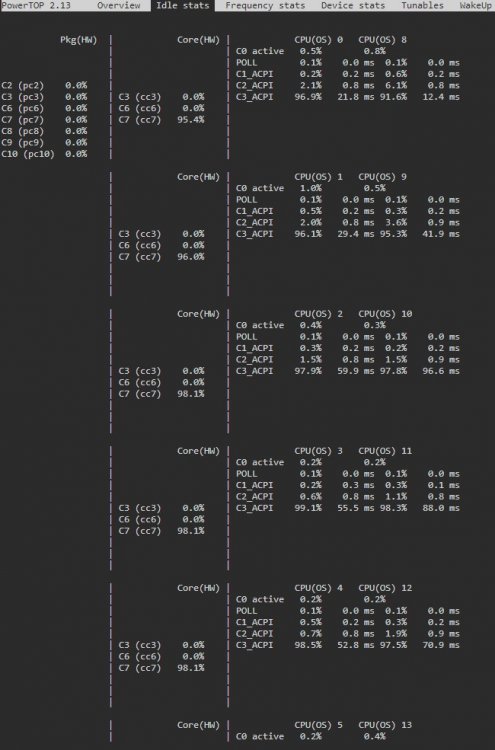
Habe gerade festgestellt, dass powertop die Ausgabe abschneidet. Ich habe auch keinen Weg gefunden an die abgeschnitten Informationen zu kommen. Auf 16 Kerne ist das Tool wohl nicht ausgelegt.
-
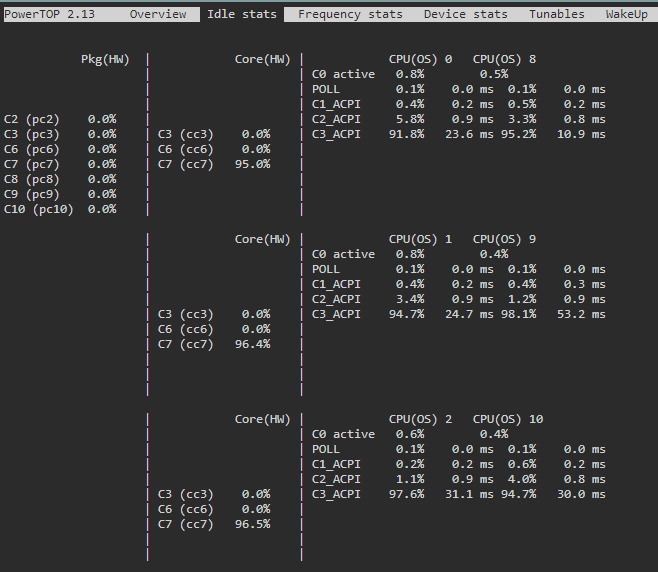
Jetzt bin ich noch mal mein BIOS durchgegangen und habe doch noch den ein oder anderen Punkt gefunden. Das einzige was ich bisher nicht eingeschaltet habe ist device sleep bei den SATA Controlern. Da wurde gewarnt, dass Port und Device es beide unterstützen müssen. Da ich es von meinen Platten nicht weiß habe ich es deaktiviert gelassen. Bis auf ein Gerät scheinen alle PCIe Geräte scheinen alle "L1" zu erlauben. root@Amiga-Server:~# lspci -vvvnnPPDq | grep -B 30 ':[[:space:]]ASPM' Address: fee00378 Data: 0000 Capabilities: [70] Power Management version 3 Flags: PMEClk- DSI- D1- D2- AuxCurrent=0mA PME(D0-,D1-,D2-,D3hot+,D3cold-) Status: D0 NoSoftRst+ PME-Enable- DSel=0 DScale=0 PME- Capabilities: [a8] SATA HBA v1.0 BAR4 Offset=00000004 Kernel driver in use: ahci Kernel modules: ahci 0000:00:1b.0 PCI bridge [0604]: Intel Corporation Device [8086:06c2] (rev f0) (prog-if 00 [Normal decode]) Control: I/O+ Mem+ BusMaster+ SpecCycle- MemWINV- VGASnoop- ParErr- Stepping- SERR- FastB2B- DisINTx+ Status: Cap+ 66MHz- UDF- FastB2B- ParErr- DEVSEL=fast >TAbort- <TAbort- <MAbort- >SERR- <PERR- INTx- Latency: 0, Cache Line Size: 64 bytes Interrupt: pin ? routed to IRQ 122 IOMMU group: 6 Bus: primary=00, secondary=01, subordinate=01, sec-latency=0 I/O behind bridge: 00004000-00004fff [size=4K] Memory behind bridge: 3f800000-3f9fffff [size=2M] Prefetchable memory behind bridge: 000000003fa00000-000000003fbfffff [size=2M] Secondary status: 66MHz- FastB2B- ParErr- DEVSEL=fast >TAbort- <TAbort- <MAbort+ <SERR- <PERR- BridgeCtl: Parity- SERR+ NoISA- VGA- VGA16+ MAbort- >Reset- FastB2B- PriDiscTmr- SecDiscTmr- DiscTmrStat- DiscTmrSERREn- Capabilities: [40] Express (v2) Root Port (Slot+), MSI 00 DevCap: MaxPayload 256 bytes, PhantFunc 0 ExtTag- RBE+ DevCtl: CorrErr- NonFatalErr- FatalErr- UnsupReq- RlxdOrd- ExtTag- PhantFunc- AuxPwr- NoSnoop- MaxPayload 128 bytes, MaxReadReq 128 bytes DevSta: CorrErr- NonFatalErr- FatalErr- UnsupReq- AuxPwr+ TransPend- LnkCap: Port #19, Speed 8GT/s, Width x1, ASPM L0s L1, Exit Latency L0s <1us, L1 <4us ClockPM- Surprise- LLActRep+ BwNot+ ASPMOptComp+ LnkCtl: ASPM L0s L1 Enabled; RCB 64 bytes, Disabled- CommClk- -- Capabilities: [80] MSI: Enable+ Count=1/1 Maskable- 64bit- Address: fee00238 Data: 0000 Capabilities: [90] Subsystem: Gigabyte Technology Co., Ltd Device [1458:5001] Capabilities: [a0] Power Management version 3 Flags: PMEClk- DSI- D1- D2- AuxCurrent=0mA PME(D0+,D1-,D2-,D3hot+,D3cold+) Status: D0 NoSoftRst- PME-Enable- DSel=0 DScale=0 PME- Kernel driver in use: pcieport 0000:00:1b.3 PCI bridge [0604]: Intel Corporation Device [8086:06c3] (rev f0) (prog-if 00 [Normal decode]) Control: I/O+ Mem+ BusMaster+ SpecCycle- MemWINV- VGASnoop- ParErr- Stepping- SERR- FastB2B- DisINTx+ Status: Cap+ 66MHz- UDF- FastB2B- ParErr- DEVSEL=fast >TAbort- <TAbort- <MAbort- >SERR- <PERR- INTx- Latency: 0, Cache Line Size: 64 bytes Interrupt: pin D routed to IRQ 123 IOMMU group: 7 Bus: primary=00, secondary=02, subordinate=03, sec-latency=0 I/O behind bridge: 0000f000-00000fff [disabled] Memory behind bridge: fff00000-000fffff [disabled] Prefetchable memory behind bridge: 00000000fff00000-00000000000fffff [disabled] Secondary status: 66MHz- FastB2B- ParErr- DEVSEL=fast >TAbort- <TAbort- <MAbort+ <SERR- <PERR- BridgeCtl: Parity- SERR+ NoISA- VGA- VGA16+ MAbort- >Reset- FastB2B- PriDiscTmr- SecDiscTmr- DiscTmrStat- DiscTmrSERREn- Capabilities: [40] Express (v2) Root Port (Slot+), MSI 00 DevCap: MaxPayload 256 bytes, PhantFunc 0 ExtTag- RBE+ DevCtl: CorrErr+ NonFatalErr+ FatalErr+ UnsupReq+ RlxdOrd- ExtTag- PhantFunc- AuxPwr- NoSnoop- MaxPayload 256 bytes, MaxReadReq 128 bytes DevSta: CorrErr- NonFatalErr- FatalErr- UnsupReq- AuxPwr+ TransPend- LnkCap: Port #20, Speed 8GT/s, Width x1, ASPM L0s L1, Exit Latency L0s unlimited, L1 <16us ClockPM- Surprise- LLActRep+ BwNot+ ASPMOptComp+ LnkCtl: ASPM Disabled; RCB 64 bytes, Disabled- CommClk- -- LaneErrStat: 0 Capabilities: [250 v1] Downstream Port Containment DpcCap: INT Msg #0, RPExt+ PoisonedTLP+ SwTrigger+ RP PIO Log 4, DL_ActiveErr+ DpcCtl: Trigger:0 Cmpl- INT- ErrCor- PoisonedTLP- SwTrigger- DL_ActiveErr- DpcSta: Trigger- Reason:00 INT- RPBusy- TriggerExt:00 RP PIO ErrPtr:1f Source: 0000 Kernel driver in use: pcieport 0000:00:1b.4 PCI bridge [0604]: Intel Corporation Comet Lake PCI Express Root Port #21 [8086:06ac] (rev f0) (prog-if 00 [Normal decode]) Control: I/O+ Mem+ BusMaster+ SpecCycle- MemWINV- VGASnoop- ParErr- Stepping- SERR- FastB2B- DisINTx+ Status: Cap+ 66MHz- UDF- FastB2B- ParErr- DEVSEL=fast >TAbort- <TAbort- <MAbort- >SERR- <PERR- INTx- Latency: 0, Cache Line Size: 64 bytes Interrupt: pin ? routed to IRQ 124 IOMMU group: 6 Bus: primary=00, secondary=04, subordinate=04, sec-latency=0 I/O behind bridge: 00005000-00005fff [size=4K] Memory behind bridge: 3fc00000-3fdfffff [size=2M] Prefetchable memory behind bridge: 000000003fe00000-000000003fffffff [size=2M] Secondary status: 66MHz- FastB2B- ParErr- DEVSEL=fast >TAbort- <TAbort- <MAbort+ <SERR- <PERR- BridgeCtl: Parity- SERR+ NoISA- VGA- VGA16+ MAbort- >Reset- FastB2B- PriDiscTmr- SecDiscTmr- DiscTmrStat- DiscTmrSERREn- Capabilities: [40] Express (v2) Root Port (Slot+), MSI 00 DevCap: MaxPayload 256 bytes, PhantFunc 0 ExtTag- RBE+ DevCtl: CorrErr- NonFatalErr- FatalErr- UnsupReq- RlxdOrd- ExtTag- PhantFunc- AuxPwr- NoSnoop- MaxPayload 128 bytes, MaxReadReq 128 bytes DevSta: CorrErr- NonFatalErr- FatalErr- UnsupReq- AuxPwr+ TransPend- LnkCap: Port #21, Speed 8GT/s, Width x4, ASPM L0s L1, Exit Latency L0s <1us, L1 <4us ClockPM- Surprise- LLActRep+ BwNot+ ASPMOptComp+ LnkCtl: ASPM L0s L1 Enabled; RCB 64 bytes, Disabled- CommClk- -- Capabilities: [80] MSI: Enable+ Count=1/1 Maskable- 64bit- Address: fee00298 Data: 0000 Capabilities: [90] Subsystem: Gigabyte Technology Co., Ltd Device [1458:5001] Capabilities: [a0] Power Management version 3 Flags: PMEClk- DSI- D1- D2- AuxCurrent=0mA PME(D0+,D1-,D2-,D3hot+,D3cold+) Status: D0 NoSoftRst- PME-Enable- DSel=0 DScale=0 PME- Kernel driver in use: pcieport 0000:00:1c.0 PCI bridge [0604]: Intel Corporation Device [8086:06bc] (rev f0) (prog-if 00 [Normal decode]) Control: I/O+ Mem+ BusMaster+ SpecCycle- MemWINV- VGASnoop- ParErr- Stepping- SERR- FastB2B- DisINTx+ Status: Cap+ 66MHz- UDF- FastB2B- ParErr- DEVSEL=fast >TAbort- <TAbort- <MAbort- >SERR- <PERR- INTx- Latency: 0, Cache Line Size: 64 bytes Interrupt: pin ? routed to IRQ 125 IOMMU group: 8 Bus: primary=00, secondary=05, subordinate=05, sec-latency=0 I/O behind bridge: 00006000-00006fff [size=4K] Memory behind bridge: 51200000-513fffff [size=2M] Prefetchable memory behind bridge: 0000000051400000-00000000515fffff [size=2M] Secondary status: 66MHz- FastB2B- ParErr- DEVSEL=fast >TAbort- <TAbort- <MAbort+ <SERR- <PERR- BridgeCtl: Parity- SERR+ NoISA- VGA- VGA16+ MAbort- >Reset- FastB2B- PriDiscTmr- SecDiscTmr- DiscTmrStat- DiscTmrSERREn- Capabilities: [40] Express (v2) Root Port (Slot+), MSI 00 DevCap: MaxPayload 256 bytes, PhantFunc 0 ExtTag- RBE+ DevCtl: CorrErr- NonFatalErr- FatalErr- UnsupReq- RlxdOrd- ExtTag- PhantFunc- AuxPwr- NoSnoop- MaxPayload 128 bytes, MaxReadReq 128 bytes DevSta: CorrErr- NonFatalErr- FatalErr- UnsupReq- AuxPwr+ TransPend- LnkCap: Port #5, Speed 8GT/s, Width x4, ASPM L0s L1, Exit Latency L0s <1us, L1 <4us ClockPM- Surprise- LLActRep+ BwNot+ ASPMOptComp+ LnkCtl: ASPM L0s L1 Enabled; RCB 64 bytes, Disabled- CommClk- -- Capabilities: [80] MSI: Enable+ Count=1/1 Maskable- 64bit- Address: fee002b8 Data: 0000 Capabilities: [90] Subsystem: Gigabyte Technology Co., Ltd Device [1458:5001] Capabilities: [a0] Power Management version 3 Flags: PMEClk- DSI- D1- D2- AuxCurrent=0mA PME(D0+,D1-,D2-,D3hot+,D3cold+) Status: D0 NoSoftRst- PME-Enable- DSel=0 DScale=0 PME- Kernel driver in use: pcieport 0000:00:1d.0 PCI bridge [0604]: Intel Corporation Comet Lake PCI Express Root Port #9 [8086:06b0] (rev f0) (prog-if 00 [Normal decode]) Control: I/O+ Mem+ BusMaster+ SpecCycle- MemWINV- VGASnoop- ParErr- Stepping- SERR- FastB2B- DisINTx+ Status: Cap+ 66MHz- UDF- FastB2B- ParErr- DEVSEL=fast >TAbort- <TAbort- <MAbort- >SERR- <PERR- INTx- Latency: 0, Cache Line Size: 64 bytes Interrupt: pin ? routed to IRQ 126 IOMMU group: 9 Bus: primary=00, secondary=06, subordinate=06, sec-latency=0 I/O behind bridge: 00007000-00007fff [size=4K] Memory behind bridge: 51600000-517fffff [size=2M] Prefetchable memory behind bridge: 0000000051800000-00000000519fffff [size=2M] Secondary status: 66MHz- FastB2B- ParErr- DEVSEL=fast >TAbort- <TAbort- <MAbort+ <SERR- <PERR- BridgeCtl: Parity- SERR+ NoISA- VGA- VGA16+ MAbort- >Reset- FastB2B- PriDiscTmr- SecDiscTmr- DiscTmrStat- DiscTmrSERREn- Capabilities: [40] Express (v2) Root Port (Slot+), MSI 00 DevCap: MaxPayload 256 bytes, PhantFunc 0 ExtTag- RBE+ DevCtl: CorrErr- NonFatalErr- FatalErr- UnsupReq- RlxdOrd- ExtTag- PhantFunc- AuxPwr- NoSnoop- MaxPayload 128 bytes, MaxReadReq 128 bytes DevSta: CorrErr- NonFatalErr- FatalErr- UnsupReq- AuxPwr+ TransPend- LnkCap: Port #9, Speed 8GT/s, Width x1, ASPM L0s L1, Exit Latency L0s <1us, L1 <4us ClockPM- Surprise- LLActRep+ BwNot+ ASPMOptComp+ LnkCtl: ASPM L0s L1 Enabled; RCB 64 bytes, Disabled- CommClk- -- Capabilities: [80] MSI: Enable+ Count=1/1 Maskable- 64bit- Address: fee002d8 Data: 0000 Capabilities: [90] Subsystem: Gigabyte Technology Co., Ltd Device [1458:5001] Capabilities: [a0] Power Management version 3 Flags: PMEClk- DSI- D1- D2- AuxCurrent=0mA PME(D0+,D1-,D2-,D3hot+,D3cold+) Status: D0 NoSoftRst- PME-Enable- DSel=0 DScale=0 PME- Kernel driver in use: pcieport 0000:00:1d.4 PCI bridge [0604]: Intel Corporation Device [8086:06b4] (rev f0) (prog-if 00 [Normal decode]) Control: I/O+ Mem+ BusMaster+ SpecCycle- MemWINV- VGASnoop- ParErr- Stepping- SERR- FastB2B- DisINTx+ Status: Cap+ 66MHz- UDF- FastB2B- ParErr- DEVSEL=fast >TAbort- <TAbort- <MAbort- >SERR- <PERR- INTx- Latency: 0, Cache Line Size: 64 bytes Interrupt: pin ? routed to IRQ 127 IOMMU group: 9 Bus: primary=00, secondary=07, subordinate=07, sec-latency=0 I/O behind bridge: 0000f000-00000fff [disabled] Memory behind bridge: fff00000-000fffff [disabled] Prefetchable memory behind bridge: 00000000fff00000-00000000000fffff [disabled] Secondary status: 66MHz- FastB2B- ParErr- DEVSEL=fast >TAbort- <TAbort- <MAbort+ <SERR- <PERR- BridgeCtl: Parity- SERR+ NoISA- VGA- VGA16+ MAbort- >Reset- FastB2B- PriDiscTmr- SecDiscTmr- DiscTmrStat- DiscTmrSERREn- Capabilities: [40] Express (v2) Root Port (Slot-), MSI 00 DevCap: MaxPayload 256 bytes, PhantFunc 0 ExtTag- RBE+ DevCtl: CorrErr- NonFatalErr- FatalErr- UnsupReq- RlxdOrd- ExtTag- PhantFunc- AuxPwr- NoSnoop- MaxPayload 128 bytes, MaxReadReq 128 bytes DevSta: CorrErr- NonFatalErr- FatalErr- UnsupReq- AuxPwr+ TransPend- LnkCap: Port #13, Speed 8GT/s, Width x1, ASPM L0s L1, Exit Latency L0s <1us, L1 <4us ClockPM- Surprise- LLActRep+ BwNot+ ASPMOptComp+ LnkCtl: ASPM L0s L1 Enabled; RCB 64 bytes, Disabled- CommClk- Die Powertop Ausgabe hat sich nicht signifikant geändert. Zumindest für jemanden wie mich, der sich nicht auskennt. Cpufreq-info liefert für mich auch zufriedenstellende Werte oder interpretiere ich den Wert current cpu frequency falsch. Die scheinen sauber runter zu regeln. root@Amiga-Server:~# cpufreq-info cpufrequtils 008: cpufreq-info (C) Dominik Brodowski 2004-2009 Report errors and bugs to [email protected], please. analyzing CPU 0: driver: intel_pstate CPUs which run at the same hardware frequency: 0 CPUs which need to have their frequency coordinated by software: 0 maximum transition latency: 4294.55 ms. hardware limits: 800 MHz - 4.80 GHz available cpufreq governors: performance, powersave current policy: frequency should be within 800 MHz and 4.80 GHz. The governor "powersave" may decide which speed to use within this range. current CPU frequency is 3.92 GHz. analyzing CPU 1: driver: intel_pstate CPUs which run at the same hardware frequency: 1 CPUs which need to have their frequency coordinated by software: 1 maximum transition latency: 4294.55 ms. hardware limits: 800 MHz - 4.80 GHz available cpufreq governors: performance, powersave current policy: frequency should be within 800 MHz and 4.80 GHz. The governor "powersave" may decide which speed to use within this range. current CPU frequency is 3.12 GHz. analyzing CPU 2: driver: intel_pstate CPUs which run at the same hardware frequency: 2 CPUs which need to have their frequency coordinated by software: 2 maximum transition latency: 4294.55 ms. hardware limits: 800 MHz - 4.80 GHz available cpufreq governors: performance, powersave current policy: frequency should be within 800 MHz and 4.80 GHz. The governor "powersave" may decide which speed to use within this range. current CPU frequency is 2.41 GHz. analyzing CPU 3: driver: intel_pstate CPUs which run at the same hardware frequency: 3 CPUs which need to have their frequency coordinated by software: 3 maximum transition latency: 4294.55 ms. hardware limits: 800 MHz - 4.80 GHz available cpufreq governors: performance, powersave current policy: frequency should be within 800 MHz and 4.80 GHz. The governor "powersave" may decide which speed to use within this range. current CPU frequency is 1.72 GHz. analyzing CPU 4: driver: intel_pstate CPUs which run at the same hardware frequency: 4 CPUs which need to have their frequency coordinated by software: 4 maximum transition latency: 4294.55 ms. hardware limits: 800 MHz - 4.80 GHz available cpufreq governors: performance, powersave current policy: frequency should be within 800 MHz and 4.80 GHz. The governor "powersave" may decide which speed to use within this range. current CPU frequency is 1.06 GHz. analyzing CPU 5: driver: intel_pstate CPUs which run at the same hardware frequency: 5 CPUs which need to have their frequency coordinated by software: 5 maximum transition latency: 4294.55 ms. hardware limits: 800 MHz - 4.80 GHz available cpufreq governors: performance, powersave current policy: frequency should be within 800 MHz and 4.80 GHz. The governor "powersave" may decide which speed to use within this range. current CPU frequency is 800 MHz. analyzing CPU 6: driver: intel_pstate CPUs which run at the same hardware frequency: 6 CPUs which need to have their frequency coordinated by software: 6 maximum transition latency: 4294.55 ms. hardware limits: 800 MHz - 4.80 GHz available cpufreq governors: performance, powersave current policy: frequency should be within 800 MHz and 4.80 GHz. The governor "powersave" may decide which speed to use within this range. current CPU frequency is 800 MHz. analyzing CPU 7: driver: intel_pstate CPUs which run at the same hardware frequency: 7 CPUs which need to have their frequency coordinated by software: 7 maximum transition latency: 4294.55 ms. hardware limits: 800 MHz - 4.80 GHz available cpufreq governors: performance, powersave current policy: frequency should be within 800 MHz and 4.80 GHz. The governor "powersave" may decide which speed to use within this range. current CPU frequency is 800 MHz. analyzing CPU 8: driver: intel_pstate CPUs which run at the same hardware frequency: 8 CPUs which need to have their frequency coordinated by software: 8 maximum transition latency: 4294.55 ms. hardware limits: 800 MHz - 4.80 GHz available cpufreq governors: performance, powersave current policy: frequency should be within 800 MHz and 4.80 GHz. The governor "powersave" may decide which speed to use within this range. current CPU frequency is 800 MHz. analyzing CPU 9: driver: intel_pstate CPUs which run at the same hardware frequency: 9 CPUs which need to have their frequency coordinated by software: 9 maximum transition latency: 4294.55 ms. hardware limits: 800 MHz - 4.80 GHz available cpufreq governors: performance, powersave current policy: frequency should be within 800 MHz and 4.80 GHz. The governor "powersave" may decide which speed to use within this range. current CPU frequency is 801 MHz. analyzing CPU 10: driver: intel_pstate CPUs which run at the same hardware frequency: 10 CPUs which need to have their frequency coordinated by software: 10 maximum transition latency: 4294.55 ms. hardware limits: 800 MHz - 4.80 GHz available cpufreq governors: performance, powersave current policy: frequency should be within 800 MHz and 4.80 GHz. The governor "powersave" may decide which speed to use within this range. current CPU frequency is 800 MHz. analyzing CPU 11: driver: intel_pstate CPUs which run at the same hardware frequency: 11 CPUs which need to have their frequency coordinated by software: 11 maximum transition latency: 4294.55 ms. hardware limits: 800 MHz - 4.80 GHz available cpufreq governors: performance, powersave current policy: frequency should be within 800 MHz and 4.80 GHz. The governor "powersave" may decide which speed to use within this range. current CPU frequency is 800 MHz. analyzing CPU 12: driver: intel_pstate CPUs which run at the same hardware frequency: 12 CPUs which need to have their frequency coordinated by software: 12 maximum transition latency: 4294.55 ms. hardware limits: 800 MHz - 4.80 GHz available cpufreq governors: performance, powersave current policy: frequency should be within 800 MHz and 4.80 GHz. The governor "powersave" may decide which speed to use within this range. current CPU frequency is 801 MHz. analyzing CPU 13: driver: intel_pstate CPUs which run at the same hardware frequency: 13 CPUs which need to have their frequency coordinated by software: 13 maximum transition latency: 4294.55 ms. hardware limits: 800 MHz - 4.80 GHz available cpufreq governors: performance, powersave current policy: frequency should be within 800 MHz and 4.80 GHz. The governor "powersave" may decide which speed to use within this range. current CPU frequency is 800 MHz. analyzing CPU 14: driver: intel_pstate CPUs which run at the same hardware frequency: 14 CPUs which need to have their frequency coordinated by software: 14 maximum transition latency: 4294.55 ms. hardware limits: 800 MHz - 4.80 GHz available cpufreq governors: performance, powersave current policy: frequency should be within 800 MHz and 4.80 GHz. The governor "powersave" may decide which speed to use within this range. current CPU frequency is 801 MHz. analyzing CPU 15: driver: intel_pstate CPUs which run at the same hardware frequency: 15 CPUs which need to have their frequency coordinated by software: 15 maximum transition latency: 4294.55 ms. hardware limits: 800 MHz - 4.80 GHz available cpufreq governors: performance, powersave current policy: frequency should be within 800 MHz and 4.80 GHz. The governor "powersave" may decide which speed to use within this range. current CPU frequency is 801 MHz. Wenn die Platten runter gefahren sind liege ich zwar weit über den von Euch erreichten Werten aber gegenüber meinem Ausgangsverbrauch von 70 W und jetzt gerade mal 30 Watt ist das super und ich bin damit voll zufrieden. Vielen , vielen Dank für die Unterstützung. Falls Du mal in Bruchsal vorbei kommst melde Dich. Dann gebe ich Dir gerne ein Bierchen aus. Auf Jahr gerechnet sind das gut 90€ Ersparnis. Dafür gibt es auch zwei :-). Nur noch aus Interesse. In dem ein oder anderen Beitrag habe ich gelesen, dass die Ausgabe bei powertop in der ersten Spalte Werte <> 0 schlecht wären. Die sind bei mir noch gleich null. Was bedeuten die Werte denn und was wird aus Deiner Sicht rechts bei de C states nicht richtig angezeigt (meinst Du, dass kein Wert für die GPU angezeigt wird?). Kann ich bei den Treibern noch etwas überprüfen? Heir noch eine Angabe zu den C states und dem power govenor : root@Amiga-Server:~# grep . /sys/devices/system/cpu/cpu0/cpuidle/state*/name /sys/devices/system/cpu/cpu0/cpuidle/state0/name:POLL /sys/devices/system/cpu/cpu0/cpuidle/state1/name:C1_ACPI /sys/devices/system/cpu/cpu0/cpuidle/state2/name:C2_ACPI /sys/devices/system/cpu/cpu0/cpuidle/state3/name:C3_ACPI root@Amiga-Server:~# cat /sys/devices/system/cpu/cpu*/cpufreq/scaling_governor powersave powersave powersave powersave powersave powersave powersave powersave powersave powersave powersave powersave powersave powersave powersave powersave root@Amiga-Server:~# cat /sys/module/pcie_aspm/parameters/policy [default] performance powersave powersupersave Und noch mein modprobe.d Verzeichnis root@Amiga-Server:/boot/config/modprobe.d# ls i915.conf Ist es richtig, dass in der Datei i915.conf "blacklist i915" steht? CU
-
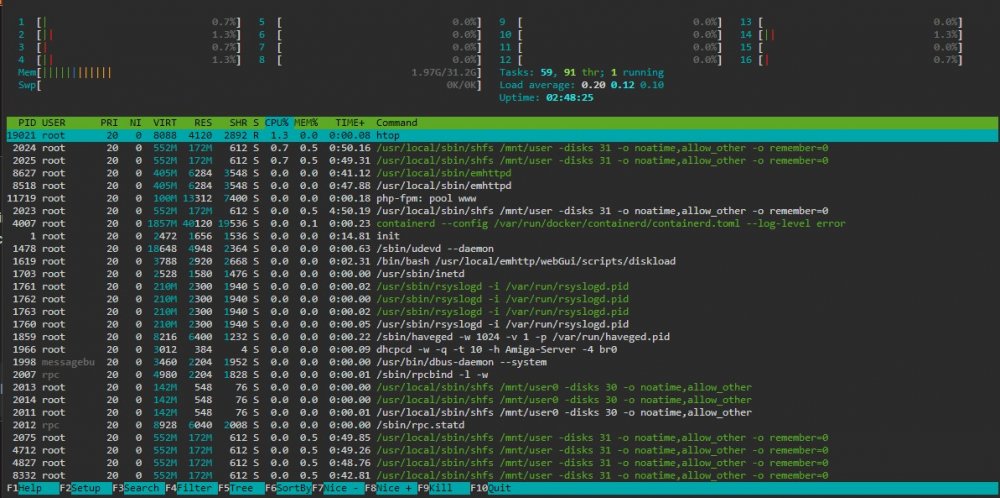
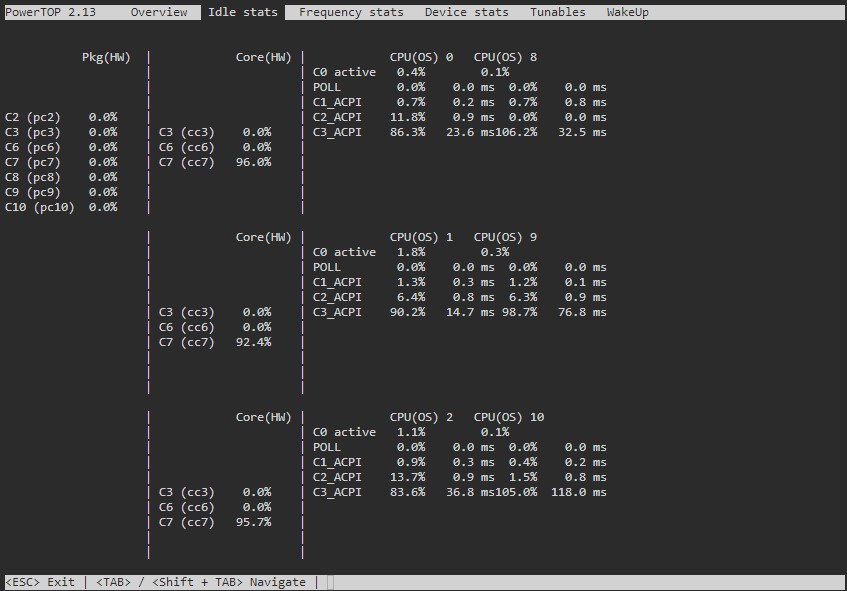
So den Treiber habe ich mal installiert. Dafür habe ich mein modprobe i915; chmod -R 777 /dev/dri aus dem go file aus kommentiert. Ich wusste nicht ob sich das beißt. Plex habe ich, wie alle Container. Hab ich auch gemacht um den "find" Problem auf die Spur zu kommen. Jetzt muss ich mal testen, ob Plex immer noch mit der GPU transkodiert. Das "find /mnt/user/Backup" konnte ich auf mein folder caching zurückführen. Nachdem ich es deaktiviert hatte war raus. Guckst Du hier : Powetop hat sich augenscheinlich aber nicht viel verändert: cpufreq-info hat folgendes ausgespuckt: root@Amiga-Server:~# cpufreq-info cpufrequtils 008: cpufreq-info (C) Dominik Brodowski 2004-2009 Report errors and bugs to [email protected], please. analyzing CPU 0: driver: intel_pstate CPUs which run at the same hardware frequency: 0 CPUs which need to have their frequency coordinated by software: 0 maximum transition latency: 4294.55 ms. hardware limits: 800 MHz - 4.80 GHz available cpufreq governors: performance, powersave current policy: frequency should be within 800 MHz and 4.80 GHz. The governor "powersave" may decide which speed to use within this range. current CPU frequency is 3.90 GHz. analyzing CPU 1: driver: intel_pstate CPUs which run at the same hardware frequency: 1 CPUs which need to have their frequency coordinated by software: 1 maximum transition latency: 4294.55 ms. hardware limits: 800 MHz - 4.80 GHz available cpufreq governors: performance, powersave current policy: frequency should be within 800 MHz and 4.80 GHz. The governor "powersave" may decide which speed to use within this range. current CPU frequency is 3.08 GHz. analyzing CPU 2: driver: intel_pstate CPUs which run at the same hardware frequency: 2 CPUs which need to have their frequency coordinated by software: 2 maximum transition latency: 4294.55 ms. hardware limits: 800 MHz - 4.80 GHz available cpufreq governors: performance, powersave current policy: frequency should be within 800 MHz and 4.80 GHz. The governor "powersave" may decide which speed to use within this range. current CPU frequency is 2.38 GHz. analyzing CPU 3: driver: intel_pstate CPUs which run at the same hardware frequency: 3 CPUs which need to have their frequency coordinated by software: 3 maximum transition latency: 4294.55 ms. hardware limits: 800 MHz - 4.80 GHz available cpufreq governors: performance, powersave current policy: frequency should be within 800 MHz and 4.80 GHz. The governor "powersave" may decide which speed to use within this range. current CPU frequency is 1.58 GHz. analyzing CPU 4: driver: intel_pstate CPUs which run at the same hardware frequency: 4 CPUs which need to have their frequency coordinated by software: 4 maximum transition latency: 4294.55 ms. hardware limits: 800 MHz - 4.80 GHz available cpufreq governors: performance, powersave current policy: frequency should be within 800 MHz and 4.80 GHz. The governor "powersave" may decide which speed to use within this range. current CPU frequency is 1.16 GHz. analyzing CPU 5: driver: intel_pstate CPUs which run at the same hardware frequency: 5 CPUs which need to have their frequency coordinated by software: 5 maximum transition latency: 4294.55 ms. hardware limits: 800 MHz - 4.80 GHz available cpufreq governors: performance, powersave current policy: frequency should be within 800 MHz and 4.80 GHz. The governor "powersave" may decide which speed to use within this range. current CPU frequency is 800 MHz. analyzing CPU 6: driver: intel_pstate CPUs which run at the same hardware frequency: 6 CPUs which need to have their frequency coordinated by software: 6 maximum transition latency: 4294.55 ms. hardware limits: 800 MHz - 4.80 GHz available cpufreq governors: performance, powersave current policy: frequency should be within 800 MHz and 4.80 GHz. The governor "powersave" may decide which speed to use within this range. current CPU frequency is 800 MHz. analyzing CPU 7: driver: intel_pstate CPUs which run at the same hardware frequency: 7 CPUs which need to have their frequency coordinated by software: 7 maximum transition latency: 4294.55 ms. hardware limits: 800 MHz - 4.80 GHz available cpufreq governors: performance, powersave current policy: frequency should be within 800 MHz and 4.80 GHz. The governor "powersave" may decide which speed to use within this range. current CPU frequency is 800 MHz. analyzing CPU 8: driver: intel_pstate CPUs which run at the same hardware frequency: 8 CPUs which need to have their frequency coordinated by software: 8 maximum transition latency: 4294.55 ms. hardware limits: 800 MHz - 4.80 GHz available cpufreq governors: performance, powersave current policy: frequency should be within 800 MHz and 4.80 GHz. The governor "powersave" may decide which speed to use within this range. current CPU frequency is 800 MHz. analyzing CPU 9: driver: intel_pstate CPUs which run at the same hardware frequency: 9 CPUs which need to have their frequency coordinated by software: 9 maximum transition latency: 4294.55 ms. hardware limits: 800 MHz - 4.80 GHz available cpufreq governors: performance, powersave current policy: frequency should be within 800 MHz and 4.80 GHz. The governor "powersave" may decide which speed to use within this range. current CPU frequency is 800 MHz. analyzing CPU 10: driver: intel_pstate CPUs which run at the same hardware frequency: 10 CPUs which need to have their frequency coordinated by software: 10 maximum transition latency: 4294.55 ms. hardware limits: 800 MHz - 4.80 GHz available cpufreq governors: performance, powersave current policy: frequency should be within 800 MHz and 4.80 GHz. The governor "powersave" may decide which speed to use within this range. current CPU frequency is 801 MHz. analyzing CPU 11: driver: intel_pstate CPUs which run at the same hardware frequency: 11 CPUs which need to have their frequency coordinated by software: 11 maximum transition latency: 4294.55 ms. hardware limits: 800 MHz - 4.80 GHz available cpufreq governors: performance, powersave current policy: frequency should be within 800 MHz and 4.80 GHz. The governor "powersave" may decide which speed to use within this range. current CPU frequency is 801 MHz. analyzing CPU 12: driver: intel_pstate CPUs which run at the same hardware frequency: 12 CPUs which need to have their frequency coordinated by software: 12 maximum transition latency: 4294.55 ms. hardware limits: 800 MHz - 4.80 GHz available cpufreq governors: performance, powersave current policy: frequency should be within 800 MHz and 4.80 GHz. The governor "powersave" may decide which speed to use within this range. current CPU frequency is 800 MHz. analyzing CPU 13: driver: intel_pstate CPUs which run at the same hardware frequency: 13 CPUs which need to have their frequency coordinated by software: 13 maximum transition latency: 4294.55 ms. hardware limits: 800 MHz - 4.80 GHz available cpufreq governors: performance, powersave current policy: frequency should be within 800 MHz and 4.80 GHz. The governor "powersave" may decide which speed to use within this range. current CPU frequency is 800 MHz. analyzing CPU 14: driver: intel_pstate CPUs which run at the same hardware frequency: 14 CPUs which need to have their frequency coordinated by software: 14 maximum transition latency: 4294.55 ms. hardware limits: 800 MHz - 4.80 GHz available cpufreq governors: performance, powersave current policy: frequency should be within 800 MHz and 4.80 GHz. The governor "powersave" may decide which speed to use within this range. current CPU frequency is 800 MHz. analyzing CPU 15: driver: intel_pstate CPUs which run at the same hardware frequency: 15 CPUs which need to have their frequency coordinated by software: 15 maximum transition latency: 4294.55 ms. hardware limits: 800 MHz - 4.80 GHz available cpufreq governors: performance, powersave current policy: frequency should be within 800 MHz and 4.80 GHz. The governor "powersave" may decide which speed to use within this range. current CPU frequency is 800 MHz. Immerhin bin ich nach einer viertel Stunde Leerlauf (ohne laufende Container) auf 31 bis 35 Watt. Schon mal ganz gut. Mit laufenden Container ergeben sich eigentlichkeine signifikante Änderungen. Schon mal vielen Dank. Weißt Du warum powertop immer noch links keinen Übergang in die C states erkennt? CU
-
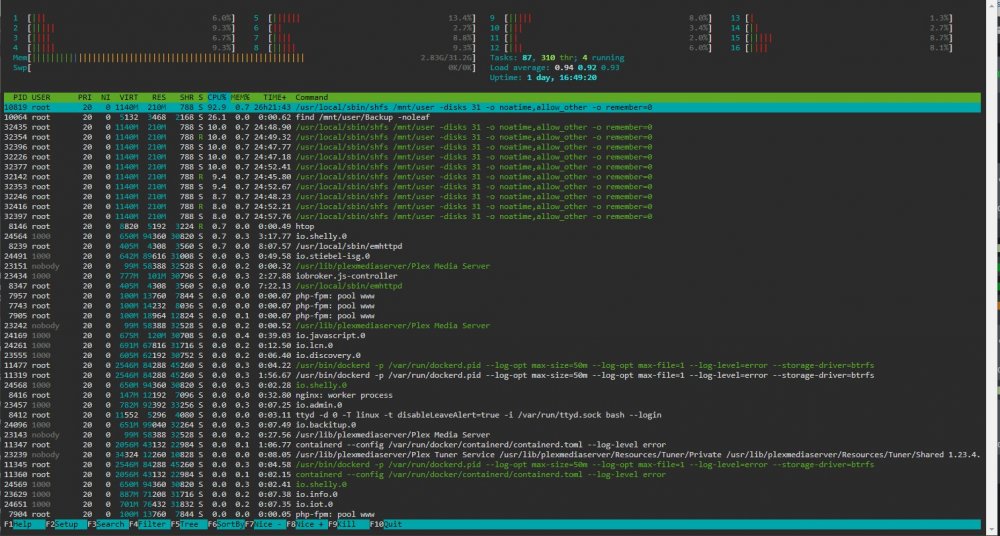
powertop Auto Tune läuft. Hab ich ins go file gepackt und neu gestartet. Im go file habe ich darüber hinaus modprobe i915; chmod -R 777 /dev/dri; eingefügt. Habe ich aus einem Tipp für meinen Plex Container, um das Transcodieren durch die GPU zu ermöglichen. Meinst Du das mit iGPU Treiber. Sollte ich mehr oder was anderes tun? Die Ausgabe von htop kommt jetzt.
-
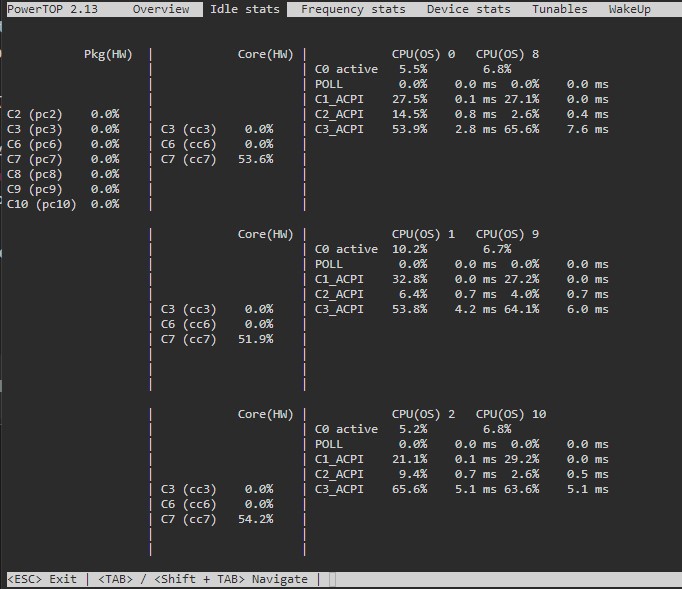
Hallo Zusammen, jetzt kommt noch einer mit ein paar Fragen. Da der Rechner ursprünglich für andere Aufgaben geplant war sind die Komponenten für den derzeitigen Einsatz sicherlich stark überdimensioniert. Aber so viel Strom kann ich gar nicht sparen um alles neu und angepasst zu kaufen. Hier mein System. SilverStone SST-CS380 V2 ATX-Gehäuse Intel Core I7-10700 2,90 GHz Sockel 1200 Prozessor boxed Gigabyte H470M-HD3 Intel H470 1200 ATX Mainboard BE Quiet System Power 9 600 Watt ATX Netzteil 64GB RAM (4xCrucial 16 GB PC3200 25600 CL-22 DDR4-RAM) 5x8TB Sata und 1 1TB Sata SDD Trotzdem wollte ich es im Energieverbrauch etwas optimieren. Powertop wirft mir so etwas raus s. Anhang. Die Platten fahren alle runter und im Bios habe ich alles was irgendwie nach C state aussieht habe ich aktiviert. Da ich aus Eine USB Plate für Backupzwecke dran habe habe ich USB noch nicht angefasst. Nach der Audio HW muss ich auch noch schauen. Was ich noch nicht ganz verstanden habe ist, dass die Werte rechts (ich denke mal die einzelnen Kerne) schon Prozentuale prozentuale an c1 bis c1 drei Zeigen. Der Pkg (HW) aber überall 0 zeigt. Wennich ehrlich bin kann ich den Wert nicht richtig interpretieren. Aber nach dem, was ich hier bisher gelesen habe scheint das ja nicht gut zu sein. Ich sehe im Dashboard auch nach längeren Pausen immer einzelne Kerne mit 1% bis 2% ausschlagen. Sie legen sich also nicht schlafen. Powertop -auto-tune läuft. Mir geht auch nicht darum das letzte Watt rauszuholen aber mein derzeitiger idle Verbrauch von 55 bis 70 W scheint mir doch was viel und ich hoffe hier etwas Potential zu haben. Wenn ich unter 40 komme wäre ich schon froh. Kann mir hier jemand weiterhelfen? Im BIOS habe ich nicht viel verwertbares gefunden. Ich habe im Standard vier Container laufen (Plex, ioBorker, Influx und duplicati) appdata liegt im Cache. Sollte man die Container vielleicht an einzelne Kerne binden, damit die anderen schlafen können oder mach vielleicht etwas anderes grundlegend falsch. Schon mal vielen Dank für Eure Nachhilfe.
-
Soweit ich es verstanden habe liegt es daran, dass beim Wechsel der NodeJS Version weitere Anpassungen an den Modulen über die Kommandozeile notwendig werden, da im module Verzeichnis wohl Reverenzen auf die JS Version enthalten sind. Buanet hat es so beschrieben (quelle: https://smarthome.buanet.de/2020/10/iobroker-docker-container-backup-restore/): Die ioBroker Doku dazu findest Du hier: https://www.iobroker.net/#de/documentation/install/updatenode.md Ist damit wohl kein Bug sondern eine bekannte (ob zwingende kann ich nicht beurteilen) Notwendigkeit. Ich habe auch tatsächlich dadurch schon Probleme bekommen und musste den ioBroker neu einrichten. Mit der Pflege der Räume und Funktionen, Namen und anderem Kram (Skripte habe ich separat exportiert) ist das bei einer größeren Installation eine Zumutung. Ich hoffe auch, dass die ioBroker Community hier bald eine bessere Möglichkeit findet. Vor allem was Updates der Basis angeht (Host/NodeJS). Das ist ein Grund warum ich tatsächlich über einen Umstieg nach Home Assistant nachdenke. Der muss sich aber auch erst beweisen, scheint mir aber tatsächlich stabiler zu sein (in dem Punkt). Allerdings habe ich jetzt schon viel Arbeit und Lizenzen in ioBroker gesteckt, so dass ich nicht so schnell aufgeben will. Aber anscheinend bin ich der Einzige der die Probleme mit dem beschrieben Restore hat. Dann liegt es wohl an mir und oder meiner Implementierung. Aber leider konnte ich meinen Fehler noch nicht identifizieren. Das war meine Hoffnung hier jemanden mit dem gleichen Problem zu finden. Mir ist auch bewuss, dass wir uns im unraid und nicht im iobroker oder im buanet git Forum befinden (Ich glaube nicht, dass es ein Problem von unraid und seiner Docker Implementierung ist. Ich habe es auch mit dem . Im git hab ich schon geschrieben. Allerdings kann es sein, dass aufgrund meines suboptimalen Englisch die Frage noch weniger angekommen ist als hier. Buante hat darum gebeten Fragen öffentlich zu stellen, damit alle etwas davon haben aber vielleicht schreibe ich ihn doch mal direkt an. Ich kann ja noch ein paar Tage warten und schauen was rein kommt. Danke schon mal für Deine Diskussion. Hilft einem immer weiter auch andere Sichten zu erfahren und sich damit auseinanderzusetzen. CU
-
Sorry, vielleicht habe ich mein Anliegen nicht wirklich rüber gebracht. Da der ioBroker mittlerweile doch die ein oder Andere Aufgabe im Haus übernommen hat muss ich sicherstellen, dass das Teil auch nach einem beliebigen Update (also auch Major Updates) ohne großen manuellen Aufwand und damit downtime weiterläuft. Meine Frau steigt mir sonst aufs Dach :-). Da das kopieren des /opt/iobroker Verzeichnis bei einem Major Update nicht funktioniert, da sich in der Regel darin die node.js Version geändert hat, hat Buanet einen anderen Weg beschreiben, der immer funktionieren soll, auch bei besagtem Update mit Änderung der js Version. Er verweist auf sein Startskript (leeres /opt/iobroer VErzeinis mit nur einer Backupdatei drin) oder über ein restore in der Console einer nackten iobroker Installation mit "iobroker restore" (vorher natürlich kill -iu iobroker). Beide Wege funktionieren bei mir nicht. Das ist mein eigentliches Anliegen. Habt Ihr diese Methoden schon einmal ausprobiert bzw. getestet. Auf Git hat mir jemand den Hinweis gegeben, dass es momentan Probleme mit der Backup/Restore Funktion geben soll. Ich fahre auch täglich ein Backup und lasse den Container tatsächlich so lange stabil. bis ich einen funktionsfähigen neuen Container habe. Deshalb arbeite ich für da Update immer mit einer zweiten Installation. Die kann ich testen, freigeben und dann die Produktion schwenken. Aber früher oder später muss man hoch. Ich möchte hier aber keine Grundsatzdiskussion anfangen ob oder warum es wichtig ist Software aktuell zu halten. CU
-
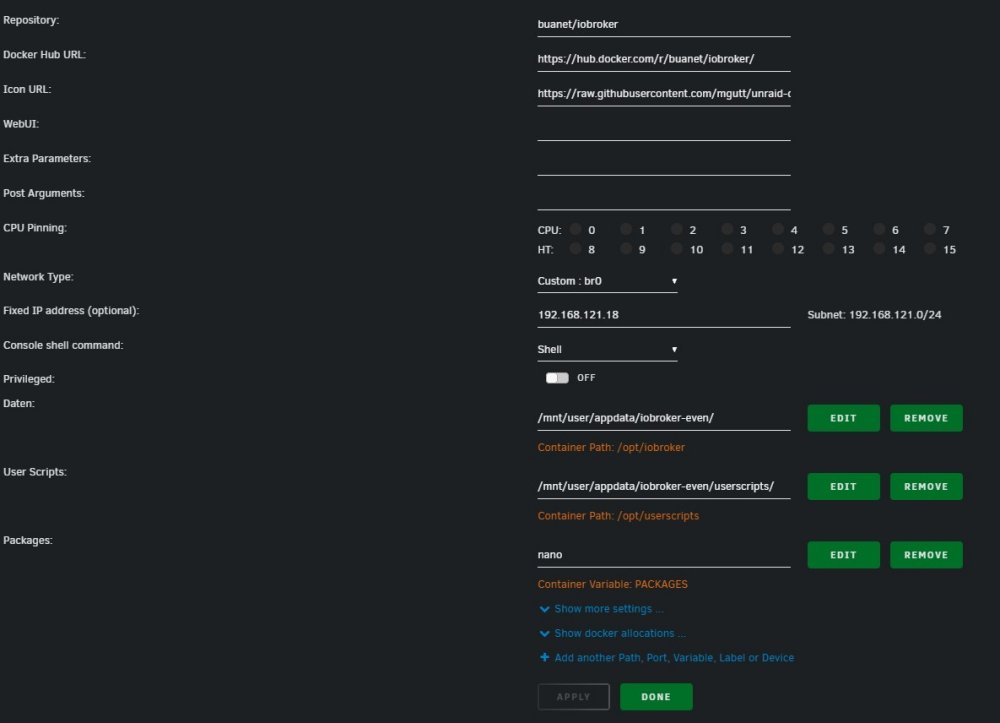
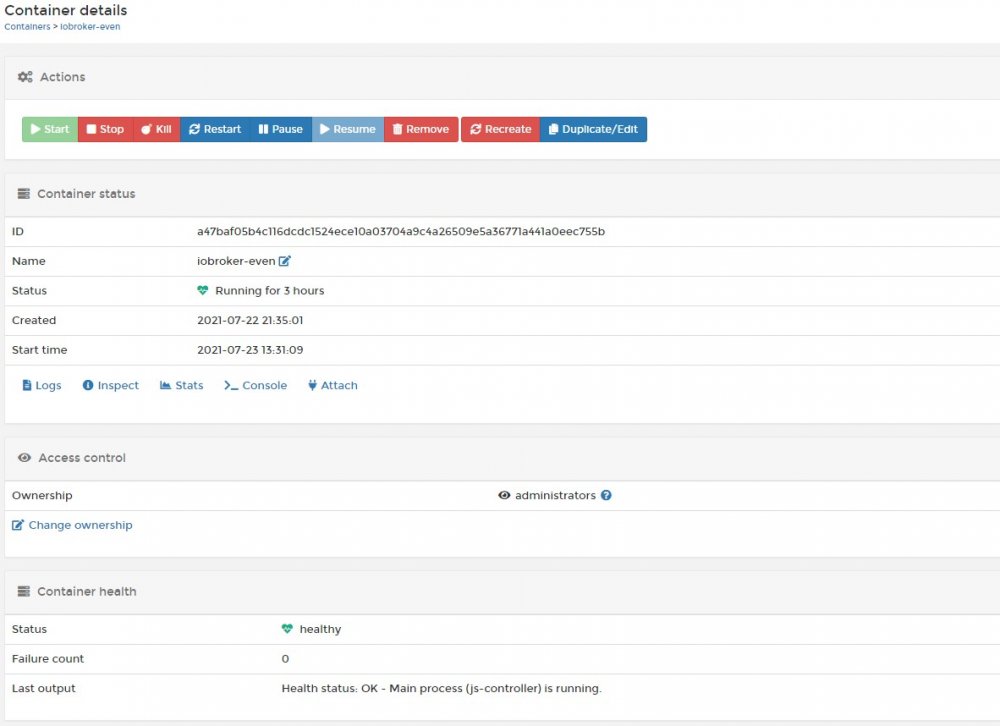
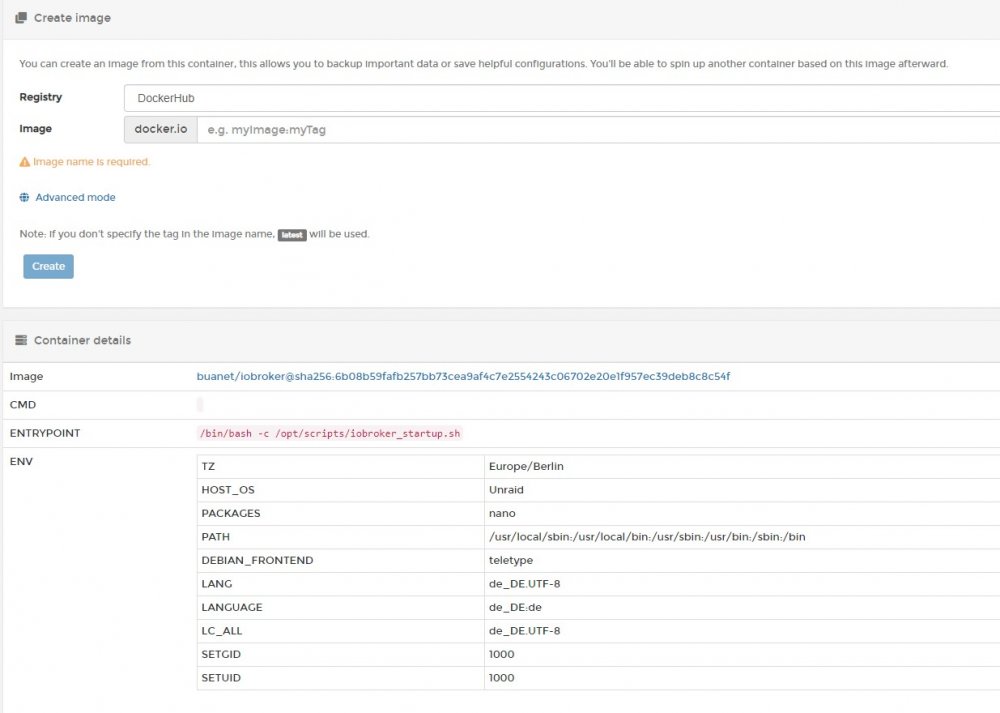
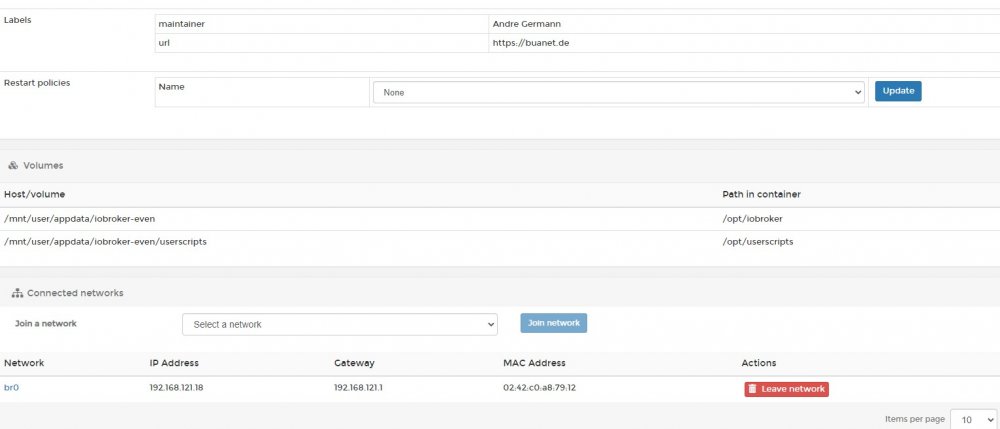
Hallo Zusammen, ich habe Probleme mit der backup Funktion. Da bei mir zuhause mittlerweile einige Funktionen vom ioBroker abhängig sind versuche ich ein Konstrukt aufzubauen, dass mir nur kurze Downtimes und eine gesicherte Widerherstellung garantiert. Lieder komme ich (noch) nicht zurecht. Ich beschreibe erst einmal was ich vor habe und was bisher passiert ist. Ich habe zwei gleiche ioBroler Container aufgesetzt, einen iobroker-even und einen iobroker-odd. Bei even zeigt /opt/iobroker auf ..appdata/iobroker-even und bei ott halt auf .../appdata/iobroker-odd. Damit will ich sicherstellen, dass ich immer erst die eine Instanz update schaue ob alles läuft und dann beim nächsten Update halt mit dem jetzt gestoppten Container weiter zu machen. Ich habe den Containern eine eigen IP (macvlan) verpasst. Natürlich beiden die gleiche. Sie laufen ja nur abwechselnd und die Aufrufe belieben damit gleich. Die Sicht auf die Config (einmal über unraid udn einmal über Portainer habe ich beigefügt). Um auch Wechsel der Hauptversion gut zu überstehen (muss ja auch mal sein) habe ich versucht buanets backup/restore Methoden zu verwenden. Alle Wege sind aber bisher gescheitert. Was habe ich getan. Ich habe meinen ioBroker aufgesetzt. Dieser läuft sehr stabil. Dann habe ich ein Backup erzeugt. Sowohl über den Backitup Adapter als auch über die Console. 1. Versuch: leeres Verzeichnis, backupfile reinkopiert und Container gestartet (logs anbei). Aber leider nicht erfolgreich. Die Fehler in den logs kann ich leider nicht interpretieren und summe wurde der Restore erfolgreich abgeschlossen. 2. Versuch: leeres Verzeichnis, Container gestartet, backitup Adapter installiert und versucht das Backup einzuspielen. Es kommt die Meldung, dass der ioBroker neu gestartet wird, es öffnet sich ein neues Fenster ip:8091 aber da kommt keine Verbindung zustande und der Restore wird nicht installiert. Über die Console mit iobroker restore kann ich das update auch nicht einspielen. Nach dem Restore ist IP:8081 nicht erreichbar. 3. Wenn ich einfach das Verzeichnis 1:1 auf File Ebene rüber kopiere funktioniert alles einwandfrei. Dieser weg funktioniert nur leider nicht bei einem Major Update. Und bei etwas größeren Installationen (das hier sind nur Testinstallationen, die Prod. ist viel umfangreicher) kann und will ich mir eine händische Nachkonfiguration nicht leisten. Kann mir einer sagen was da schief läuft? Schon mal vielen Dank im Voraus. CU Bernd log.txt restore.log