





drcorso
Members
-
Joined
-
Last visited
-
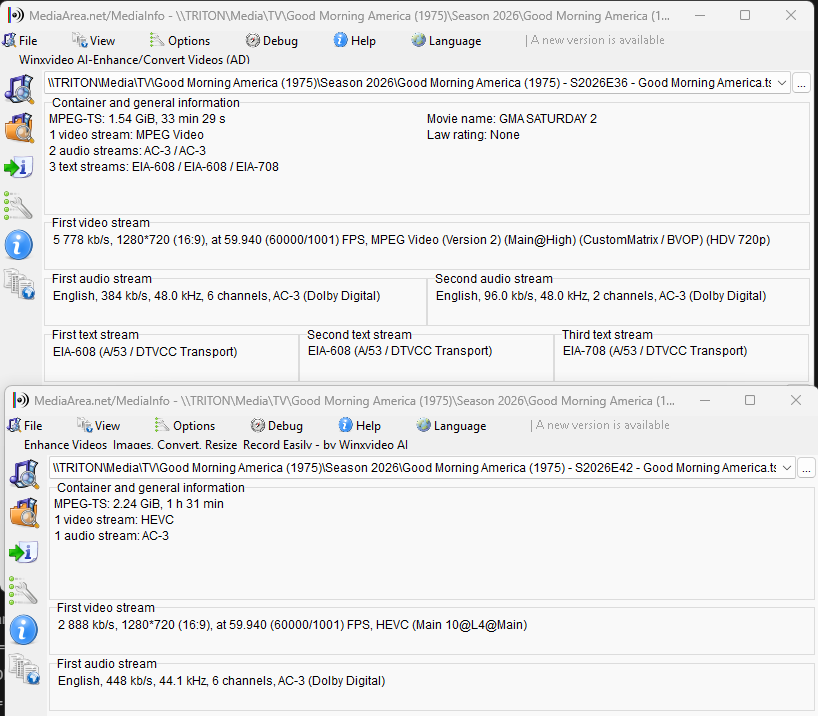
If there are other or better ways to do this, please share. The reason I resurrected this thread specifically it's what all the search engines are picking up when I was looking for a solution for myself. In my area stations are dropping their ATSC 1.0 broadcasts and consolidating to a single tower using ATSC 3.0 and I lost the ability to DVR shows in Plex on Unraid with my HDHomerun. I have been searching for a few days and have not found any other solutions that looked promising for this combination of Unraid, PLEX and HDHomerun. Since this post comes up frequently in search's, I figured other people will be coming across this post. Anyway I am no expert on dealing with docker as just use the apps like an app store on Unraid. This was my first attempt to create a custom docker container and while it did not go perfect based on AI, AI certainly helped me get through the issues. This worked to allow me to DVR my from the ATSC 3.0 channel. My scheduled recordings automatically picked up the new channels. Plus I learned quite a bit. Here are my notes from getting this working in a docker container on Unraid 7.2.3. Refer to notes here: GitHub - johnb-7/hdhr-ac4: This project aims to emulate an HDHomerun tuner that supplies ATSC 3.0 programs with AC3 audio. Open terminal in Unraid UI and run the following commands to download the repository to your Unraid server cd /mnt/user/appdata git clone https://github.com/johnb-7/hdhr-ac4.git Download the latest Emby installer from https://emby.media/linux-server.html and save it in the docker build directory. Update the Dockerfile in the folder /mnt/user/appdata/hdhr-ac4 to point to the Emby installer by replacing the file name "emby-server-deb_4.8.0.21_amd64.deb" with the latest version of the file name. During my install these 2 lines needed updating for the new file: COPY emby-server-deb_4.9.3.0_amd64.deb ./ RUN ar x emby-server-deb_4.9.3.0_amd64.deb data.tar.xz && \ Open terminal in Unraid UI and run the following commands to build the Docker image cd /mnt/user/appdata/hdhr-ac4 docker build -t hdhr-ac4 . "Yes, the PERIOD above at the end of the line is required" Create a custom Docker container in Unraid in the Unraid UI by going to Docker tab → Add Container Fill in these fields: Name = hdhr-ac4 Repository = hdhr-ac4 Network Type = Bridge Add Port with these fields: Name: App Container Port: 5004 Host Port: 5004 Add Port with these fields: Name: WebUI Container Port: 6800 (or the port you prefer based on other apps) Host Port: 80 Add Path with these fields: Container Path: /config Host Path: /mnt/user/appdata/hdhr-ac4/config Add Variable with these fields: Name = HDHR_IP Key =HDHR_IP Value = <ip of your HDHomeRun> Add Variable with these fields: Name = HOST_IP Key = HOST_IP Value = <ip of your unraid server> Add Variable with these fields: Name = DEVICEID_SWAP Key = DEVICEID_SWAP Value = <0 or 1, see dev notes> Save and it should start Check the logs You can test in VLC by opening a stream and using your unraid IP and a channel in this example, my server is 192.168.4.102 and the ATSC 3.0 channel I used was 112.1 http://192.168.4.102:5004/auto/v112.1 In Plex add a new tuner using localhost:webui_port or unraidip:webui_port and follow the steps like you would for adding any tuner. Comparing 2 of the files for a show that was recording, this is also going to save significantly on disk space. Before - 33 minutes = 1,540 MB GB = 46.67 MB/min of recording After - 91 minutes = 2,240 MB = 24.62 MB/min of recording
-
From copilot Absolutely, Dominic — let’s walk through this in a clean, practical way so you can get the hdhr-ac4 container running on Unraid 7.2.3. This project isn’t packaged as an Unraid template, so you’ll be creating a custom Docker container using the repository’s Dockerfile and runtime instructions. Below is a detailed, step‑by‑step guide that works perfectly on Unraid. 🧰 How to Create an hdhr-ac4 Docker Container on Unraid 7.2.3The GitHub repo you shared (johnb‑7/hdhr-ac4) provides a Dockerfile and instructions for running the AC‑4 transcoder for HDHomeRun streams. Unraid can build and run this container easily — you just need to set it up manually. ✅ Step 1 — Download the Repository to Your Unraid ServerYou have two options: Option A — Use Unraid’s built‑in terminalOpen Unraid Web UI Go to Terminal (top-right) Run: cd /mnt/user/appdata git clone https://github.com/johnb-7/hdhr-ac4.git Option B — Download ZIP and uploadDownload ZIP from GitHub Extract it Upload the folder to /mnt/user/appdata/hdhr-ac4 Either way, you now have the Dockerfile on your server. ✅ Step 2 — Build the Docker Image on UnraidUnraid doesn’t expose a GUI for building images, but you can do it via terminal. Open Terminal again Navigate into the repo: cd /mnt/user/appdata/hdhr-ac4 Build the image: docker build -t hdhr-ac4 . This creates a local Docker image named hdhr-ac4. ✅ Step 3 — Create a Custom Docker Container in UnraidNow you’ll create the container using Unraid’s GUI. 1. Go to:Docker tab → Add Container 2. Fill in the basic fields:Field Value Name hdhr-ac4 Repository hdhr-ac4 Network Type Bridge (or Host if preferred) Since you built the image locally, “Repository: hdhr-ac4” tells Unraid to use that local image. ✅ Step 4 — Add Required PortsThe repo exposes port 5004 by default. In the container settings: Add Port:Container Port: 5004 Host Port: 5004 (You can change the host port if needed.) ✅ Step 5 — Add Volume Mappings (Optional but Recommended)If you want to store logs or config outside the container: Add Path:Container Path: /config Host Path: /mnt/user/appdata/hdhr-ac4/config ✅ Step 6 — Add Environment Variables (If Needed)The repo doesn’t require special variables, but if you want to customize: Variable Purpose LOG_LEVEL Set logging verbosity PORT Change listening port Example: LOG_LEVEL=info PORT=5004 ✅ Step 7 — Apply and Start the ContainerClick Apply → Unraid will create and start the container. You can check logs via: Docker tab → hdhr-ac4 → Logs ✅ Step 8 — Test the ContainerThe container listens for HDHomeRun AC‑4 streams and transcodes them. A typical test URL looks like: http://<unraid-ip>:5004/auto/v<channel-number> Example: http://192.168.1.10:5004/auto/v5.1 You can plug this into: VLC Plex (as a custom tuner) Emby/Jellyfin HDHomeRun apps (via custom tuner mode) 🧪 Optional: Auto‑Start on BootIn the Docker tab: Click the container’s icon Enable Auto Start 🎉 You now have hdhr-ac4 running as a Docker container on UnraidIf you want, I can also create: A ready‑to‑import Unraid XML template A docker‑compose.yml (Unraid supports it via the Compose Manager plugin) A custom script to rebuild the image automatically when the repo updates Just tell me what direction you want to go next.
