newmember
Members
-
Joined
-
Last visited
-
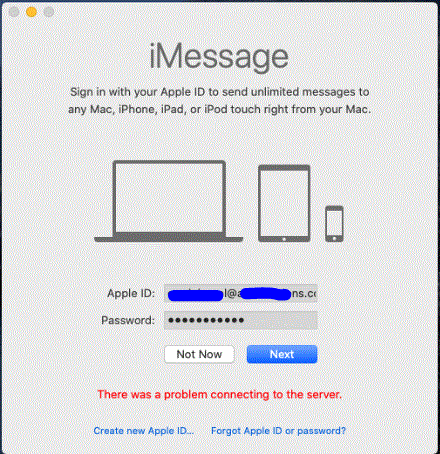
Creating a new appleID is failing, the serialnumber has been used to many times. This is a new install using macinabox. Watching the new video doesnt mention anything about appleIDs Before we have to check serialnumber with apple website and look for unregistered serialnumbers. For macinabox what are we doing to create appleIDs for iMessage, facetime etc?
-
I am running into this issue, any thoughts, anything I should try? Update I am updating my Jupypter hub with a 4GB image, which downloads fine and then fails. Notification pops up Docker critical image disk utilization: 06-03-2023 15:26 Alert [TOWER] - Docker image disk utilization of 90% Docker utilization of image file /mnt/user/system/docker/docker.img Docker critical image disk utilization: 06-03-2023 15:27 Alert [TOWER] - Docker image disk utilization of 99% Docker utilization of image file /mnt/user/system/docker/docker.img root@Tower:/mnt/user/system/docker# ls -altr total 20971520 drwxrwxrwx 1 root root 0 Aug 7 2019 ./ drwxrwxrwx 1 nobody users 48 Dec 18 2020 ../ -rw-rw-rw- 1 nobody users 21474836480 Mar 6 15:57 docker.img Space Name Container Writable Log Backblaze_Personal_Backup 2.66 GB 0 B 32.2 MB MS-SQL-Server 1.47 GB 89.0 kB 371 kB jupyterlab 1.41 GB 153 kB 68.9 kB ApacheGuacamole 1.31 GB 182 MB 8.58 kB binhex-sabnzbd 1.27 GB 131 MB 51.3 kB binhex-sonarr 1.17 GB 40.5 MB 1.91 MB binhex-radarr 1.03 GB 158 MB 480 kB pihole_1 379 MB 57.1 MB 11.1 kB pihole_2 346 MB 23.9 MB 11.1 kB Portainer-CE 272 MB 0 B 61.6 kB vm_custom_icons 33.3 MB 0 B 439 B Total size 11.4 GB 593 MB 35.2 MB Mapped Folders /data/mnt/user/appdata/data /media/mnt/user /config/mnt/user/appdata/binhex-radarr /data/mnt/user/Downloads/TVShows/ /config/mnt/user/appdata/binhex-sabnzbd /data/mnt/user/Downloads/TVShows/ /media/mnt/user /config/mnt/user/appdata/binhex-sonarr /config/mnt/user/appdata/ApacheGuacamole /drive_d//mnt/user/ /config/mnt/user/appdata/Backblaze_Personal_Backup /var/opt/mssql/data/mnt/user/appdata/mssql/data/ /var/opt/mssql/log/mnt/user/appdata/mssql/log/ /var/opt/mssql/secrets/mnt/user/appdata/mssql/secrets/ /var/run/docker.sock/var/run/docker.sock /data/mnt/user/appdata/portainer-ce /opt/app/data/mnt/user/appdata/jupyterlab/notebooks /appdata/mnt/user/appdata/jupyterlab/config /unraid_vm_icons/usr/local/emhttp/plugins/dynamix.vm.manager/templates/images /config/mnt/user/appdata/vm_custom_icons /etc/pihole//mnt/user/appdata/pihole/pihole1/ /etc/dnsmasq.d//mnt/user/appdata/pihole/dnsmasq.d/ /etc/pihole//mnt/user/appdata/pihole/pihole2/ /etc/dnsmasq.d//mnt/user/appdata/pihole/dnsmasq.d/ Edited 21 hours ago by newmember
-
I am running into this issue, any thoughts, anything I should try? Update I am updating my Jupypter hub with a 4GB image, which downloads fine and then fails. Notification pops up Docker critical image disk utilization: 06-03-2023 15:26 Alert [TOWER] - Docker image disk utilization of 90% Docker utilization of image file /mnt/user/system/docker/docker.img Docker critical image disk utilization: 06-03-2023 15:27 Alert [TOWER] - Docker image disk utilization of 99% Docker utilization of image file /mnt/user/system/docker/docker.img root@Tower:/mnt/user/system/docker# ls -altr total 20971520 drwxrwxrwx 1 root root 0 Aug 7 2019 ./ drwxrwxrwx 1 nobody users 48 Dec 18 2020 ../ -rw-rw-rw- 1 nobody users 21474836480 Mar 6 15:57 docker.img Space Name Container Writable Log Backblaze_Personal_Backup 2.66 GB 0 B 32.2 MB MS-SQL-Server 1.47 GB 89.0 kB 371 kB jupyterlab 1.41 GB 153 kB 68.9 kB ApacheGuacamole 1.31 GB 182 MB 8.58 kB binhex-sabnzbd 1.27 GB 131 MB 51.3 kB binhex-sonarr 1.17 GB 40.5 MB 1.91 MB binhex-radarr 1.03 GB 158 MB 480 kB pihole_1 379 MB 57.1 MB 11.1 kB pihole_2 346 MB 23.9 MB 11.1 kB Portainer-CE 272 MB 0 B 61.6 kB vm_custom_icons 33.3 MB 0 B 439 B Total size 11.4 GB 593 MB 35.2 MB Mapped Folders /data/mnt/user/appdata/data /media/mnt/user /config/mnt/user/appdata/binhex-radarr /data/mnt/user/Downloads/TVShows/ /config/mnt/user/appdata/binhex-sabnzbd /data/mnt/user/Downloads/TVShows/ /media/mnt/user /config/mnt/user/appdata/binhex-sonarr /config/mnt/user/appdata/ApacheGuacamole /drive_d//mnt/user/ /config/mnt/user/appdata/Backblaze_Personal_Backup /var/opt/mssql/data/mnt/user/appdata/mssql/data/ /var/opt/mssql/log/mnt/user/appdata/mssql/log/ /var/opt/mssql/secrets/mnt/user/appdata/mssql/secrets/ /var/run/docker.sock/var/run/docker.sock /data/mnt/user/appdata/portainer-ce /opt/app/data/mnt/user/appdata/jupyterlab/notebooks /appdata/mnt/user/appdata/jupyterlab/config /unraid_vm_icons/usr/local/emhttp/plugins/dynamix.vm.manager/templates/images /config/mnt/user/appdata/vm_custom_icons /etc/pihole//mnt/user/appdata/pihole/pihole1/ /etc/dnsmasq.d//mnt/user/appdata/pihole/dnsmasq.d/ /etc/pihole//mnt/user/appdata/pihole/pihole2/ /etc/dnsmasq.d//mnt/user/appdata/pihole/dnsmasq.d/
-
With DHCP its not possible to see what IPs your VM are picking up without logging into them. So we could make the IPs appear in UNRAID on the VM page using a script. Would be possible to add the IPs of the VMs to the VM web guide page? I was thinking that a simple ARP could be done. So maybe start with a broadcast ping to the network. % ping 192.168.0.255 PING 192.168.0.255 (192.168.0.255): 56 data bytes Request timeout for icmp_seq 0 Request timeout for icmp_seq 1 Request timeout for icmp_seq 2 Then do an arp with a filter of the MAC address form the Vm log -device '{"driver":"virtio-net","netdev":"hostnet0","id":"net0","mac":"52:54:00:05:9f:59","bus":"pci.0","addr":"0x2"}' \ Then filter for the MAC: % arp -a | grep 9f:59 ? (192.168.1.106) at 52:54:0:5:9f:59 on en6 ifscope [ethernet] ? (192.168.1.106) at 52:54:0:5:9f:59 on en0 ifscope [ethernet] Then check and filter the IPs from potentially multiple interfaces ? (192.168.1.106) at 52:54:0:5:9f:59 on en0 ifscope [ethernet] Then provide the IP(s) to the VM web guide page beside the VM. 192.168.1.106 We could maybe make the IP a clickable link to RDP or SSH? From VM start up log: netdev tap,fd=36,id=hostnet0 \ -device '{"driver":"virtio-net","netdev":"hostnet0","id":"net0","mac":"52:54:00:05:9f:59","bus":"pci.0","addr":"0x2"}' \ -chardev pty,id=charserial0 \ -device '{"driver":"isa-serial","chardev":"charserial0","id":"serial0"}' \ -
-
Can I have two pi-hole running using the same disk directory location? I want to run two pi-holes for HA. This appears to be running but maybe its not a good idea? Thank you

-
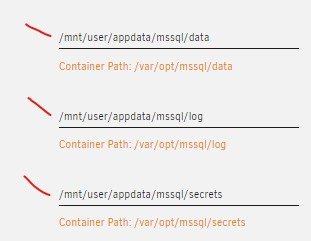
For MSSQL 2019 the permissions for the container has changed from 'root' to 'mssql' so not the local mapped drives need to have the same permissions Ref: https://stackoverflow.com/questions/65601077/unable-to-run-sql-server-2019-docker-with-volumes-and-get-error-setup-failed-co Fiddle with folder directories for your server. 1. Start the MSSQL2019 container. 2. From the command line in UNRAID copy the folders from the containter to the mapped drive location: docker cp MS-SQL-Server:/var/opt/mssql/data /mnt/user/appdata/mssql/ docker cp MS-SQL-Server:/var/opt/mssql/secrets /mnt/user/appdata/mssql/ docker cp MS-SQL-Server:/var/opt/mssql/log /mnt/user/appdata/mssql/ 3. Shut down the MSSQL container: 4. Add these mappings to the MSSQL2019 container template: /mnt/user/appdata/mssql/data /mnt/user/appdata/mssql/secrets /mnt/user/appdata/mssql/log 5. Change the permssions on the folders and files: sudo chown -R 10001 /mnt/user/appdata/mssql/ 6. Start up the MSSQL2019 container
-
My image was booting with either OS objects. Thanks I have updated those lines in OS. I have left the the VM cfg pointing to the /mnt/users/domains/MacintaboxCatalina/ovmf directory Cheers
-
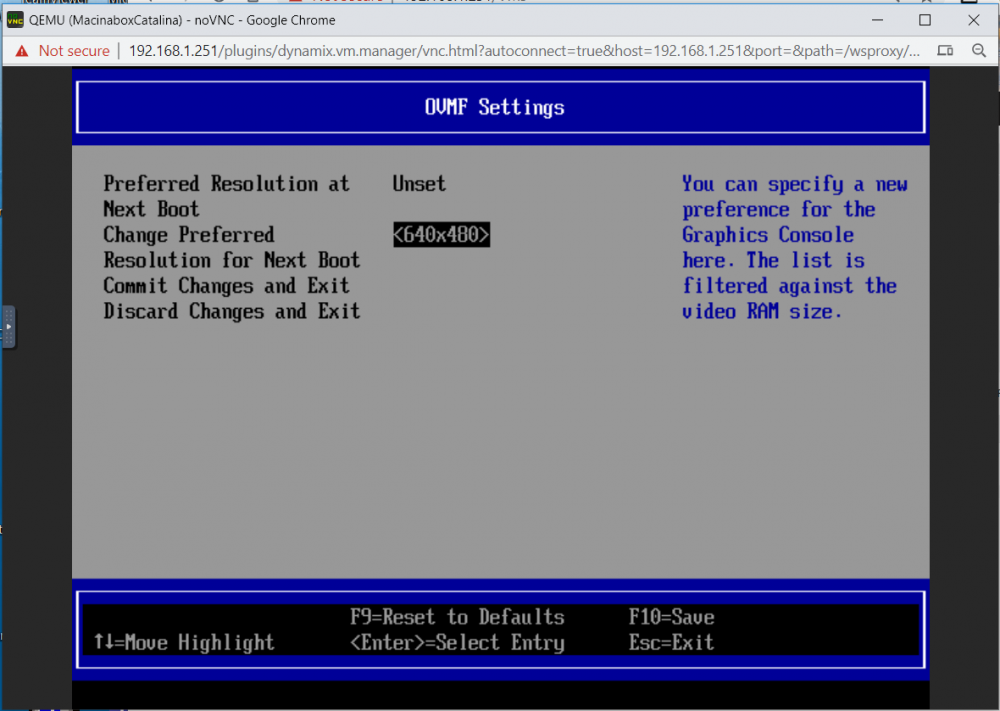
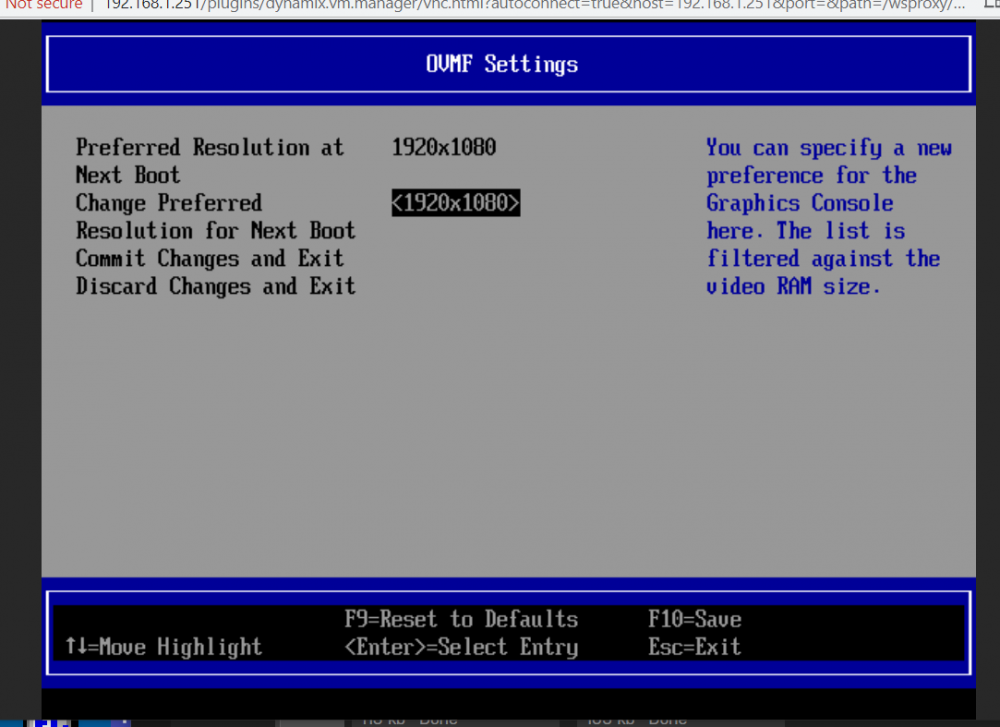
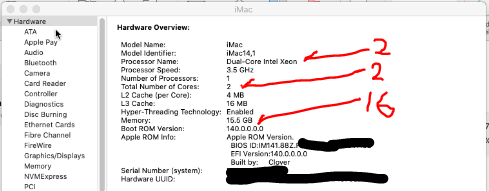
Thank you I found it easier to start the boot up to the Then I found the OVMF setting as you has described. It was set to 1920X1080 before I updated the CPU from 2 to 4 It was now set to 640X480. Then I updated it to 1920X1080, Then 'commit changes and exit. When I go back to the OVMF screen the 'preferred resolution' is updated ESC to exit Restart The first restart and I had he same 640X480 resolution. I stopped the VM Started the VM and good to go. Checking back: <memory unit='KiB'>16252928</memory> <currentMemory unit='KiB'>16252928</currentMemory> <cpu mode='host-passthrough' check='none'> <topology sockets='1' cores='2' threads='2'/> This shows up as Dual Core and 2 Cores = 4 Cores total Thanks for the assistance.
-
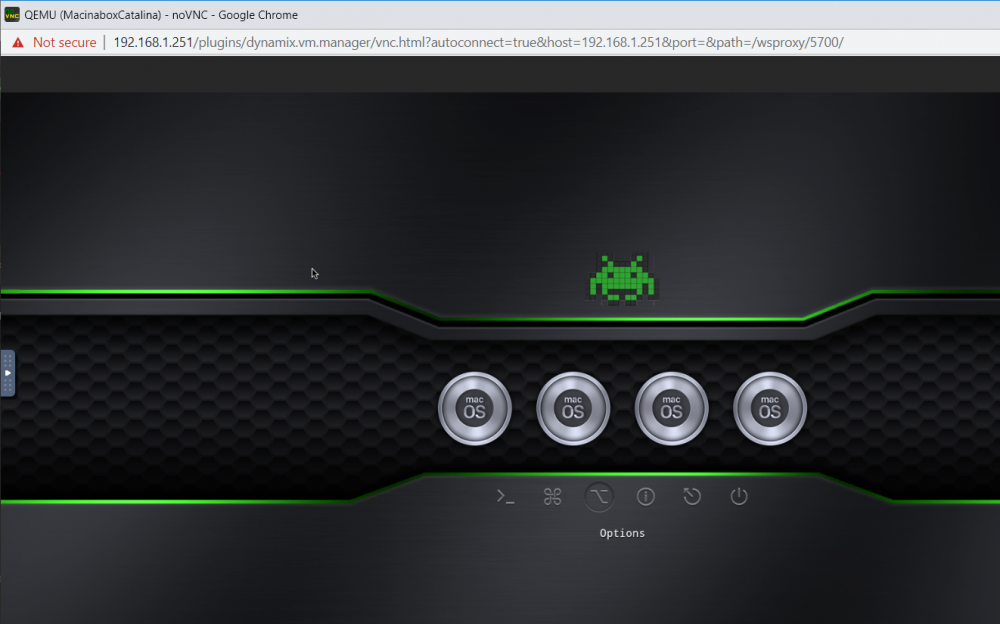
Thanks for the feedback. Am I in the right place to set the resolution in Clover?
-
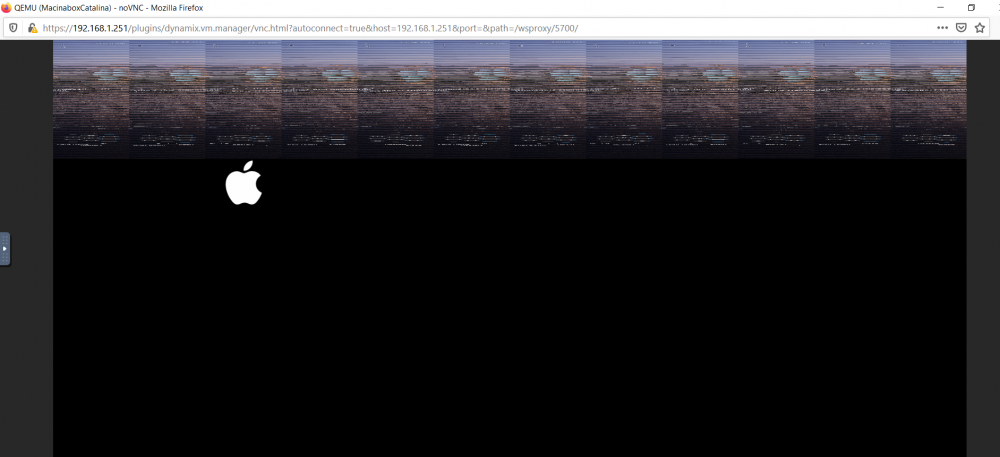
I updated the network card to vmxnet3 and when I reboot I see this issue with the vnc video. Thoughts? Thanks
-
Just checked screen never turn off power Never sleep High performance
-
Sometimes I loose access to the video output. Like Win10 has froze. But most of the time I would like to 'stop' Win10 from the UNRAID GUI instead of having to log into WIn10 and shutdown.
-
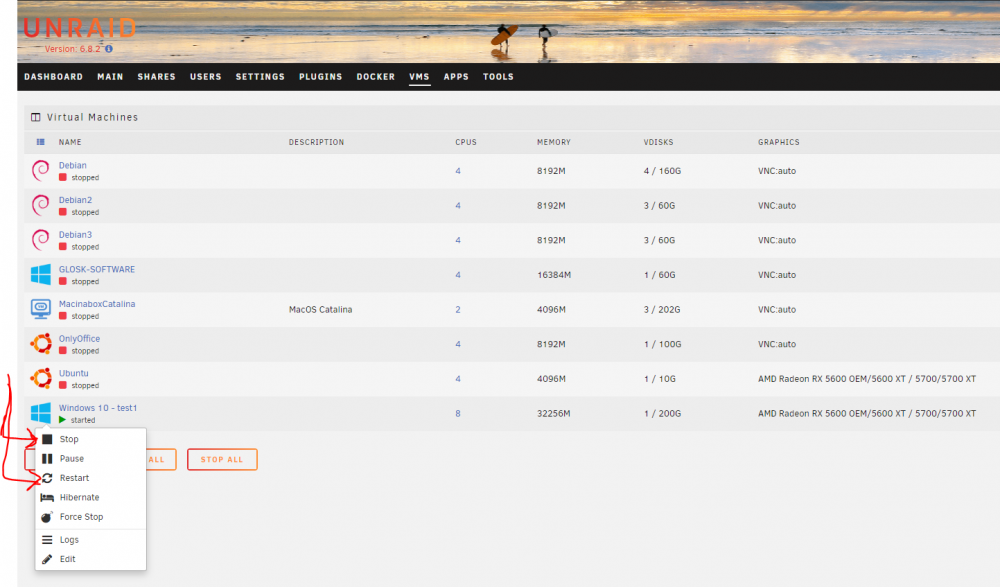
Fro the UNRAID VM GUI, when I try to stop the Win10 VM nothing happens. When I try to restart the Win10 nothing happens. (see attached screen shot) Added diagnostics to attachments I am missing a Win10 driver to allow these controls to work? tower-diagnostics-20200215-1801.zip
-
Thank you. I changed my NIC from vmxnet3 to <model type='e1000-82545em'/> All good
-
Error connecting to apple. Both imessage and app store fail. Thoughts?