Ablatem
Members
-
Joined
-
I replaced the SATA cable and that resolved the issue. Thanks very much for your help.
-
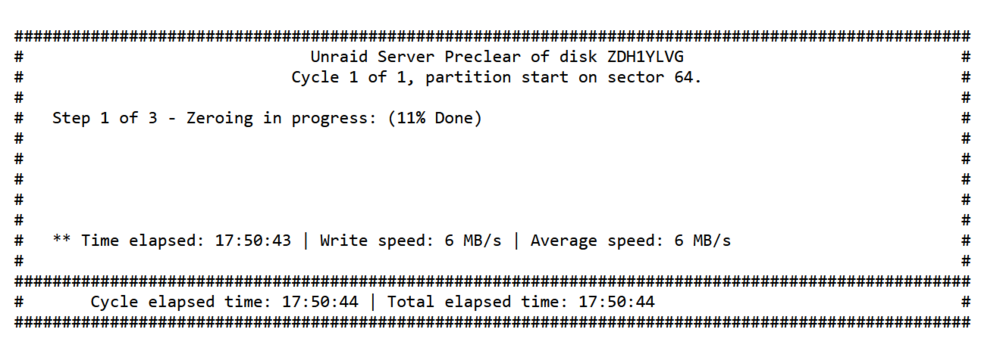
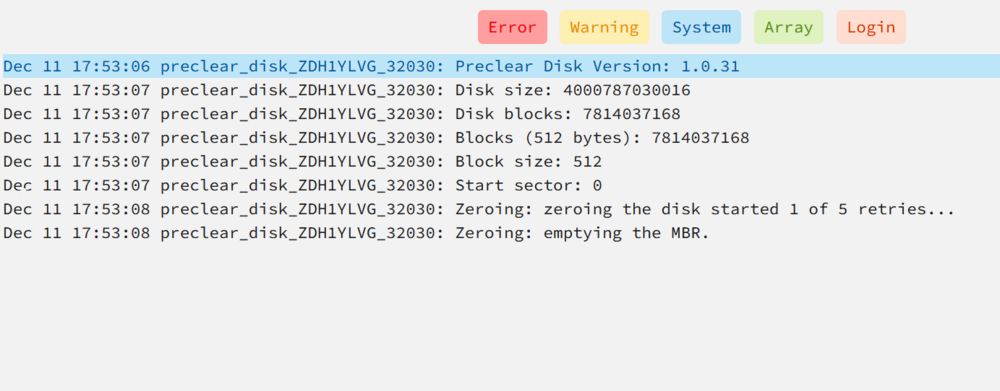
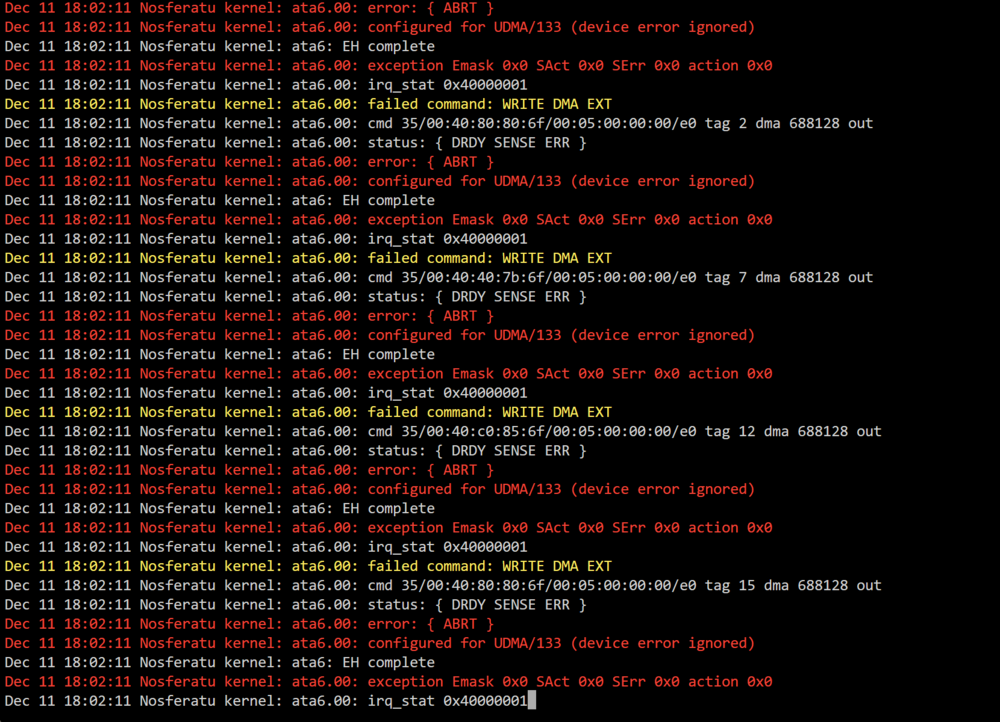
Hello, I am in the process of adding an older 4 TB drive into an array. I decided to run preclear on it first and it seems to be taking a very long time to run. I have done this before and I don't remember it taking this long. Could someone let me know if this is 'normal'? From the preclear progress report: I may have just found the reason - this is from the disk log and it indicates errors and failed commands so it looks like this isn't a disk I should use for anything. Is that correct? Thanks in advance for any help on this.
-
Right - I am getting rid of the problem 12 TB drive so it is out of the picture completely.
-
Thanks for your replies - they were all informative. I decided to go with Michael_P because I am very familiar with Murphy's law. I am going to take one of the 'clean' 10 TB drives and make that my parity drive. It doesn't have any issues and I can start off 'clean'.
-
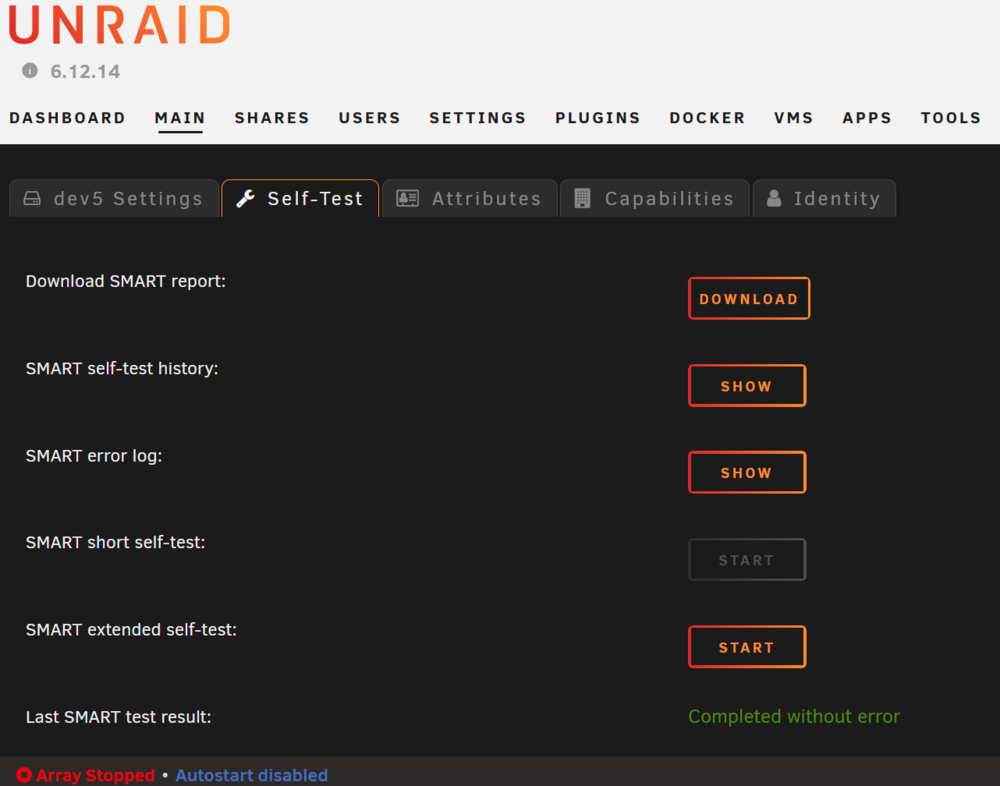
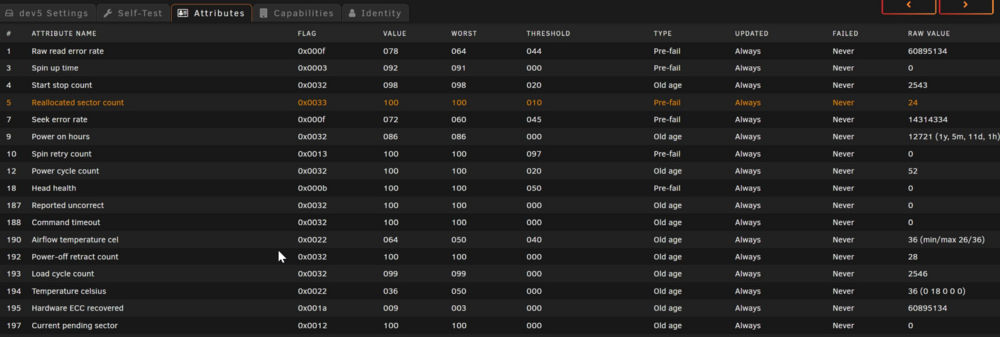
Good to know. I was wondering about this drive since I am going to be using it as the only parity drive in a new array. The extended test completed without error: I ran another smart drive report and I see some differences with temp and other things but the one that stood out to me is Seek Error Rate - this increased from 72 (raw value: 14314145) to 73 (raw value: 21390618).
-
Thanks for the reply. I am running that test now - looks like it will take a while to run. I will post the results when it is complete. As long as it passes this test and the number stays the same - I should be ok for this drive to be used as the one parity drive - is that correct?
-
Hello, I am setting up an additional Unraid server in my environment. I am planning to use an Iron Wolf Pro 12 TB drive as a parity drive. I have not built any array but once I had the drives added and powered up the machine, I saw a warning about the reallocated sector count being 24. This drive was previously used in a Proxmox server if that makes any difference. Here is the warning that I saw: I have included a copy of the smartdrive report. Should I replace the drive? Thanks. Rick ST12000NE0007-2GT116_ZCH0HMHX-20241209-1343.txt

-
@trurl - parity drive still healthy after 3 days. I will continue to keep an eye on it. Thanks again for your help.
-
@trurl - thanks for your response. I did acknowledge the CRC and it says healthy as of now. I will watch it for a couple of days and if nothing changes, I will close this.
-
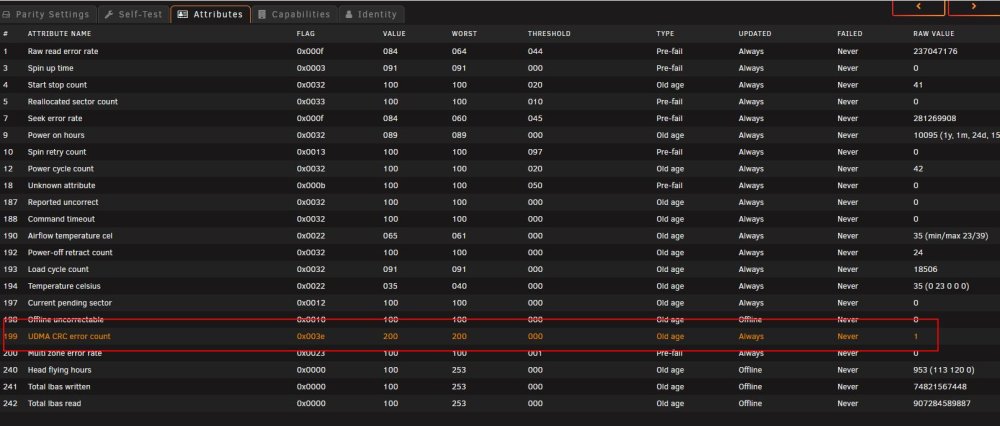
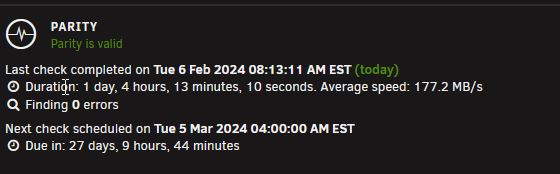
Hello, I have one 18 TB parity drive that is showing - UDMA CRC error count. It just passed a parity check with no issues. Should this drive be replaced? I have 2 other 18 TB drives in an array. Thanks in advance for your time.
-
Thanks @Kilrah and @JorgeB for your assistance. I have been able to recreate my original VM's with no issues using the steps I mentioned above in the comment I marked as the solution. I appreciate the help.
-
I was able to restore a 'test' vm which looks fine. I created a new vm and used the same name as before as assigned CPU and RAM. The Primary vDisk location is set to Auto since it was using a valid path - /mnt/user/domains/RedHat/vdisk1.img Network Source is virbrO Network Model is virtio-net I didn't make any other changes. So far so good - I will take another look at it and then try a restore of another VM. Does this sounds like the correct process to use as far as recreating the vm's? Note: I had to change the Network Source to br0 - Network Model - left this the same - virtio-net This change gave me network connectivity. I will use this setting going forward.
-
Thanks for the reply, @JorgeB. I do have the old libvirt and I am pointing to it but I can't get any vm's to be listed. The libvirt.img file I have is 1.07 GB. Is there a documented process for recreating the VM's using the existing vdisk file? I am making a copy of one of my existing VM's vdisk and then I was going to attempt to recreate it. Could the network error I am seeing in the libvirt log be causing a problem with not being able to see the existing vm's?

-
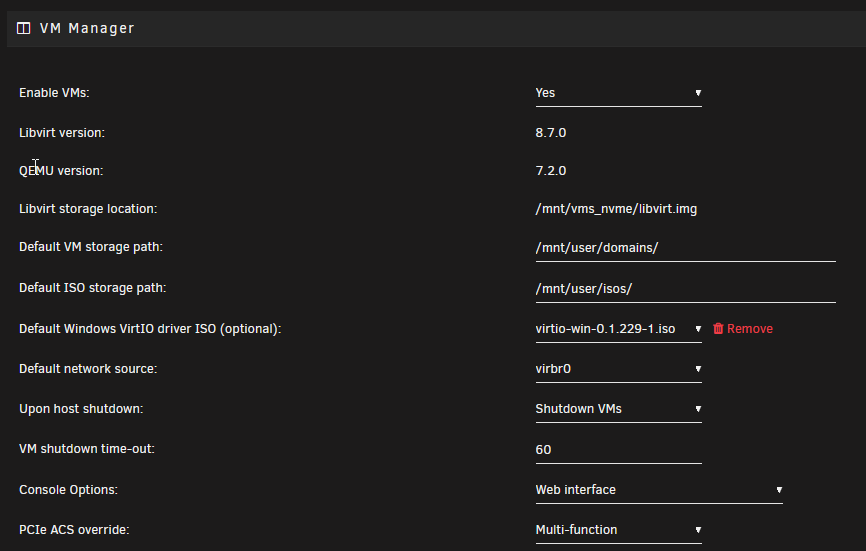
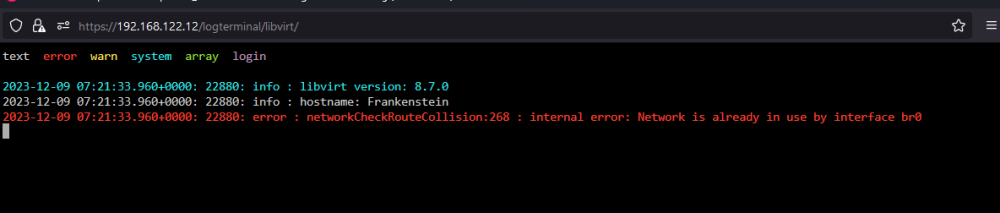
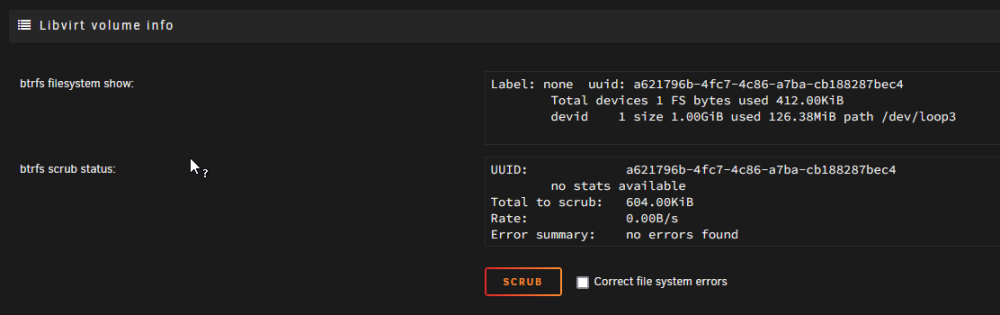
I deleted the new libvirt.img file and made sure VM Manager was set to point to the original location. I disabled Docker and VM then I rebooted. When it came back online, I confirmed that the VM Manager location was the same and it was. I started Docker and VM. When I checked VM, there were still no VMs listed. I looked at the libvirt log and I see an error about the Network interface being already in use by interface br0 - I don't know where this is coming from because in VM Manager, the Default network source is virbr0 I see this under Libvirt volume info - Should I check Correct file system errors and click 'scrub'?
-
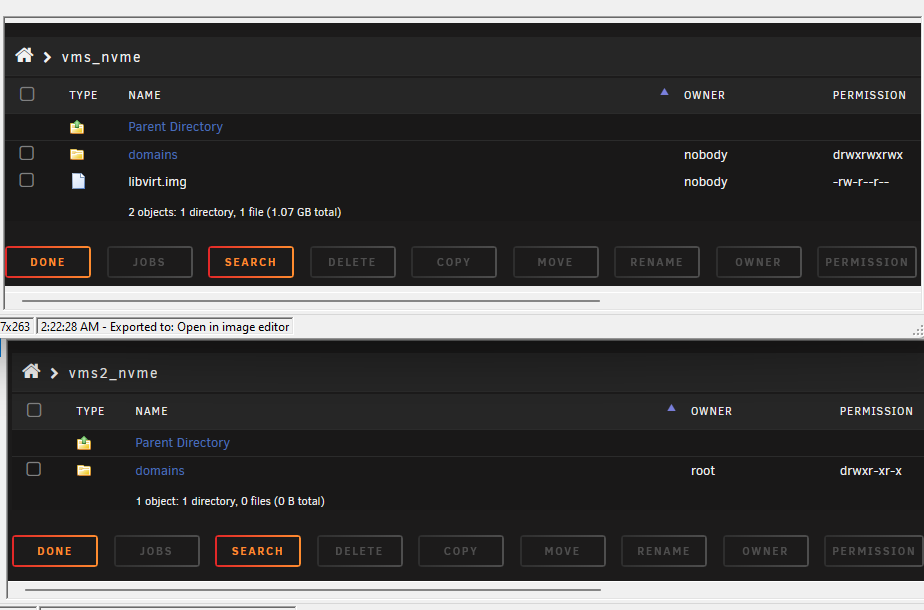
Hello, @Kilrah, Thanks for your response. I did not move the existing file before so I thought that could be the issue. I wanted to go back to the original location and that is when I saw no VM's. I just tried restarting the array and that didn't make any difference so I took another look at the locations. I see a problem - in both locations (/mnt/vms_nvme and /mnt/vms2_nvme) there are libvirt.img files - so 2 image files. Both are the same size - 1.07 GB I thought about what you mentioned about the file size being only 1 GB and I decided that it could be left where it is and I can move VM's from the original nvme over to the new nvme to make a little extra space. With that being said, I assume that now I need to delete the libvirt.img file located in the new location: /mnt/vms2_nvme - then restart the array again. I know what happens when you assume so can you confirm that?