Kirizan
Members
-
Joined
-
Last visited
-
If you wanted to use the MariaDB option still, you can remove the `DB_SQLITE_FILE` variable and re-add the variables: `DB_MYSQL_HOST`, `DB_MYSQL_PORT`, `DB_MYSQL_USER`, `DB_MYSQL_PASSWORD`, `DB_MYSQL_NAME`. I just set this up (I already had MariaDB setup for other things and wanted to keep everything in one place) and so far it's working.
-
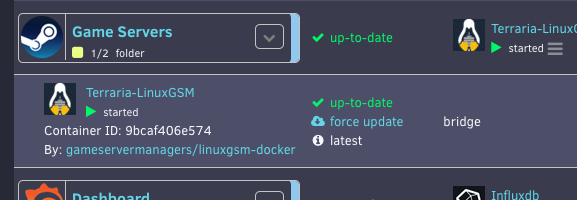
I discovered a small bug. If you remove a container without removing it from the folder, it still shows up as in the folder count, but there is no way to remove it. As seen here: It says there are 1/2 containers started, but there is only 1 container left in the folder. In the folder.json file, the old container (linuxgsm-docker) is still listed as a member of the folder. If you click on the folder, the old container doesn't show up, and there isn't any way to remove the container (besides editing the /boot/config/plugins/docker.folder/folder.json file directly). As I said, I can remove the extra container by modifying the file, so it's a minor issues, but I thought I'd post it here in case anyone else has this same issue.