D4zz4
Members
-
Joined
-
Last visited
Everything posted by D4zz4
-
Hey bobintb. Thanks for your reply. I will do that this weekend and let you know the results.
-
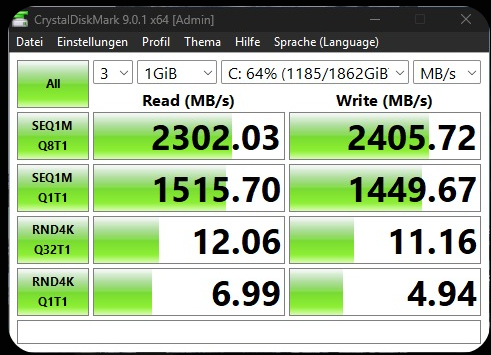
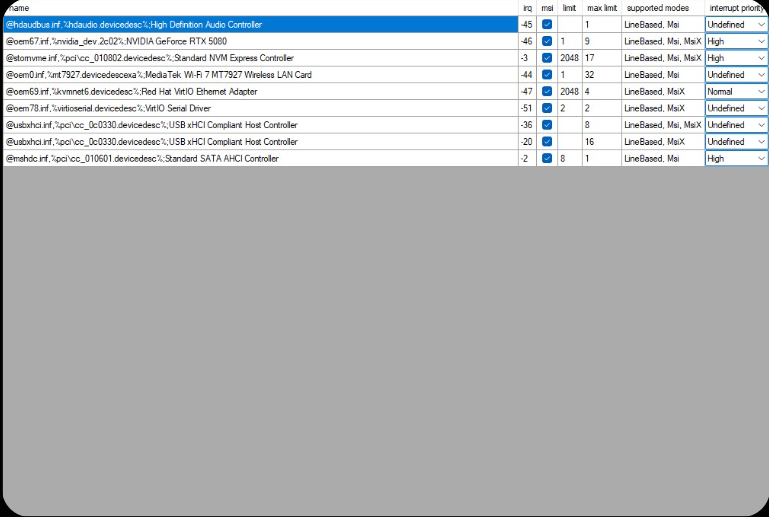
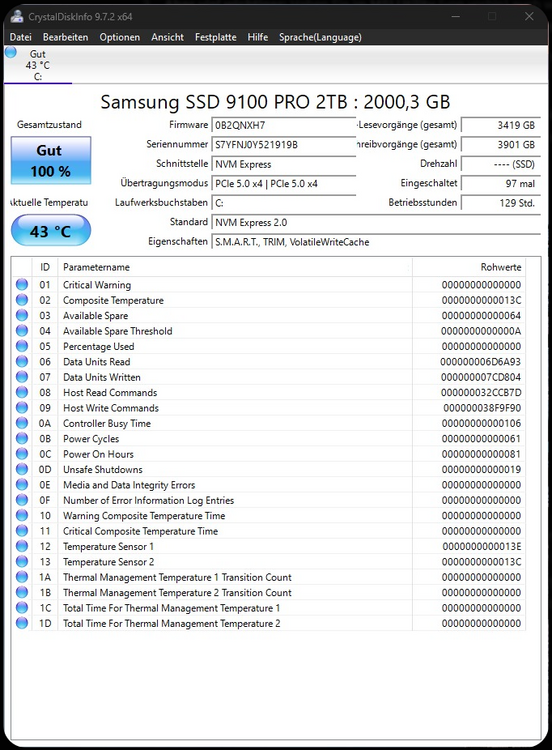
Hi everyone, I have migrated my bare metal Windows 11 installation to an Unraid VM. While the system boots and runs, I am facing severe performance issues, specifically regarding disk I/O latency. Despite having high-end hardware, the VM feels sluggish. Right-clicking on the desktop takes ~3 seconds to open the context menu. Games take forever to load. Benchmarks confirm a massive bottleneck in 4K Random Reads. Hardware: CPU: AMD Ryzen 9 9950X (Zen 5) Motherboard: ASUS ROG Crosshair X870E Hero (BIOS updated to latest AGESA) RAM: [2x48GB DDR5-6000] GPU: NVIDIA RTX 5080 (Passed through) NVMe (System): Samsung 9100 PRO Gen 5 OEM (Passed through via PCI controller) Unraid Version: 7.2.2 The Problem: CrystalDiskMark inside the VM shows: Seq Read: ~2300 MB/s (Seems capped at PCIe 3.0 speeds? The drive is Gen 5). 4K Random Read (Q1T1): ~6 MB/s (This is drastically low and causing the lag). VM Configuration: Machine: pc-q35-9.2 Bios: OVMF TPM vDisk: None (Manual passthrough of the NVMe controller via "Other PCI Devices") CPU Pinning: Isolated CCD 1 completely (Cores 8-15 + Threads) for the VM. Emulator pinned to Core 0/16 (CCD 0). What I have tried so far (Extensive Troubleshooting): 1. BIOS / Host Level: Global C-States: Disabled IOMMU / SVM: Enabled PCIe Link Speed for M.2_1: Tried forcing Gen 5 (resulted in boot loop), currently on Auto/Gen4. Boot args: kernel /bzimage append pcie_acs_override=downstream,multifunction isolcpus=8-15 amd_pstate=disable iommu=pt initrd=/bzroot Note: amd_pstate=disable was necessary to prevent cores from dropping to 600 MHz. Now clocks are stable at 3000-5000 MHz. 2. Windows / VM Level: MSI Mode: Enabled (High Priority) for GPU, Audio Controller, and Standard NVM Express Controller using MSI Utility v3. VirtIO: All drivers installed (Balloon, Serial, NetKVM) via virtio-win-gt-x64.msi. Optimizations: Windows Power Plan: High Performance. Core Isolation / Memory Integrity: OFF. BitLocker: OFF / Fully Decrypted. Write Caching: Enabled in Device Manager (Turning off buffer flushing caused boot loops). Cleanup: Removed old "Ghost" devices (Samsung Magician drivers, old hidden devices) to fix timeouts. Benchmark Results (CrystalDiskMark inside VM): The Question: Why is the 4K performance so abysmal (6 MB/s) on a direct PCIe passthrough of a Gen 5 SSD? It feels like the interrupt handling or the PCIe link negotiation is broken. The sequential speed of ~2300 MB/s also suggests the drive is running at PCIe 3.0 x4 speeds instead of 4.0 or 5.0. Attached is my VM XML. Any help or ideas are greatly appreciated! XML Config: XML <?xml version='1.0' encoding='UTF-8'?> <domain type='kvm'> <name>Windows 11 Q35</name> <uuid>c69ace29-a030-1c38-4a27-ecaf5fe16117</uuid> <metadata> <vmtemplate xmlns="http://unraid" name="Windows 11" iconold="windows11.png" icon="windows11.png" os="windowstpm" webui="" storage="default"/> </metadata> <memory unit='KiB'>50331648</memory> <currentMemory unit='KiB'>50331648</currentMemory> <memoryBacking> <nosharepages/> </memoryBacking> <vcpu placement='static'>16</vcpu> <cputune> <vcpupin vcpu='0' cpuset='8'/> <vcpupin vcpu='1' cpuset='24'/> <vcpupin vcpu='2' cpuset='9'/> <vcpupin vcpu='3' cpuset='25'/> <vcpupin vcpu='4' cpuset='10'/> <vcpupin vcpu='5' cpuset='26'/> <vcpupin vcpu='6' cpuset='11'/> <vcpupin vcpu='7' cpuset='27'/> <vcpupin vcpu='8' cpuset='12'/> <vcpupin vcpu='9' cpuset='28'/> <vcpupin vcpu='10' cpuset='13'/> <vcpupin vcpu='11' cpuset='29'/> <vcpupin vcpu='12' cpuset='14'/> <vcpupin vcpu='13' cpuset='30'/> <vcpupin vcpu='14' cpuset='15'/> <vcpupin vcpu='15' cpuset='31'/> <emulatorpin cpuset='0,16'/> </cputune> <os> <type arch='x86_64' machine='pc-q35-9.2'>hvm</type> <loader readonly='yes' type='pflash' format='raw'>/usr/share/qemu/ovmf-x64/OVMF_CODE-pure-efi-tpm.fd</loader> <nvram format='raw'>/etc/libvirt/qemu/nvram/c69ace29-a030-1c38-4a27-ecaf5fe16117_VARS-pure-efi-tpm.fd</nvram> <boot dev='hd'/> </os> <features> <acpi/> <apic/> <hyperv mode='custom'> <relaxed state='on'/> <vapic state='on'/> <spinlocks state='on' retries='8191'/> <vpindex state='on'/> <synic state='on'/> <stimer state='on'/> <vendor_id state='on' value='none'/> </hyperv> </features> <cpu mode='host-passthrough' check='none' migratable='on'> <topology sockets='1' dies='1' clusters='1' cores='8' threads='2'/> <cache mode='passthrough'/> <feature policy='require' name='topoext'/> </cpu> <clock offset='localtime'> <timer name='hpet' present='no'/> <timer name='hypervclock' present='yes'/> </clock> <on_poweroff>destroy</on_poweroff> <on_reboot>restart</on_reboot> <on_crash>restart</on_crash> <devices> <emulator>/usr/local/sbin/qemu</emulator> <disk type='file' device='cdrom'> <driver name='qemu' type='raw'/> <source file='/mnt/user/isos/virtio-win-0.1.285-1.iso'/> <target dev='hdb' bus='sata'/> <readonly/> <address type='drive' controller='0' bus='0' target='0' unit='1'/> </disk> <controller type='usb' index='0' model='qemu-xhci' ports='15'> <address type='pci' domain='0x0000' bus='0x00' slot='0x07' function='0x0'/> </controller> <controller type='pci' index='0' model='pcie-root'/> <controller type='pci' index='1' model='pcie-root-port'> <model name='pcie-root-port'/> <target chassis='1' port='0x8'/> <address type='pci' domain='0x0000' bus='0x00' slot='0x01' function='0x0' multifunction='on'/> </controller> <controller type='pci' index='2' model='pcie-root-port'> <model name='pcie-root-port'/> <target chassis='2' port='0x9'/> <address type='pci' domain='0x0000' bus='0x00' slot='0x01' function='0x1'/> </controller> <controller type='pci' index='3' model='pcie-root-port'> <model name='pcie-root-port'/> <target chassis='3' port='0xa'/> <address type='pci' domain='0x0000' bus='0x00' slot='0x01' function='0x2'/> </controller> <controller type='pci' index='4' model='pcie-root-port'> <model name='pcie-root-port'/> <target chassis='4' port='0xb'/> <address type='pci' domain='0x0000' bus='0x00' slot='0x01' function='0x3'/> </controller> <controller type='pci' index='5' model='pcie-root-port'> <model name='pcie-root-port'/> <target chassis='5' port='0xc'/> <address type='pci' domain='0x0000' bus='0x00' slot='0x01' function='0x4'/> </controller> <controller type='pci' index='6' model='pcie-root-port'> <model name='pcie-root-port'/> <target chassis='6' port='0xd'/> <address type='pci' domain='0x0000' bus='0x00' slot='0x01' function='0x5'/> </controller> <controller type='pci' index='7' model='pcie-root-port'> <model name='pcie-root-port'/> <target chassis='7' port='0xe'/> <address type='pci' domain='0x0000' bus='0x00' slot='0x01' function='0x6'/> </controller> <controller type='pci' index='8' model='pcie-root-port'> <model name='pcie-root-port'/> <target chassis='8' port='0xf'/> <address type='pci' domain='0x0000' bus='0x00' slot='0x01' function='0x7'/> </controller> <controller type='virtio-serial' index='0'> <address type='pci' domain='0x0000' bus='0x02' slot='0x00' function='0x0'/> </controller> <controller type='sata' index='0'> <address type='pci' domain='0x0000' bus='0x00' slot='0x1f' function='0x2'/> </controller> <interface type='bridge'> <mac address='52:54:00:33:d4:1f'/> <source bridge='br0'/> <model type='virtio-net'/> <address type='pci' domain='0x0000' bus='0x01' slot='0x00' function='0x0'/> </interface> <serial type='pty'> <target type='isa-serial' port='0'> <model name='isa-serial'/> </target> </serial> <console type='pty'> <target type='serial' port='0'/> </console> <channel type='unix'> <target type='virtio' name='org.qemu.guest_agent.0'/> <address type='virtio-serial' controller='0' bus='0' port='1'/> </channel> <input type='mouse' bus='ps2'/> <input type='keyboard' bus='ps2'/> <tpm model='tpm-tis'> <backend type='emulator' version='2.0' persistent_state='yes'/> </tpm> <audio id='1' type='none'/> <hostdev mode='subsystem' type='pci' managed='yes'> <driver name='vfio'/> <source> <address domain='0x0000' bus='0x01' slot='0x00' function='0x0'/> </source> <rom file='/mnt/user/isos/vbios/rtx5080.rom'/> <address type='pci' domain='0x0000' bus='0x03' slot='0x00' function='0x0'/> </hostdev> <hostdev mode='subsystem' type='pci' managed='yes'> <driver name='vfio'/> <source> <address domain='0x0000' bus='0x01' slot='0x00' function='0x1'/> </source> <address type='pci' domain='0x0000' bus='0x04' slot='0x00' function='0x0'/> </hostdev> <hostdev mode='subsystem' type='pci' managed='yes'> <driver name='vfio'/> <source> <address domain='0x0000' bus='0x02' slot='0x00' function='0x0'/> </source> <address type='pci' domain='0x0000' bus='0x05' slot='0x00' function='0x0'/> </hostdev> <hostdev mode='subsystem' type='pci' managed='yes'> <driver name='vfio'/> <source> <address domain='0x0000' bus='0x0a' slot='0x00' function='0x0'/> </source> <address type='pci' domain='0x0000' bus='0x06' slot='0x00' function='0x0'/> </hostdev> <hostdev mode='subsystem' type='pci' managed='yes'> <driver name='vfio'/> <source> <address domain='0x0000' bus='0x79' slot='0x00' function='0x0'/> </source> <address type='pci' domain='0x0000' bus='0x07' slot='0x00' function='0x0'/> </hostdev> <watchdog model='itco' action='reset'/> <memballoon model='none'/> </devices> </domain>
-
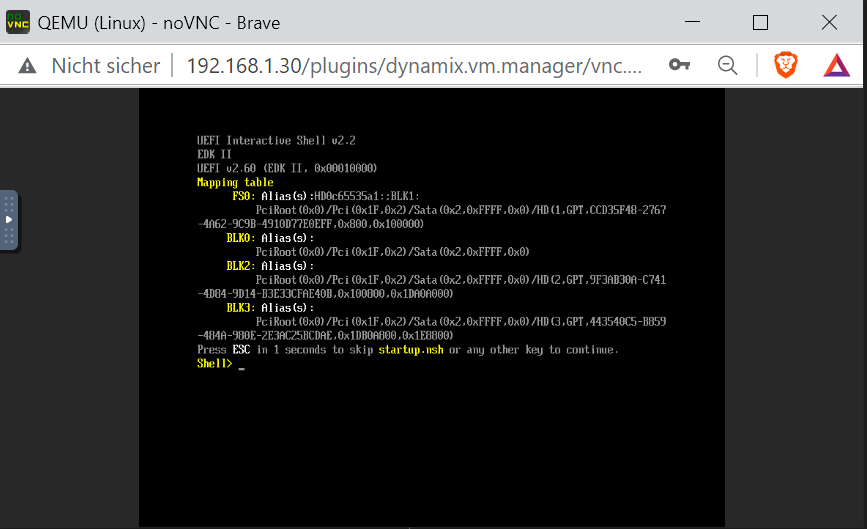
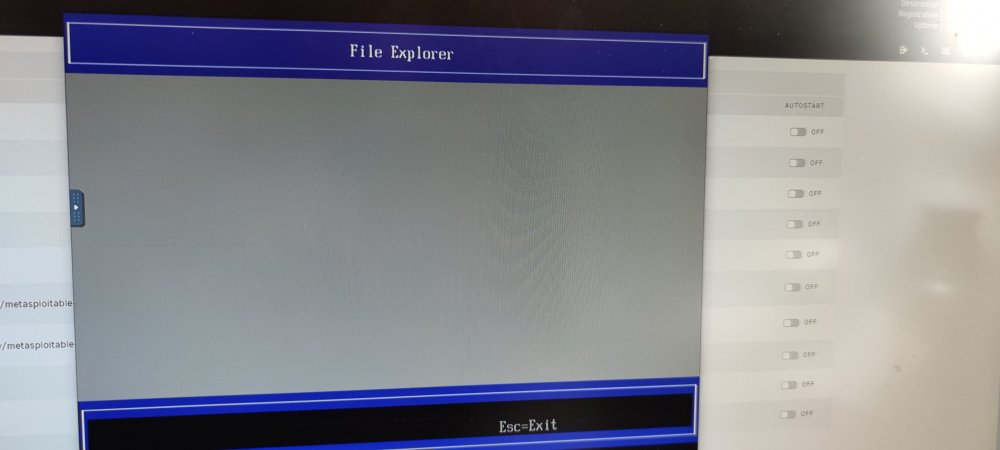
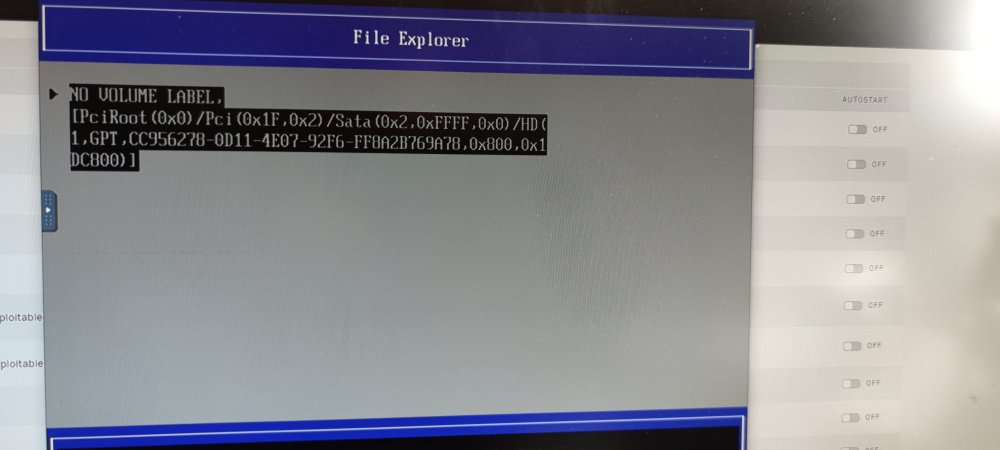
Thank you for the link. I haven't tried every single one of the suggested steps in the process, but I added the GRUB_ENABLE_CRYPTODISK=y and updated GRUB. No success so far. As for your question, I didn't get any error. It shows the same shell on startup and if I go into the BIOS and try to set up the boot-option with the efi-file it shows a blank screen after selecting the device: Again, when I boot into this system without unraid it works fine.
-
I tried it again with automated partitioning - same issue. No file system is showing up. Now I tried a normal installation again - worked perfectly fine*
-
I created them manually because efi and boot partition are too small when created automatically. If the old kernels are not deleted after an update, it can cause some problems I've heard. And resizing later can be difficult. I can retry the installation and see if it works with automated partitioning... I will report back
-
Maybe allow me to ask another question regarding this topic. After your help, I thought I set up a new installation with encryption and lvm. After setting up the partitions and installing the system, I went into the boot menu like before, but this time the .efi file did not show up. It did not show any file system at all. I only encrypted the root and the swap partitions, not the efi nor the boot partition. What did I do wrong?
-
Oh man, you are a lifesaver! After a few tries, it worked. I couldn't enter the bios via the VNC connection because I wasn't fast enough with the ESC button. So I had to plug in my keyboard directly into the server to get into the boot menu. From there I did as you said - created a new boot entry and chose the grub.efi file - enter a name for the new boot option (otherwise it wouldn't save) and moved the new option to the first position in the boot order. Thank you for helping me out. If I somehow can buy you a coffee, just pm me!
-
Thank you very much! I will try that and report back. Sorry for the noob question but what do you mean by "you have fs0 on hd"?
-
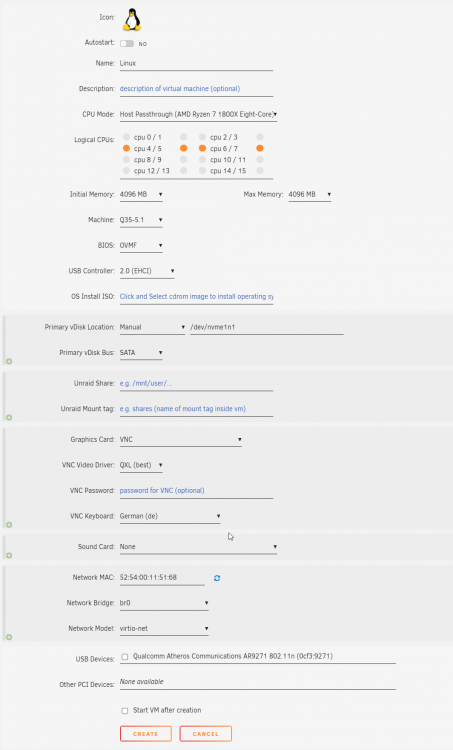
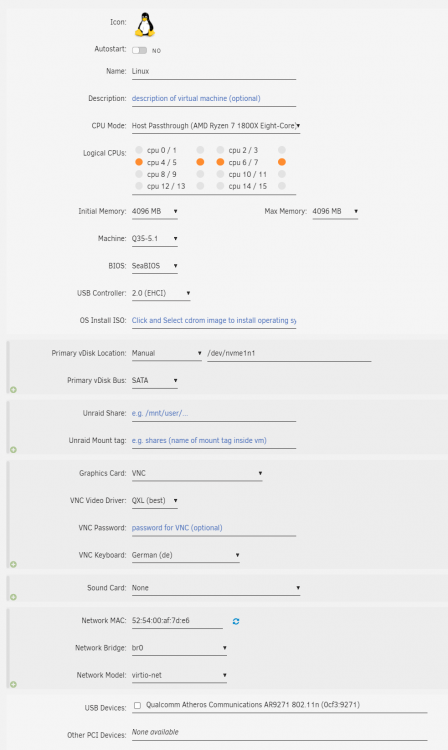
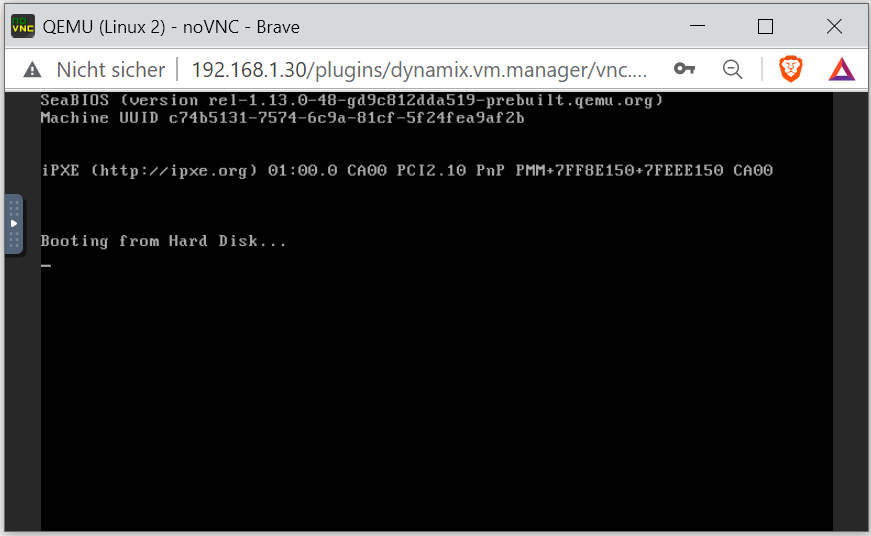
Hello everybody! I've been trying to get my Kali Linux installation running as a VM in Unraid. I have installed a basic installation on a NVME which boots on startup without any problems.(Without Unraid) But every time I try setting up a VM I get stuck with different issues depending on my settings. First setup: With these setting I get stuck here: And if I try the SeaBIOS I get stuck here: What am I doing wrong? I appreciate every help I can get. Thanks in advance peeps