tdatta
Members
-
Joined
-
Last visited
Everything posted by tdatta
-
Seems to have been resolved by using IP addresses instead of the server name. This was what was in common between the remote devices that were using VPN to join the LAN. Will reply if the issue occurs again.
-
Here is another interesting finding. I just tested a files transfer to my iphone over the air. The iphone was using wiregaurd to vpn into the home LAN. This uses the remote share mounted using smb credentials using the my files app on the phone,.This once again saturated the verizon link at about 200 Mb/s. Seems like the windows machines on the LAN dont want to play well with unraid, but play well with each other. For some reason the remote machines that are using vpn to join the LAN (iphone and windows 10 computer) can both saturate their link speeds when doing file transfers.
-
Ok will try, I assume that you mean a new unlicensed unraid trial on a new flash drive. Any thing that I need to keep in mind when pluggin this into the server hardware that has the currently configured drives and shares in it already?
-
I have tested it with another PC on the LAN which is windows 10 instead of 11. Same issue. Note that I am able to do high speed transfers between windows PCs on the LAN using SMB. Interestingly though, I tested with a remote windows 10 PC (wireguard vpn into LAN), and am getting 10 MB/s consistently which is the limit of the 100 Mb connection that this remote PC has.
-
I do, and I will try that, however I have no issues with things like plex that are reading off of the shares. Also as I mentioned earlier the other files transfer protocols seem to work.
-
Yes, same speeds for array or cache pools.
-
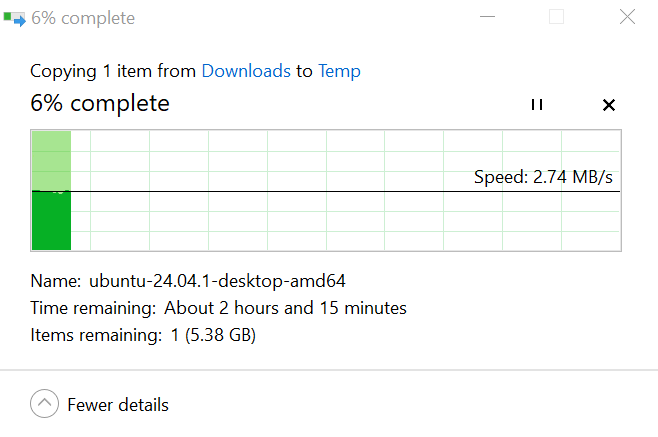
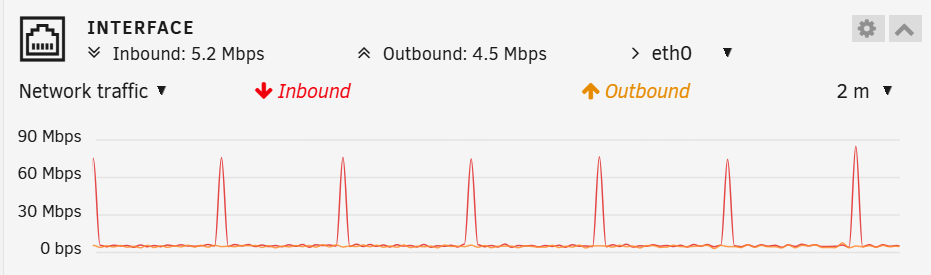
My SMB transfers have become unusable. I have a 10 gig network and the transfer speeds between my windows 11 PC and the unraid server shares are excruciatingly slow. I thought this was due to upgrading unraid (6.12.14) or upgrading from windows 10 to 11, but it seems that the problem holds even if I roll back unraid (6.12.11 manually) or I try to connect from other computers on the network that are running windows 10. I am pretty sure the problem is on the unraid side because I am easily able to saturate my connection to a synology nas which is also mapped using SMB. I can also transfer files between windows computers using SMB. I have tried a number of tips posted on the forums about security settings and credentials, but I dont think that is the issue. I have no problem seeing the shares, mapping them, or browsing them. The problem is when I try to initiate file transfers in either direction. One thing I noticed but which might be a red herring is that when I disabled my second 1gb NIC on the PC (kept the 10bg active) I could sometimes get full speed, but I cannot seem to replicate this anymore. I have been playing around with windows SMB settings including enabling SMB v1, disabling forced encryption, multichannel, etc. Pretty much everything I can think of, I even tried mapping an NFS share and the speed was also terrible. I am really at my wits end. Things were working great a week ago. Weirdly the network activity seems to come in bursts separated by about 20 seconds. Some other notes: 1. Iperf3 reports nearly 10gb connection. 2. Ftp connection between windows and unraid seems to max out at 100 MB/s. 3. Syncthing windows to docker on unraid works reasonably well at speeds around 350 MB/s. I have attached my diagnostics file if anyone can provide some insight. Thanks in advance. sherlock-diagnostics-20250105-2227.zip
-
Readings without UPS: 40-50W standard idle, (plex and wyze and windows VM with passthrough HDD and Blue Iris) 38-39W with dockers off but BI VM running (seems strange that docker would use so much power) 24-27W with docker and VM off. I guess this is "true" idle. Power supply is an EVGA from ~2018, probably 550-650 watts, I need to check to be sure. Fans are two Noctua NF-A8 @ ~1700 RPM (each max 1W), and one Noctua industrial NF-12 iPPC @ ~1500 RPM (max 3.6W) output from "uptime": 20:34:00 up 5:32 , 0 users, load average: 3.20 3.22, 3.00 You can see in my previous linked post what the c states are like with and without the VM. With the VM off it can spend close to ~50% in package C3 FYI- running powertop auto-tune saves about 10W at idle (the numbers above are after auto-tune)
-
CPU: 9900k underclocked to 2500 MHz Motherboard: E3C246D4U RAM: Corsair 4*16 GB Cache: 2x Samsung 500 GB M.2 NVME, one in a PCI card Array: 2 exos 18 TB and 2 WD purple 10 TB Additional drive: WD purple 10 TB passed through Always on dockers include plex and wyze bridge, there is also an always on windows VM running Blue Iris. With disks spun down (except for the one passed through to the VM) I am at 40-45 W at the plug (with a 1500 UPS in series). I have spent time using powertop and trying to get ASPM working, but these don't seem to get me past C3. more details here: ASPM for E3C246D4U I guess my power consumption is not bad for what the system is doing.
-
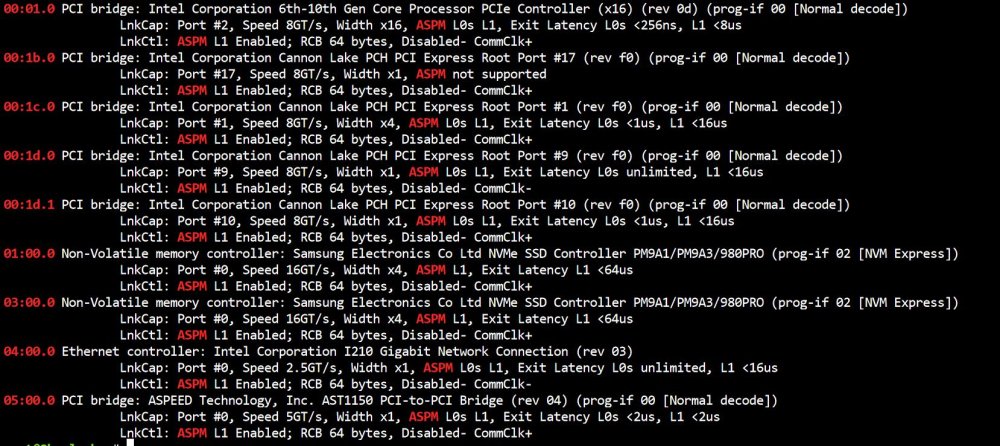
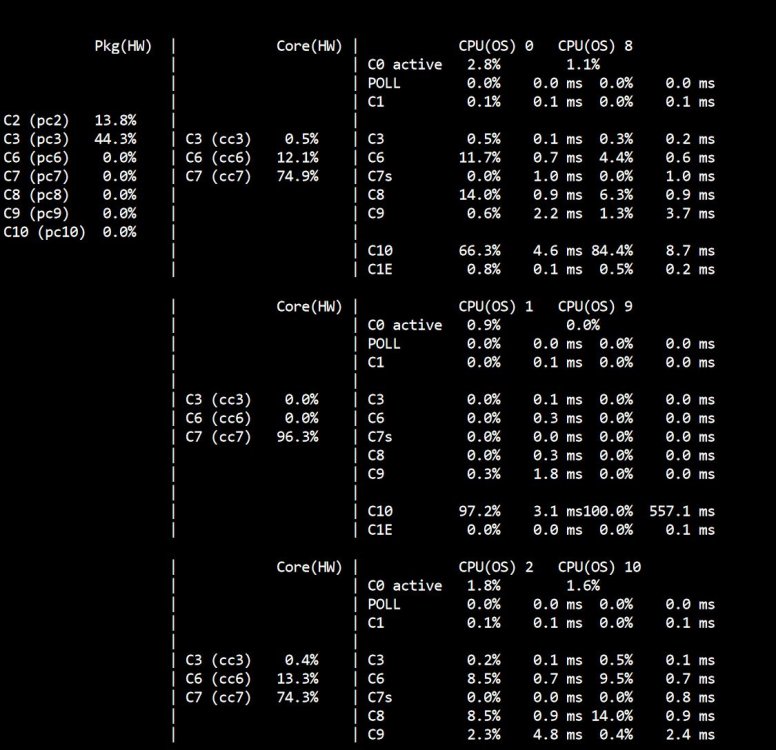
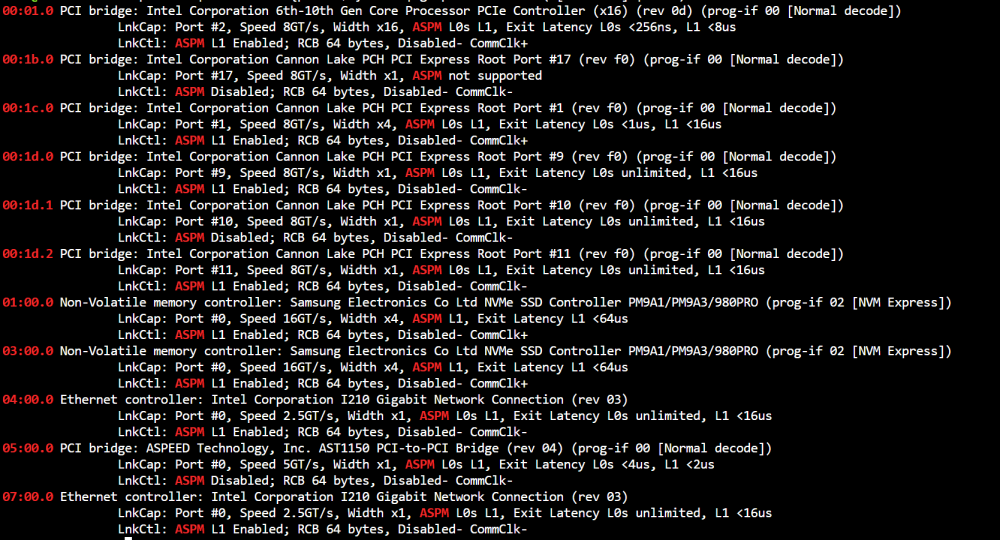
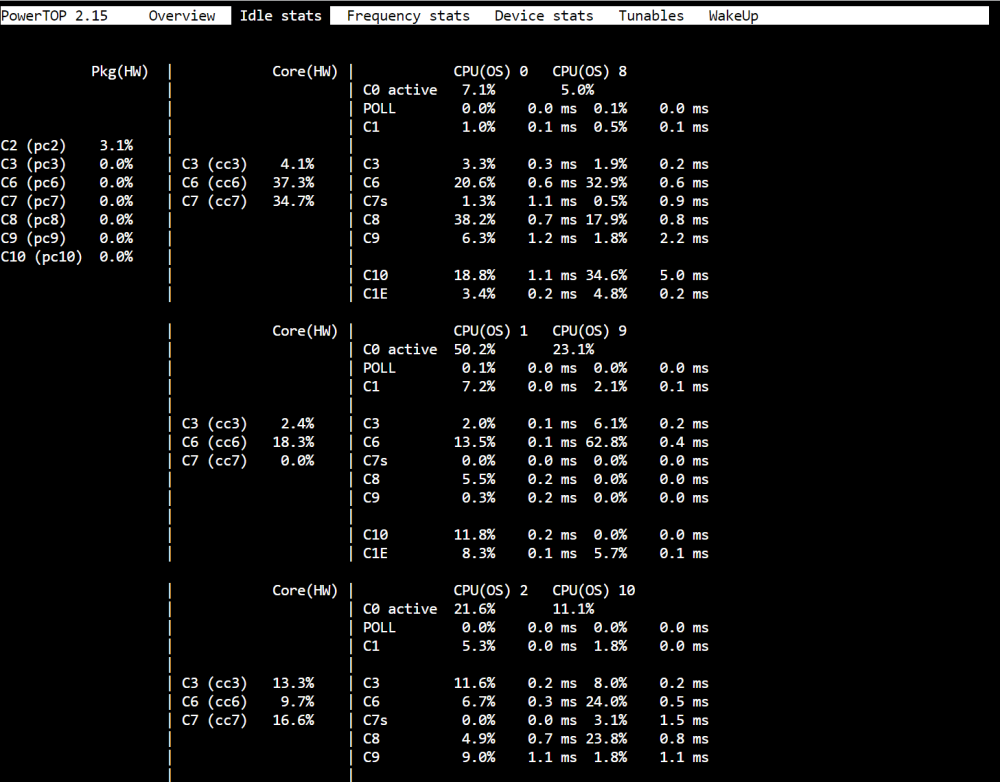
Ok, so I went through the bios and disabled a number of things. And then I forcibly set ASPM for all that had is disabled by setting the PCI link control registers manually. This yields the following output: Interestingly this "allowed" me to set L1 for a device which claims it doesnt support ASPM (port #17 above). Yet now when I go through powertop I still dont see any states above C3 for the package Any thoughts on this?
-
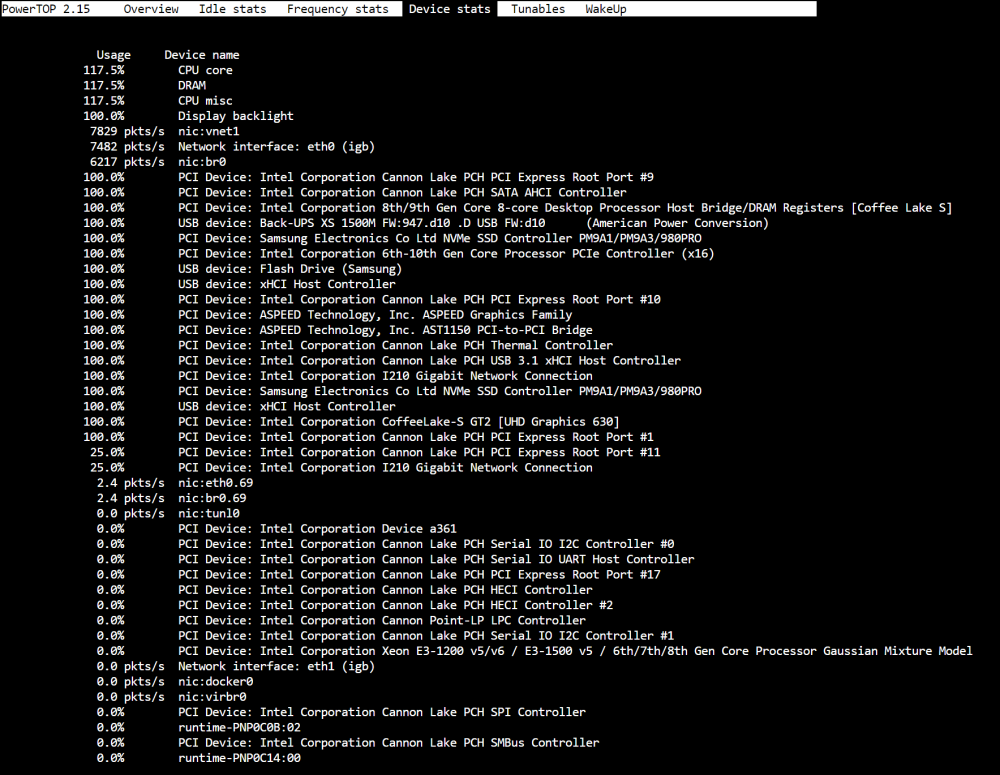
Im trying to get to higher c-states. I have spent some time going through the BIOS to enable ASPM on as many PCIE items as I can find. But I am struggling with addressing all of them. As you can see the ones with ASPM disabled are root ports 10 and 17 and also the AST1150 PCI-to-PCI bridge. In the BIOS port 10 has the same settings as the rest (ASPM enabled), and port 17 is delegated to USB/SATA and I have no control options. For the PCI bridge, I am unsure what settings to change. In general I enter the BIOS with ctrl+alt+f3, I wonder if this is complicating things by making too many options available. Powertop shows nothing higher that C3 for the package. Note that I have a Vm with blue iris running when this snapshot was taken. If that VM is not running the package C3 percentage can hit ~50%. and it also shows a number of devices at 100% Any assistance would be greatly appreciated.
-
Thank you I will read through what you linked.
-
update: I ran scrub. No longer any file system issues, but that particular VM wont boot. The windows recovery options do not work. the cache drives were in RAID 1. What is the point of that if they have issues like this?
-
I have two nvme ssd cache disks. One is in an M.2 slot on the motherboard, the other is in a PCIE adapter. They are in RAID 1. After installing some fans the system reports issues with one of the disks and I cannot start a particular VM, another one appears to work. The docker containers seem to run fine though. Some messages I am getting are: Jan 29 11:34:53 Sherlock kernel: BTRFS error (device nvme1n1p1): parent transid verify failed on 1138769920 wanted 196530 found 179974 Jan 29 11:34:57 Sherlock kernel: btrfs_print_data_csum_error: 997 callbacks suppressed Jan 29 11:34:57 Sherlock kernel: BTRFS warning (device nvme1n1p1): csum failed root 5 ino 305583 off 0 csum 0x710bae7d expected csum 0xc75ff09f mirror 2 Jan 29 11:34:57 Sherlock kernel: btrfs_dev_stat_print_on_error: 997 callbacks suppressed Jan 29 11:34:57 Sherlock kernel: BTRFS error (device nvme1n1p1): bdev /dev/nvme1n1p1 errs: wr 206546744, rd 3634341, flush 2878652, corrupt 12296835, gen 0 and similar. I have attached the diag, any help would be greatly appreciated. sherlock-diagnostics-20230129-1119.zip