SeRiusMe
Members
-
Joined
-
Last visited
Everything posted by SeRiusMe
-
Still container network is hanging after a while if attached to Bridge or Host. 🤷♀️
-
Same on me. But I have Adguard installed on my router machine. Listening on port 53 and I changed the routers DNS server to 53530. Adguard resolves to router and router to upstreams.
-
No, by now there's no interface with an empty gateway. DOCKER: IPv4 custom network on interface eth0: Subnet: 10.1.3.0/24 Gateway: 10.1.3.251 DHCP pool: not set IPv4 custom network on interface eth0.2: Subnet: 10.1.2.0/24 Gateway: 10.1.2.251 DHCP pool: not set IPv4 custom network on interface eth0.5: Subnet: 10.1.5.0/24 Gateway: 10.1.5.251 DHCP pool: not set UNRAID: # ifconfig docker0: flags=4099<UP,BROADCAST,MULTICAST> mtu 1500 inet 172.17.0.1 netmask 255.255.0.0 broadcast 172.17.255.255 ether REDACTED txqueuelen 0 (Ethernet) RX packets 4 bytes 168 (168.0 B) RX errors 0 dropped 0 overruns 0 frame 0 TX packets 4 bytes 268 (268.0 B) TX errors 0 dropped 0 overruns 0 carrier 0 collisions 0 eth0: flags=4163<UP,BROADCAST,RUNNING,MULTICAST> mtu 1500 inet 10.1.3.30 netmask 255.255.255.0 broadcast 0.0.0.0 ether REDACTED txqueuelen 1000 (Ethernet) RX packets 8061 bytes 1604692 (1.5 MiB) RX errors 0 dropped 0 overruns 0 frame 0 TX packets 6701 bytes 5185374 (4.9 MiB) TX errors 0 dropped 0 overruns 0 carrier 0 collisions 0 eth0.2: flags=4163<UP,BROADCAST,RUNNING,MULTICAST> mtu 1500 inet REDACTED netmask 255.255.255.0 broadcast 0.0.0.0 ether f4:52:14:c6:05:c2 txqueuelen 1000 (Ethernet) RX packets 2879 bytes 863444 (843.2 KiB) RX errors 0 dropped 0 overruns 0 frame 0 TX packets 2278 bytes 4808849 (4.5 MiB) TX errors 0 dropped 0 overruns 0 carrier 0 collisions 0 eth0.5: flags=4163<UP,BROADCAST,RUNNING,MULTICAST> mtu 1500 inet 10.1.5.30 netmask 255.255.255.0 broadcast 0.0.0.0 ether REDACTED txqueuelen 1000 (Ethernet) RX packets 3589 bytes 265242 (259.0 KiB) RX errors 0 dropped 0 overruns 0 frame 0 TX packets 690 bytes 74546 (72.7 KiB) TX errors 0 dropped 0 overruns 0 carrier 0 collisions 0
-
If I change the order for the DNS at the host and put the 10.1.5.251 at the top, The container at VLAN5 resolves DNS. BUT ALSO OTHER ONE IN VLAN2. (But it takes a while, I suppose because is trying 10.1.5.251 first? # ip addr 1: lo: <LOOPBACK,UP,LOWER_UP> mtu 65536 qdisc noqueue state UNKNOWN group default qlen 1000 link/loopback 00:00:00:00:00:00 brd 00:00:00:00:00:00 inet 127.0.0.1/8 scope host lo valid_lft forever preferred_lft forever 2: tunl0@NONE: <NOARP> mtu 1480 qdisc noop state DOWN group default qlen 1000 link/ipip 0.0.0.0 brd 0.0.0.0 45: eth0@if36: <BROADCAST,MULTICAST,UP,LOWER_UP> mtu 1500 qdisc noqueue state UP group default link/ether 02:42:0a:01:02:19 brd ff:ff:ff:ff:ff:ff link-netnsid 0 inet 10.1.2.25/24 brd 10.1.2.255 scope global eth0 valid_lft forever preferred_lft forever # nslookup google.com Server: 127.0.0.11 Address: 127.0.0.11#53 Non-authoritative answer: Name: google.com Address: 142.250.201.78 Name: google.com Address: 2a00:1450:4003:803::200e WTF??
-
RESOLUTION IN CONTAINER IN VLAN5 WORKS IF DNS OF VLAN5 IS FORCED INSTEAD OF THE DEFAULT (10.1.3.251) # nslookup google.com 10.1.5.251 Server: 10.1.5.251 Address: 10.1.5.251#53 Non-authoritative answer: Name: google.com Address: 142.250.201.78 Name: google.com Address: 2a00:1450:4003:803::200e The host DNS server doesn't work, and I guess the internal docker DNS is trying the same: # nslookup google.com 10.1.3.251 ;; communications error to 10.1.3.251#53: timed out ;; communications error to 10.1.3.251#53: timed out ;; communications error to 10.1.3.251#53: timed out ;; no servers could be reached # nslookup google.com 127.0.0.11 Server: 127.0.0.11 Address: 127.0.0.11#53 ** server can't find google.com: SERVFAIL Even if I add the other DNS servers to unraids network, it doesn't work: # UNRAID HOST # cat /etc/resolv.conf # Generated by rc.inet1 nameserver 10.1.3.251 nameserver 10.1.2.251 nameserver 10.1.5.251
-
Yes, even removing the docker configuration file from /boot and rebooting. # cat /boot/config/docker.cfg DOCKER_ENABLED="yes" DOCKER_IMAGE_FILE="/mnt/services/system/docker/docker.img" DOCKER_IMAGE_SIZE="20" DOCKER_APP_CONFIG_PATH="/mnt/services/appdata/" DOCKER_APP_UNRAID_PATH="" DOCKER_READMORE="yes" DOCKER_CUSTOM_NETWORKS="eth1 eth2 " <=== IF THOSE REFER TO HOST INTERFACES, THEY ARE DISABLED. ONLY ETH0 IS UP BUT I EDIT THE FILE AND AFTER DOCKER STARTS REVERTS TO THOSE VALUES. DOCKER_TIMEOUT="10" DOCKER_LOG_ROTATION="yes" DOCKER_LOG_SIZE="50m" DOCKER_LOG_FILES="1" DOCKER_AUTHORING_MODE="no" DOCKER_USER_NETWORKS="remove" Host routing table: # route -n Kernel IP routing table Destination Gateway Genmask Flags Metric Ref Use Iface 0.0.0.0 10.1.3.251 0.0.0.0 UG 1 0 0 eth0 0.0.0.0 10.1.2.251 0.0.0.0 UG 2 0 0 eth0.2 0.0.0.0 10.1.5.251 0.0.0.0 UG 3 0 0 eth0.5 10.1.2.0 0.0.0.0 255.255.255.0 U 1 0 0 eth0.2 10.1.3.0 0.0.0.0 255.255.255.0 U 1 0 0 eth0 10.1.5.0 0.0.0.0 255.255.255.0 U 1 0 0 eth0.5 172.17.0.0 0.0.0.0 255.255.0.0 U 0 0 0 docker0 Resolution in container in Bridge works: # dig google.com ; <<>> DiG 9.18.19-1~deb12u1-Debian <<>> google.com ;; global options: +cmd ;; Got answer: ;; ->>HEADER<<- opcode: QUERY, status: NOERROR, id: 53262 ;; flags: qr rd ra; QUERY: 1, ANSWER: 1, AUTHORITY: 0, ADDITIONAL: 1 ;; OPT PSEUDOSECTION: ; EDNS: version: 0, flags:; udp: 1232 ;; QUESTION SECTION: ;google.com. IN A ;; ANSWER SECTION: google.com. 300 IN A 142.250.201.78 ;; Query time: 23 msec ;; SERVER: 10.1.3.251#53(10.1.3.251) (UDP) ;; WHEN: Fri May 24 19:51:18 CEST 2024 ;; MSG SIZE rcvd: 55
-
Unfortunately deleting the docker image didn't work. 😢 But docker did create the missing routes: # route -n Kernel IP routing table Destination Gateway Genmask Flags Metric Ref Use Iface 0.0.0.0 10.1.3.251 0.0.0.0 UG 1 0 0 eth0 0.0.0.0 10.1.2.251 0.0.0.0 UG 2 0 0 eth0.2 0.0.0.0 10.1.5.251 0.0.0.0 UG 3 0 0 eth0.5 10.1.2.0 0.0.0.0 255.255.255.0 U 0 0 0 vhost0.2 10.1.2.0 0.0.0.0 255.255.255.0 U 1 0 0 eth0.2 10.1.3.0 0.0.0.0 255.255.255.0 U 0 0 0 vhost0 10.1.3.0 0.0.0.0 255.255.255.0 U 1 0 0 eth0 10.1.5.0 0.0.0.0 255.255.255.0 U 0 0 0 vhost0.5 10.1.5.0 0.0.0.0 255.255.255.0 U 1 0 0 eth0.5 172.17.0.0 0.0.0.0 255.255.0.0 U 0 0 0 docker0
-
I've seen that post, but I can't understand what is being said there. BTW, I've seen the route table you posted there and I'm missing several routes that are there, for example docker0. Can you please explain me how did the other guy solved it? Now, I can't make changes on network. Because docker is stopped, but it's still saying that has to be stopped for changes:

-
Restarting docker brings this two errors, that I found online tht are related to trying to create routes and failing because they exist. # /etc/rc.d/rc.docker restart stopping dockerd ... ... Waiting to die. starting dockerd ... RTNETLINK answers: File exists RTNETLINK answers: File exists
-
I found a container for network diagnosing: # dig google.com ; <<>> DiG 9.18.19-1~deb12u1-Debian <<>> google.com ;; global options: +cmd ;; Got answer: ;; ->>HEADER<<- opcode: QUERY, status: SERVFAIL, id: 47311 ;; flags: qr rd; QUERY: 1, ANSWER: 0, AUTHORITY: 0, ADDITIONAL: 0 ;; WARNING: recursion requested but not available ;; QUESTION SECTION: ;google.com. IN A ;; Query time: 4001 msec ;; SERVER: 127.0.0.11#53(127.0.0.11) (UDP) ;; WHEN: Fri May 24 13:56:00 CEST 2024 ;; MSG SIZE rcvd: 28 # ping www.google.com ping: www.google.com: Temporary failure in name resolution # host www.google.com Host www.google.com not found: 2(SERVFAIL) From one container to other works, but not to host: # nslookup d10ef2ae9349 Server: 127.0.0.11 Address: 127.0.0.11#53 Non-authoritative answer: Name: d10ef2ae9349 Address: 10.1.5.28 # nslookup deathshadow Server: 127.0.0.11 Address: 127.0.0.11#53 ** server can't find deathshadow: SERVFAIL Seems like dockers DNS gateway is not working??
-
My router listens for DNS queries on all interfaces. LAN, IOT and SYS. I don't have any blocked DNS entries on my router, but anyways I've created a firewall rule allowing access for DNS address in 10.1.3.xx segment and the problem still persists. This is a traceroute inside a container on vlan 5 to a computer in vlan 2: # traceroute 10.1.2.100 traceroute to 10.1.2.100 (10.1.2.100), 30 hops max, 46 byte packets 1 10.1.5.251 (10.1.5.251) 0.091 ms 0.121 ms 0.072 ms 2 10.1.2.100 (10.1.2.100) 1.211 ms 1.347 ms 1.230 ms I can't find any way of inspecting a DNS request inside any of may containers, but all have in resolv.conf 127.0.0.11 as DNS resolver and fails. Yes, it seems a docker configuration problem with the DNS resolver. If I could "see" what requests are really coming from the containers... Now I'm trying with bridging active. I found in the release notes of unraid (https://docs.unraid.net/unraid-os/release-notes/6.12.4/#fix-for-macvlan-call-traces) a writeup talking about a problem and trying it, but doesn't change anything. Perhaps you are right when you say that perhaps the docker networking configuration is not reconfiguring and it's frozen at some point. I don't know, but I'm not advancing anything. EDIT: There isn't any problem that I know it the routing at the router. My computer, for example has total access to the devices in other vlans, and devices in all vlans can resolve DNS queries. LXC containers on a Proxmox server in ITO segment can resolve DNS. Even the Unraid Host can perfectly resolve. Something is wrong between the host and the dockers. And if the containers use the default bridge (dropouts). If I put a container manually in the 10.1.3.xx net it runs without dropouts (with no DNS): I also checks the DHCP in case there where conflicts, but no.

-
You mean that set the Id to an unused/fake vlan so traffic doesn't go anywhere? I think I could do the same by changing vlan 3 on that port from untagged to tagged. (It's already tagged) But I would want to take that IP configuration out there. I think something messed as I started the server in just one network, as every other appliance and evolved to vlans. EDIT: I was missing permissions for the proxmox server in 10.1.5.xx for mounting backups share. As soon as I added them, I accessed properly. So the only server that fails at mounting and accessing shares is at 10.1.3.xx segment. That is the configuration that I want to fix in the main section of the interface. I bet that the server is trying to serve all the DNS requests through the 10.1.3.xx gateway/route, and it's failing. (It must be the default route)
-
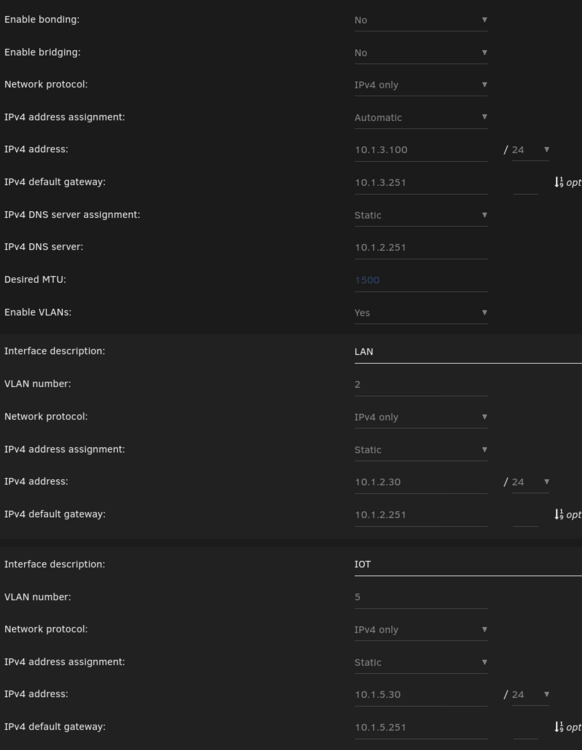
Thanks @Vr2Io for all your help. My current docker configuration is: And I can't change the empty gateway in eth0.2. And you can see that it's not creating a custom network for eth0. BTW I've managed to rearrage the interfaces. The mellanox now it's the eth0 and the two RJ45 are eth1 and 2. I've only left attached the link to eth0 (10Gb). Network is stable without disconnects. Still I don't have DNS resolution inside dockers. Krusader on eth0.2 hangs here: And other container on eth0.5 fails to resolve: The containers are present on the network, and for example, Home Assistant that s on another machine records to influxdb correctly. Samba shares work as expected, but NFS shares do not. I'm trying to mount a backup share on my proxmox server and it can't communicate with the nfs server. My computer can mount NFS shares and it's on the vlan 2. I think the problem is related to being unable to reset the main IP configuration of the interface and to raise an address in 10.1.3.xx segment as vlan: Proxmox let's you leave the parent interface unconfigured, and configure the bridge:



-
With the graph I meant in the 3th image I posted of the switch configuration, the picture of the switch, the top or the bottom ones. No, no... I don't have tree APs for covering vlans 😄 I have 3 but for covering all the space. Each AP can broadcast different SSIDs and I have one dedicated for IOT. That's what I do. One AP in the basement, one in the first floor and other on the 2nd. Solid stone house, is what it requires. Nope. Trunk is an interface that processes frames from different Vlans: https://www.geeksforgeeks.org/access-trunk-ports/ LAGG/Bond is the link aggregation that can be for redundancy online/offline or for bandwidth. Yes, of today there are prtocols that allow bandwidth aggregation. https://docs.netgate.com/pfsense/en/latest/interfaces/lagg.html So sad. Thanks for your help. For what is worth, I didn't mean to offend anyone. And also english is not my native language. Perhaps I'm tired and my eyes hurt. I all started with a failing drive in my NAS and the system I programmed failed to send me a warning. Repair, test a new system+migrate... Plus the paid workload...
-
I could have a problem here: unraid:~# route -n Kernel IP routing table Destination Gateway Genmask Flags Metric Ref Use Iface 0.0.0.0 10.1.5.251 0.0.0.0 UG 0 0 0 eth2.5 10.1.2.0 0.0.0.0 255.255.255.0 U 1 0 0 eth2.2 10.1.3.0 0.0.0.0 255.255.255.0 U 1 0 0 eth0 10.1.5.0 0.0.0.0 255.255.255.0 U 1 0 0 eth2.5 172.17.0.0 0.0.0.0 255.255.0.0 U 0 0 0 docker0 I think you're referring to LAGG/Bond here.
-
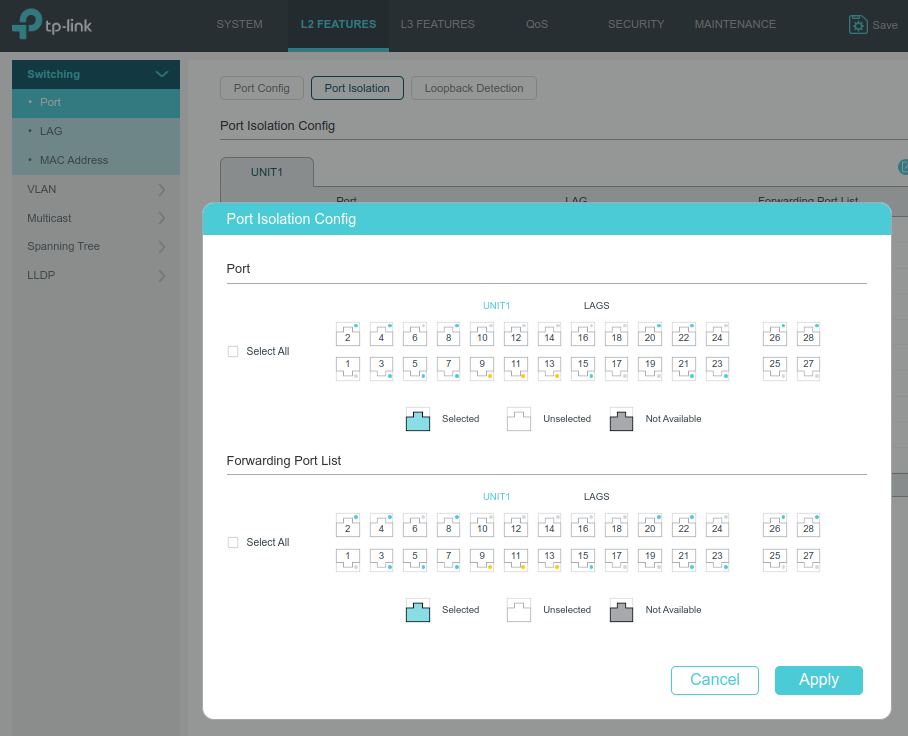
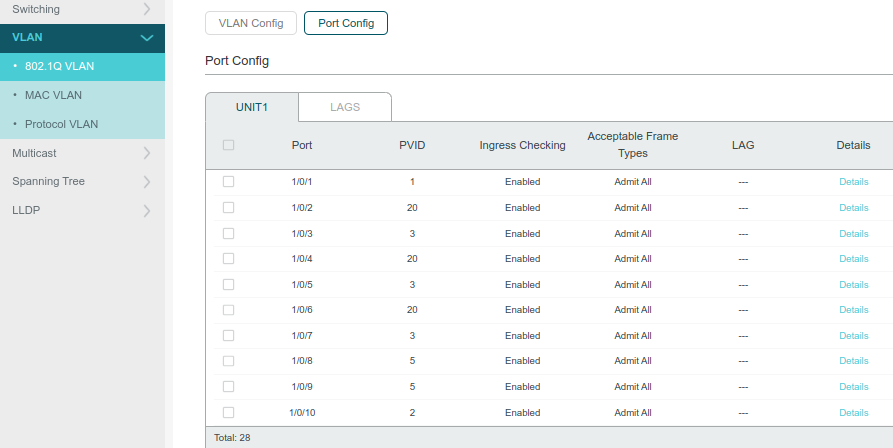
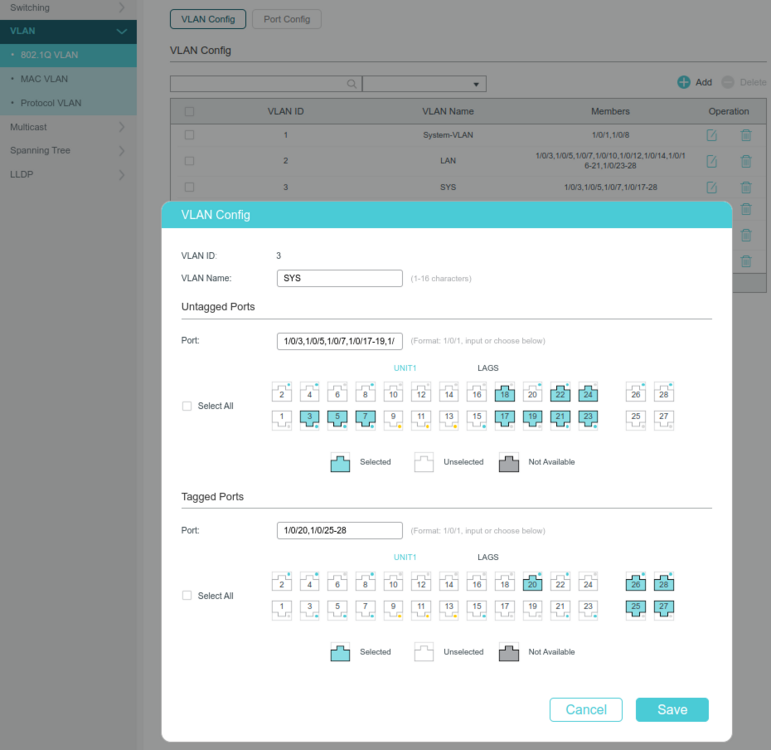
That's so interesting. I thought that this intermittent disconnects sound like a Loopback problem. I see your proposal, but changing to that would require me to buy several NICs the servers and give them each vlan through it's own NIC, isn't it. I don't understand your pictures, as I never fiddled with microtik, but those seem better to configure than mines: (I think you mean L2 port isolation) As for 802.1Q VLAN configuration, first every port has the id of an VLAN, that's mandatory: And then you configure each VLAN. Untagged ports are the ports with just a "normal client" connected, in the way MAM explains, and tagged are the trunks. The ports on the lower graph (tagged) will be also tagged in other VLANS, but the ones above (access ports) can only be untagged in one. F.Ex 3, 5 and 7 are the ports for the APs. They are tagged also in the other vlans they serve through dedicated SSIDs. If that wasn't configured that way IOT devices could never use wifi unless I had a physical AP for IOT. I think I guess where must be the problem. The eth2 interface LACKS configuration in the base "interface". And it doesn't have VLAN 3 configured. I bet that unraid is sending some packets untagged though it and my router is giving that interface an address in the VLAN 3 segment. My previous sever had one there and it was the same ip that eth0 currently uses. Summarizing: The mellanox MAC previously had the 10.1.3.20 address. So could be a problem with DHCP, ARP or ROUTES. What do you think?
-
Yes, It's the same for me. But if you configure a Trunk port, vlans must be tagged. Seems like you don't use trunk ports. I do. That's the only difference. Also a D-Link was my previous switch. If you change it for a TP-Link in the future, prepare for hair pulling trying to replicate your config. There's something totally inverse vlans that I can't remember, but I almost went crazy. I've also noticed that you have bridging enabled. Could that affect to docker macvlan? 🤔 Don't get me wrong, but... on the lack of gateway on your 2nd interface... could simply be that you have all your cameras "pointing" to your management device. I don't know, perhaps it's unraid special with interfaces configuration, but how debian works is that creates a route for each interface such that request from a segment goes to the interface that has the gateway in the same segment. I see nothing strange on it. If the OS needs to communicate with 10.1.2.10 sends it through eth2.2 to 10.1.2.251. I currently have my 2nd Proxmox sever offline, and the 3th is only on IOT lan... let me turn it on.
-
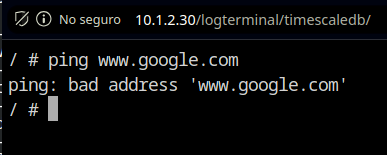
With the configuration posted above, but with vlan disabled at eth0, I'm at a somewhat working state. But the interface eth0 is losing communication periodically. The eth2 interface is rock solid, and I can attach docker containers to each vlan and they're accesible. But they don't resolve DNS queries. I think it's a problem of dockers configuration from unraid side. But as it works from an image, I don't know how to fine-tune docker configuration for macvlan. I don't know if this solution is prepared to do virtualization if it can't successfully manage networking. Perhaps I have something wrong. I've tried to modify the containers DNS configuration entry with Portainer, but every time a container wakes up, it seems like something is overriding that configuration and a container in a macvlan eth2.5 ends with a /etc/resolv.conf file that says 127.0.0.11. And that's wrong. I don't know what else to try. Is there anyone running containers on several vlans?
-
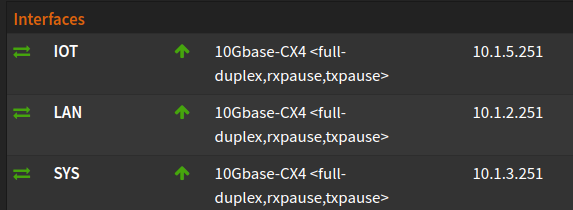
Perhaps I'm not completely understanding you, but I think that's incorrect. Vlans are isolated (if you want) network segments. You can't specify a gateway from another network into one interface. My switch does not offer inter-vlan routing, so it's the router who does the task. I think you mean that the configuration for an interface in the IOT vlan (5) should be configured this way: fixed ip: 10.1.5.100 segment 255.255.255.0 gateway: 10.1.2.1 <== the LAN gteway? Perhaps SYS gateway? There will be no communication to this gateway, if the GUI allows for that. XXsenses have different gateways for each interface. We are talking about network gateways here, not internet/wan gateways, right? My network topology has independent switch, router, and internet gateway+modem. My router has only one gateway, but could be configured with several for redundancy, for example.
-
No, no. I did in that way. I have some ports configured as Trunk, other as IOT, LAN, etc... What it does different with my previous router is how is configured. I was counter intuitive to me.
-
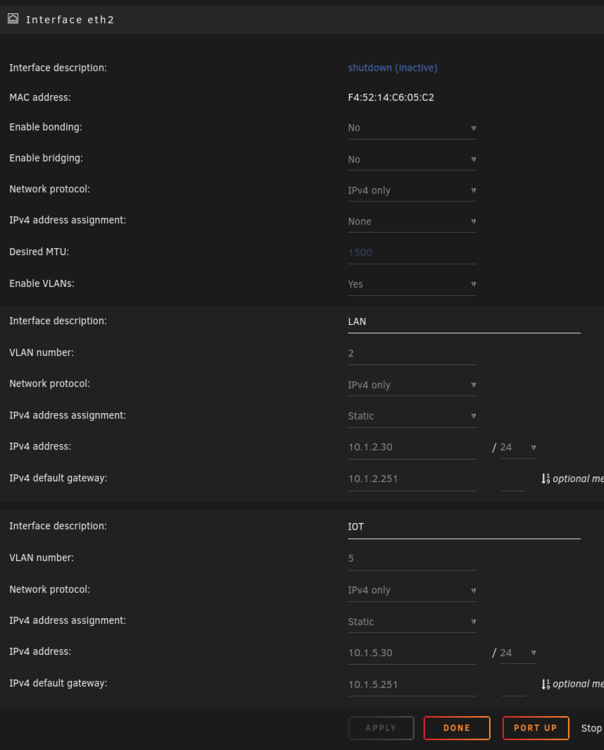
Yesterday late, I've been trying what you suggested. I deleted network.cfg from the config folder and changed network-rules.cfg for the mellanox to be the first interface, but the server never had communication upon reboot. I think there must be other net configuration file interfering that it's not in the boot folder. The 10gbe cable is attached to a port with no restrictions, so it was the RJ45 one, but after a while, I changed that last port on the switch to only be vlan3 (mgmt). The 10Gb link: vlan id 3, Tagged for 2, 3, 5. The RJ45_1 link: vlan id 3, Untagged for 3. I'm a developer, not a networking technician. But when I bought this router it was different to the one I had before. For a port to be a "client" one, you must give it the id of the target lan and untag it for that vlan. That means that will only accept untagged frames, (all, because the device is not configured for vlans) and will be tagged for the vlan. Then a trunk must be given the id of the main/default vlan, and then tag all the vlans that will accept. It will accept only tagged frames. I'm afraid that it is not possible to disable inter-vlan routing at my router. My systems would stop working. The main problem is that I think that my NAS should be at the LAN. Because I understand that the users storage function is more important than media storage. But that media storage must be served to the media devices, the TV for example, the services and players that organize and serve the content, all of them are on the IOT vlan. And I want a good bandwidth for my storage, but is also needed for the media. Now, I have the interfaces configured as: Interface eth0 Interface description: (RJ45 1GB Untagged 3) MAC address: REDACTED Enable bonding: No Enable bridging: No Network protocol: IPv4 only IPv4 address assignment: Static IPv4 address: 10.1.3.20/24 IPv4 default gateway:10.1.3.251 IPv4 DNS server assignment: Static IPv4 DNS server: 10.1.3.251 Enable VLANs: Yes Interface eth1: Shutdown (Inactive) Interface eth2 Interface description: (Mellanox 10Gb DAC Trunk) MAC address: REDACTED Enable bonding: No Enable bridging: No Network protocol: IPv4 only IPv4 address assignment: None Enable VLANs: Yes Interface description: LAN VLAN number: 2 Network protocol: IPv4 only IPv4 address assignment: Static IPv4 address: 10.1.2.30/24 IPv4 default gateway: 10.1.2.251 Interface description: IOT VLAN number: 5 Network protocol: IPv4 only IPv4 address assignment: Static IPv4 address: 10.1.5.30/24 IPv4 default gateway: 10.1.5.251 The problems I see: Vlan is active for eth0, but I can't remove the main Ip configuration. I know that this combination is wrong and is the cause that I don't have communication on this interface. But the other works without interruptions. If I configure a container to be linked to a vlan on eth2, the container loses communication. This doesn't work. Can anyone help me configuring the network, so I can have containers on IOT and LAN and I serve files on both LAN and IOT? I had that setup on a plain debian, two interfaces, one on each valn, and it routed correctly the requests.

-
Excuse me @MAM59. How I must do the network change you told me first? As soon as I change the rules, it asks for reboot. And then it loses connection. I had to psysically reach the server and alter the rules config file to revert the change and reboot.
-
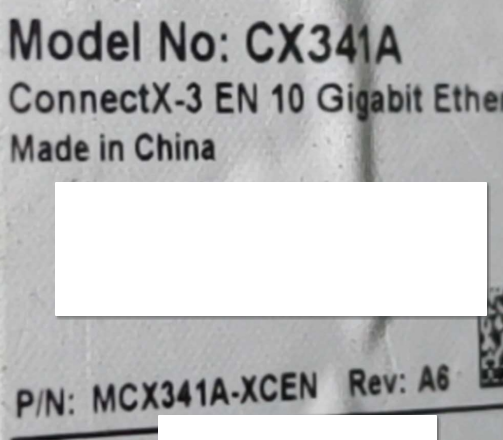
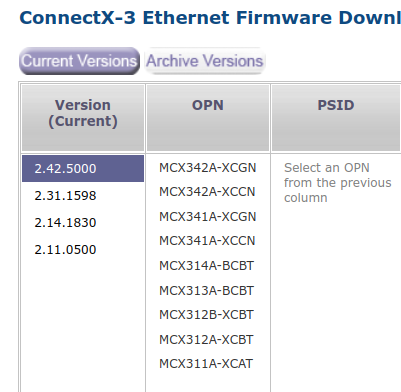
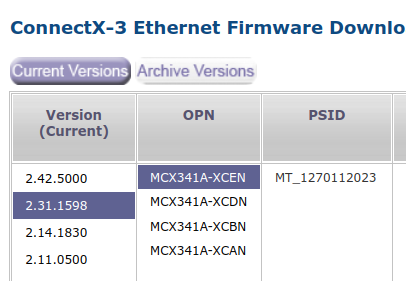
I'm afraid that there's no newer firmware for my card. In fact, it appears that I have one newer than the manufacturer 🫣
-
Thank you very much @MAM59, that's a good amount of info. I'll proceed by steps. I'm still doing the data transfer from the disks and can't afford a dropout. I've installed the plugin and that's the output: Mellanox Network Card: Temperature: 62 °C Info: FW Version: 2.31.1602 FW Release Date: 9.11.2014 Product Version: 02.31.16.02 Rom Info: type=PXE version=3.4.225 proto=ETH type=UEFI version=10.3.39 proto=ETH Device ID: 4099 Description: Node Port1 Port2 Sys image GUIDs: ffffffffffffffff ffffffffffffffff ffffffffffffffff ffffffffffffffff MACs: REDACTED REDACTED VSD: PSID: MT_1270112023 Roger! I'll do. Anyway it sound strange to me. That will be the first server that I manage that doesn't have a "default" management interface as the first. The mellanox is connected through a DAC coax cable. Never had a problem with it. This server was previously configured as a Proxmox node, and I simply tried to replicate the configuration. I only have 3 VLANs + the WAN one. Now, I'm not completely understanding what you're saying about the VLANs. Talking of this one server, the NAS services should be accessible to the LAN (2). But all my IoT services run in an isolated VLAN (5) that includes Plex/Emby that I'll be running on this server. So next I'll be trying to bind the containers to their respective VLAN. I'm currently installing the containers and importing their previous data (influx, timescale...) while the data copies on the array. I have an opnsense router implemented. Just migrated from pfsense as recent updates broke my installation and I got tired. That router manages all the inter-vlan and wan isolation. Also I have two more servers with Proxmox. What do you mean with reconsidering the VLANs? Is that Unraid can't provide shares for users on the LAN and running containers attached to the IoT vlan? That's strange. Do Downloading users have all them on their LAN without isolation?
-
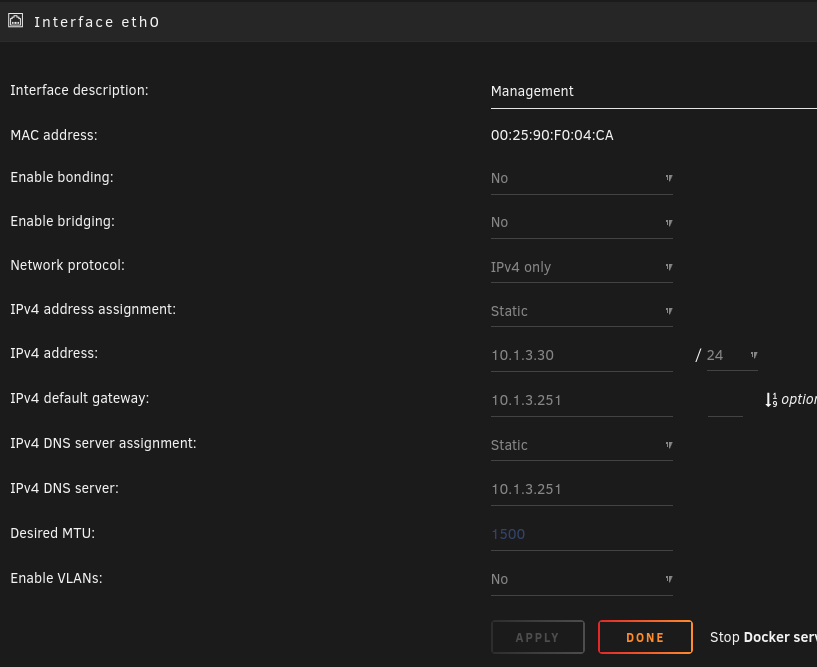
Hi, I'm new to unraid. Trying to migrate from a plain debian server I had raised myself. I'm having problems with the network configuration. I hope someone can give me a hand. The server, apart from the dedicated IPMI interface has two RJ45 adapters (eth0, eth1) and I did put a 10GBe mlx_4 PCIE card (eth2) on it. It was already in use before, in the previous system in the desired configuration. My intention is running the following configuration: eth0 port as a management network at vlan 3. It is connected to an untagged port at id 3. eth2 connected to a trunk switch port configured (tagged) for vlans 2 and 5. (untagged or main vlan for this port is 3) I have configured the following settings: As you can see, I have to leave the eth2 interface disabled, because when it is online, all network connections reset after some seconds. So if I access the Krusader container GUI, it's frozen after some seconds. If I establish a SSH session, it's closed after some seconds. 1-2 minutes aprox. What's the problem?