keepitshut
Members
-
Joined
-
Last visited
Everything posted by keepitshut
-
2018-03-03 19:41:49.812+0000: starting up libvirt version: 3.8.0, qemu version: 2.10.2, hostname: jx LC_ALL=C PATH=/bin:/sbin:/usr/bin:/usr/sbin HOME=/ QEMU_AUDIO_DRV=none /usr/local/sbin/qemu -name guest=Ubuntu,debug-threads=on -S -object secret,id=masterKey0,format=raw,file=/var/lib/libvirt/qemu/domain-6-Ubuntu/master-key.aes -machine pc-q35-2.10,accel=kvm,usb=off,dump-guest-core=off,mem-merge=off -cpu host -drive file=/usr/share/qemu/ovmf-x64/OVMF_CODE-pure-efi.fd,if=pflash,format=raw,unit=0,readonly=on -drive file=/etc/libvirt/qemu/nvram/a054925e-26c0-f812-dbd9-8d677594237f_VARS-pure-efi.fd,if=pflash,format=raw,unit=1 -m 2560 -realtime mlock=off -smp 1,sockets=1,cores=1,threads=1 -uuid a054925e-26c0-f812-dbd9-8d677594237f -no-user-config -nodefaults -chardev socket,id=charmonitor,path=/var/lib/libvirt/qemu/domain-6-Ubuntu/monitor.sock,server,nowait -mon chardev=charmonitor,id=monitor,mode=control -rtc base=utc,driftfix=slew -global kvm-pit.lost_tick_policy=delay -no-hpet -no-shutdown -boot strict=on -device pcie-root-port,port=0x10,chassis=1,id=pci.1,bus=pcie.0,multifunata0-0-0,id=sata0-0-0,bootindex=2 -netdev tap,fd=26,id=hostnet0,vhost=on,vhostfd=28 -device virtio-net-pci,netdev=hostnet0,id=net0,mac=52:54:00:54:19:45,bus=pci.1,addr=0x0 -chardev pty,id=charserial0 -device isa-serial,chardev=charserial0,id=serial0 -chardev socket,id=charchannel0,path=/var/lib/libvirt/qemu/channel/target/domain-6-Ubuntu/org.qemu.guest_agent.0,server,nowait -device virtserialport,bus=virtio-serial0.0,nr=1,chardev=charchannel0,id=channel0,name=org.qemu.guest_agent.0 -device usb-tablet,id=input0,bus=usb.0,port=1 -vnc 0.0.0.0:0,websocket=5700,password -k en-us -device qxl-vga,id=video0,ram_size=67108864,vram_size=67108864,vram64_size_mb=0,vgamem_mb=16,max_outputs=1,bus=pcie.0,addr=0x1 -device virtio-balloon-pci,id=balloon0,bus=pci.4,addr=0x0 -msg timestamp=on 2018-03-03 19:41:49.812+0000: Domain id=6 is tainted: high-privileges 2018-03-03 19:41:49.812+0000: Domain id=6 is tainted: host-cpu 2018-03-03T19:41:49.869747Z qemu-system-x86_64: -chardev pty,id=charserial0: char device redirected to /dev/pts/0 (label charserial0) These are the logs. I don't see anything out of the ordinary though
-
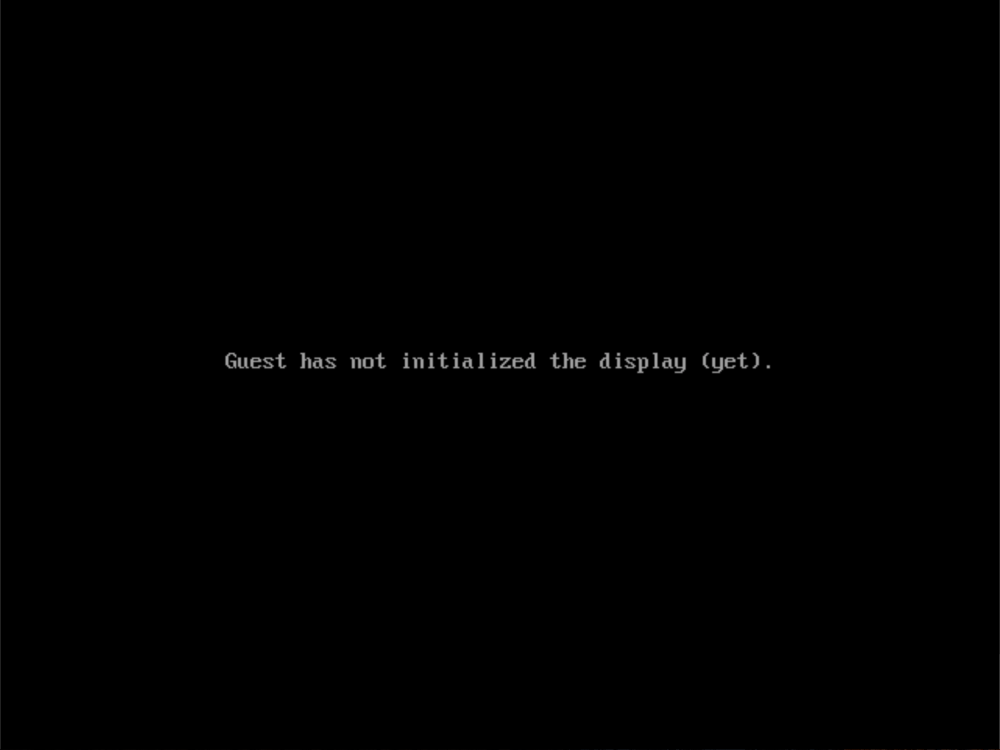
Hi everyone, I have been trying to setup a Ubuntu server install as a VM. After creating the VM and launching the browser VNC, all I get is a black screen with "Guest has not initialised the display (yet)". HVM is enabled, but my hardware does not support IOMMU. Any idea whats causing this? Using Unraid 6.4.1 and Ubuntu Server 16.04 Thank you!
-
Are there any instructions to ensure a successful migration from the old docker container? Any specific things we should look out for when transferring the files? Thanks!
-
By the way, anyone getting such an error when attempting to load privoxy in the browser? Invalid header received from client.
-
No security risk at all, intact it could be argued that having no port forward at all is more secure, it just generally means lower speeds. Sent from my SM-G900F using Tapatalk Funny how I get better speeds without port forwarding. Guess the impact of geographical location plays a bigger role. Thanks for the reply and the awesome docker mate
-
Hi I was just wondering is it safe to use a server that does not enable port forwarding for PIA? I am able to get better speeds using a local/closer-to-home server, though it does not support port forwarding. However, does this pose some form of security-issue or a danger of leaking my IP? Thanks to anyone who is able to help
-
Hi guys, trying to use this nginx docker as a reverse proxy for pydio. I can't seem to get sharing to work though, I keep getting 404ed and this is in my error log: "Primary script unknown" while reading response header from upstream, client: x.x.x.x, server: xxx, request: "POST /pydio/index.php? HTTP/1.1", upstream: "fastcgi://127.0.0.1:9000", host: "xxx", referrer: "https://xxx/pydio/settings/" My nginx config: location /pydio/ { proxy_pass https://192.168.0.101:444/; location ~ \.php$ { fastcgi_split_path_info ^(.+\.php)(/.+)$; # With php5-cgi alone: fastcgi_pass 127.0.0.1:9000; # With php5-fpm: #fastcgi_pass unix:/var/run/php5-fpm.sock; fastcgi_index index.php; include /etc/nginx/fastcgi_params; } } Any help would be appreciated. I suspect its something to do with the php and cgi thing, but I have no idea how to solve it
-
hey man, i figured out the problem for mine. Mine was because my assets were being loaded over normal http and thus was being blocked by the browser. Not sure if it is the same for you, but should be worth checking out.
-
Hi can I just check is there any reason why my nginx server has issues with serving up css files? I am trying to serve static sites generated by Hugo. I have an apache server that is behind nginx, and nginx is used as a reverse proxy. When I visit apache directly, the site displays correctly. But when I attempt to access it through nginx however, the site comes out completely unstyled. I tested the .css links inside the page's source and there are no issues, as in I am able to see the css directly. Its just for some reason the css does not render out. For the avoidance of doubt, I mainly use this nginx server just as a reverse proxy and for ssl encryption. This is the config i have for nginx: server { server_name xxx.me www.xxx.me; listen 443 ssl; root /config/www; index index.html index.htm index.php; ### Set Certificates ### ssl_certificate /certs/live/junxuan.me/fullchain.pem; ssl_certificate_key /certs/live/junxuan.me/privkey.pem; ### Add Diffie–Hellman key exchange ### ssl_dhparam /etc/ssl/certs/dhparam.pem; ### Disable SSL by enforcing TLS ### ssl_protocols TLSv1 TLSv1.1 TLSv1.2; ### Add some ciphers and reject weaker ones ### ssl_ciphers "EECDH+AESGCM:EDH+AESGCM:ECDHE-RSA-AES128-GCM-SHA256:AES256+EECDH:DHE-RSA-AES128-GCM-SHA256:AES256+EDH:ECDHE-RSA-AES256-GCM-SHA384:DHE-RSA-AES256-GCM-SHA384:ECDHE-RSA-AES256-SHA384:ECDHE-RSA-AES128-SHA256:ECDHE-RSA-AES256-SHA:ECDHE-RSA-AES128-SHA:DHE-RSA-AES256-SHA256:DHE-RSA-AES128-SHA256:DHE-RSA-AES256-SHA:DHE-RSA-AES128-SHA:ECDHE-RSA-DES-CBC3-SHA:EDH-RSA-DES-CBC3-SHA:AES256-GCM-SHA384:AES128-GCM-SHA256:AES256-SHA256:AES128-SHA256:AES256-SHA:AES128-SHA:DES-CBC3-SHA:HIGH:!aNULL:!eNULL:!EXPORT:!DES:!MD5:!PSK:!RC4"; ssl_prefer_server_ciphers on; ssl_session_cache shared:SSL:10m; ### Add HTTP Strict Transport Security ### add_header Strict-Transport-Security "max-age=63072000; includeSubdomains; preload"; add_header Front-End-Https on; ###Other Settings ### client_max_body_size 0m; location / { ### Proxy Pass Info ### proxy_pass http://192.168.0.101:8082/; <-- this is my apache server } } server { listen 80; server_name www.xxx.me; return 301 https://$server_name$request_uri; }