





BenW
Members
-
Joined
-
Last visited
-
Hi, I've had an UNRAID server for a few years and it's served me well. I initially purchased quite a significant amount of storage which I've been slower than I thought I would be to use, so the server is sitting at about 50% capacity currently. I run a small video production company, and there is about 40tb of footage & business files that I want to keep safe. I've been paying for crash plan pro, but have noticed recently that it seems to just continually be re-scanning files or checking - it never seems to actually reliably be uploading and I don't trust that if there were a fire or a theft at my premises that I would actually be able to recover that amount of data from them. In addition to paying $16aud per month. My idea is to remove 40-50tb of drives from the UNRAID and put them into an existing enclosure that I have sitting around, and connect that to an old MacBook Pro that will sit out in the shed, connected by Wifi, and have a docker push backups out to keep that Mac up to date with the latest storage. Unfortunately I don't have anyone that I could convince to run a machine at a remote location on their internet for offsite backup, although hopefully the garage is removed enough to mitigate theft or fire. Yes, I know that it's not the safest, but it'd probably be safer than just relying on the UNRAID? What are your thoughts on this strategy? Do you have a recommendation of a docker that could manage to push the updates out to a remote file-share via SMB? Cheers in advance
-
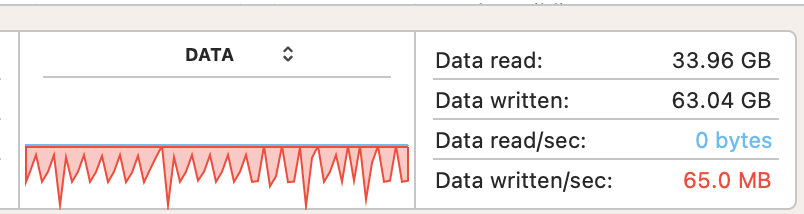
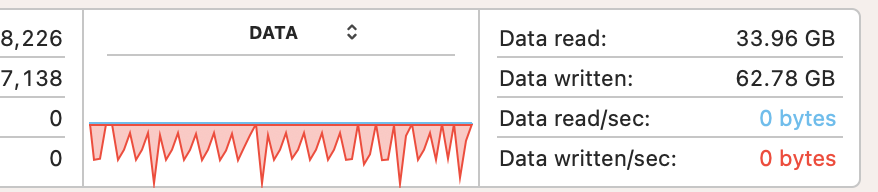
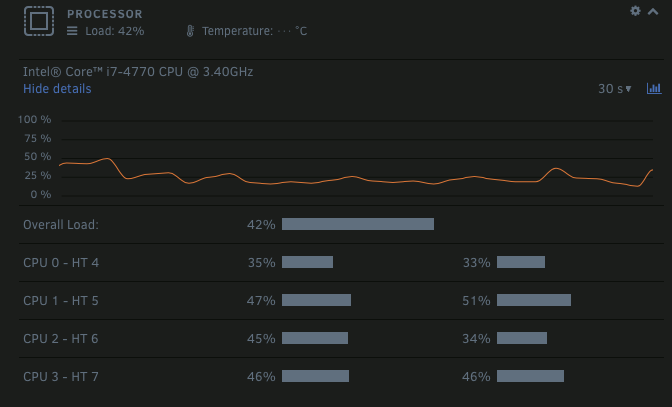
Hi, I'm having slow / bursty speeds trying to read from my unraid server on my Mac, and am not sure where to start to diagnose the issue. As you can see from the Mac throughput graph, it bursts between 1-2MB/s to 72ish MB/s continuously. Copying from another Mac or PC over the same network is fast, and the issue is the same wether I'm on a wired gigabit or wireless network. Where would I start? CPU Usage on the server appears OK, what else should I be looking at? Diagnostics are attached.. Thanks for your help! chasm-diagnostics-20230131-1654.zip

-
Thanks - I'll give the re-writing rules from root to NC domain a go, but is leaving it as is a security risk?
-
Hi all, Quick (hopefully) question; I've followed SpaceInvaderOne's video about setting up reverse proxy and Nextcloud - using SWAG to make it externally accessible. Everything is working fine - and Nextcloud is the only externally accessible app I've setup. However, when I access my static IP address directly from a browser (not via the Nextcloud.(mydomain.com)) I get a 'Welcome to your SWAG instance' page. Is this a security issue? Is there any way to direct ALL traffic that hits port 80 or 444 at my address to send it directly to my Nextcloud instance? Cheers!
-
Yeah - sorry for the lack of info. I was at the end of a marathon session trying to get it all to work! In the end I managed to fix the errors showing in Nextcloud by following Spaceinvaders video on fixing nextcloud issues, as well as another tutorial by linuxserver about adding in a line to trust SWAG as a proxy..
-
Hi all, I've followed Spaceinvader ones YouTube videos on how to setup Nextcloud and SWAG, and I can access everything remotely without an issue. I get two security warnings in the 'overview' section though: " There are some warnings regarding your setup. The reverse proxy header configuration is incorrect, or you are accessing Nextcloud from a trusted proxy. If not, this is a security issue and can allow an attacker to spoof their IP address as visible to the Nextcloud. Further information can be found in the documentation. The "Strict-Transport-Security" HTTP header is not set to at least "15552000" seconds. For enhanced security, it is recommended to enable HSTS as described in the security tips ↗." Can anyone point me in the direction as to what I should be looking at? Cheers
-
Could someone help me diagnose slow write speeds on my server? I'm getting about 15-20MB/S, and when copying over multiple small files it takes an extremely long time. I've checked the write cache as per post two, and all seem to be enabled with the exception of the boot flash drive. Diagnostics attached! TIA! edit: UPDATE So I did some more testing, and it appears that the slow write speeds (and read speeds) were due to MacOS - I have two Macs as my main production machines, and a windows box as a fail-over. I tested the windows box and was consistently getting 105ish MB/s read over the network and ~70-80MB write, compared to ~50MB/s read on both Macs and 15-20MB/s write. After some hunting and troubleshooting, I found that MACos SMB implementation is apparently pretty crap, but turning off delayed ACK seemed to fix the issue. To test it (non permanent) in terminal: sudo sysctl -w net.inet.tcp.delayed_ack=0 All of a sudden, I was getting read and write speeds the same as the windows box. This is a MASSIVE improvement!! For anyone that is on MACos and needs a permanent fix, this is what I did: To make the change permanent (requires reboot): Create/edit the file /etc/sysctl.conf Terminal: sudo vim /etc/sysctl.conf Add this line to the configuration file: net.inet.tcp.delayed_ack=0 Save and close file (type “:wq” without quotes, then hit enter) reboot computer
