mark2741
Members
-
Joined
-
Last visited
-
We'd have to wait overnight at least for the notification, unless there is a test other than Fix Common Problems scan that we can run?
-
Received the following email notification from my Unraid sever. I logged in and no errors/warnings. I ran Fix Common Problems scan and nothing. I then rebooted. Diagnostics attached. I'm running latest version of Unraid. Subject: cron for user root /usr/bin/run-parts /etc/cron.daily 1> /dev/null Body: warning: Potentially dangerous mode on unraid-api: 0666 error: Ignoring unraid-api because it is writable by group or others. error: found error in file unraid-api, skipping warning: Potentially dangerous mode on unraid-api.patch: 0666 error: Ignoring unraid-api.patch because it is writable by group or others. error: found error in file unraid-api.patch, skipping unraid-diagnostics-20250208-1003.zip
-
Thank you so much. You were right - this is only happening when I am viewing the Dashboard. To confirm, I opened the terminal window and then switched off of the Dashboard and immediately the nv_open_q process stopped using any resources. I will ignore when viewing that Dashboard page. I did drop the polling interval of gpu-stats to 5000ms, which reduced CPU spiking by about half but still odd to me that it would do it. Thank you for your help!
-
Hoping for some help with this. Subject: nv_open_q causing CPU spikes Unraid with the Nvidia driver was running fine for me on the 8GB (2x4GB) of RAM I had in there but I figured I'd replace with 16GB (2x8GB). Replaced the RAM and then rebooted. I have always ran Unraid headless but this time I happened to have a monitor hooked up so I could check to make sure that no XMP or any overclocking was set for the new RAM. After confirming that and running memtest (passed for 5+ hours) I booted and noticed that it said something about installing the nvidia open source driver? I just pressed enter and moved on and didn't think about it. I had already had an nvidia card installed and plugin installed with the "latest branch" nvidia driver running fine with no issues so was surprised to see the reference to the open source driver install popping up. Since then I keep getting CPU spiking. Everythign works as expected but CPU is always fluctuating and spiking. I run only a single Plex docker on this (binhex-plex) server, along with gpu-stats and Fix Common Problems and a couple other popular plugins. No VMs. Before, since I only run a plex server on this Unraid server and nothing else, I would never see more than 1 or 2% activity unless i was actively watching a plex stream. Now, it is constantly fluctuating CPU and spiking. When I run the top cmd I see that two processes are causing it shfs and nv_open_q, but priimarily one is causing the spiking: nv_open_q Here is what I have tried to resolve this: 1. Uninstalled and reinstalled the nvidia driver (countless times, rebooting after each install). 2. Removed the 2x4GB of RAM from slots A2 and A4 where they always were before when it was running fine, and moved the new 2x8GB into those slots. 3. Yesterday I opened top and did a kill cmd on the nv_open_q. Checked back a minute or two later and the CPU was no longer spiking. So definitely that process is the cause. Attaching diagnostics and screenshots. Any help is appreciated. Only other thing I can think to try is to remove the new RAM and go back to the old RAM but I can't see how that would fix this. I think I need to remove the nv_open_q somehow but not sure how. Uninstalling the nvidia driver hasn't accomplished that. unraid-diagnostics-20241117-1232.zip
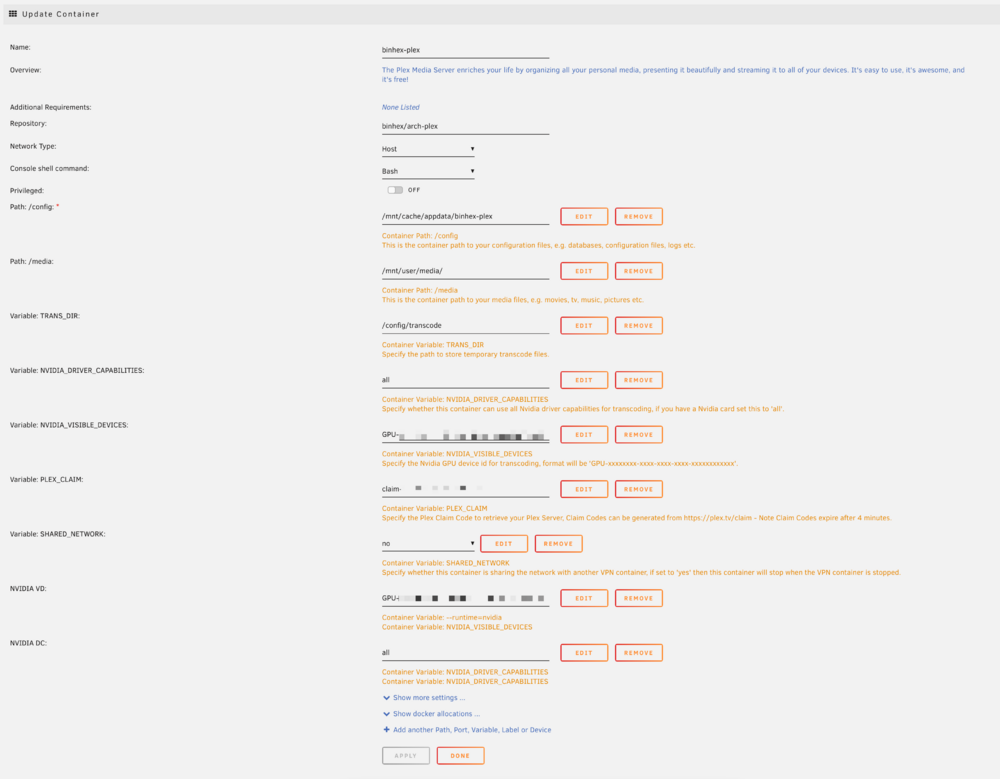
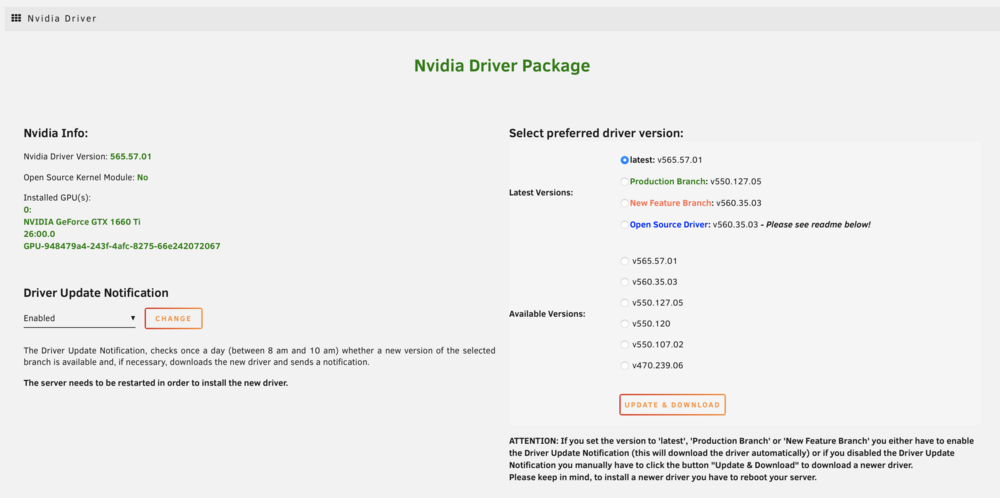
-
Unraid was running fine for me on the 8GB (2x4GB) of RAM I had in there but I figured I'd replace with 16GB (2x8GB). Replaced the RAM and then rebooted. I have always ran Unraid headless but this time I happened to have a monitor hooked up so I could check to make sure that no XMP or any overclocking was set for the new RAM. After confirming that and running memtest (passed for 5+ hours) I booted and noticed that it said something about installing the nvidia open source driver? I just pressed enter and moved on and didn't think about it. I had already had an nvidia card installed and plugin installed with the "latest branch" nvidia driver running fine with no issues so was surprised to see the reference to the open source driver install popping up. Since then I keep getting CPU spiking. Before, since I only run a plex server on this Unraid server and nothing else, I would never see more than 1 or 2% activity unless i was actively watching a plex stream. Now, it is constantly fluctuating CPU and spiking. When I run the top cmd I see that two processes are causing it, but priimarily one: nv_open_q Here is what I have tried to resolve this: 1. Uninstalled and reinstalled the nvidia driver (countless times, rebooting after each install). 2. Removed the 2x4GB of RAM from slots A2 and A4 where they always were before when it was running fine, and moved the new 2x8GB into those slots. Attaching diagnostics. Any help is appreciated. Only other thing I can think to try is to remove the new RAM and go back to the old RAM but I can't see how that would fix this. I think I need to remove the nv_open_q somehow but not sure how. Uninstalling the nvidia driver hasn't accomplished that. unraid-diagnostics-20241116-0938.zip
-
Understood about the plex dvr issue - thanks. But problem remains regarding the high cpu usage. I never had this cpu spiking when I was running just 8GB (2x4GB) of RAM. Only thing I changed was I added 16GB (2x8) to now total 24GB of RAM. Upon reboot, CPU is constantly spiking. Two processes were spiking it. One, shfs, is now resolved (see below). nv_open_q is still causing the issue. shfs: this process was utilizing quite a bit of CPU as well. I found a mention on reddit to have plex mount /mnt/cache/appdata instead of /mnt/user/appdata and that solved that one. nv_open_q: this one was still utilizing a lot of CPU and spiking it. Uninstalled nvidia driver completely, rebooted, checked the stats to make sure no cpu usage spikes (confirmed); reinstalled nvidia driver - same issue with nv_open_q spiking CPU intermittently. Changed from Production branch to Latest branch. Same issue. Changed from Latest branch to New Feature branch. Rebooted after each of course. Any ideas?
-
Was running Unraid fine with only 8GB of RAM, using only Plex docker. Wife complained that she couldn't watch a DVR'd show through plex. Turns out she was trying to watch it while it was still recording, i.e. the recording started at 3PM but she started watching from the beginning at ~3:30PM and when trying to advance through commercials it would choke. So I figured I'd order some RAM and throw it in there. Added two 8GB modules to now total 24GB of RAM. Booted up, ran memtest for 5+ hours with no errors, then rebooted. Everything appears to work fine but my CPU cores keep getting maxed out, one at a time - the bar graph on the Dashboard is constantly fluxuating between cores. It's not the plex docker - I disabled Docker and rebooted and problem persists. I'm running an Nvidia card and using the Nvidia driver plugin. It is set to the latest driver version. When I open terminal and view top, it shows nv_open_q varying between 50 and 100% CPU usage. Diagnostics attached. Any help is greatly appreciated. I'm not as tech savvy as most so go easy on me : ) unraid-diagnostics-20241113-1023.zip
-
Thanks again. Scrub ran without error. I did notice - after booting up the system for the first time after replacing the RAM - all of my apps, settings, plex docker, etc. seem just as before, but the name of server reverted back to "Tower". I changed it and all seems to be working great now. I went from 16GB down to 8GB (2x4GB) but even with a plex stream running it is only using 35% of memory so I think all is well. I may buy new RAM eventually. Thanks again for your help. Fingers crossed no corruption on the array but as of now everything seems fine so far.
-
Thank you JorgeB. I just checked and I am not overclocking the RAM per the BIOS settings, which are all just set to AUTO. I then ran memtest and immediately it started throwing errors! I then rebooted and went back into the BIOS and forced the RAM speed to 1600mhz, which is the lowest setting, restarted memtest and still got errors immediately. Fortunately, I have some old 2400mhz RAM that was sitting unused so I threw that in, reset the BIOS, rebooted and started memtest. It's running now and so far, no errors! Thank you! If it caused any data corruption due to the bad RAM, do you have any next steps I should take to ensure my data is good? I'm fine with reinstalling the plex docker if needed. I have a fairly simple/small library.
-
Using latest version, Unraid 6.12.13 with following plugins: Appdata Backup Community Applications Dynamix File Manager Fix Common Problems GPU Statistics Nvidia Driver RTL8168 Drivers unbalanced Unraid Connect User Scripts (with a script provided via tutorial to spin down Nvidia GPU fans automatically at array start and hourly) No VMs and one docker: Plex (binhex-plex) AMD Ryzen 2600 CPU | 16GB RAM | Nvidia 1660 Ti GPU I am getting **unable to write to cache** error from Fix Common Problems. This happened last year, and I forget exactly what I did but was eventually able to 'fix' it and it was running fine until this past weekend when I couldn't access my Plex docker via GUI. I don't have a ton of setup/critical data so I just wound up trying a different docker (linuxserver-io) and it worked for maybe a day and then same issue. I then got the **unable to write to cache** and decided to just buy a new cache drive, a 250GB SATA III PCIE drive, replacing a ~5 year old equivalent. I also replaced the SATA cable with a new one. Ran fine for last ~4 days and then this morning received the error again. When I try to access any of my plex libraries the UI shows "Something went wrong." First, tell us the exact version of Unraid, the plugins and addons you have loaded, and what hardware you are using. You can tell us about your hardware either here in the post, or in your signature. Diagnostics attached. Thank you in advance for your assistance. unraid-diagnostics-20240905-0813.zip
-
Received this error. I tried a number of things including rebooting. I then uninstalled Plex docker (linuxserverio) and installed a different docker plex app but same issue and I cannot connect to the webui of plex anymore. Diagnostics attached. unraid-diagnostics-20240331-1932.zip
-
I tried following the steps to delete and re-create but eventually just formatted the cache drive and that worked. Marking this as solved.
-
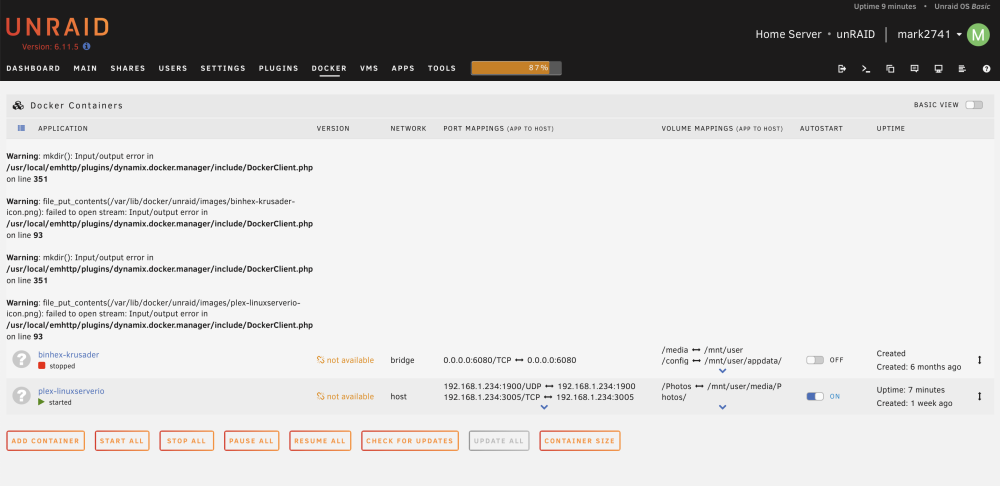
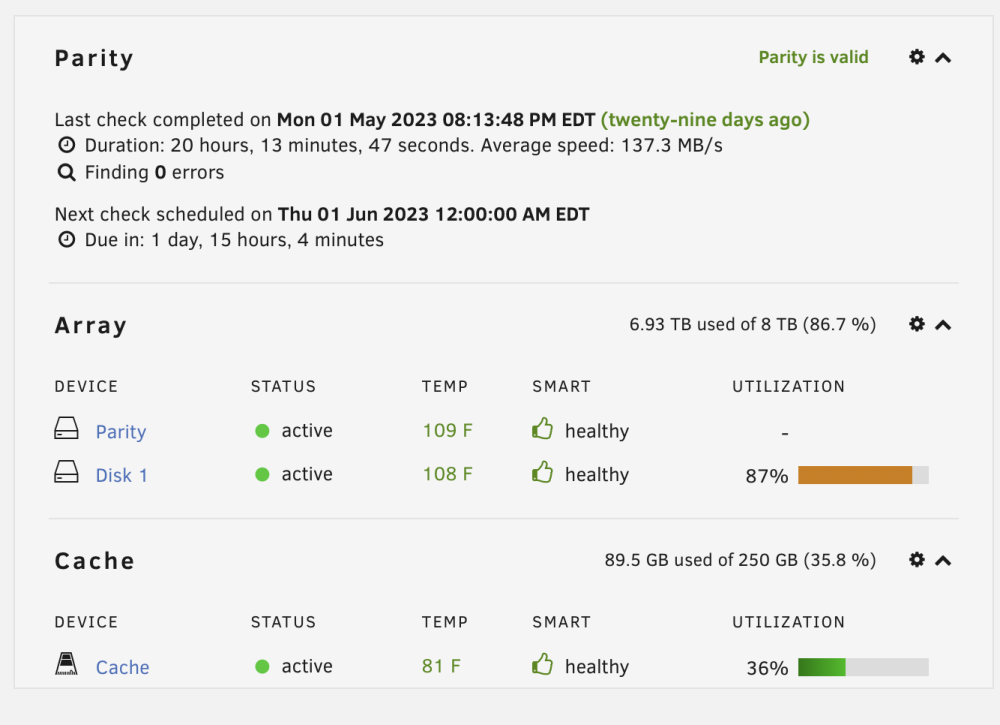
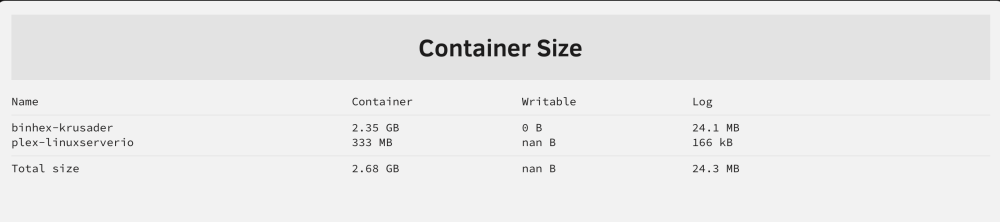
Thank you @JorgeB. I ran that command and then did a reboot and it seems to have cleared the prior warnings. But now am seeing the errors below again when I run FCP. This is what I saw before a couple or few times over the last few months, but a reboot would (temporarily) seem to fix it. Looking at the Docker page I see these: The cache has plenty of spare space: When I click the Container Size button I see these, which doesn't look right to my unskilled eye: unraid-diagnostics-20230530-0850.zip
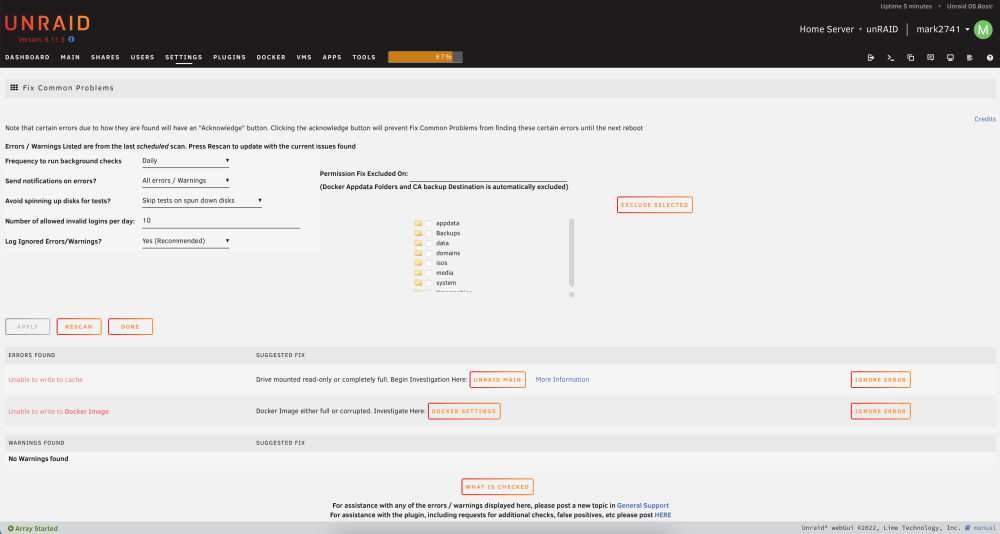
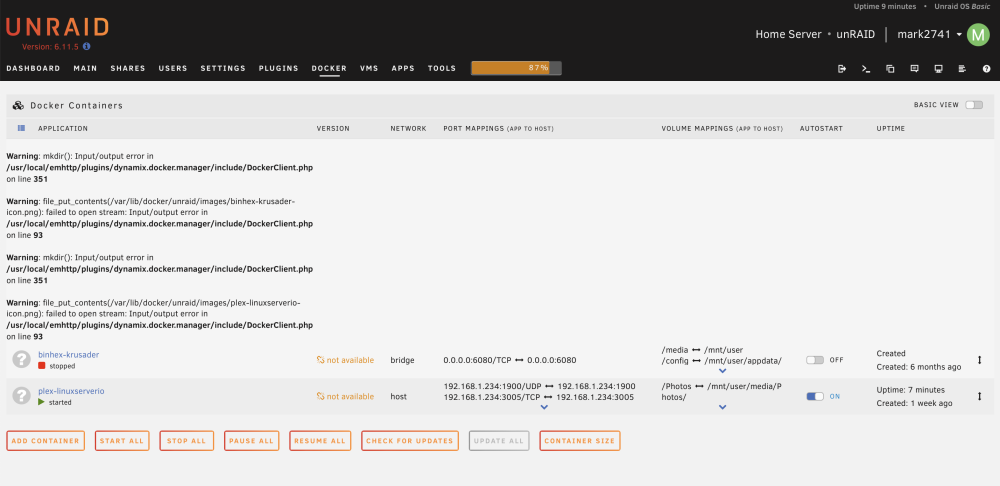
-
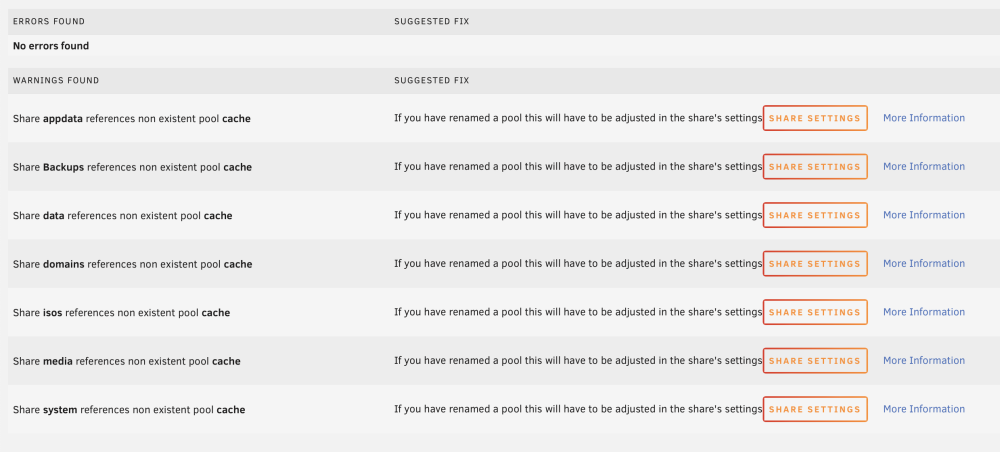
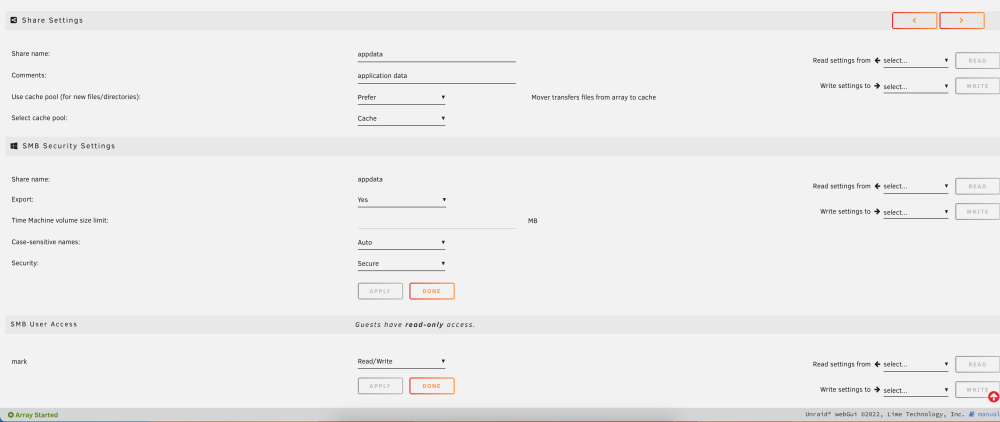
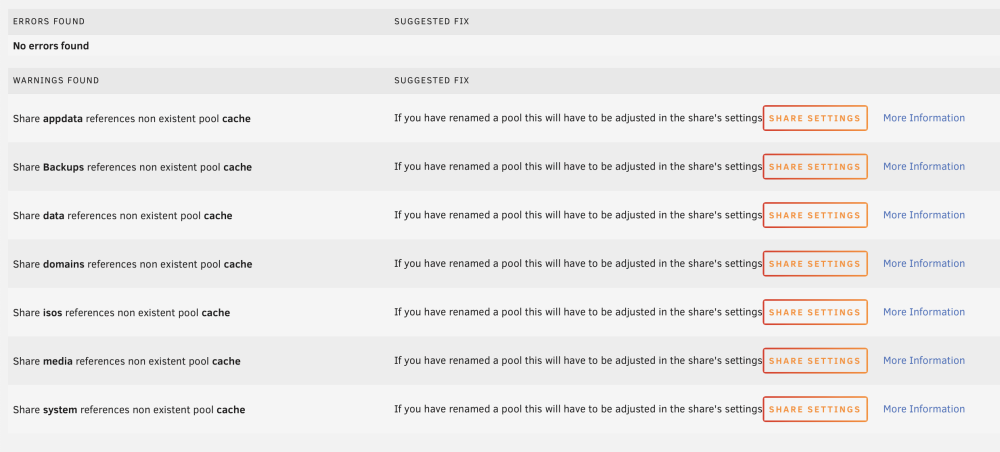
Fix Common Problems is reporting a "Cache unmountable: wrong or no filesystem" warning for all of my shares. Attaching diagnostics. I am running the latest stable build of unRAID (6.11.5). I'm not sure what do do/check. My cache drive is an NVME SSD, about 2 or 3 years old. For the past few months I've been getting errors every few weeks saying that the cache was full or read-only, but neither was the case so I'd reboot and that seemed to solve the issue. Today I did the same and now getting the below warnings. Screenshots of my settings: unraid-diagnostics-20230529-1610.zip
-
Just upgraded with no issues. Working perfectly for me. One thing I have noticed - my HD temps are much lower than before, from ~109 down to 100. I haven't changed anything other than the update.