





BKG
Members
-
Joined
-
Last visited
Everything posted by BKG
-
@wgstarks I know, that is the problem. No matter what changes I make to the port it sticks with 8080.
-
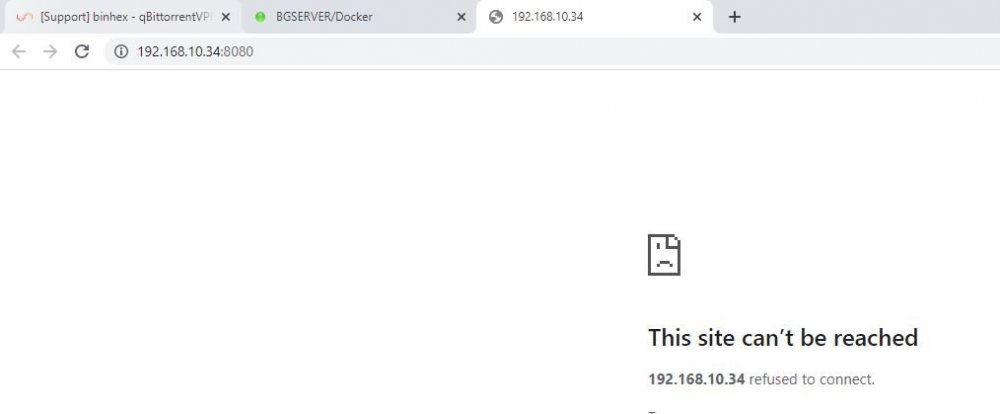
tried that too... here is the snap shot.


-
tried that, no luck...
-
the IP of the PC is 192.168.20.0/24 network but passed to other subnets in my network setup. For example, i can hit my router on 192.168.0.0/24 network, my cameras on 192.168.10.0/24 network, and my unraid on 192.168.10.0/24.
-
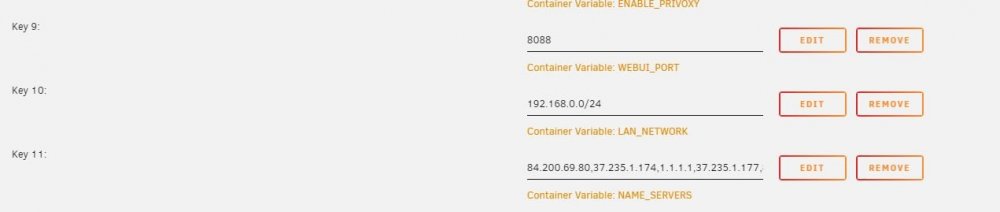
The other thing is - the port is not changing from 8080 to 8088
-
container LAN is 192.168.0.0/24. unless i am confusing this question with something else. Thanks,
-
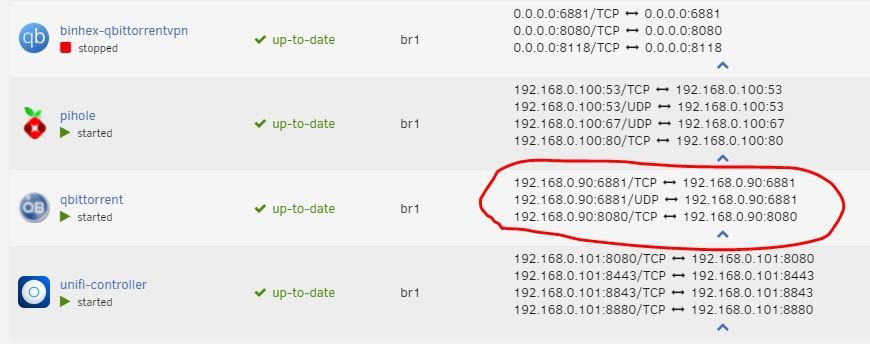
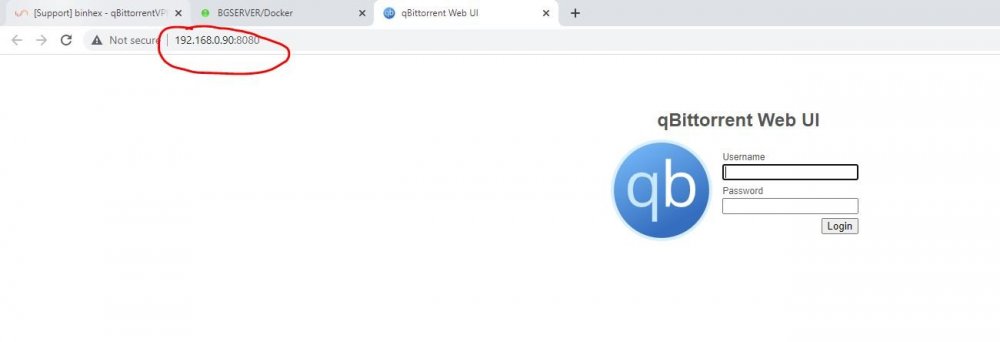
i presented the PDF as a backup to show that each individual network is working properly with its respective components - VMs, dockers except for the WEBUI for the QB. As a troubleshooting step i downloaded and installed the other QB build which works with the same network parameters, but doesn't have VPN built-in like yours does (see attached). See attached picture. I do believe the problem is in the setup. Can yo please expand on this quote above? Thanks,
-
No , I don't try and use the VM to connect to QB. I presented the PDF to reflect the high-level picture of what I have and that I can connect to to other docker-containers on the 192.168.0.0/24 network. I do not use the 192.168.10.0/24 network to connect to QB. Again, I have two physical networks right now, one allocated to VM and the other to Docker.
-
Hi binhex, see my answers below and also attached visual aid to back up. I am attempting to connect on the LAN. I am trying to get to the WEBUI. I have two physical NICs. eth0 is bridged and allocated to server control and VM network. eth1 is bridged and allocated to Docker network(see attached). Controllers are in the separate IOMMU groups. I am using eth1(br1) to connect to the QBVPN container on the 192.168.0.0/24 network. I can hit other containers on the eth1(br1) 192.168.0.0/24 network(see attached). I can hit VM on the eth0(br0) 192.168.10.0/24 network(see attached). I don't quite get your guidance, which I quoted in the above reply, where you referencing your "SECRET SAUCE" where you tell to add an additional port and delete the original one. I think that is where the problem is in my case. I would really appreciate if you can share the screen shot of your setup to compare. Thanks, docker_VM-layout.pdf

-
pretty sure I put the right one. I did this before with QNAP and also on my ANDROID TV . I fetched from the log that the VPN is connecting. I reducted few things as ******** in the log, but it shows it successfully connects and obtaind VPN IP. What bothers me is not the VPN but the fact I can't get it to show the WEBUI.
-
This is where I am floating. I followed this but I think i did something wrong.
-
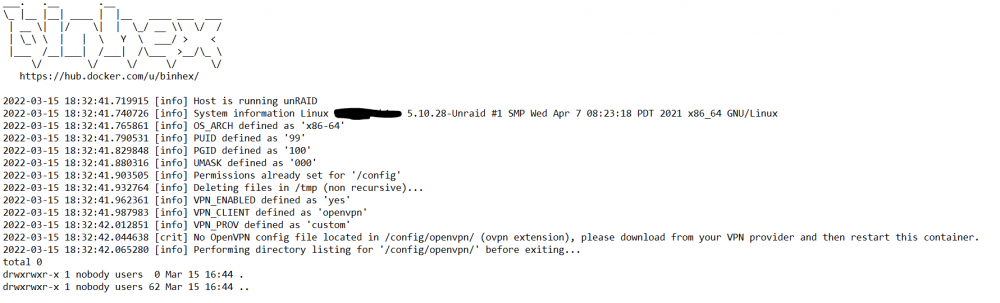
Done that now and container starts. From the log I can see that the opnvpn file is working(log attached). Still can not hit the WEBUI. Connection is on bridge. Can you look at the log if you have time? Thanks, supervisord.log
-
I was not setting anything up yet in terms of Downloads and VPN creds. Just want to make sure the docker works properly first and then will edit. Here is the log below hopefully that is the correct one i opened up appdata/binhex-qbittorrentvpn/supervisord.log. Also, now for some reason I can't start the qbVPN anymore. Thanks.
-
here it is with the network set back to br1. I have two NICs on this server eth0 is bridged to br0 and eth1 is bridged to br1. bro is for the system control and VM and br1 is for the dockers. I have other dockers and VM working fine. root@localhost:# /usr/local/emhttp/plugins/dynamix.docker.manager/scripts/docker create --name='binhex-qbittorrentvpn' --net='br1' --privileged=true -e TZ="America/New_York" -e HOST_OS="Unraid" -e 'TCP_PORT_6881'='6881' -e 'UDP_PORT_6881'='6881' -e 'TCP_PORT_8088'='8088' -e 'TCP_PORT_8118'='8118' -e 'VPN_ENABLED'='yes' -e 'VPN_USER'='vpn username' -e 'VPN_PASS'='vpn password' -e 'VPN_PROV'='pia' -e 'VPN_CLIENT'='openvpn' -e 'VPN_OPTIONS'='' -e 'STRICT_PORT_FORWARD'='yes' -e 'ENABLE_PRIVOXY'='no' -e 'WEBUI_PORT'='8088' -e 'LAN_NETWORK'='192.168.0.0/24' -e 'NAME_SERVERS'='84.200.69.80,37.235.1.174,1.1.1.1,37.235.1.177,84.200.70.40,1.0.0.1' -e 'VPN_INPUT_PORTS'='' -e 'VPN_OUTPUT_PORTS'='' -e 'DEBUG'='false' -e 'UMASK'='000' -e 'PUID'='99' -e 'PGID'='100' -v '/mnt/user/appdata/data':'/data':'rw' -v '/mnt/user/appdata/binhex-qbittorrentvpn':'/config':'rw' --sysctl="net.ipv4.conf.all.src_valid_mark=1" 'binhex/arch-qbittorrentvpn' a0cbe5f8248e40a706e990a03ba5eaa8109d67e85728b242f09e74f8dd3e1fc1 The command finished successfully!
-
it does change the port when I change network to bridge, but still no webui
-
no matter what I do, it doesn't change the default port 8080

-
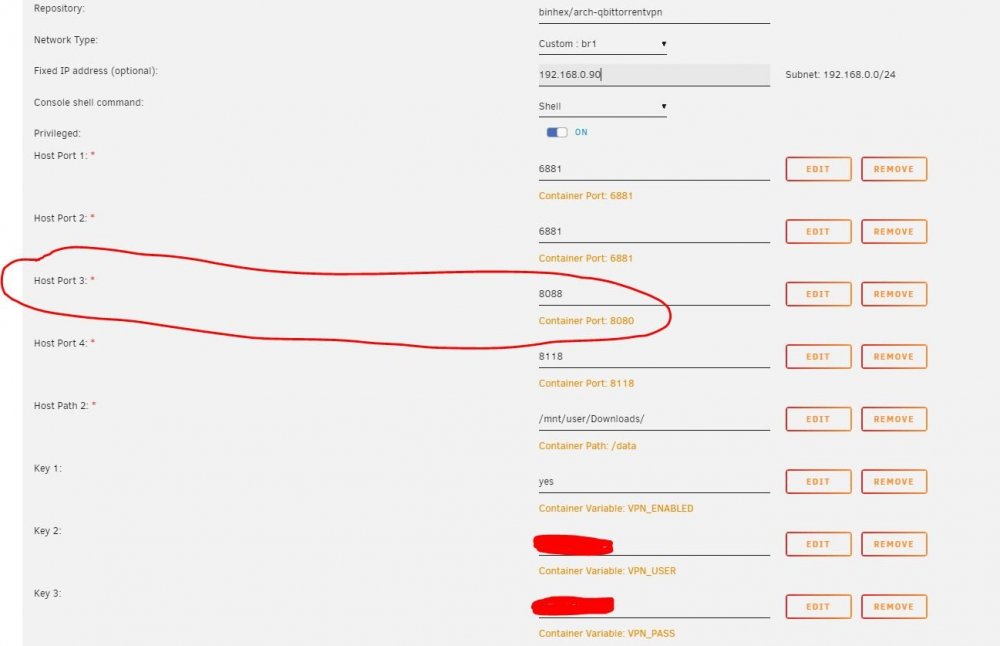
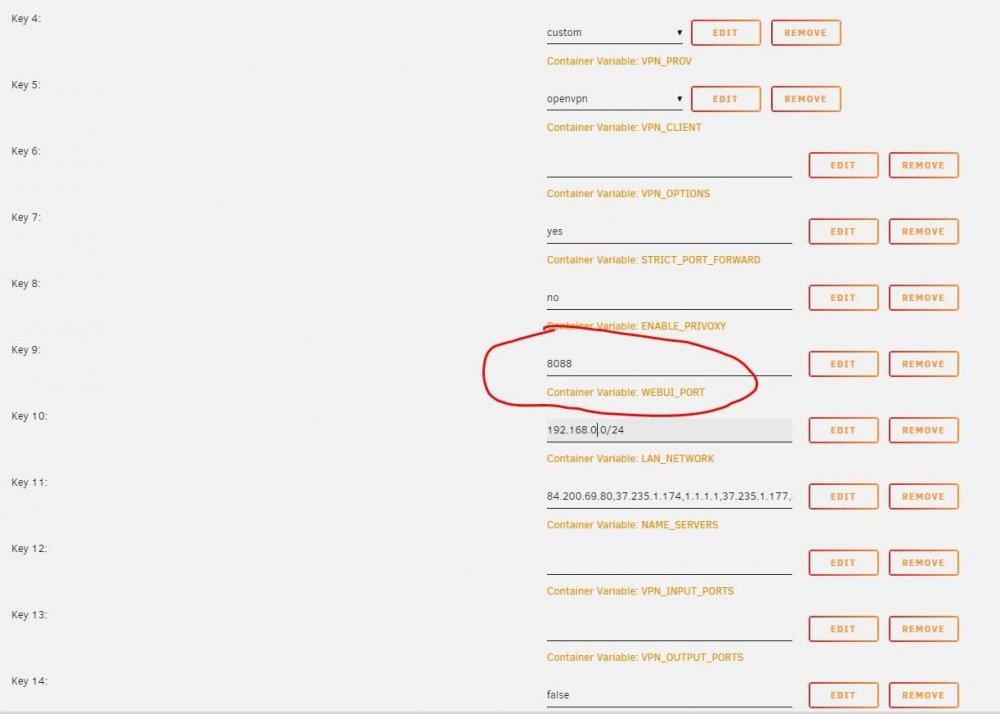
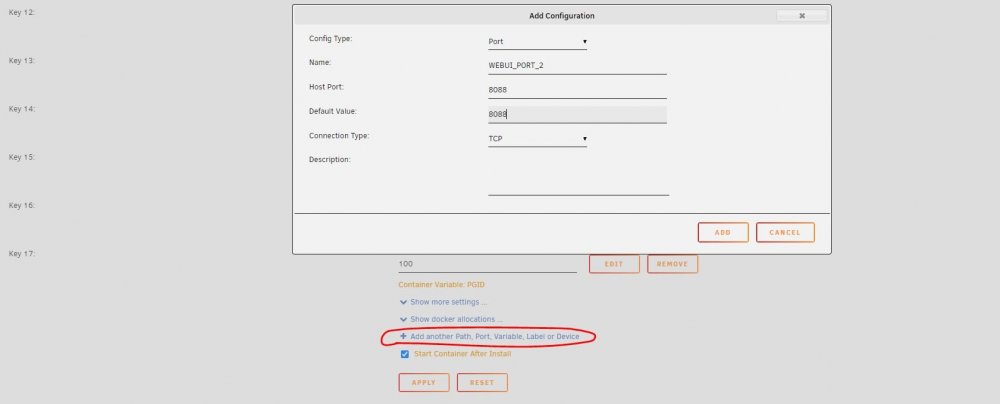
I think I followed to the "T" but still when I start the docker it shows port 8080. I think i don't quite get the directions from binhex on the page #1 where he is saying that you have to add the new port and delete the existing one.
-
i am definitely messing something up here. I changed the settings back to original and still couldn't start the docker. I reinstalled the docker and cleaned up the directory and reinstalled. I can now start the docker with network set to - br1 but no WEBUI
-
Still no go. Before I changed network to HOST it was just not starting and now after I changed it it throws an error
-
Got it! Now I am obviously having problems starting the container after changing the ports as suggested in the beginning of this thread. Of course the reason for that is my lack of understanding. Can you guide me in the right direction please? I have done the following: changed port 8080 -> 8088 changed port for WEBUI for 8088 created an additional entry path "PORT TYPE" with port 8088 I now can not start the docker. Is this something I have to change in CLI? Thanks,

-
Thanks wgstarks. If want to modify the location can I provide any path? for example: /mnt/user/Downloads/. Or do I have to create "data" folder in the new path? example: /mnt/user/Downloads/data Thanks again.
-
Hi, where is the path for the downloads in the template? Thanks,
-
I have mine setup in the following way, if it helps. Also, I only have 6 cameras. See below: I have created Win10 pro VM with the passthrough for CPU. I have allocated 80GB for the system drive and also it acts as a "NEW FOLDER" with the 10GB limit for the new recorded clips. After the limit is reached the clips are moved to "STORED" folder which is located on the separate 4TB drive. I have 4TB drive setup as "UNALLOCATED DEVICE" in pass-through mode.
-
Hi guys, I have run into a dead end with this one. I have two NICs. I have one VM - Win10 and two dockers - pihole and UNIFI controller. No matter what I do with the NICs I can;t get it to work on two different subnets. I want my VM and unRAID to be on 192.168.10.0/24 subnet and my dockers on 192.168.0.0/24 subnet. Any help appreciated. Thanks.
-
Thanks trurl. makes perfect sense! It is all buttoned up now!


