





neuk34
Members
-
Joined
-
Last visited
Everything posted by neuk34
-
done. Thanks for your help.
-
it's getting worst
-
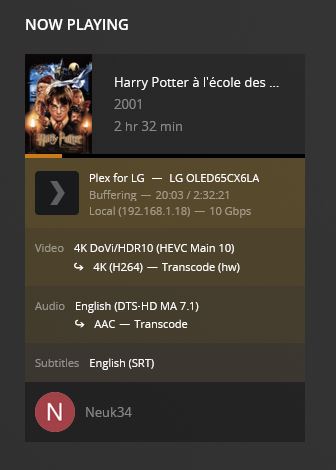
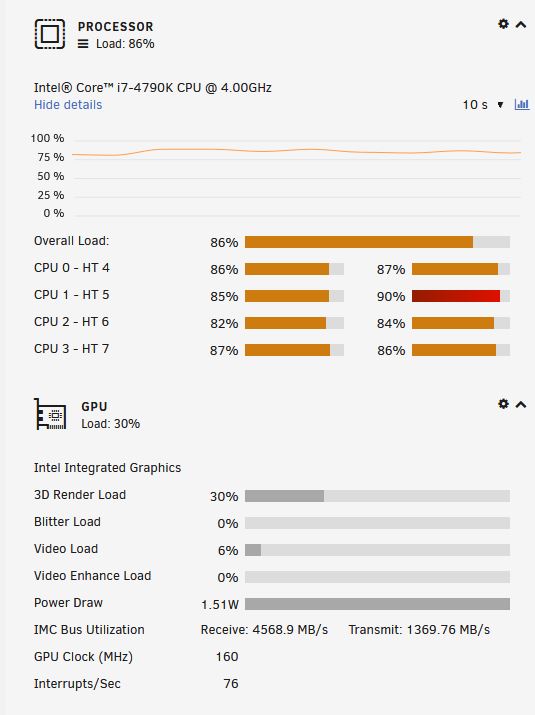
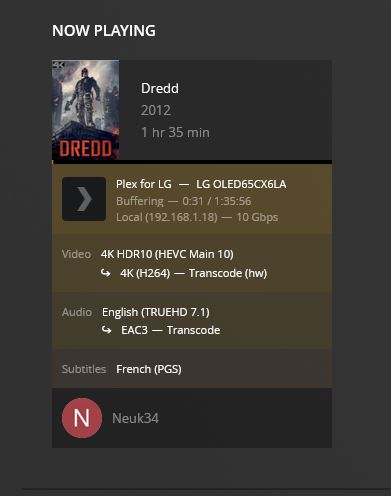
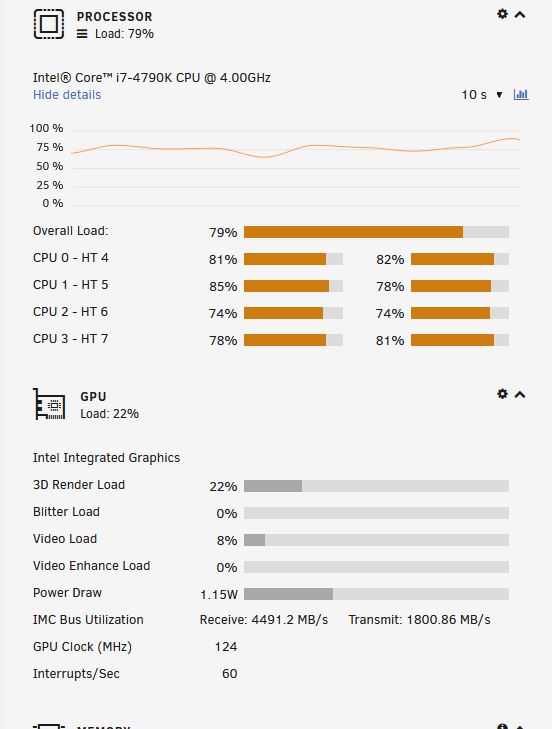
OK I've setup intelGPU plugin but it's still buffering Thanks

-
no
-
this is the lastest of linuxserver repository. So it should be 1.29.1. I try to find it out in vain. No, never used that. Thanks
-
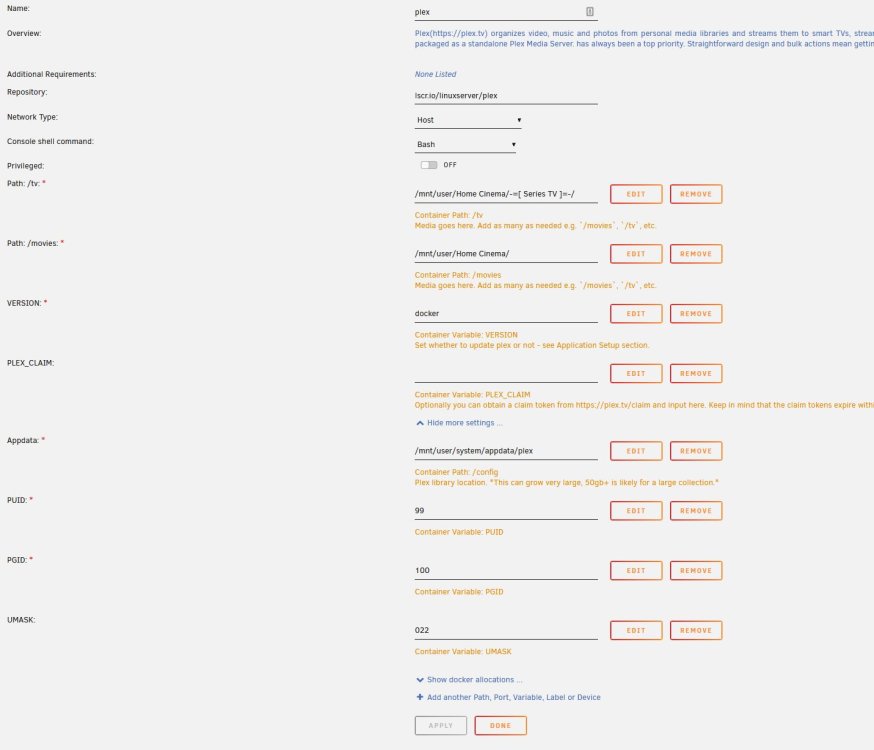
here comes the version : Version 4.87.2 and docker settings :
-
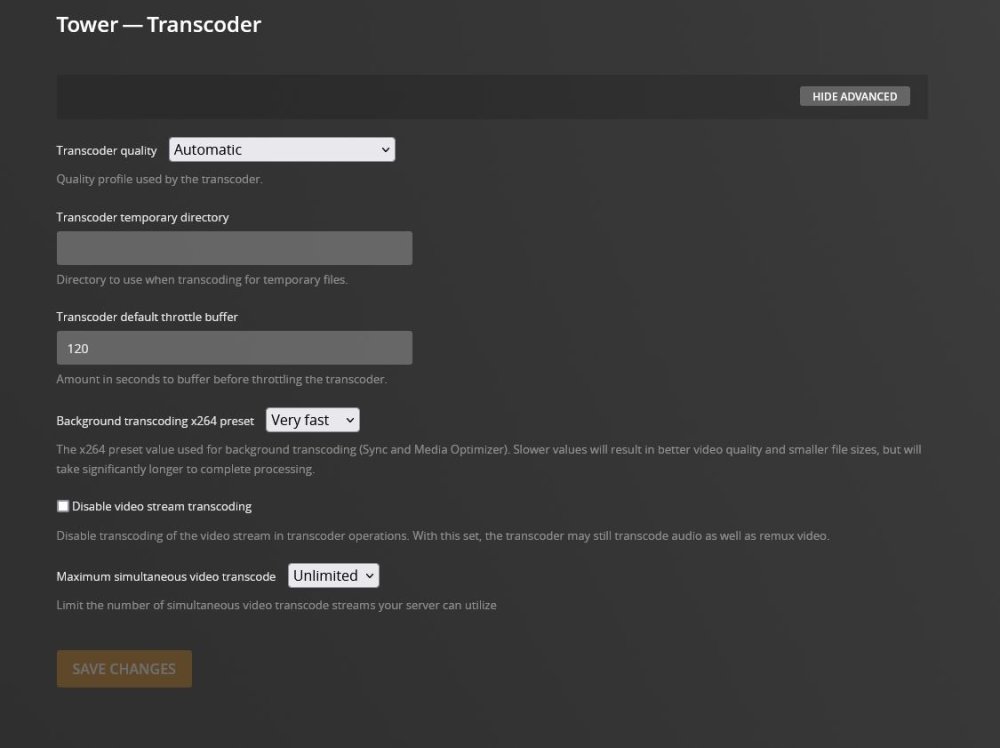
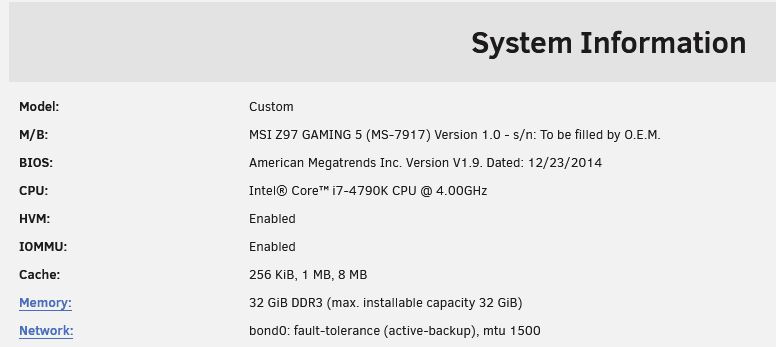
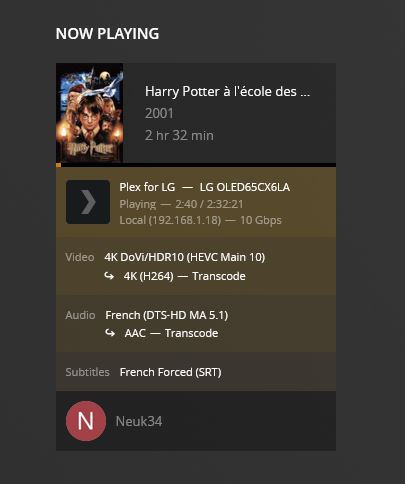
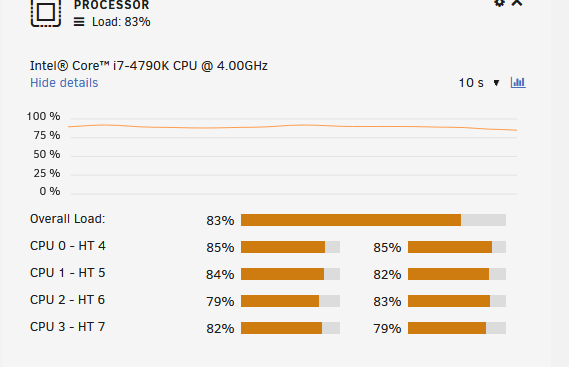
Hello, After upgrading plex version (linuxserver container), watching movie is now impossible. Plex is buffering again and again as soon as he's transcoding, even with just 1 audio stream. I've got i7 4790K with 32 Go DDR3. LG CX need to get a transcoded stream, while Apple TV read direclty on the server. In this case, plex just works fine. I went through similar topic to try to fix it but I don't find any solution. (Network is good, plex is well setup..) I tried to join all information that could help to find it out. Thanks !!! tower-diagnostics-20221028-2039.zip
-
problem solved !! thanks
-
Hello, I try to start my VM with a new SSD drive but : https://zupimages.net/viewer.php?id=22/40/phjt.jpg I came over the forum but did not find something that helps me. https://zupimages.net/up/22/40/oqe9.jpg https://zupimages.net/viewer.php?id=22/40/ykgs.jpg https://zupimages.net/viewer.php?id=22/40/y3lf.jpg Could you please help? Thanks tower-diagnostics-20221006-0527.zip
-
Hi guys, My VM can just start one time after powering on my server. I mean that VM is lauched when server start, but I can't reboot the VM if I need to. I have to reboot the server entirely to make it live again. Moreover, VM freezes for 30s sometimes and goes well if I wait. Do you have any idea? https://zupimages.net/viewer.php?id=22/40/j3th.jpg https://zupimages.net/viewer.php?id=22/40/io17.jpg VM log : text error warn system array login 2022-10-05 07:31:45.713+0000: starting up libvirt version: 8.2.0, qemu version: 6.2.0, kernel: 5.19.9-Unraid, hostname: Tower LC_ALL=C \ PATH=/bin:/sbin:/usr/bin:/usr/sbin \ HOME='/var/lib/libvirt/qemu/domain-1-Windows 10 Gaming' \ XDG_DATA_HOME='/var/lib/libvirt/qemu/domain-1-Windows 10 Gaming/.local/share' \ XDG_CACHE_HOME='/var/lib/libvirt/qemu/domain-1-Windows 10 Gaming/.cache' \ XDG_CONFIG_HOME='/var/lib/libvirt/qemu/domain-1-Windows 10 Gaming/.config' \ /usr/local/sbin/qemu \ -name 'guest=Windows 10 Gaming,debug-threads=on' \ -S \ -object '{"qom-type":"secret","id":"masterKey0","format":"raw","file":"/var/lib/libvirt/qemu/domain-1-Windows 10 Gaming/master-key.aes"}' \ -blockdev '{"driver":"file","filename":"/usr/share/qemu/ovmf-x64/OVMF_CODE-pure-efi.fd","node-name":"libvirt-pflash0-storage","auto-read-only":true,"discard":"unmap"}' \ -blockdev '{"node-name":"libvirt-pflash0-format","read-only":true,"driver":"raw","file":"libvirt-pflash0-storage"}' \ -blockdev '{"driver":"file","filename":"/etc/libvirt/qemu/nvram/95ee060e-b106-777b-1c0a-6965cff9f6e5_VARS-pure-efi.fd","node-name":"libvirt-pflash1-storage","auto-read-only":true,"discard":"unmap"}' \ -blockdev '{"node-name":"libvirt-pflash1-format","read-only":false,"driver":"raw","file":"libvirt-pflash1-storage"}' \ -machine pc-i440fx-5.1,usb=off,dump-guest-core=off,mem-merge=off,pflash0=libvirt-pflash0-format,pflash1=libvirt-pflash1-format,memory-backend=pc.ram \ -accel kvm \ -cpu host,migratable=on,hv-time=on,hv-relaxed=on,hv-vapic=on,hv-spinlocks=0x1fff,hv-vendor-id=none,host-cache-info=on,l3-cache=off \ -m 16384 \ -object '{"qom-type":"memory-backend-ram","id":"pc.ram","size":17179869184}' \ -overcommit mem-lock=off \ -smp 6,sockets=1,dies=1,cores=3,threads=2 \ -uuid 95ee060e-b106-777b-1c0a-6965cff9f6e5 \ -display none \ -no-user-config \ -nodefaults \ -chardev socket,id=charmonitor,fd=34,server=on,wait=off \ -mon chardev=charmonitor,id=monitor,mode=control \ -rtc base=localtime \ -no-hpet \ -no-shutdown \ -boot strict=on \ -device ich9-usb-ehci1,id=usb,bus=pci.0,addr=0x7.0x7 \ -device ich9-usb-uhci1,masterbus=usb.0,firstport=0,bus=pci.0,multifunction=on,addr=0x7 \ -device ich9-usb-uhci2,masterbus=usb.0,firstport=2,bus=pci.0,addr=0x7.0x1 \ -device ich9-usb-uhci3,masterbus=usb.0,firstport=4,bus=pci.0,addr=0x7.0x2 \ -device ahci,id=sata0,bus=pci.0,addr=0x3 \ -device virtio-serial-pci,id=virtio-serial0,bus=pci.0,addr=0x4 \ -blockdev '{"driver":"host_device","filename":"/dev/disk/by-id/ata-Samsung_SSD_840_PRO_Series_S1ATNSAD774980B","node-name":"libvirt-2-storage","cache":{"direct":false,"no-flush":false},"auto-read-only":true,"discard":"unmap"}' \ -blockdev '{"node-name":"libvirt-2-format","read-only":false,"cache":{"direct":false,"no-flush":false},"driver":"raw","file":"libvirt-2-storage"}' \ -device ide-hd,bus=sata0.2,drive=libvirt-2-format,id=sata0-0-2,bootindex=1,write-cache=on \ -blockdev '{"driver":"host_device","filename":"/dev/disk/by-id/ata-Samsung_SSD_850_EVO_250GB_S2R6NX0H409251D","node-name":"libvirt-1-storage","cache":{"direct":false,"no-flush":false},"auto-read-only":true,"discard":"unmap"}' \ -blockdev '{"node-name":"libvirt-1-format","read-only":false,"cache":{"direct":false,"no-flush":false},"driver":"raw","file":"libvirt-1-storage"}' \ -device ide-hd,bus=sata0.3,drive=libvirt-1-format,id=sata0-0-3,write-cache=on \ -netdev tap,fd=35,id=hostnet0 \ -device virtio-net,netdev=hostnet0,id=net0,mac=52:54:00:20:e1:41,bus=pci.0,addr=0x2 \ -chardev pty,id=charserial0 \ -device isa-serial,chardev=charserial0,id=serial0,index=0 \ -chardev socket,id=charchannel0,fd=33,server=on,wait=off \ -device virtserialport,bus=virtio-serial0.0,nr=1,chardev=charchannel0,id=channel0,name=org.qemu.guest_agent.0 \ -audiodev '{"id":"audio1","driver":"none"}' \ -device vfio-pci,host=0000:01:00.0,id=hostdev0,bus=pci.0,addr=0x5 \ -device vfio-pci,host=0000:00:1b.0,id=hostdev1,bus=pci.0,addr=0x6 \ -device usb-host,hostdevice=/dev/bus/usb/003/002,id=hostdev2,bus=usb.0,port=1 \ -device usb-host,hostdevice=/dev/bus/usb/003/003,id=hostdev3,bus=usb.0,port=2 \ -device usb-host,hostdevice=/dev/bus/usb/003/006,id=hostdev4,bus=usb.0,port=3 \ -device usb-host,hostdevice=/dev/bus/usb/003/004,id=hostdev5,bus=usb.0,port=4 \ -sandbox on,obsolete=deny,elevateprivileges=deny,spawn=deny,resourcecontrol=deny \ -msg timestamp=on char device redirected to /dev/pts/0 (label charserial0) Thanks tower-diagnostics-20221005-1949.zip
-
I failed. I started a recovery tool to get my datas. I really thank all of you for your kind help.
-
Yes, when I talked about disk1, it was actually disk3, sorry for misunderstanding. What do you mean about add attributes 1 and 200? Thanks
-
Start the array in normal mode and it should now be emulating what it thinks should be on disk1. Ideally it should be mountable and its contents available. If not do not proceed and check back here and provide your diagnostics UNraid is not emulating. Here the diag thanks !!! tower-diagnostics-20220317-1745.zip
-
I can't rebuilt it because UNRAID see parity drive as new and wants to overwrite it. I don't know if it possible to force Unraid to trust the existing parity drive ?
-
I think that all my drives are OK (Disk1 has not been formatted so my datas should be still there, even if partition has been struggled). Concerning parity drive,I've just ran sync for 5s. But maybe it's enough to make it incompatible ? I tried to set my parity and a spare drive to launch a rebuild but, as I said, the config has been deleted so : "All existing data on this device (parity) will be OVERWRITTEN when array is Started" So, I stoppped here. Is there any way to force him to think that parity drive is still valid? tower-diagnostics-20220317-1451.zip
-
I would say that it ran maybe 5s.. and yes, all my disk are xfs. root@Tower:~# sudo fdisk /dev/sde Welcome to fdisk (util-linux 2.36). Changes will remain in memory only, until you decide to write them. Be careful before using the write command. The device contains 'xfs' signature and it will be removed by a write command. See fdisk(8) man page and --wipe option for more details. Device does not contain a recognized partition table. The size of this disk is 3.6 TiB (4000787030016 bytes). DOS partition table format cannot be used on drives for volumes larger than 2199023255040 bytes for 512-byte sectors. Use GUID partition table format (GPT). Created a new DOS disklabel with disk identifier 0x462f1a04. Command (m for help):
-
Hello everyone, I wanted to remove empty disk from the array tu use them on an other server. I deleted the conf using the tool new config I accidentally set disk1 to parity 2 slot and I launched the array. OMG !! I canceled immediately parity rebuild. So, my disk 1 is not mountable anymore. Is there something I can do? Do you think I can recover my datas back? Thanks
-
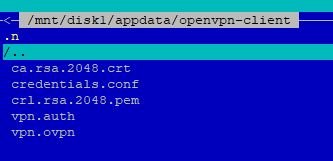
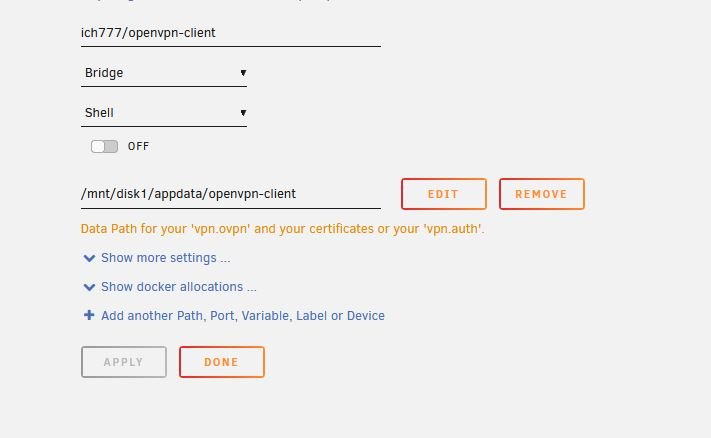
Hello Ich ! There is not trial on PIA, but I can send you in PM my access. It looks like container doesn't find conf files at /mnt/disk1/appdata/openvpn-client: cannot access '/vpn/*': No such file or directory You can see in my previous capture that all the files are present in the directory. I don't understand.. Here comes my conf : client dev tun proto udp remote france.privacy.network 1198 resolv-retry infinite nobind persist-key persist-tun cipher aes-128-cbc auth sha1 tls-client remote-cert-tls server auth-user-pass compress verb 1 reneg-sec 0 <crl-verify> -----BEGIN X509 CRL----- "my key" -----END X509 CRL----- </crl-verify> <ca> -----BEGIN CERTIFICATE----- my key -----END CERTIFICATE----- </ca> disable-occ Do you find any issue? Thanks
-
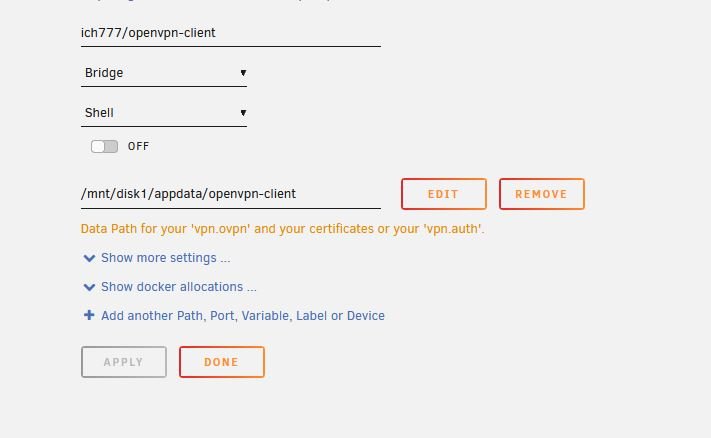
Hello, I have been trying to connect unraid to PIA VPN for hours thanks to openVPN client but I am stuck. First, I have downloaded a fresh openvpn config files from PIA Then, I have downloaded the right container from apps : OpenVPN-Client by ich777 and I followed carrefully the steps : - 1) Rename your *.ovpn to 'vpn.ovpn' and place it in your OpenVPN-Client directory : done (capture 1) - 2) Create in the same directory a file named 'vpn.auth' and place your Username in the first line and the Password for the connection in the second line and save it : done - 3) Restart the container open the logs and see if the connection to your VPN establishes successfully. Log results : ---Checking for optional scripts--- ---No optional script found, continuing--- ---Starting...--- ls: cannot access '/vpn/*': No such file or directory ls: cannot access '/vpn/*': No such file or directory Error: ipv4: FIB table does not exist. Dump terminated ERROR: VPN not configured! ---Checking for optional scripts--- ---No optional script found, continuing--- ---Starting...--- Error: ipv4: FIB table does not exist. Dump terminated ERROR: VPN not configured! + exec sg vpn -c 'openvpn --cd /vpn --config /vpn/vpn.conf --script-security 2 --redirect-gateway def1 --auth-user-pass /vpn/vpn.auth ' Options error: In [CMD-LINE]:1: Error opening configuration file: /vpn/vpn.conf Use --help for more information. ---Checking for optional scripts--- ---No optional script found, continuing--- ---Starting...--- Error: ipv4: FIB table does not exist. Dump terminated ERROR: VPN not configured! Is anyone could help me please ?
-
no one can help ?
-
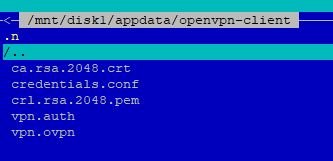
Hello, I have been trying to connect unraid to PIA VPN for hours but I am stuck. First, I have downloaded a fresh openvpn config files from PIA Then, I have downloaded the right container from apps : OpenVPN-Client by ich777 and I followed carrefully the steps : - 1) Rename your *.ovpn to 'vpn.ovpn' and place it in your OpenVPN-Client directory : done (capture 1) - 2) Create in the same directory a file named 'vpn.auth' and place your Username in the first line and the Password for the connection in the second line and save it : done - 3) Restart the container open the logs and see if the connection to your VPN establishes successfully. results : ---Checking for optional scripts--- ---No optional script found, continuing--- ---Starting...--- ls: cannot access '/vpn/*': No such file or directory ls: cannot access '/vpn/*': No such file or directory Error: ipv4: FIB table does not exist. Dump terminated ERROR: VPN not configured! ---Checking for optional scripts--- ---No optional script found, continuing--- ---Starting...--- Error: ipv4: FIB table does not exist. Dump terminated ERROR: VPN not configured! + exec sg vpn -c 'openvpn --cd /vpn --config /vpn/vpn.conf --script-security 2 --redirect-gateway def1 --auth-user-pass /vpn/vpn.auth ' Options error: In [CMD-LINE]:1: Error opening configuration file: /vpn/vpn.conf Use --help for more information. ---Checking for optional scripts--- ---No optional script found, continuing--- ---Starting...--- Error: ipv4: FIB table does not exist. Dump terminated ERROR: VPN not configured! Is anyone could help me please ? I have search among post but I don't find anything that coulmd help. Thanks
-
ok merci ! je vais checker !
-
Hello à tous, Quelqu'un aurait t il déjà automatisé ses dl de torrent. En gros, il scan le flux RSS, envoie le torrent à dl, nettoie le nom de fichier, et s'update dans plex avec la jaquette ? Il y a des container comme couchpotate ou sonar ou watcher, mais c'est pas évident. Merci
-
go to settings > vm
-
Thanks to @cat2devnull, I noticed that my GTX1070 is compatible with High Sierra. So I tried with this older version ! I've been able to see my passthroughed SSD disk (dev/disk/by-id/ata-Samsung_SSD_840_PRO_Series_S1ATNSAD774980B) at the boot installation. But I have not be able to erase it with disk utilities building GUID Partition. So, I'm stuck because installation can't be done using this disk. Do you think that there is a way to do it? Presently, I'm installing it on this same disk, but not passthroughed (mnt/disks/Samsung_SSD_840_PRO_Series_S1ATNSAD774980B). Less performance, but I move forward.. EDIT : installation done. It boots at clover, USB wireless keyboard works, choose Boot macOS from HighSierra, apple logo appears, and restart again and again.. (don't boot at clover using rom file / black screen) <?xml version='1.0' encoding='UTF-8'?> <domain type='kvm' xmlns:qemu='http://libvirt.org/schemas/domain/qemu/1.0'> <name>MacinaboxHighSierra</name> <uuid>bf50ca85-8c9b-4a7b-a814-df10f20b729a</uuid> <description>MacOS High Sierra</description> <metadata> <vmtemplate xmlns="unraid" name="Mac OS HighSierra" icon="/mnt/user/system/libvirt/domains/MacinaboxHighSierra/icon/highsierra.png" os="HighSierra"/> </metadata> <memory unit='KiB'>8388608</memory> <currentMemory unit='KiB'>8388608</currentMemory> <memoryBacking> <nosharepages/> </memoryBacking> <vcpu placement='static'>6</vcpu> <cputune> <vcpupin vcpu='0' cpuset='1'/> <vcpupin vcpu='1' cpuset='5'/> <vcpupin vcpu='2' cpuset='2'/> <vcpupin vcpu='3' cpuset='6'/> <vcpupin vcpu='4' cpuset='3'/> <vcpupin vcpu='5' cpuset='7'/> </cputune> <os> <type arch='x86_64' machine='pc-q35-3.1'>hvm</type> <loader readonly='yes' type='pflash'>/mnt/user/system/libvirt/domains/MacinaboxHighSierra/ovmf/OVMF_CODE.fd</loader> <nvram>/mnt/user/system/libvirt/domains/MacinaboxHighSierra/ovmf/OVMF_VARS.fd</nvram> </os> <features> <acpi/> <apic/> </features> <cpu mode='host-passthrough' check='none'> <topology sockets='1' cores='3' threads='2'/> <cache mode='passthrough'/> </cpu> <clock offset='utc'> <timer name='rtc' tickpolicy='catchup'/> <timer name='pit' tickpolicy='delay'/> <timer name='hpet' present='no'/> </clock> <on_poweroff>destroy</on_poweroff> <on_reboot>restart</on_reboot> <on_crash>restart</on_crash> <devices> <emulator>/usr/local/sbin/qemu</emulator> <disk type='file' device='disk'> <driver name='qemu' type='qcow2' cache='writeback'/> <source file='/mnt/disks/Samsung_SSD_840_PRO_Series_S1ATNSAD774980B/MacinaboxHighSierra/Clover.qcow2'/> <target dev='hdc' bus='sata'/> <boot order='1'/> <address type='drive' controller='0' bus='0' target='0' unit='2'/> </disk> <disk type='file' device='disk'> <driver name='qemu' type='raw' cache='writeback'/> <source file='/mnt/disks/Samsung_SSD_840_PRO_Series_S1ATNSAD774980B/MacinaboxHighSierra/HighSierra-install.img'/> <target dev='hdd' bus='sata'/> <address type='drive' controller='0' bus='0' target='0' unit='3'/> </disk> <disk type='file' device='disk'> <driver name='qemu' type='raw' cache='writeback'/> <source file='/mnt/disks/Samsung_SSD_840_PRO_Series_S1ATNSAD774980B/MacinaboxHighSierra/macos_disk.img'/> <target dev='hde' bus='sata'/> <address type='drive' controller='0' bus='0' target='0' unit='4'/> </disk> <controller type='sata' index='0'> <address type='pci' domain='0x0000' bus='0x00' slot='0x1f' function='0x2'/> </controller> <controller type='pci' index='0' model='pcie-root'/> <controller type='pci' index='1' model='pcie-root-port'> <model name='pcie-root-port'/> <target chassis='1' port='0x10'/> <address type='pci' domain='0x0000' bus='0x00' slot='0x02' function='0x0' multifunction='on'/> </controller> <controller type='pci' index='2' model='pcie-root-port'> <model name='pcie-root-port'/> <target chassis='2' port='0x11'/> <address type='pci' domain='0x0000' bus='0x00' slot='0x02' function='0x1'/> </controller> <controller type='pci' index='3' model='pcie-root-port'> <model name='pcie-root-port'/> <target chassis='3' port='0x12'/> <address type='pci' domain='0x0000' bus='0x00' slot='0x02' function='0x2'/> </controller> <controller type='pci' index='4' model='pcie-root-port'> <model name='pcie-root-port'/> <target chassis='4' port='0x13'/> <address type='pci' domain='0x0000' bus='0x00' slot='0x02' function='0x3'/> </controller> <controller type='virtio-serial' index='0'> <address type='pci' domain='0x0000' bus='0x02' slot='0x00' function='0x0'/> </controller> <controller type='usb' index='0' model='ich9-ehci1'> <address type='pci' domain='0x0000' bus='0x00' slot='0x07' function='0x7'/> </controller> <controller type='usb' index='0' model='ich9-uhci1'> <master startport='0'/> <address type='pci' domain='0x0000' bus='0x00' slot='0x07' function='0x0' multifunction='on'/> </controller> <controller type='usb' index='0' model='ich9-uhci2'> <master startport='2'/> <address type='pci' domain='0x0000' bus='0x00' slot='0x07' function='0x1'/> </controller> <controller type='usb' index='0' model='ich9-uhci3'> <master startport='4'/> <address type='pci' domain='0x0000' bus='0x00' slot='0x07' function='0x2'/> </controller> <interface type='bridge'> <mac address='52:54:00:6e:06:d1'/> <source bridge='br0'/> <model type='e1000-82545em'/> <address type='pci' domain='0x0000' bus='0x01' slot='0x00' function='0x0'/> </interface> <serial type='pty'> <target type='isa-serial' port='0'> <model name='isa-serial'/> </target> </serial> <console type='pty'> <target type='serial' port='0'/> </console> <channel type='unix'> <target type='virtio' name='org.qemu.guest_agent.0'/> <address type='virtio-serial' controller='0' bus='0' port='1'/> </channel> <input type='tablet' bus='usb'> <address type='usb' bus='0' port='1'/> </input> <input type='mouse' bus='ps2'/> <input type='keyboard' bus='ps2'/> <hostdev mode='subsystem' type='pci' managed='yes'> <driver name='vfio'/> <source> <address domain='0x0000' bus='0x01' slot='0x00' function='0x0'/> </source> <address type='pci' domain='0x0000' bus='0x03' slot='0x00' function='0x0'/> </hostdev> <hostdev mode='subsystem' type='pci' managed='yes'> <driver name='vfio'/> <source> <address domain='0x0000' bus='0x00' slot='0x1b' function='0x0'/> </source> <address type='pci' domain='0x0000' bus='0x04' slot='0x00' function='0x0'/> </hostdev> <hostdev mode='subsystem' type='usb' managed='no'> <source> <vendor id='0x046d'/> <product id='0xc52b'/> </source> <address type='usb' bus='0' port='2'/> </hostdev> <hostdev mode='subsystem' type='usb' managed='no'> <source> <vendor id='0x0a12'/> <product id='0x0001'/> </source> <address type='usb' bus='0' port='3'/> </hostdev> <memballoon model='none'/> </devices> <qemu:commandline> <qemu:arg value='-usb'/> <qemu:arg value='-device'/> <qemu:arg value='usb-kbd,bus=usb-bus.0'/> <qemu:arg value='-device'/> <qemu:arg value='isa-applesmc,osk=$$$$$$$$'/> <qemu:arg value='-smbios'/> <qemu:arg value='type=2'/> <qemu:arg value='-cpu'/> <qemu:arg value='Penryn,kvm=on,vendor=GenuineIntel,+invtsc,vmware-cpuid-freq=on,+pcid,+ssse3,+sse4.2,+popcnt,+avx,+aes,+xsave,+xsaveopt,check'/> </qemu:commandline> </domain>


