Jidovu Marius Adrian
Members
-
Joined
-
Last visited
Everything posted by Jidovu Marius Adrian
-
The app is still in beta and being developed... You can change the folders by using "Enter custom download path" and specify the folder you wish, you can also change the mounted folder as well by editing the container template. I will forward this issue to the bugs reports as well.
-
Go to your nextcloud docker and click it then go to the console cd apps/ git clone https://github.com/ONLYOFFICE/onlyoffice-nextcloud.git onlyoffice chown -R www-data:www-data onlyoffice That is the connector you need for Nextcloud to function with Document Server. And configuring it with some easy steps: 1. Access Nextcloud, open the Not enabled apps page and click the Enable button for the ONLYOFFICE application. 2. Open the Nextcloud Admin settings, go to the ONLYOFFICE section and enter the address of the server with ONLYOFFICE Document Server installed: https://<documentserver>
-
I will expand the guide write on the reserved post how to integrate nextcloud with document server.... In case you did not succeed read the how to again when it is done.
-
You need to configure document server to use ssl by creating the certificates and then add them in the folder: /mnt/user/appdata/onlyoffice/DocumentServer/data/certs/ After you add them you need to restart the docker container. Then change the container view from basic view to advanced view and on WebUI change http://[IP]:[PORT:8082] to https://[IP]:[PORT:8082] And click apply for the container to restart with the new config. Did you succeed to integrate document server into your nextcloud?
-
In next cloud click settings and then go to the apps page then open the dissabled apps section, enable the onlyoffice application. ( you can click the app store button to get the connector if you do not have it) Next open the admin page, on the basic settings tab scroll down to the onlyoffice section and copy the web address including the port of your onlyoffice document server. Now if you click the files section and then the + button you should have the onlyoffice files there. Do not forget to disable the test server though.
-
Does your nextcloud have the integration app activated?
-
I am not sure I follow what you say with demo server, do you mean where is the main site that controls them all ? As for that error you can ignore it. The file is empty because there are no errors to add into that log file.
-
I will add a request for this to get a fix. Without the quotes the command will not work. Most of the times I still end up using filebot to manage the library names anyway
-
You are passing that command directly in the terminal while using goautoyt it will not be the same thing.
-
The bug has been fixed now and new version pushed. Remove the docker and the image, then download the app again to take effect.
-
That is to be expected to not allow spaces. As you can see in the following command: executing youtube-dl command: /usr/local/bin/youtube-dl -f bestaudio[ext=m4a] -o downloads/videos/%(uploader)s/audio/%(title)s.%(ext)s youtube-video-link Reason is it will get added to the download command and it should not have spaces. Although you can use another docker to manage the names/ tags etc, something like Beets for example.
-
Does that hdd have windows installed on it and boots? If yes add it on your laptop then boot into windows, connect that laptop to the same network as unraid and in windows explorer go to \\"Server Name" ( the name you assigned to your unraid server, default is Tower ) and then copy your data into one of the shares you created.
-
Cant you connect the laptop to the same network that unraid use and do that over smb? That way you do not need to remove any hdd from the array. I know that unraid will remember the hdd if you remove it from array and add it back but not sure what will happen if you copy data on it and add it back, that question must be answered by unraid officials. ( my guess is it will retain the new data and recognize the hdd in the array but like I said have some unraid official to confirm it)
-
You should have no issue reading that hdd from a windows machine, let us know if you were able to save your data using your old laptop.
-
The app does make use of youtube-dl.
-
The issue has been added to the bug/issues report. Keep in mind the app is currently in Beta.
-
There is not much to know honestly, you will find it in the vms tab and it is located under the vms. Select the windows vm you want to attach the usb device and then select the device from the list and click attach, after you are done detach the device.
-
Not sure but I think using an hdd usb adapter might be the fastest way to recover the data on that drive before you format it and add it into unraid array. If you use hdd usb adapter then you can attach it directly to a windows vm and copy your data. If you do not want to play in the windows vm config and add it there you can install Libvirt Hotplug USB from the Apps store which will help you attach / detach usb devices on the fly.
-
Another user created a request forum post for this application, so I created the template and here its The application still needs some work done before getting new features.
-
GoAutoYT makes it easy for you to automatically download videos from as many YouTube channels as you'd like. Features: Clean, very simple design - The dashboard only contains an input form where you can add a channel and configure checking intervals and what to download, and a little list of all your channels where you can delete them or tell the server to check for new uploads immediately. Everything is on a single page - You can view and control everything from just one page. Makes downloading videos/audio automatically very easy - Just paste a link of a channel you want to download, set a checking interval and that's it, the server will keep checking for new uploads and download if necessary. The container runs with PID/GID of 1000 and UMASK of 022 by default. This can be changed by passing environment variables to the container like so: environment: - PUID=1000 - PGID=1000 - UMASK_SET=0044 Mounted folder with the downloaded files is located in : /mnt/user/appdata/go-auto-yt/downloads Mounted folder with the configuration files is located in : /mnt/user/appdata/go-auto-yt/config
-
Installing Nextcloud-ONLYOFFICE integration app All the changes are done inside the Nextcloud docker by opening its console. The Nextcloud administrator can install the integration app from the in-built application market. For that go to the user name and select Apps. After that find ONLYOFFICE in the list of available applications and install it. If the server with the Nextcloud installed does not have an Internet access, or if you need it for some other reason, the administrator can install the application manually. To start using ONLYOFFICE Document Server with Nextcloud, the following steps must be performed: 1. Go to the Nextcloud server apps/ directory (or some other directory used to connect applications, in our case we open the console for the Nextcloud docker ) : cd apps/ 2. Get the Nextcloud ONLYOFFICE integration app. There are several ways to do that: a. Download the latest signed version from the official store for Nextcloud. b. Or you can download the latest signed version from the application release page on GitHub. c. Or you can clone the application source code and compile it yourself: git clone https://github.com/ONLYOFFICE/onlyoffice-nextcloud.git onlyoffice 3. Change the owner to update the application right from Nextcloud web interface: chown -R www-data:www-data onlyoffice 4. In Nextcloud open the ~/index.php/settings/apps?category=disabled page with Not enabled apps by administrator and click Enable for the ONLYOFFICE application. Configuring Nextcloud-ONLYOFFICE integration app In Nextcloud open the ~/index.php/settings/admin/onlyoffice page with administrative settings for ONLYOFFICE section. Enter the following address to connect ONLYOFFICE Document Server: https://<documentserver>/ Where the documentserver is the name of the server with the ONLYOFFICE Document Server installed. The address must be accessible for the user browser and from the Nextcloud server. The Nextcloud server address must also be accessible from ONLYOFFICE Document Server for correct work. Sometimes your network configuration might not allow the requests between installed Nextcloud and ONLYOFFICE Document Server using the public addresses. The Advanced server settings allows to set the ONLYOFFICE Document Server address for internal requests from Nextcloud server and the returning Nextcloud address for the internal requests from ONLYOFFICE Document Server. You need to enter them in the appropriate fields. To restrict the access to ONLYOFFICE Document Server and for security reasons and data integrity the encrypted signature is used. Specify the Secret key in the Nextcloud administrative configuration. In the ONLYOFFICE Document Server config file specify the same secret key and enable the validation. Enable or disable the Open file in the same tab setting. The Open in ONLYOFFICE action will be added to the file context menu. You can specify this action as default and it will be used when the file name is clicked for the selected file types. Known issues If the document is shared using the Federated Cloud Sharing app, the co-editing among the servers will not be avaialble. The users from one and the same server can edit the document in the co-editing mode, but the users from two (or more) different servers will not be able to collaborate on the same document in real time. Adding the storage using the External storages app has issues with the co-editing in some cases. If the connection is made using the same authorization keys (the Username and password or Global credentials authentication type is selected), then the co-editing is available for the users. If different authorization keys are used (Log-in credentials, save in database or User entered, store in database authentication options), the co-editing is not available. When the Log-in credentials, save in session authentication type is used, the files cannot be opened in the editor. Nextcloud provides an option to encrypt the file storage. But if the encryption with the per-user encryption keys (used by default in Nextcloud Default encryption module app) is enabled, ONLYOFFICE Document Server cannot open the encrypted files for editing and save them after the editing. The ONLYOFFICE section of the administrative settings page will display a notification about it. However if you set the encryption with the master key, ONLYOFFICE application will work as intended. The instruction on enabling master key based encryption is available in the official documentation on Nextcloud websites. If you are using a self-signed certificate for your Document Server, Nextcloud will not validate such a certificate and will not allow connection to/from Document Server. This issue can be solved the following way: locate the Nextcloud config file (/nextcloud/config/config.php) and open it. Insert the following section to it: 'onlyoffice' => array ( 'verify_peer_off' => true ) This will disable the certificate verification and allow Nextcloud to establish connection with Document Server, but you must remember that this is a temporary insecure solution and we strongly recommend that you replace the certificate with the one issued by some CA. Once you do that, do not forget to remove the above section from Nextcloud config file. Official Nextcloud ONLYOFFICE integration app link
-
Applications Names: onlyoffice-mysql-server onlyoffice-document-server onlyoffice-mail-server onlyoffice-community-server Before starting any container create the onlyoffice network ( it is a custom bridged network to group them up ) : sudo docker network create --driver bridge onlyoffice onlyoffice-community-server -- Local Installation ( stand alone or paired with onlyoffice-document-server ) onlyoffice-community-server can be started alone, although it should be paired with onlyoffice-document-server If it is paired with onlyoffice-document-server you need to add back the following variable to: Value: onlyoffice-document-server Default Value: onlyoffice-document-server Found in " Onlyoffice Document Server - Read Description for Changes ----> : " The only downside using this installation is that you have to dump your database each time you upgrade Only Office. onlyoffice-community-server -- External Installation (Community Server, Document Server, Mail Server, MySQL Server) integrated onlyoffice-mysql-server -- initialization The mysql server gets installed first and it will require some folders/ files to be created on the appdata share ( the files and folders will be created in the /mnt/user/appdata/onlyoffice/mysql ). Copy and paste the following commands inside Unraid terminal: sudo mkdir -p "/mnt/user/appdata/onlyoffice/mysql/conf.d"; \ sudo mkdir -p "/mnt/user/appdata/onlyoffice/mysql/data"; \ sudo mkdir -p "/mnt/user/appdata/onlyoffice/mysql/initdb"; \ sudo mkdir -p "/mnt/user/appdata/onlyoffice/mysql/logs"; \ chown 999:999 /mnt/user/appdata/onlyoffice/mysql/logs; Change the passwords for 'root' , 'onlyoffice_user' , 'mail_admin' and do not forget to change the passwords in the templates of each container ( 'onlyoffice-mail-server' , 'onlyoffice-community-server' , 'onlyoffice-mysql-server' ) 'onlyoffice-document-server' uses postgresql database and is hosted by that container. Please note, that the bellow script will set permissions to access SQL server from any domains (%). If you want to limit the access, you can specify hosts which will have access to SQL server. Copy and paste the following commands inside Unraid terminal: echo "[mysqld] sql_mode = 'NO_ENGINE_SUBSTITUTION' max_connections = 1000 max_allowed_packet = 1048576000 group_concat_max_len = 2048 log-error = /var/log/mysql/error.log" > /mnt/user/appdata/onlyoffice/mysql/conf.d/onlyoffice.cnf sudo chmod 0644 /mnt/user/appdata/onlyoffice/mysql/conf.d/onlyoffice.cnf echo "CREATE USER 'onlyoffice_user'@'localhost' IDENTIFIED BY 'onlyoffice_pass'; CREATE USER 'mail_admin'@'localhost' IDENTIFIED BY 'Isadmin123'; GRANT ALL PRIVILEGES ON * . * TO 'root'@'%' IDENTIFIED BY 'my-secret-pw'; GRANT ALL PRIVILEGES ON * . * TO 'onlyoffice_user'@'%' IDENTIFIED BY 'onlyoffice_pass'; GRANT ALL PRIVILEGES ON * . * TO 'mail_admin'@'%' IDENTIFIED BY 'Isadmin123'; FLUSH PRIVILEGES;" > /mnt/user/appdata/onlyoffice/mysql/initdb/setup.sql onlyoffice-mail-server -- instalation Your domain that will be used for maintaining correspondence must be valid and configured for this machine (i.e. it should have the appropriate A record in the DNS settings that points your domain name to the IP address of the machine where Mail Server is installed). The "-h yourdomain.com" parameter must be understood as a service domain for Mail Server. It is usually specified in the MX record of the domain that will be used for maintaining correspondence. As a rule, the "yourdomain.com" looks like mx1.onlyoffice.com. To change the 'yourdomain.com' with your domain name switch from 'BASIC VIEW' to 'ADVANCED VIEW' in the container template and look in 'Extra Parameters'. It is recommended that you select a name like mx.yourdomain.com for the A record of your mail server computer. This means that the A record in your Domain Name System (DNS) must point to the IP address of the computer where Mail Server will be installed and the Pointer (PTR) record on this computer must resolve the computer IP address to a fully-qualified domain name (FQDN) as an opposite to what A record does. To verify the correctness of the settings for the A record the following command is used ( command used inside the mail server docker ) : dig -t A mx.yourdomain.com If everything is correct you should see the output which contains lines like these among the others: ... ;; ANSWER SECTION: mx.yourdomain.com. IN A {your IP address} ... Instead of {your IP address} the real IP address of the server will be shown ( command used inside the mail server docker ). dig -x {your IP address} It should return the output which contains lines like these among the others: ... ;; ANSWER SECTION: {your IP address} IN PTR mx.yourdomain.com. ... After you install Mail Server, you will also need to add an MX record to yourdomain.com so that it pointed to mx.yourdomain.com. This is required for mail to reach @yourdomain.com addresses. Get the IP address for Mail Server using the command ( run it in unraid terminal ) : docker inspect -f '{{range .NetworkSettings.Networks}}{{.IPAddress}}{{end}}' onlyoffice-mail-server The additional parameters for mail server are available here. The following ports are mapped in the 'Extra Parameters' setting found by switching from 'BASIC VIEW' to 'ADVANCED VIEW' in the container template: 25 for SMTP , 465 for SMTPS , 143 for IMAP , 993 for IMAPS , 110 for POP3 , 995 for POP3S , 8081 for Mail API , 4190 for ManageSieve Protocol The following link is how to configure email in the Only Office Community web portal The self-signed certificates for your domain will be created by default while running the docker container. If you want to use CA sertified certificates, you will need to rename them and copy into the /mnt/user/appdata/onlyoffice/MailServer/data/certs directory before running the image. The following files are required: /mnt/user/appdata/onlyoffice/MailServer/data/certs/mail.onlyoffice.key /mnt/user/appdata/onlyoffice/MailServer/data/certs/mail.onlyoffice.crt /mnt/user/appdata/onlyoffice/MailServer/data/certs/mail.onlyoffice.ca-bundle You can copy the SSL certificates into the /mnt/user/appdata/onlyoffice/MailServer/data/certs directory after running the image. But in this case you will need to restart the docker container. Commands for creation of self signed SSL certificate When using CA certified certificates, the Private key (.key) and SSL certificate (.crt) are provided to you by the CA. When using self-signed certificates you need to generate these files yourself. Self signed certificate creation for 'onlyoffice-document-server' and 'onlyoffice-community-server' if https is going to be used ( if you install 'onlyoffice-mail-server' https will be required ). mkdir -p /mnt/user/appdata/onlyoffice/certs cd /mnt/user/appdata/onlyoffice/certs openssl genrsa -out onlyoffice.key 2048 openssl req -new -key onlyoffice.key -out onlyoffice.csr openssl x509 -req -days 365 -in onlyoffice.csr -signkey onlyoffice.key -out onlyoffice.crt openssl dhparam -out dhparam.pem 2048 #Document Server cert folder: mkdir -p /mnt/user/appdata/onlyoffice/DocumentServer/data/certs/ cp /mnt/user/appdata/onlyoffice/certs/onlyoffice.key /mnt/user/appdata/onlyoffice/DocumentServer/data/certs/ cp /mnt/user/appdata/onlyoffice/certs/onlyoffice.crt /mnt/user/appdata/onlyoffice/DocumentServer/data/certs/ cp /mnt/user/appdata/onlyoffice/certs/dhparam.pem /mnt/user/appdata/onlyoffice/DocumentServer/data/certs/ chmod 400 /mnt/user/appdata/onlyoffice/DocumentServer/data/certs/onlyoffice.key #Community Server cert folder: mkdir -p /mnt/user/appdata/onlyoffice/CommunityServer/data/certs/ cp /mnt/user/appdata/onlyoffice/certs/onlyoffice.key /mnt/user/appdata/onlyoffice/CommunityServer/data/certs/ cp /mnt/user/appdata/onlyoffice/certs/onlyoffice.crt /mnt/user/appdata/onlyoffice/CommunityServer/data/certs/ cp /mnt/user/appdata/onlyoffice/certs/dhparam.pem /mnt/user/appdata/onlyoffice/CommunityServer/data/certs/ chmod 400 /mnt/user/appdata/onlyoffice/CommunityServer/data/certs/onlyoffice.key And restart Docker containers. Once you are done with this you can start the dockers in this order : onlyoffice-mysql-server onlyoffice-document-server onlyoffice-mail-server onlyoffice-community-server To link the the Only Office dockers you need to go to the "Integration" tab in your Only Office Community portal. Note: Do not forget to change the passwords to match and/or anything else you may have changed in the scripts that you run above inside the containers templates ( 'onlyoffice-mysql-server' , 'onlyoffice-mail-server' , 'onlyoffice-community-server' ). Also "Read Description for Changes ----> : " inside the containers templates are there for the necessary changes needed if you are going to do the external installation. One last note: Untick 'I agree to send anonymous usage data to improve ONLYOFFICE' in the community server web install if you are using onlyoffice offline after install and tick only the box with the agreement. Switching to HTTPS from HTTP ( onlyoffice-document-server and onlyoffice-community-server ). To make the Web UI to open HTTPS instead of HTTP then go and edit the container and change from BASIC VIEW to ADVANCED VIEW and change on the Web UI tab e.g : http://[IP]:[PORT:8082] to https://[IP]:[PORT:4432] for onlyoffice-document-server and https://[IP]:[PORT:4431] for onlyoffice-community-server.
-
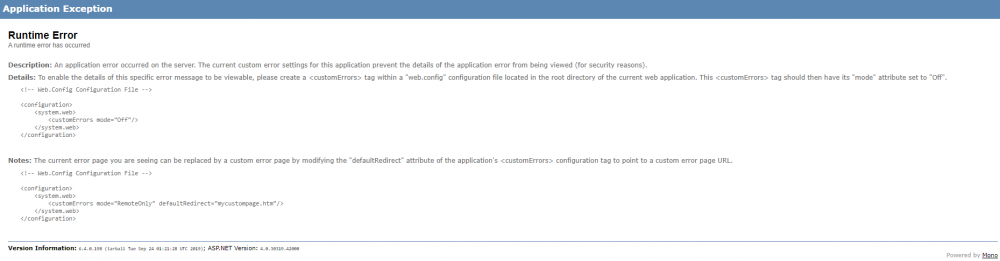
Well looks like this is the custom error that is hidden Not Found The requested URL /Default.aspx was not found on this server.
-
Christmas tree 😀 Though I did change to mysql 5.7 and i no longer get the bind error but the variables are the same like in the mariadb 20191130.txt
-
This is the end result because something does not work somewhere