Zervun
Members
-
Joined
-
I tried removing the unassigned devices various plugins again, and it's still happening. Not much has changed log wise other than an error when I did on nginx - but that was probably due to the removal of preclear root@Nexus:~# cat /var/log/nginx/error.log 2026/02/16 21:38:01 [info] 6761#6761: Using 116KiB of shared memory for nchan in /etc/nginx/nginx.conf:162 2026/02/16 21:38:01 [info] 6761#6761: Using 262144KiB of shared memory for nchan in /etc/nginx/nginx.conf:162 2026/02/17 03:03:59 [crit] 6771#6771: *10894 connect() to unix:/var/run/php-fpm.sock failed (2: No such file or directory) while connecting to upstream, client: 10.0.2.2, server: , request: "POST /plugins/unassigned.devices/include/UnassignedDevices.php HTTP/2.0", subrequest: "/auth-request.php", upstream: "fastcgi://unix:/var/run/php-fpm.sock:", host: "10.0.2.75", referrer: "https://10.0.2.75/Main" 2026/02/17 03:03:59 [error] 6771#6771: *10894 auth request unexpected status: 502 while sending to client, client: 10.0.2.2, server: , request: "POST /plugins/unassigned.devices/include/UnassignedDevices.php HTTP/2.0", host: "10.0.2.75", referrer: "https://10.0.2.75/Main" 2026/02/17 03:04:00 [crit] 6771#6771: *10894 connect() to unix:/var/run/php-fpm.sock failed (2: No such file or directory) while connecting to upstream, client: 10.0.2.2, server: , request: "POST /plugins/unassigned.devices/include/UnassignedDevices.php HTTP/2.0", subrequest: "/auth-request.php", upstream: "fastcgi://unix:/var/run/php-fpm.sock:", host: "10.0.2.75", referrer: "https://10.0.2.75/Main" 2026/02/17 03:04:00 [error] 6771#6771: *10894 auth request unexpected status: 502 while sending to client, client: 10.0.2.2, server: , request: "POST /plugins/unassigned.devices/include/UnassignedDevices.php HTTP/2.0", host: "10.0.2.75", referrer: "https://10.0.2.75/Main" 2026/02/17 03:04:00 [crit] 6771#6771: *10894 connect() to unix:/var/run/php-fpm.sock failed (2: No such file or directory) while connecting to upstream, client: 10.0.2.2, server: , request: "POST /plugins/unassigned.devices/include/UnassignedDevices.php HTTP/2.0", subrequest: "/auth-request.php", upstream: "fastcgi://unix:/var/run/php-fpm.sock:", host: "10.0.2.75", referrer: "https://10.0.2.75/Main" 2026/02/17 03:04:00 [error] 6771#6771: *10894 auth request unexpected status: 502 while sending to client, client: 10.0.2.2, server: , request: "POST /plugins/unassigned.devices/include/UnassignedDevices.php HTTP/2.0", host: "10.0.2.75", referrer: "https://10.0.2.75/Main" 2026/02/17 04:09:21 [error] 6771#6771: *16574 FastCGI sent in stderr: "Unable to open primary script: /usr/local/emhttp/plugins/unassigned.devices.preclear/include/Preclear.php (No such file or directory)" while reading response header from upstream, client: 10.0.2.2, server: , request: "POST /plugins/unassigned.devices.preclear/include/Preclear.php HTTP/2.0", upstream: "fastcgi://unix:/var/run/php-fpm.sock:", host: "10.0.2.75", referrer: "https://10.0.2.75/Plugins" root@Nexus:~# cat /var/log/php-fpm.slow.log [17-Feb-2026 02:49:49] [pool www] pid 1168708 script_filename = /usr/local/emhttp/plugins/unassigned.devices/include/UnassignedDevices.php [0x0000146a1721c8d0] exec() /usr/local/emhttp/plugins/unassigned.devices/include/UnassignedDevices.php:561 nexus-diagnostics-20260217-0458.zip
-
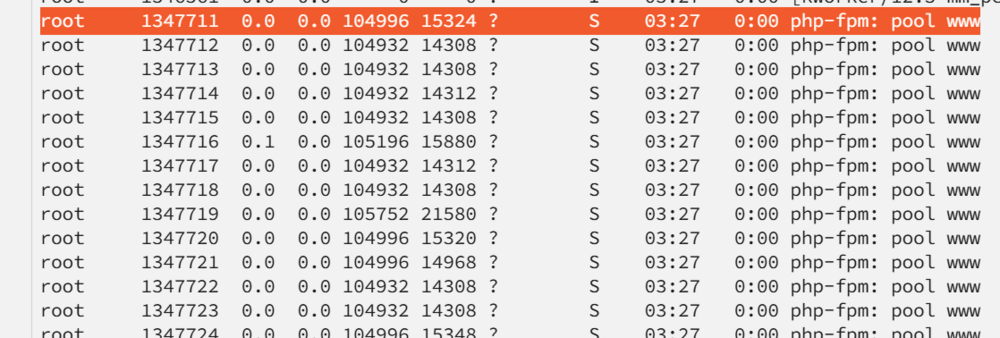
So I've ran into this problem and followed some other threads in trying to diagnose it and hitting a dead end. I have the issue where there are dozens of Main goal is just to find out WHY it is happening, I'm a bit less interested in using scripts to up the setting as a bandaid and more focused on figuring out why it is happening. As soon as I go clicking around the menus, it starts spanning a ton of I have two systems my old 7.2.3 (hardware wise) and my new 7.2.3 fresh install that I am migrating to. My old server does not have this issue, so I'm completely puzzled (checked and yes my old server has this as well periodically) New server consists of ASUS W880 - has IPMI on it 192GB DDR5 ECC 2x WD SNX850 4TB ZFS Mirror (cache) 2x WD 5400 MAX 3.84 ZFS Mirror (cache-downloads) Array XFS - 2x Parity Ironwolf PRO 28TB, slew of 28 and 26TB drives LSI 9400 16i to Supermicro SAS3 backplane, Supermicro 4u case Mellanox ConnectX-3 Minimal plugins installed Appdata Backup CA Cleanup Appdata (haven't used) Community Applications Dynamix System Buttons Fix Common Problems (doesn't show up anything) Intel GPU TOP Unassigned Devices (I uninstalled this but was still having the max_children setting issue and after reinstall is now posting an error (see below) to /var/log/php-fpm.slow.log and /var/log/nginx/error.log - I'm unsure if this is related to max_children as that error still happened when I uninstalled it) Unassigned Devices Plus (I uninstalled this but was still having the max_children setting issue and reinstalled it) Unassigned Devices Preclear (I uninstalled this but was still having the max_children setting issue and reinstalled it) Only other kinda custom things I have done (and does not seem to affect the max_children issue) System drivers i915 - options i915 force_probe=!7d67 xe - options xe force_probe=7d67 I've gone ahead and made the php tweaks to /etc/php-fpm.d/www.conf and restarted the service a couple times slowlog = /var/log/php-fpm.slow.log request_slowlog_timeout = 5s request_terminate_timeout = 60s cat /etc/php-fpm.d/www.conf | grep slowlog ; - 'slowlog' ; Note: slowlog is mandatory if request_slowlog_timeout is set ;slowlog = log/$pool.log.slow slowlog = /var/log/php-fpm.slow.log ; dumped to the 'slowlog' file. A value of '0s' means 'off'. request_slowlog_timeout = 5s ;request_slowlog_trace_depth = 20 root@Nexus:~# cat /var/log/php-fpm.slow.log [17-Feb-2026 02:49:49] [pool www] pid 1168708 script_filename = /usr/local/emhttp/plugins/unassigned.devices/include/UnassignedDevices.php [0x0000146a1721c8d0] exec() /usr/local/emhttp/plugins/unassigned.devices/include/UnassignedDevices.php:561 Note: the unassigned devices thing in the log only showed up after re-installing it, and the max_children still was happening without the plugin root@Nexus:~# cat /var/log/nginx/error.log 2026/02/16 21:38:01 [info] 6761#6761: Using 116KiB of shared memory for nchan in /etc/nginx/nginx.conf:162 2026/02/16 21:38:01 [info] 6761#6761: Using 262144KiB of shared memory for nchan in /etc/nginx/nginx.conf:162 2026/02/17 03:03:59 [crit] 6771#6771: *10894 connect() to unix:/var/run/php-fpm.sock failed (2: No such file or directory) while connecting to upstream, client: 10.0.2.2, server: , request: "POST /plugins/unassigned.devices/include/UnassignedDevices.php HTTP/2.0", subrequest: "/auth-request.php", upstream: "fastcgi://unix:/var/run/php-fpm.sock:", host: "10.0.2.75", referrer: "https://10.0.2.75/Main" 2026/02/17 03:03:59 [error] 6771#6771: *10894 auth request unexpected status: 502 while sending to client, client: 10.0.2.2, server: , request: "POST /plugins/unassigned.devices/include/UnassignedDevices.php HTTP/2.0", host: "10.0.2.75", referrer: "https://10.0.2.75/Main" 2026/02/17 03:04:00 [crit] 6771#6771: *10894 connect() to unix:/var/run/php-fpm.sock failed (2: No such file or directory) while connecting to upstream, client: 10.0.2.2, server: , request: "POST /plugins/unassigned.devices/include/UnassignedDevices.php HTTP/2.0", subrequest: "/auth-request.php", upstream: "fastcgi://unix:/var/run/php-fpm.sock:", host: "10.0.2.75", referrer: "https://10.0.2.75/Main" 2026/02/17 03:04:00 [error] 6771#6771: *10894 auth request unexpected status: 502 while sending to client, client: 10.0.2.2, server: , request: "POST /plugins/unassigned.devices/include/UnassignedDevices.php HTTP/2.0", host: "10.0.2.75", referrer: "https://10.0.2.75/Main" 2026/02/17 03:04:00 [crit] 6771#6771: *10894 connect() to unix:/var/run/php-fpm.sock failed (2: No such file or directory) while connecting to upstream, client: 10.0.2.2, server: , request: "POST /plugins/unassigned.devices/include/UnassignedDevices.php HTTP/2.0", subrequest: "/auth-request.php", upstream: "fastcgi://unix:/var/run/php-fpm.sock:", host: "10.0.2.75", referrer: "https://10.0.2.75/Main" 2026/02/17 03:04:00 [error] 6771#6771: *10894 auth request unexpected status: 502 while sending to client, client: 10.0.2.2, server: , request: "POST /plugins/unassigned.devices/include/UnassignedDevices.php HTTP/2.0", host: "10.0.2.75", referrer: "https://10.0.2.75/Main" Note, that the nginx error log only had the two entries on 2/16 prior to me re-installing unsassigned devices and after I had mapped a SMB drive the errors on 2/17 showed up. 10.0.2.2 is my system I'm using the webbrowser from, 10.0.2.75 is the server Other notes Docker is disabled VMs are disabled Still showing max_children errors When I uninstalled all the Unassigned Devices the max_children was still showing errors but was not as bad, and nothing was showing up in /var/log/php-fpm.slow.log - now that I've reenabled them errors show up in both it and nginx error log, but I'm not sure it has anything to do with the max_children issue nexus-diagnostics-20260217-0345.zip
-
I stand corrected, looks like it wasn't that...
-
FWIW I've narrowed at least my issue down a bit, was the unassigned devices plugin, or preclear or the other one when I had a gl.inet KVM plugged in. Going to have to diagnose if it was the KVM or the actually plugins but the warnings seem to have dissapeared.
-
I'm having this same issue and can't figure it out for the life of me...
-
This is happening to me as well with a fresh install of 7.2.3 with very minimal plugins/dockers on. Happens even when I stop all the dockers. Intel quicksync driver, had GPU statistics but removed that and still happening.
-
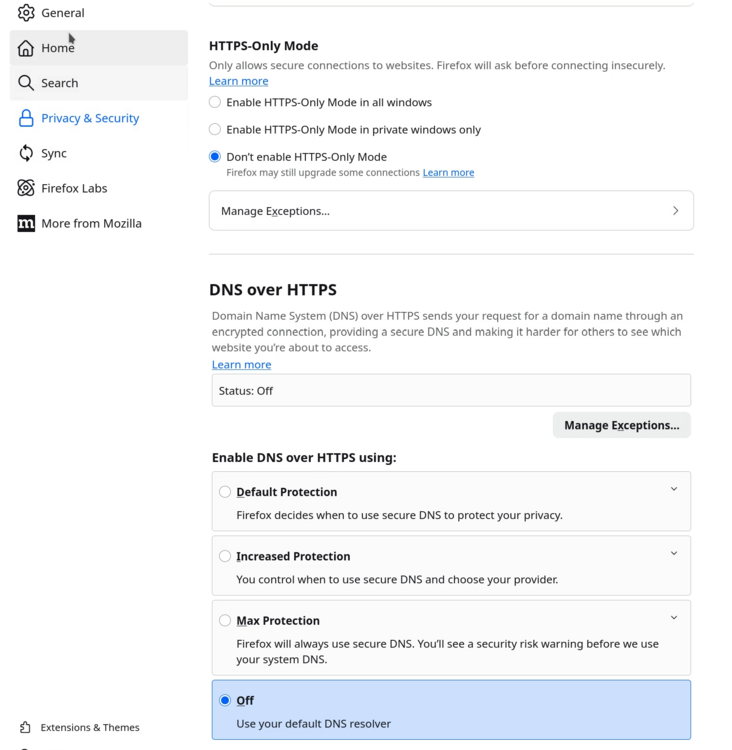
Hopefully this helps people out - I was poking my eyes out trying to figure this out You need extra parameters set to (if there is already one there, add this after) --dns=x.x.x.x where x.x.x.x is the DNS IP address that is found in your wireguard configuration file per the first post readme IF you are using the Firefox container to test, by default it has built in DNS over HTTPS which overrides local DNS settings. Go into Firefox privacy & security, scroll down to DNS and turn it OFF Restart Firefox container and test with www.dnsleaktest.com or mullvad.net/en/check For other containers if they have nslookup, you can use that as well
-
Sounds like an issue with your VPN provider. I would wager a guess that there are disconnection issues, retries or something of the sort. Have you checked logs? The first stop every single time is to look at your appdata logs of the container. Is your VPN provider getting blocked by IPS/IDS and/or DNS lists?
-
I tried searching the thread and have read the github FAQ. I don't think I've come across this question. I've had wireguard successfully running for a long time. Today, it looks like mullvad changed one of their endpoints I was using and/or they are having issues with the endpoint. Absolutely nothing to do with the container/functionality. Obviously I couldn't access the gui, searched the logs and it was issues with mullvad connecting. So I grabbed a new set off endpoints from them, deleted the old wg.conf file, uploaded a new endpoint, chowned it properly and blam it worked again like magic as I expected it would. My question is - when we get these VPN endpoints from the providers, they are usually bundled up into a dozen or so endpoints in a zip file per whatever location you select. I obviously used one of those. Is there some best practice to be able to change the endpoint? I gather I could just open wg.conf file and edit that but I was wondering what happens for example if I just throw all the endpoint conf files in the wireguard directory? Will it just use the first one? Or will it bug out? Can I just leave the others there for quick reference? This is obviously an extremely small annoyance and has nothing to do with the container itself but how wireguard operates. Since I have files all over the place I'm just wondering if I could drop them in the wireguard folder, so I could just ssh in and have the files there for copy and pasting. I'm assuming with how wireguard operates I couldn't create a script that if the first one failed it would use the next etc. As always thank you so much binhex for maintaining these containers they are awesome.
-
Ya, I'm not sure of what my issue was. Unfortunately I was without power for a week and internet for about a month during the Oregon storms. When I started it back up it was the Plex permissions changes and Nvidia changes. Not sure if either of those caused an issue, or I got some corruption somewhere. I did update things but it was crashing quite a bit. I did try and do some database restores, but they didn't work on this last pass. I did install binhex plex and it is working fine, so I migrated over to that. This was before I knew that you could copy all your meta data and so forth over but oh well. I might reinstall and migrate back to binhex plexpass in the future.
-
Same - this has been happening to me once or twice a day. Restarting fixes this until today, where about a few minutes ago I can't access the webgui at all. Tryed updating the container etc. All other binhex dockers (sonar, radar, sabvpn, delug, etc work fine) I check logs, nothing seems unusual. Looks like it starts but no webgui
-
Just a note, after the latest forced update everything is working well again.
-
Having trouble connecting to Mullvad this morning and the webui. Looks like it is getting a soft connection reset. Force updated to the latest image (was working yesterday). Edit: I can connect to mullvad on other computers. Couldn't find any errors in the sup log file. Sup file attached supervisord.log
-
Confirmed - works now thanks!
-
Ah makes sense - annoying. I see it now and missed it when looking through the log. Thanks for looking at this! I really appreciate it!