gustomucho
Members
-
Joined
-
Last visited
-
I've been using the @mgutt recommended settings for years now. Until recently, it has always worked flawlessly. For a few weeks now (that I have noticed), RAM usage doesn't seem to purge itself, even after transcoding has ended for many hours/days. The only way I have found to clear the RAM is to restart the Plex container. My tmpfs-size is set to 16000000000. Oddly enough, RAM usage will always creep up to roughly 50% of that amount. Right now, after inserting the command "df -h" into the Plex console, here is the return : tmpfs 15G 7.4G 7.6G 50% /tmp And if I restart my Plex container, it goes right back down to : tmpfs 15G 12K 15G 1% /tmp I don't know if this is the same problem as @Pandemic reported a few weeks ago, but this is definitely a new behaviour in my case. Could this be linked to a new Plex Server update (I'm always using the latest stable release)? I have not yet tried reverting to an earlier Plex Server version, but I might eventually just to test it out. Any ideas?
-
After encountering the same issue, I found a simple fix you guys can try. If you were previously using checkip.dyndns.org to check your IP (in ddclient config : web=checkip.dyndns.org), and you also had the setting SSL=yes, then this might also be the source of your errors. It seems the https of said website no longer seems to exist and thus cannot be used to check your IP. A simple fix is using cloudflare's trace function to check your IP if you want to keep SSL enabled. In ddclient config, simply change web=checkip.dyndns.org for web=cloudflare.com/cdn-cgi/trace Otherwise, you might try changing change SSL=yes for SSL=no and keep using dyndns.org, but I have not tried that. Let me know how it goes.
-
Nvm
-
Interesting! What happens if you limit yourself to 4GB and for example you try to locally download a 8GB transcoded movie to a device?
-
Is there any actual difference in speed (in real world use) between a PCI-e 2.0 and PCI-e 3.0 model (for example 9211-8i vs 9207-8i)? The latter are more expensive and I'm wondering if it should result in any actual noticeable speed difference? Setup would be with 8 drives connected to the HBA for the next few years, but eventually maybe more than 8 drives with the use of a SAS expander.
-
Glad I could help someone else
-
Thanks alot for the quick answer! Problem solved
-
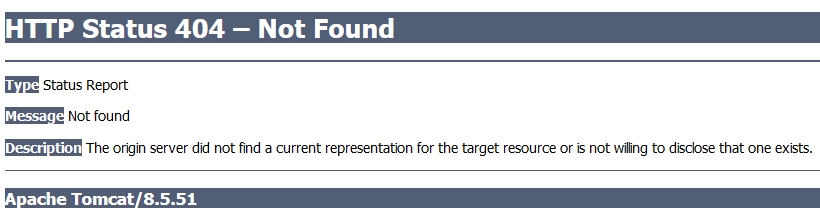
I'm having some problems with my reverse proxy for a particular container (Linuxserver's Airsonic). I recently updated my containers (both Airsonic and Swag). Everything was working perfectly fine before the update. Now I get the following error : I am using the default subdomain.conf file provided with Swag (airsonic.subdomain.conf) Just to make sure, I tried deleting the config file and using the new one that gets automatically downloaded. The results stays the same. I can still access the Airsonic docker using the local address. Also, all of my other containers using Swag reverse proxy still work perfectly fine, so it seems isolated for Airsonic. The log of Swag does not bring up any error and airsonic subdomain is shown in there. Any ideas?
-
After tinkering with this for a while, it seems the solution is much simpler than I thought. For some reason, the only step required is to modify the config.php file. No need to install ffmpeg or even to enable the app "Preview Generator" inside Nextcloud. I'll leave what I did here if it can help anyone looking to generate thumbnails for video files : 1. Go to your config.php file located at /mnt/user/appdata/nextcloud/www/nextcloud/config/config.php 2. Just before the end of your config file, add the following lines (after the 'installed' => true,) : 'installed' => true, 'enable_previews' => true, 'enabledPreviewProviders' => array ( 0 => 'OC\\Preview\\TXT', 1 => 'OC\\Preview\\Image', 2 => 'OC\\Preview\\MP3', 3 => 'OC\\Preview\\Movie', 4 => 'OC\\Preview\\MP4', ), ); You can also add other file types that you require (mkv, avi, etc.)
-
I actually cannot see any video thumbnails, either on the web interface or in iOS. I quoted the other post since it looks to be related to my problem in some way. Nextcloud official documentation clearly seems to indicate that in order to generate video previews/thumbnails, you need to install ffmpeg and configure your config.php file with the following lines : 'enable_previews' => true, 'enabledPreviewProviders' => [ 'OC\Preview\Movie', 'OC\Preview\MP4', The problem is that I don't know how to integrate ffmpeg. There is a ffmpeg docker available for unRAID (FFmpeg mkvdts2ac3), but how to make it interact with Nextcloud, that I do not know. I also found some other online resources, but I don't know how to use code lines like "apt install ffmpeg" on unRAID (or in general for that matter)!
-
Did you figure out how to do this? There are a few posts in this thread asking how to generate thumbnails for video files, but nobody ever gets an answer From what I gathered, one needs to install ffmpeg. Does anyone know how to do this and make it interact with NC?
-
For me the main problem was the download speed while using the integrated Relay service. I would get really slow download speeds (1-3 MB/s). I decided to use a reverse proxy and disable the Relay service. Took me a bit of time to figure out as I am still new to all this, so I'll just leave what I did here in case it helps someone. 1. First I followed SpaceInvaderOne's guide on setting up Letsencrypt/Swag (easily found on youtube). You should then already have a custom network type called "proxynet". 2. Create a CNAME on your DNS provider with your desired subdomain name. You can use "tonido" for simplicity. 3. You then need a .conf file for Letsencrypt/Swag to use with tonido. The Swag container already offers a lot of premade configs, but none for Tonido, so here is what I used. The only things you could need to change are "server_name tonido.*;" in case you wanted to use a funky subdomain name. Also, for the line "set $upstream_app Tonido;" if you changed to docker container name, this is where you input the modified docker container name. server { listen 443 ssl; listen [::]:443 ssl; server_name tonido.*; include /config/nginx/ssl.conf; client_max_body_size 0; location / { include /config/nginx/proxy.conf; resolver 127.0.0.11 valid=30s; set $upstream_app Tonido; set $upstream_port 10001; set $upstream_proto http; proxy_pass $upstream_proto://$upstream_app:$upstream_port; } } Afterwards, you can save that config file and name it something recognizable, for example "tonido.subdomain.conf" Simply save the config file in /mnt/user/appdata/swag/nginx/proxy-confs 4. Modify your swag container and add your new subdomain at the line "Subdomain(s)". 5. Finally, open your tonido WebUI, go to Settings/Network, uncheck "Enable Relay" and uncheck "Enable WAN to LAN re-direct". 6. You should be good to go; your tonido instance should be accessible through your subdomain with blazing fast download speeds. As I said, this was done through trial and error, so if anyone has a better way to do or some suggestions, feel free!
-
@xthursdayx It is actually much easier than that. Simply copy the contents of your "/mnt/user/appdata/rutorrent/rtorrent/rtorrent_sess" into the following folder : "/mnt/user/appdata/binhex-rtorrentvpn/rtorrent/session" Everything should be good to go.
-
I am also wondering how to install ffmpeg to be able to generate thumbnail for video files. Does anyone know how to do this?
-
Nope. I left it at the default "cache". Later today I'll try putting back /mnt/cache/ again and rebuilding the docker just out of curiosity to see what happens. I'll keep you posted.