endystrike
Members
-
Joined
-
Last visited
-
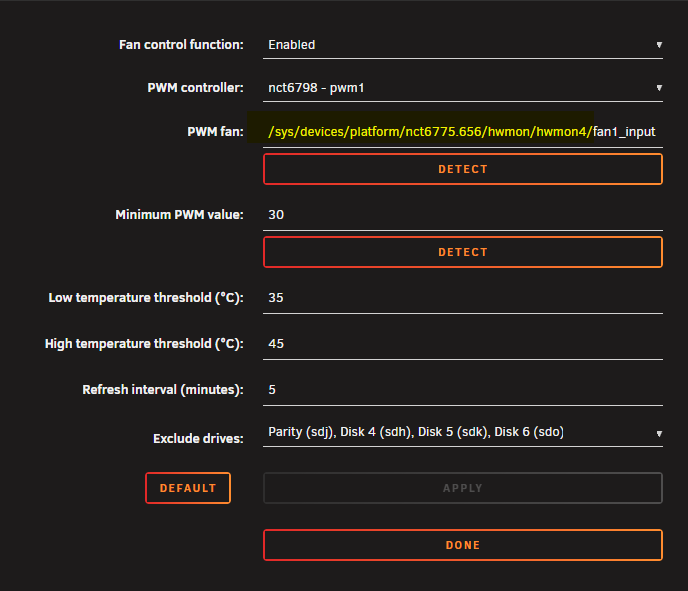
For all the people who struggled in identifying the PWM number, I suggest to do the following: take note of this part of the string, this identifies the base address of your PWM fans: So in my case I copied the base address: /sys/devices/platform/nct6775.656/hwmon/hwmon4/ Now from terminal I can try to set each fan (one by one) at 100% of the power to see which fan react to the PWM number. This for example for PWM controller #2: # Now we're going to set PWM control to manual echo 1 > /sys/devices/platform/nct6775.656/hwmon/hwmon4/pwm2_enable # Then now we're setting it to max power to identify which fan in the case react to PWM 2 controller echo 255 > /sys/devices/platform/nct6775.656/hwmon/hwmon4/pwm2 # finally once PWM 2 controller has been identified, we can set the fan back to PWM mode to auto echo 5 > /sys/devices/platform/nct6775.656/hwmon/hwmon4/pwm2_enable Now you can repeat the process, just change pwm2 with the next one you wanna test and so on until when you'll have tested all... Of course you can use this technique also to identify manually the minimum PWM value, once you've set the PWM mode to manual, just use the second command to vary the PWM value from 0 to 255 and choose the value you prefer. Sometimes I saw that after changing the values and saving them in the plugin it was a total mess even if I was sure 100% I did everything properly, but then everything got fixed after a server reboot.
-
Ciao @Ricyx , ho fatto i dovuti test e sono giunto alla conclusione che non aveva senso tenere la P2000... Semplicemente il transcoding con la UHD630 non era così tanto più lento da giustificare il consumo di una GPU dedicata. Grazie mille ancora per il tutorial, spero di poter utilizzare al meglio lo slot PCI-E che si è liberato!
-
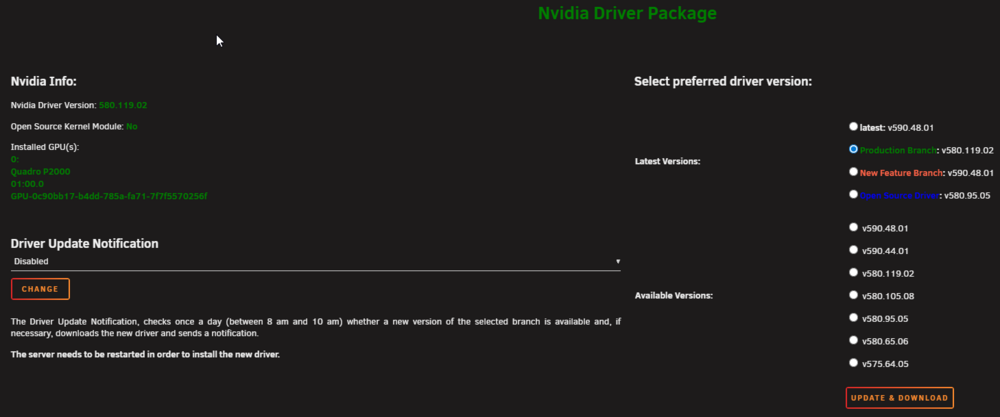
in realtà ultimamente non uso neanche praticamente più il transcoding nel senso che avevo trovato in offerta il "Fire Stick 4K Max", ma il server ormai è rimasto quello però ormai va sempre tutto in direct play... Diciamo che ogni tanto condivido con qualche amico qualche file della libreria e vedo che fanno transcoding ma si tratta sempre e comunque di singoli casi, per cui direi mai più di 1 alla volta... Ormai sta P2000 è lì ma col senno di poi avrei dovuto prendere i fire stick molto prima e forse non avrei proprio nemmeno dovuto pensare al transcoding e far solo direct play sul Fire Stick... Per la GPU Nvidia non ho un docker dedicato, uso il plugin che mette i drivers, mi pare si chiami proprio "Nvidia drivers" e poi dai settings del container di Plex si va a dire quale scheda usare mettendo appunto l'hardware id che ti da il plugin dei drivers, in questo modo il transcoding viene fatto dalla GPU sulla RAM, credo della mainboard comunque perché /transcode è mappato sul docker su /tmp che in Linux è appunto la RAM della mobo, non quella della GPU. Notavo però dal tuo tutorial che tu usi come percorso di RAM /dev/shm anziché /tmp. Il tuo setting è molto più sicuro, mi sono informato e non è detto che /tmp finisca sempre sulla RAM, per cui ti ringrazio e cambio il puntamento del mio per essere sicuro che lo faccia sempre. https://claude.ai/share/c4315744-73cd-4a80-ab81-589a82890f7f
-
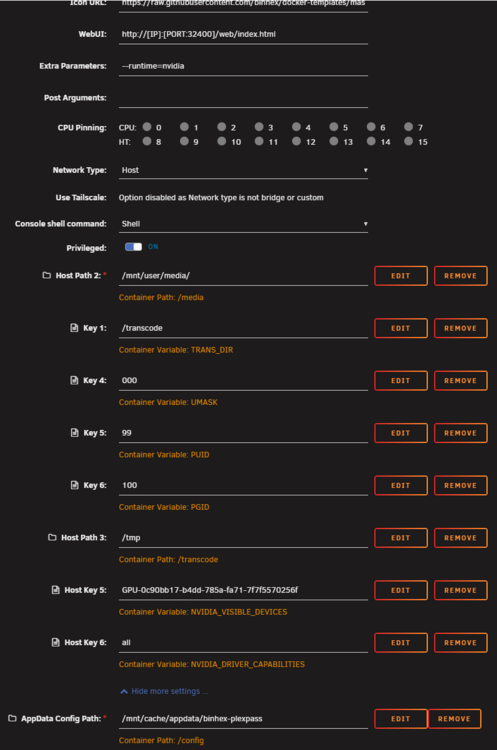
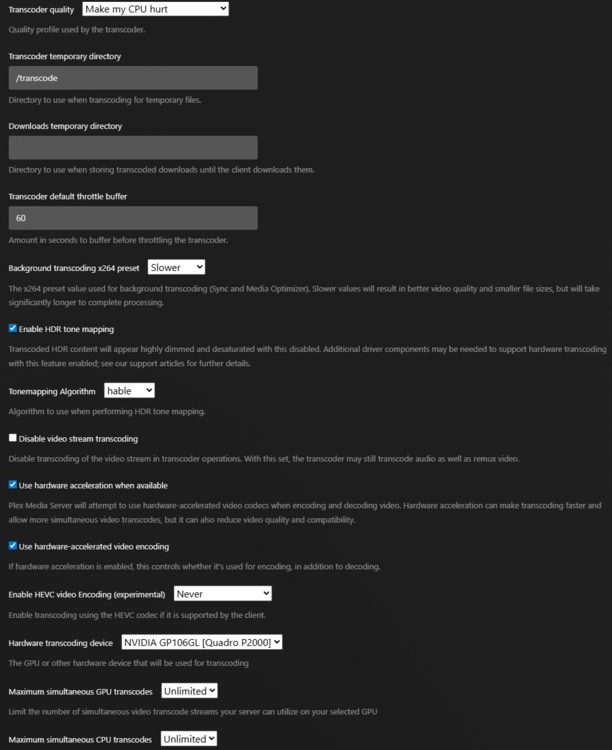
Ciao @Ricyx , la tua guida mi mette in crisi 😅, mi spiego meglio: ogni volta che cambio i settings del transcoding su Plex, succede un casino e ormai da 2 anni e passa non ho problemi facendo il transcoding sulla RAM tramite la GPU dedicata, una nVidia Quadro P2000. L'anno scorso ho aggiornato la build e ho preso usato un blocco con 9900k e 32gb di RAM e non mi sono minimamente impelagato a pensare di togliere la GPU dedicata che avevo già dalla build precedente (la P2000) per far fare recoding tramite GPU integrata (la UHD630). Al di là del risparmio energetico (credo minimo visto che cmq la GPU dedicata stà il idle la maggior parte del tempo, in status P8), che vantaggi avrei a spostare il recoding dalla P2000 alla UHD630? Entrambi cmq fanno recoding sulla RAM, non sul SSD cache o ancora peggio sui dischi dell'array... grazie! Questa è la mia configurazione di Plesk, uso Binhex PlexPass, anche verificando, stò già facendo recoding sulla RAM, Plex scrive sulla "/transcode" che di fatto dai settings del docker scrive su "/tmp" quindi nella RAM. Grazie!
-
Hi @JorgeB, Is there any particular risk in updating also the UEFI like this (without erasing anything) from a Windows machine? I feel more confident in flashing those cards from a Windows environment and later to move the card to the Unraid server sas3flash.exe -o -f SAS9300-16i_IT.bin -b mptsas3.rom -b mpt3x64.rom Thank you!
-
Hello everyone, just wanted to report that in 6.12.0-rc2 the speed of parity check seems to be slower than in 6.11.5 by ~10%. I always do parity check disabling all the dockers that could access file and all VM were shut down, turn off all user scripts may have access to the array and don't use any share on the Unraid server from any PC (I did parity check at night and all other PCs were shut down), so I'm sure 100% I did all parity checks you see here in the same conditions. I attach diagnostic report, hoping it may help. endys-diagnostics-20230412-0149.zip
-
have you already tried to reboot the server after installing the plugin? Initially it wasn't working on my server too, but after a reboot the plugin started working fine and since then I had no issue!
-
what do you mean exactly? I cannot understand... This plugin just adds the possibility to spin down SAS drives too, because Unraid natively supports spin down only for SATA drives... But the spinning down mechanism once you've installed this plugin is the same...
-
imho that's what spin down mechanism is meant to be and to do... it's a stort of "standby" and then when you access those drives they spin up again until when due to inactivity (aka "Default spin down delay" setting in Settings > disk settings) occurs again they spin down again and so on!
-
any idea @JorgeB? Thanks for your help!
-
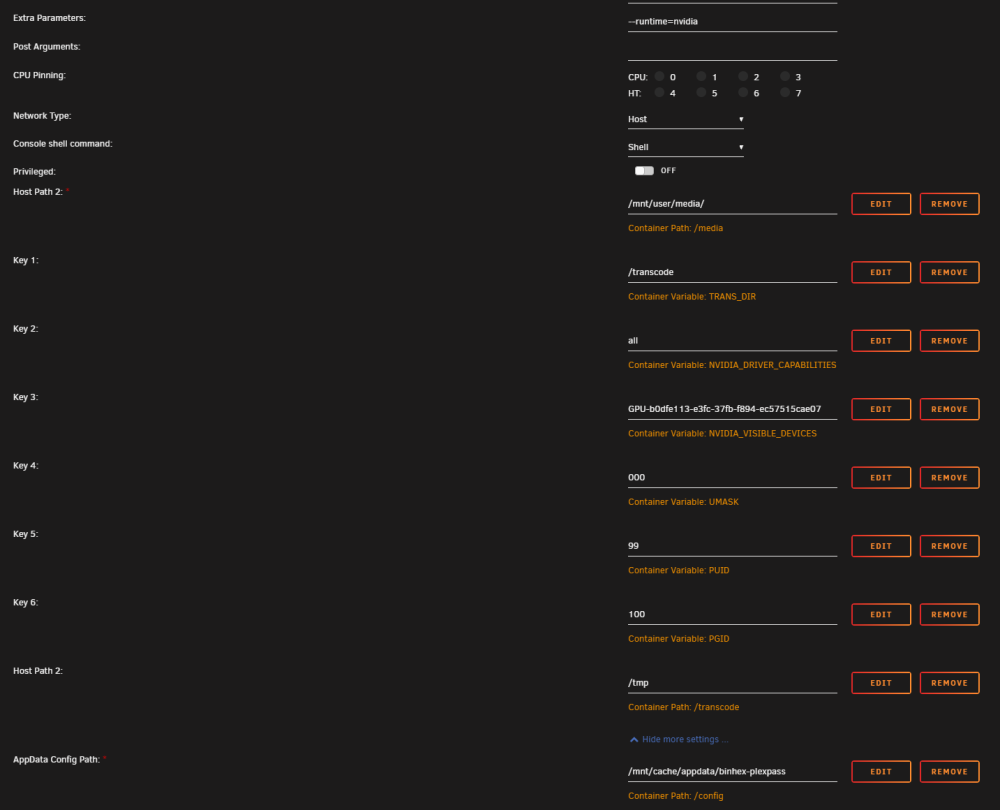
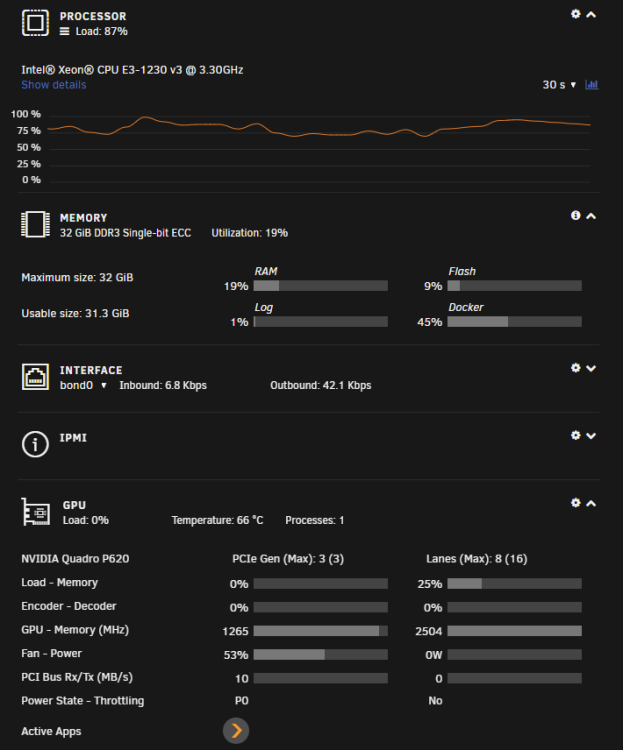
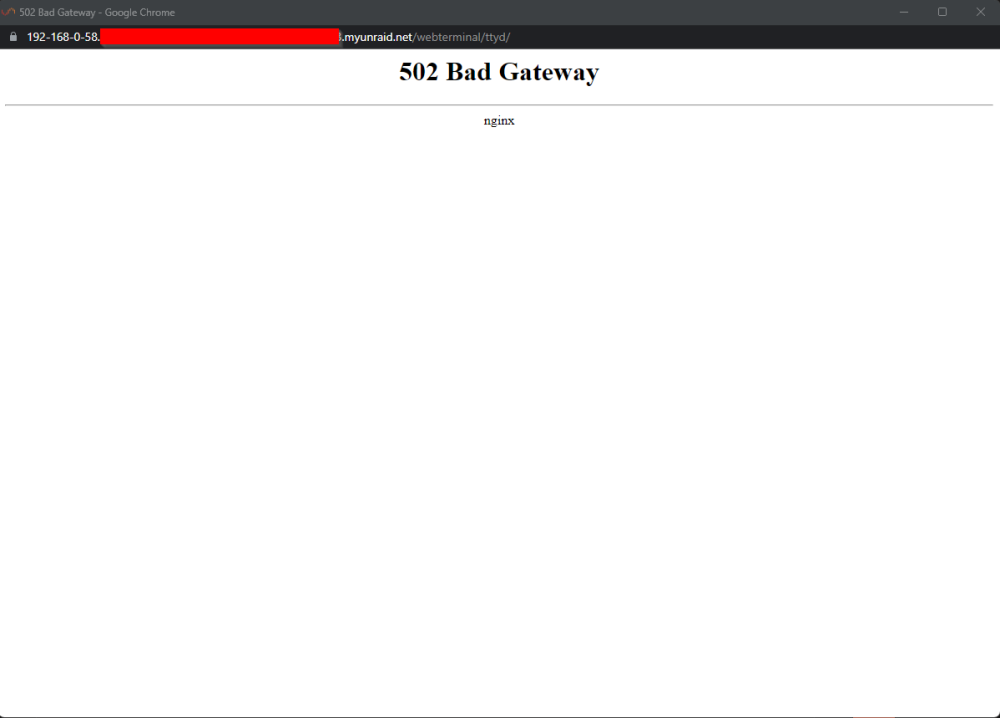
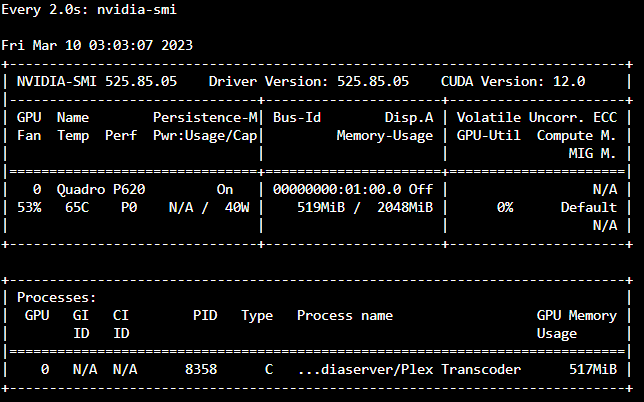
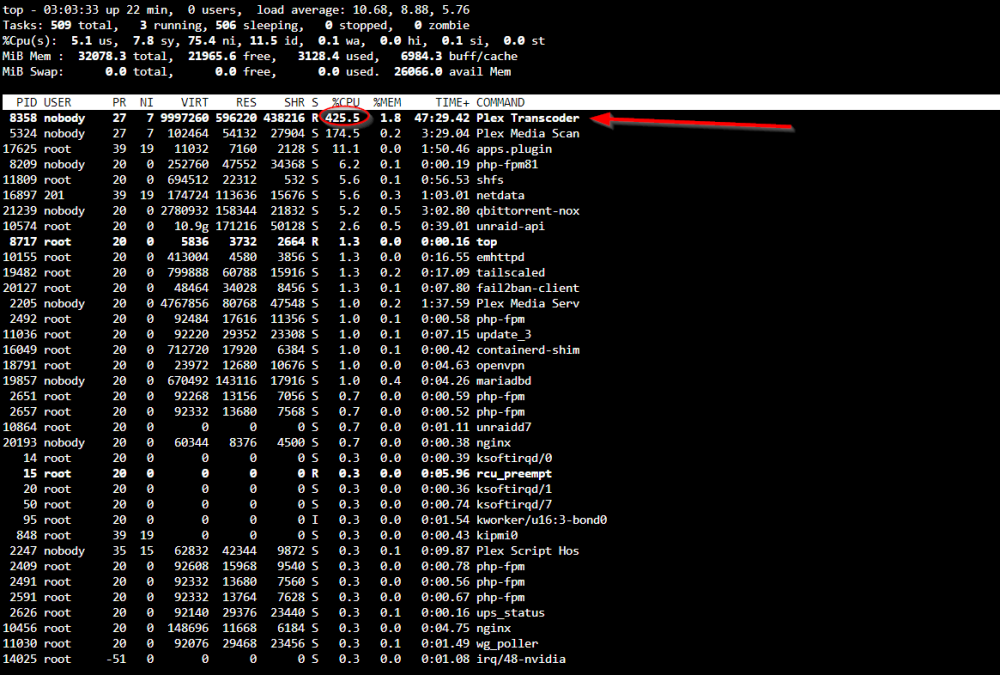
Hello, since a couple of days, I started noticing a couple of issues on my server: when I edit a share, it takes a long time to restart services and so on Cannot do a graceful shutdown, even if I increased the timeout from 90s to 300s Plex stopped transcoding correctly. Instead of using GPU, it freezes or uses CPU, but keeping GPU used as well Also terminal windows doesn't show up correctly anymore and I have to refresh the page to get it working Thanks for your kind help! Here are attached my diagnostic report and Plex configuration as well. Terminal endys-diagnostics-20230310-0254.zip
-
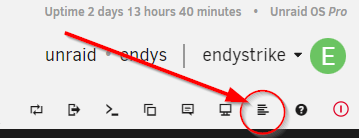
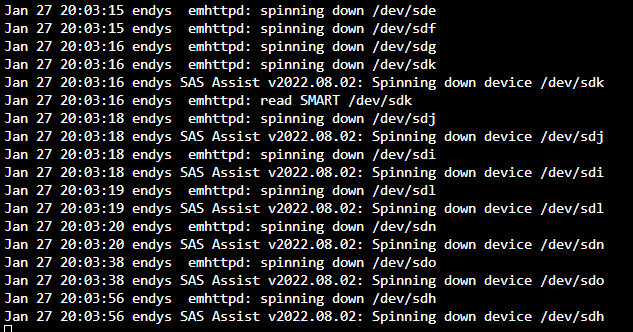
I've installed SAS spindown on my Unraid 6.11.5 and it works fine. I just have to say initially it wasn't working at all then I just reinstalled the plugin and rebooted the server and since then it started working perfectly... I'd just suggest to reinstall and reboot the server, then try to spin down a SAS drive while the syslog is open and you should see something as follows. Btw, the log you've to check is this one. PS I don't know for other users if it's the same, but some drives' models require more time to spin down, but it's not a problem for sure... Here I tried to spin up and then spin down all the drives, you can test if everything works doing the same. I'm really thankful to the creator of this plugin, I have 8 SAS drives in my build and I'm constantly saving 80w!

-
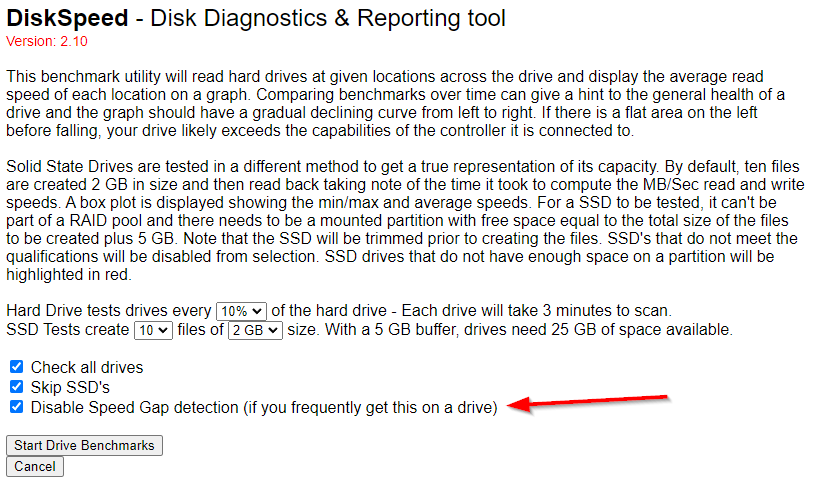
try disabling other dockers, sut down VMs, ensure mover is not running and make sure you're not accessing the drives from elsewhere during the benchmark... This is the main reason why speed gap detection occurs. By the way, I still get that alert but with that box flagged, the test continues anyway.
-
I got that alert too, I just disabled flagging the correct box and no other issue appeared after...
-
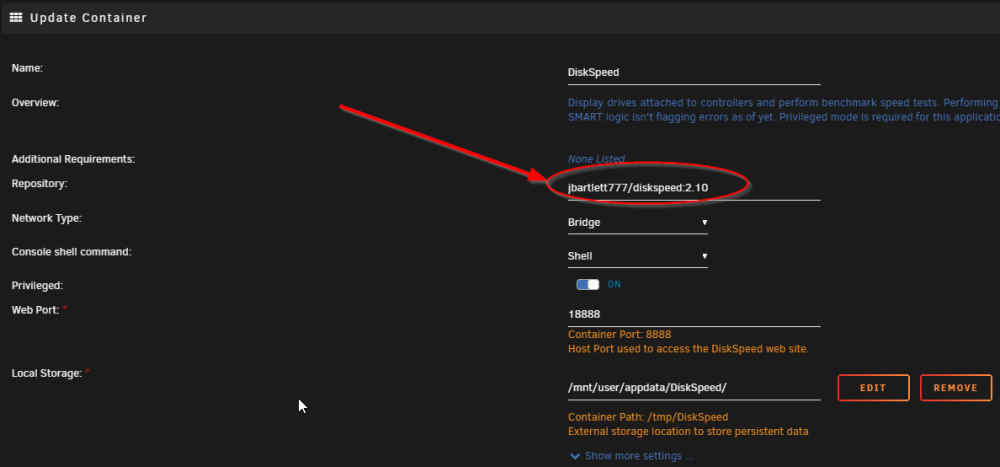
Guys for anyone having the issue of some HDD models recognized as SSD, I found a temporary fix: rollback to version 2.10. How to do that? Just edit the docker settings and set this field as follows: if the issue still persists, just remove the docker, delete the following folder "/mnt/user/appdata/DiskSpeed/" or wherever you've saved the app data of this docker, then when you reinstall the docker, set the repository field as "jbartlett777/diskspeed:2.10". In the future, when the bug will be fixed you'll just have to edit the docker again and set the repository to pull the latest version as follows: "jbartlett777/diskspeed". Hope this will help!