





2STRonin
Members
-
Joined
-
Last visited
-
No, no, I can't be angry with the cat (well, let's say at least not for long and not seriously). As described, it is a chain of unfavorable circumstances and I admit at least a partial blame because I simply naively brought such a valuable device into play without knowing about the apparent shortcomings of Ext4 in connection with NVMe controllers (Trim):) NTFS seems to spoil you too much, something like that hasn't happened for a long time. edit: To be honest - my guilt is bigger than the cat's XD I'm actually old enough to know that you don't put things in uncertain danger that you can't replace or where the loss has a high impact. ;)
-
I think it's bricked too but I insist :not by me ;D A repair from the manufacturer is unlikely (EOL) and certainly does not make economic sense. A comparable new device is far far beyond my current possibilities. At the moment I see it as a very expensive lesson to keep everything of value away from "Linux", especially NVMe Tech. I don't know yet whether a firmware flash from me is possible at all, in general it is very difficult to get any information about it from Samsung.
-
Just to clarify, I didn't want to blame anyone here. And yes paying consultants or experts to be misunderstood and ignored sounds familiar to me XD Yes, I came, saw, and failed. ;) Windows is very unhappy with the SSD. DiskManager takes a long time to open the devices, never a good sign. On the hardware side, everything seems fine, the device reports everything green via status LEDs, also reports correct values but Smart cannot be read. DiskPart Clean works but doesn't help, Clean All reports a write protection that cannot be removed. Initialization in Disk Manager acknowledges with "Device not ready" MK2FS cannot write to sector 0 and therefore cannot create a homogeneous FS. Something is worse but my skills are not yet enough to say what exactly.
-
The short story of a Windows refugee General history: I'm a PC nerd / gamer who has been trying to escape from the usual suspects. Recently, driven by economic constraints and the increasing aggressiveness of corporations to force as many people as possible into any subscription models, forced. I came to IT out of personal interest and worked there for many years, for example as a mid-tier corporate sysadmin, system architect, system engineer. What you had to do in a company that says they are like a family ;D I was mainly active in the enterprise world, i.e. Windows, HP, Cisco – the usual suspects. To be honest, for a long time I thought linux was a nice gimmick that is to be welcomed, because it might be an alternative at some point (apart from later more professional solutions such as mail systems and hypervisors). Technical history: For several years I have been running an UNRAID server based on SATA, mainly as a file server, Docker/Plex media server. Very successful, I have never had major problems with unraid that I could not have solved myself. While looking for alternatives to the conventional raidcontroller/enterprise disk/server operating systems that I had been using until then, I came across unraid. Because it was intended as an interesting test project at the time, I used older, used hardware to build this system - i7 3xxx, ddr3, consumer board, cheap sata controllers not ideal. I was pleasantly surprised how satisfying and trouble-free this system ran for years and quietly developed from a test system to the main server. That was probably a problem, as it turned out now, because the inconspicuousness lulled me into a false, naïve sense of security. Since I have more time than money in the last few months (; D) I came up with the glorious idea to finally make the server "right". From economically rosier times, I still have a lot of hardware that I wanted to use for this, namely a low end server board with low power i5, some enterprise HDDs and an enterprise PCIe NVMe SSD. I thought to use these "treasures" from better times to create a more professional system and move my data there. Fortunately, I didn't come up with the stupid idea to do a hotswap, the old server continues to run happily – under conditions that I would describe as a harsh endurance test environment. Creation of the new media server: So I procured additional materials, small parts and finally the UNRAID license, a financially exhausting process for me that took some time. Assembling the server - bequiet silentbase 601 - Supermicro Board 8x SATA, 2x M.2, 4x GBit - i5-9xxx - 16GB RAM Non ECC - 7x 10TB HGST - Power supply 850W (I still had that and you know how it looks with the hardware prices) went surprisingly smoothly, almost suspiciously ;D I hadn't thought of a Pool Cache SSD at first. In the old server, several sata ssds run as a pool cache so inconspicuously that I did not focus on this aspect at first. I initially installed unraid as a test system, but then used the pre-Christmas offer for full licensing at short notice. The creation of the base array went just as smoothly (2 parity, 5 data). What happened: I finally came to the Docker topic, mainly for the media server. As mentioned, I used plex so far, because of their "professionalization" of the license model and out of technical interest I wanted to try jellyfish. So I needed a cache ssd and wanted to use the board-side m.2 slot for it. Since I have already switched several clients to linux in the last time, my stocks are meagre and I don't need to complain about the cost development of nand memory here. A decommissioned m600 of dubious reliability (I have already lost one, a week after the warranty expired) was still there, I thought it was right to experiment for the time being. Just make a backup as soon as possible, I thought. She lasted 3 days and took all the experiments with jellyfish with her. Cache drive missing docker unable to start. Annoying but something like that happens, I thought. XD I wanted to continue with the docker/jellyfish tests but there was no expendable m.2 nvme available and so I came up with my preciousss Into the game. A samsung enterprise pcie nvme 6.4tb an artifact from better times, which I always dealt with like raw eggs, not least because it cost an arm and a leg even when it still existed and was considered affordable. Unfortunately, I had reformatted it from ntfs to ext4 just before, that will be important. XD So my sweetheart installed, fits the motherboard as if they were made for each other, temperatures are fine. I left the filesystem at ext4, that will be important. So I recreated pool cache, reinstalled docker, rebuilt jellyfish databases and continued to play around with it. It lasted 3 days then the cat came. The silentbase case has the power switch at the top of the case, very exposed, and my cats are heavy enough to trigger a 4 second forced shutoff. This is exactly what she did, during an ongoing parity check and while reading a jellyfish library. Annoying but usually not a problem, I thought. Cache drive missing, unable to start docker. I waited for the parity check that was triggered by the forced shutoff to at least have a clean array parity before I took care of the cache pool further (and secured the power switch against further animal attacks)- 12h later… After a clean reboot, the SSD was back, theoretically. Practically the filesystem was destroyed and could not be reformatted within unraid. All attempts to get the SSD to work also failed. In linux and windows. Status at the current state of information: I lost very valuable hardware from a combination of - Animal misconduct :) - Linux ext4 in combination with the filsystem history of the ssd - Own lack of corresponding skills combined with naïve trust in open source solutions What did I learn from it, technically: - Linux is not to be trusted in general, in particular the use of Ext4 in connection with NVMe disks seems to be an almost malicious trap. I am stunned how casually a simple power failure or an unclean shutdown can lead to a permanent defect of hardware, which is actually already secured against such things by itself. I'll put it this way: with ntfs this wouldn't have happened (or so i think at least) ;) What I learned from it, meta level (not so positive): - If you have a problem with hardware in connection with Windows, you have options, there are still accommodating people and in the worst case you could (at least theoretically) get paid support. If you have a problem in the linux world you are really alone, even more you expose yourself to the most vicious community imaginable, which tends to use your problems to damage you psychologically, at least that was my strong impression in the course of my research on Linux file systems, possibilities for superblock rescue and such things. "Haha, you would have made a backup" "There's nothing you can do, just throw it away" - Private computing was yesterday, you have two options today: Throw your data into the throats of faceless corporations that see you as livestock that can be farmed without moral ethical concerns – but in return you keep your data in access longer, it just doesn't belong to you anymore. Or rely on open source, that can work, but it doesn't have to work – better not rely on it and don't think that anyone will help you. Ps Please excuse the shortcomings of an automatic translation and the sarcasm that may occur in places. The loss hurts me very much - and of course I have backups ;)
-
diese entry modelle von schneider haben aus meiner sicht ein riesen problem (ausser das plv): es ist nicht vorgesehen das man den akku tauschen kann. natürlich gehts trotzdem wenn man nicht ganz ungeschickt ist aber bemerkenswert fand ich es schon. wie ich sehe ist auch bei den aktuellen bx modellen nicht vorgesehen das der anwender den akku selbst tauschen kann... 😶
-
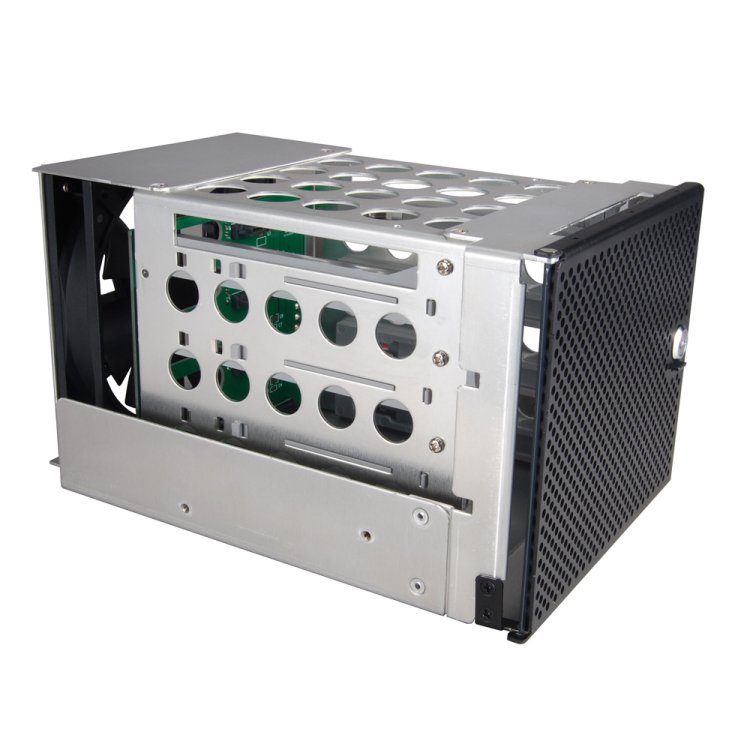
mir gefallen noctua produkte qualitativ so gut, das ich ihnen sogar das default farbthema der lüfter verzeihe/toleriere/aktzeptiere. 😂 ich hab welche aus den frühen tagen des unternehmens (so gefühlte 10; 15 jahre?!)die immernoch ohne bedenken eingesetzt werden können. mhhhh grundsätzlich schon aber die icy gehäuse sagen mir nicht zu. unter anderem finde ich persönlich das qualität zu preis verhältnis nicht sonderlich motivierend. bevor ich mir so ein icy dock kaufe, würd ich dann doch lieber ein gehäuse mit internen platten verwenden. ich hab noch zwei lian li irgendwas mit ex-34 ( 4in3 alu cage mit backplane und lüfter, bild unten ) äh ja, ziemlich treffend aber (ua) deswegen mach ich das hier ja. wobei bei den werten schon irgendwie meine hoffung zerschlagen wird, das der wahnsinns idle verbrauch hauptsächlich von dem redundanten zippy bzw supermicro overpowered netzteil herrührt. es scheint mir offensichtlich, das ich da auf jeden fall an den komponenten sparen muss in der unraid nas. also nur die platten die ich wirklich brauche (einer der vorteile von unraid aus meiner sicht) und das sind auch keine sonderlich guten vorzeichen für die geplanten betrieb des raid controllers als hba. find ich richtig gut, einfach, übersichtlich, aufs wesentliche reduziert. top! mit dem nh-u12s hat das gerät sowieso gleich mal einen sympathiebonus wie ich finde. 😁
-
oha. naja hätt ich mir eigentlich denken können, immerhin braucht man bei diesen servercontrollern in einem desktop gehäuse zwingend einen lüfter. und von keinem verbrauch käme auch keine abwärme... edit: ich hab gerade mal die zeit gefunden, mir den bestehenden server in bezug auf den durst, näher anzusehen. - ausgeschaltet: 8-12W (!) (da haben wir wohl ua das von minion angesprochene IPMI) - boot: 90-165W - normalbetrieb nach boot (dfs, ad, ps, templogger, powerchute, derlei dinge): 120W das ist natürlich unschön so.
-
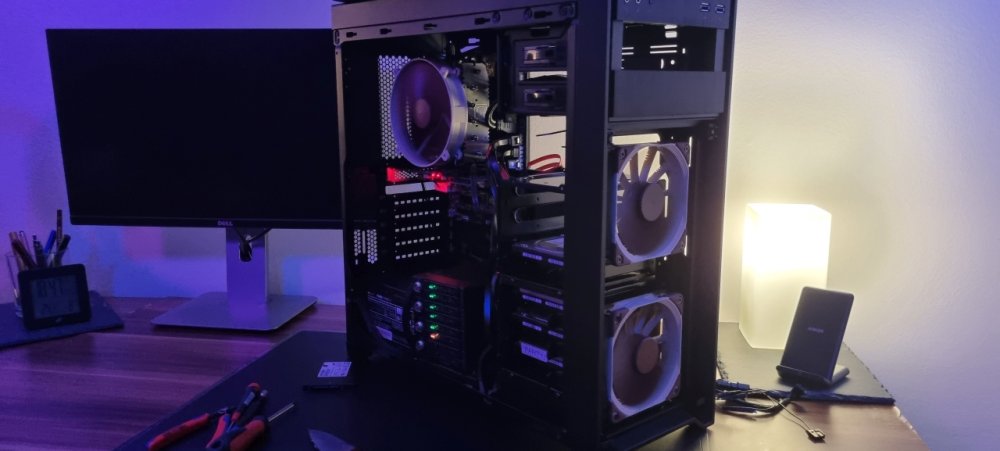
ja zudem ist es eigentlich blödsinn einen zu verwenden. aus meiner sich ist ja einer der vorteile von unraid, das man durch die verwendung der sata schnittstelle eine sehr hohe ersetzbarkeit erzielt. ich meine wenn mir der controller eingeht und ich kann ihn nicht mit einem kompatiblen ersetzen, dann kann ich mir den array dahinter in die haare schmieren. nichts destotrotz 1. die gier nach mehr ist ein hund (ich verdoppele so die anzahl der ports auf 16) 2. die controller sind mir einfach zu schade sie ungenutzt herumliegen zu lassen. ich bin gespannt wieviel so ein controller zieht. ach ipmi braucht gleich ein paar watt?! wusste ich nicht aber wie oben geschrieben, ich rechne schon damit das das board kein ausgesprochener sparefroh ist. na mal sehen wie das läuft. im testdeck ist es derzeit ein bquiet! pure power 11 500W für den "ernstfall" hab ich schon ein bquiet! straight power 11 550W. allerdings wird das sicherlich nicht diese goldene modell sein. ich habs bestellt und dann später erst gelesen das die sparsamen eigentlich nicht mehr verfügbar sind. das ist aber nicht so schlimm, sieht sonst ganz brauchbar verarbeitet aus und ist auch gold effizienzklasse. vielleicht ganz gut noch zu erwähnen: die unraid nas muss jetzt keinen stromspar preis gewinnen. aus gründen darf sie schon ein paar watt haben ( allerdings nicht wie der server gleich mal 100 watt herum im semi idle 8D ) das letzte bild ist ein obsidian 450d (oderso) da hab ich jetzt nur den fliegenden aufbau untergebracht damit (hauptsächlich die platten) die testhardware nicht wochenlag auf dem schreibtisch rumliegt. und ja die deckel gibts natürlich noch alle, auf die älteren gehäuse die ich mochte und aufgehoben habe, habe ich auch gut aufgepasst - bekommst ja kaum noch sowas massives. das define r5 hat mich natürlich auch sehr angelacht ( und man könnte es glaube gut schalldämmen 8/ hmmmm...) da hast du völlig recht, aber ich steh so drauf, auf diese wechselrahmen ( muss irgendein fetisch sein keine ahnung und den kann man nichtmal behandeln lassen)
-
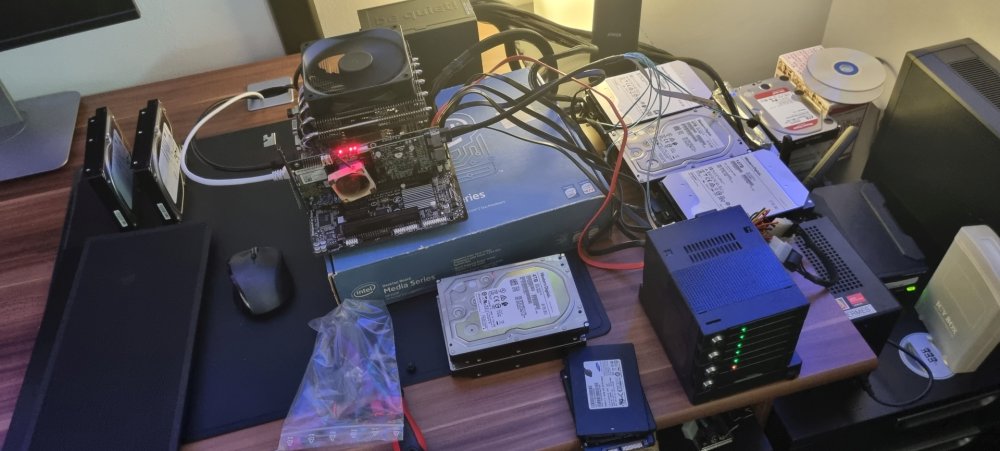
Der Weg da ich mich in linux bisher eher nicht so frei bewegen kann, in unraid schon gleich garnicht, musste ein testdeck her. alte hardware die gerade greifbar war schnell "zusammengeworfen". konkret: i7-4771, auf einem gigabyte ga-85, 8gb ram aus der "irgendeinram-geht-aber-noch kiste", ein adaptec 6805 (weil mir das board zuwenig sataports hat), eine handvoll platten: zwei relativ neue hgst 10tb, alte verzeihung gut eingefahrene wd gold 4tb, wd re, constellation (die habe ich immer sehr ungern verwendet, wer enterprise tos kennt weiß warum). zunächst im fliegeden aufbau für die installation, doch bald in eine gehäuse locker (also halbfliegend) eingebaut - nicht zuletzt wegen der plattenkühlung.
-
ich hab mir gestern offensichtlich die plex datenbank zerschossen (keine updates des library contents, librarys können nicht gelöscht werden). da es sich um ein testsystem handelt, ist eine saubere neu-installation von plex mein favorit. danke an dieser stelle.
-
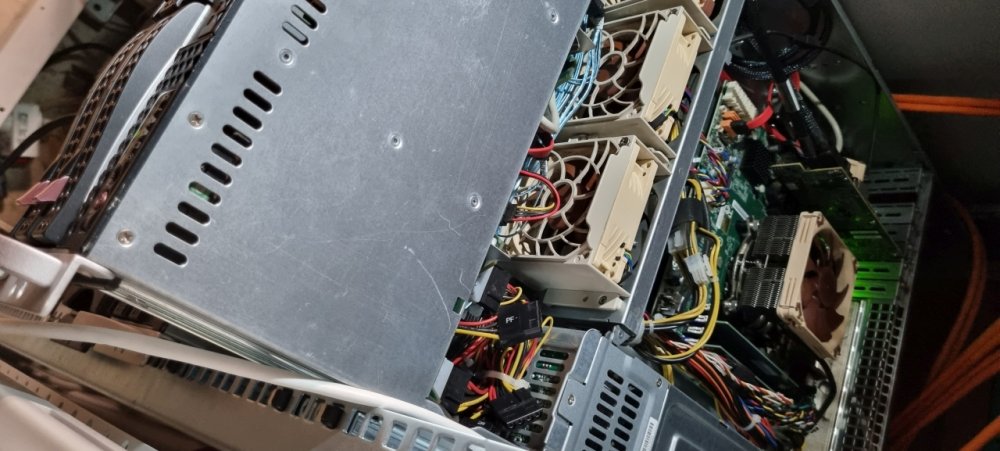
Die verfügbare Hardware grundsätzlich ist es so: mein erster pc war ein c64. also man könnte denken da hat sich seitdem einiges an hardware angesammelt - ist zwar jetzt nicht so schlimm *hust* aber die/der/das eine oder andere nvme, netzteil, gehäuse nstuff liegt schon rum und wartet auf verwendung. mit bestands-hardware meine ich in der hauptsache die im bestehenden server betriebenen komponenten. hier würde ich mich auch über den einen oder anderen kommentar der community freuen - in bezug auf eignung und allen möglichen gedanken dazu. wenns sein muss auch ein "ich hasse das zeug - schmeiss das sofort weg" XD Die CPU - Intel i5-9400 es gibt ihn halt schon, ist jetzt aus meiner sicht nicht ideal und kann (ich glaube) auch keine error correction. scheint mir für mein initiales anwendungszenario angemessen (fs, eine handvoll docker, darunter plex, nichts aufregendes zunächst). ist jauch nicht in stein gemeißelt mittelfristig. Das Mainboard - Supermicro X11SCH-LN4F gibts halt auch schon, erscheint mir ebenfalls nicht ideal aber auch nicht gänzlich ungeeignet. ich muss noch testen was das board mit einem vernünftigen netzteil so braucht. aber grundsätzlich ist es als serverboard gemeint, das sieht man zb an den umfassenen lüftereinstellungen (hoch, höher, orkan) also schätze ich mal ganz wild, es wird wohl auch nicht auf ökonomischen betrieb optimiert sein. dafür kommts mit 8 sata ports (schon allein damit hats für mich schon einen fuß in der tür ;D) und scheint mir sehr solide. zudem hab ich die möglichkeit 2 pcie karten zu betreiben - find ich ebenfalls gut Raid Controller - Broadcom/LSI 9361-8i jaaaa ein heisses thema (wortwitz). ich weiß mittlerweile das raidcontroller für unraid kontraproduktiv sind, aber (bin gespannt obs der eine oder andere verstehen kann) dieses kleine stückchen hardware ist mir so lieb das ich den anachronismus ihn in unraid zu betreiben zumindest versuchen werde. im testdeck laufen die platten an einem adaptec 6805 und werden als jbod durchgereicht. das geht ganz gut (die temps werden leider nicht ausgelesen) und ich hoffe das das mit dem lsi auch funktioniert. werden wir dann sehen. Die Platten - WD DC HC510 gleich die nächste hardware aus dem kapitel "das ist jetzt nicht so gut geeignet aber zu schade zum lahmlegen". also ich hab 2 recht ähnliche platten (hgst) im testdeck und ich kann euch sagen... diese platten sind nicht überhörbar, so etwas willst du definitiv nicht längere zeit anhören müssen. ich hätte für "inhouse" lieber was gelasseneres und leiseres gehabt. aber nicht zu ändern, da muss ich mir definitiv was einfallen lassen, denn um die nutzung dieser platten führt kein weg vorbei. Das Gehäuse ich überlege: optionen wären obsidian 450d, 500, stacker 2 oder neukauf. die geilen supermicro 2 he 8x 3,5" kommen natürlich für "im wohnzimmer" leider nicht in frage. in den obsidian 450d passen leider "nur" 6 platten, dafür sind die dimensionen vergleichsweise überschaubar, in den obsidian 500 bekomme ich in der form 9 hdds unter (wenn ich alle verfügbaren 3,5" frames dort einbaue), dafür ist das teil aber auch monströs. da ich gern auch 2 4in3 lian li einbaurahmen verwenden würde, kommt eigentlich nur der stacker2 in frage neukauf geht ja auch nicht, wenn ich die einbaurahmen verwenden will. atx gehäuse mit mindestens sechs 5,25" schächten sind ja viel zu 90er - gibts heute ja garnicht mehr (?). also wirds wohl der stacker2 werden. ich rede mir einfach ein es wird ein retroprojekt damit es mehr spaß macht . einen neukauf sehe ich als unnötig an, die üblichen verdächtigen, mit von aussen zugänglichen hdd slots, finde ich nicht schön (und sie sind sauteuer (aber was ist das heute eigentlich nicht)). bei den cases mit innenliegenden slots würde ich einen der obsidiane nehmen, ich finde die ganz nett. beim stacker 2 sehe ich so aus dem ärmel geschüttelt das manko, das dieses gehäuse recht offen gebaut ist, viel mesh. also wirds entsprechend schwieriger die unraid nas dann zum schweigen zu bringen.
-
nachdem ich mich gestern und heute schon angemessen eingeführte habe, möchte ich nun doch erstmal artig hallo sagen und erklären was mich hierher treibt. hallo leute *wink* nun - ich betreibe schon sehr lange den einen oder anderen heimserver. derzeit ist es ein full size supermicro 2he mit redundantem (920w) netzteil, ca 60tb sata an lsi controller, das ganze garniert mit w2019 server als ad domaincontroller. als alter sack natürlich bare metal ne. funktioniert super mit hoher stamina und ohne grossen maintenance aufwand und dann kam die energiekrise XD naja da gibts schon noch eine handvoll mehr gründe umzusteigen: - initialkosten, noch einmal werd ich mir so ein deck sicher nicht zulegen (zumal bei den preisen die sich da angeschlichen haben). - laufende kosten, naja wir reden von über den daumen gepeilten 80 watt im idle (sofern man bei ws2019 von idle reden kann, der hat ja immer was zu tun). seit dem sich die versorger jede kWh vergolden lassen jetzt nicht sooo geil. - technisches- und innovationsinteresse - ich will grundsätzlich - soweit möglich - von windows weg, das plv passt für mich nicht mehr - ich will docker ^^ - ich wil plex - die hardware soll ins warme (klingt komisch is aber so) - das 42he rack steht im carportschuppen, keine dämmung, ziemlich exposed eigentlich. das hatte als experiment angefangen "wie lange hält hardware sowas wohl aus" (spoiler: erstaunlich lange wenn sie in betrieb ist) aber nun soll die abwärme ins haus wo sie hingehört also lautet der beschluss - was kleineres, leiseres, schüchternderes muss her, das trotzdem mehr leisten kann. das ganze auchnoch günstiger und schöner (und dann bin ich schweißgebadet aufgewacht ;D). so kam ich also auf unraid. truenas (damals noch freenas) hat mich im härtetest vor jahren komplett enttäuscht und proxmox geht an meinem bedarf vorbei (zumindest glaub ich das gerade). nächster post - die bestands-hardware
-
2STRonin changed their profile photo
-
es war einfach noch zu früh heute morgen also mit dem thread hab ich mich ja gleich super eingeführt. aber schön, nette community - woanders wär man für solche threads gleich verbal gesteinigt worden. danke leute, ich glaub ich bleib ne weile hier ( sorry ).
-
ja, ich setze während der evaluierung ausschliesslich smb ein (und wie es ausschaut auch darüber hinaus). vielen dank für den guidelink.
-
kommt mir sehr bekannt vor was du schreibst in bezug auf daten migrationen über die zeiten. ich möchte noch anfügen: war jetzt für mich so eine mischung aus belustigung und peinlichkeit wie ein kleines kind... ich war so fasziniert von dieser bunten welt, linuxdistris, unraid, lalala "ooooh ist alles so schön bunt hier" das mir garnicht aufgefallen ist, das diese sonderzeichen auch in der welt in der ich mich bisher bewegt habe furchtbar böse sind (also zumindest der doppelpunkt, das fragezeichen find ich eigentlich komisch) XD sorry für die blöde frage - wirklich




