gilladur
Members
-
Joined
-
Last visited
Everything posted by gilladur
-
Ich hatte mich da gestern auch noch etwas eingelesen und es wird - um an eine korrekt konfigurierte yaml zu kommen - empfohlen diese zuerst durch eine lokale Installation zu erzeugen und dann in den Docker zu kopieren.
-
Ich hänge leider auch bei dem Problem, dass die yaml als Ordner und nicht als Date angelegt wird.
-
Hi Tuetenk0pp, where you actually able to fix the issue. I'm running currently into the same issues with my Win 10 VM. My Home assistant VM is not affected.
-
Community Apps tells me about Photoprism after I've updated the docker: Is that correct @ich777
-
Hi ich777, erst einmal vielen Dank für die sehr gute Anleitung. Es hat alles auf Anhieb geklappt. Ich hätte nur eine Frage, vielleicht wurde die auch schon beantwortet, welche Einstellungen sind denn für den Lancache sinnvoll. Mich wundert z.B. die lange Vorhaltezeit von 3650 Tagen: -e CACHE_MAX_AGE="3650d" \ Oder verstehe ich da was falsch. Wenn ich das nachträglich ändern will z.B. auf 300 Tage - wie mache ich das am besten. Im Terminal z.B. über diese Befehle (aus der update-containers.de ausgeliehen): # pull new containers docker pull lancachenet/monolithic # stop containers docker container stop LANCache # remove containers docker container rm LANCache # start container again # LANCache Monolithic docker run -d --name='LANCache' \ --net='bridge' \ -e CACHE_DISK_SIZE="1000000m" \ -e CACHE_INDEX_SIZE="250m" \ -e CACHE_MAX_AGE="300d" \ -e TZ="Europe/Vienna" \ -v '/mnt/lancache/cache':'/data/cache':'rw' \ -v '/mnt/lancache/logs':'/data/logs':'rw' \ -p 80:80 -p 443:443 \ --no-healthcheck --restart=unless-stopped \ 'lancachenet/monolithic' # remove dangling images docker rmi $(docker images -f dangling=true -q) # clear access log from lancache monolithic echo -n "" > /mnt/lancache/logs/access.log Was mir in Bezug auf Adguard übel aufgestoßen ist, ist diese Anmerkung zu der DNS Blockliste von ph00lt0: "We recommend against using the AdGuard DNS filter, they whitellist many tracking domains using @@ which overwrite your settings in the name of functionality. They allow for trackers in emails links and page ads in search results, something we do not compromise for." Und wenn man sich die DNS Liste anschaut, dann findet man wirklich diese Einträge, die alle anderen Regeln überschreiben/whitelisten: @@||ad.10010.com^ @@||ad.abchina.com^ @@||ad.kazakinfo.com^ @@||ad.ourgame.com^ @@||adcdn.pingan.com^ @@||advert.kf5.com^ @@||api.ads.tvb.com^ @@||app-advertise.zhihuishu.com^ @@||buyad.bi-xenon.cn^ @@||captcha.su.baidu.com^ @@||img.ads.tvb.com^ So etwas gibt es bei Pi-Hole nicht. Was denkt ihr dazu? Dann noch eine kurze letzte Frage, habt ihr DNSSEC in Adguard aktiviert? Unbound kann ja die Anfragen nicht verschlüsselt senden, da die Root-Nameserver das DNS over HTTPS (DoH) Protokolle (noch) nicht unterstützen. "Unbound unterstützt zwar DNS over TLS (DoT) und auch DNS over HTTPS (DoH), aber die Root-Nameserver unterstützen diese Protokolle (noch) nicht. Wenn wir also auf einen DNS-Mittelsmann verzichten wollen, müssen wir auch auf die Verschlüsselung unserer DNS-Anfragen verzichten. Der Einsatz von DNSSEC unter unbound stellt aber zumindest sicher, dass die zurückgelieferten Daten echt (Authentizität) und unverändert (Integrität) sind." kuketz-blog.de
-
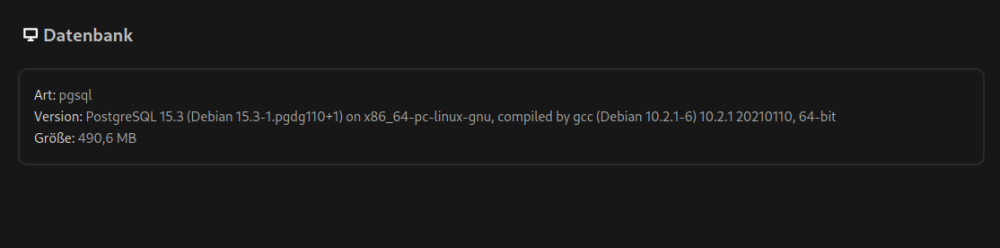
I've dived a bit deeper in the dump_all command could it be that the option -s is incorrect? # pg_dump -U nextcloud -s > /var/lib/postgresql/data/bak.sql according to the postgres documentation: This would explain why no data is in the tables after import and therefore I can't login with my login data or? Edit: dumping the Database without -s did the trick - Nextcloud is now running fine under V15 pg_dumpall -U nextcloud > /var/lib/postgresql/data/bak14.sql ==>
-
Hi jj9987, I've used the Dump all data from the old version and imported it into the new V15 docker - the same way CryPt00n explained it. According to the logs all connections seem to work. Still can't login in the web interface. Could it be, that the password encryption changed between V14 and V15? Edit: I've checked the tables in adminer and unfortunately they are there but empty - somehow the data is not imported properly with the command psql -U nextcloud -d nextcloud < /var/lib/postgresql/data/bak.sql if you wonder, my database is named only nextcloud
-
Thank you for your very clear explanation. I've followed it and it seems all fine regarding nextcloud being able to connect to the V15 if it's active. Nevertheless, I can't login into the webUI into my Nextcloud - it says that the User or Password is wrong. If I switch back to V14 everything works again. Any idea?
-
The only thing you have to do is to add ":2023.3.22-38414355" like in the picture under repository - by that way this particular working build is used:

-
Thanks, that's working for me too.
-
Am I the only one with internal server error since the update yesterday? Traceback (most recent call last): File "/usr/local/searxng/searx/webapp.py", line 1398, in <module> redis_initialize() File "/usr/local/searxng/searx/redisdb.py", line 56, in initialize _CLIENT.ping() File "/usr/lib/python3.10/site-packages/redis/commands/core.py", line 1194, in ping return self.execute_command("PING", **kwargs) File "/usr/lib/python3.10/site-packages/redis/client.py", line 1255, in execute_command conn = self.connection or pool.get_connection(command_name, **options) File "/usr/lib/python3.10/site-packages/redis/connection.py", line 1441, in get_connection connection.connect() File "/usr/lib/python3.10/site-packages/redis/connection.py", line 698, in connect sock = self.retry.call_with_retry( File "/usr/lib/python3.10/site-packages/redis/retry.py", line 46, in call_with_retry return do() File "/usr/lib/python3.10/site-packages/redis/connection.py", line 699, in <lambda> lambda: self._connect(), lambda error: self.disconnect(error) File "/usr/lib/python3.10/site-packages/redis/connection.py", line 1171, in _connect sock.settimeout(self.socket_timeout) AttributeError: 'UnixDomainSocketConnection' object has no attribute 'socket_timeout' unable to load app 0 (mountpoint='') (callable not found or import error) *** no app loaded. going in full dynamic mode *** --- no python application found, check your startup logs for errors --- [pid: 15|app: -1|req: -1/1] 192.168.178.162 () {36 vars in 1944 bytes} [Sat Mar 25 11:50:20 2023] GET / => generated 21 bytes in 0 msecs (HTTP/1.1 500) 3 headers in 102 bytes (0 switches on core 0) --- no python application found, check your startup logs for errors --- [pid: 49|app: -1|req: -1/2] 192.168.178.162 () {36 vars in 1942 bytes} [Sat Mar 25 11:50:20 2023] GET /favicon.ico => generated 21 bytes in 0 msecs (HTTP/1.1 500) 3 headers in 102 bytes (0 switches on core 0)
-
Unraid is showing that it can't get the current version to check about updates - is the docker retired?
-
I had next to the changes in my Fritzbox to add the Local DNS Records [A/AAAA] in my pihole. You'll find it on the left side in PiHole under "Local DNS"
-
Does someone of you also have this error in the settings overview after updating to the latest version 24: Technical information ===================== The following list covers which files have failed the integrity check. Please read the previous linked documentation to learn more about the errors and how to fix them. Results ======= - core - INVALID_HASH - core/js/mimetypelist.js Raw output ========== Array ( [core] => Array ( [INVALID_HASH] => Array ( [core/js/mimetypelist.js] => Array ( [expected] => 94195a260a005dac543c3f6aa504f1b28e0078297fe94a4f52f012c16c109f0323eecc9f767d6949f860dfe454625fcaf1dc56f87bb8350975d8f006bbbdf14a [current] => 1b07fb272efa65a10011ed52a6e51260343c5de2a256e1ae49f180173e2b6684ccf90d1af3c19fa97c31d42914866db46e3216883ec0d6a82cec0ad5529e78b1 ) ) ) ) It seems to be linked to OnlyOffice app overwriting the default mimetypelist which causes the mismatch - but I don't know how to fix it. There are some post about this this issue on Github but none seem to fix the issue: https://github.com/nextcloud/server/issues/30732 https://github.com/ONLYOFFICE/onlyoffice-nextcloud/issues/600 Never had this before and to be honest I don't know if I should bother or just wait for the next update to get it fixed?
-
It seems to be that this was the issue - I'll will ask as you mentioned in the corresponding thread (did not had the time yet and wanted to be sure that the issue is gone). Thank you for your help!
-
Do you think it's coming from my Ram-Disk - I'm using this now for at least a few months and never had this issue? I can disable it, but I think it's not the root cause. It's taken from this post: Ram-Disk Anyway I've removed the code from the Go-File and there is no Ram-Disk therefore - let's see.
-
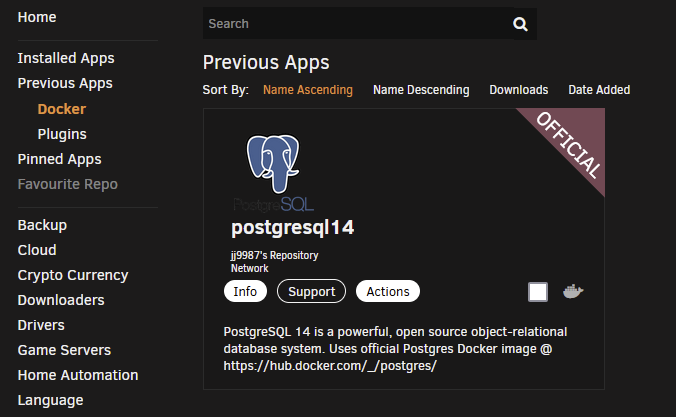
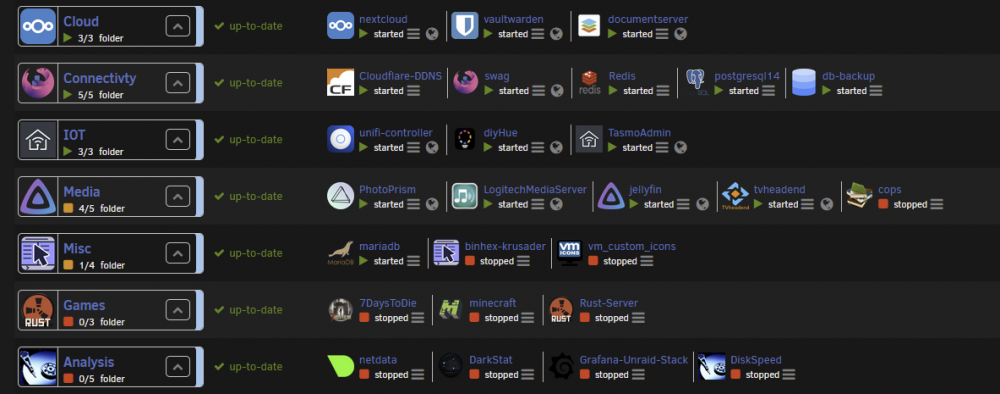
Hi Squid, you mean two times the same container? No - I have just one instance of each container. I seems that it is also not limited to a specific container. It first happened with Prostgres 14 then I deleted the Docker directory and reinstalled everything Then same issue with Minecraft and the next time with tvheadend and Photoprism. What I noticed, is that after installing all previous Dockers Postgres seems to be recognized as not installed, even that I've installed it and it's working. Don't know if this is related?
-
Hi Guys, since a few days I have the issue when updating my docker containers. I seems that the docker can't be stopped during the update and then the update fails. With something like that: "Server error - can not remove image" After the failed update when I try to start the containers it's giving me: "Image can not be deleted, in use by other container(s)" I did not had this in the past and it started 3 days ago and since then I've deleted the Docker directory (which I use instead of the image) and reinstalled the containers several times as this issue comes back again an again. Not with every update and not all the time with the same containers. Any idea where this could come from and whats broken? I'm currently on RC2 kingserver-diagnostics-20220107-1432.zip
-
I've reported this issue also when RC1 was released but, even with some help of the community, I could not get to the root of the issue. On the other hand I did find an user which is on RC1 or RC2 which is not seeing the reduced speed. If someone has an idea how to track this down - I'm open for testing 🙂
-
Hi all, with the latest release candidates for Unraid I experience a huge decrease in speed in Nextcloud. All other dockers seem to work fine. After having the issue with RC1 I reverted back to the last stable and everything seems to be on normal snappiness. But now after switching to RC2 I see the same slow UI behavior. Does anyone have the same issue? Logs seems to be fine and no errors are noticeable - just everything is happening 3x slower. I wonder if its related to my reverse proxy setup or if there is an issue with MariaDB. I read on Reddit that many users are switching to PostgreSQL as it seems to be faster. But even if, can't get why the RCs having such an impact on my install?
-
Was ich jetzt ehrlich gesagt noch nicht verstanden habe, ist dies nun nur ein Problem bei meinem Server oder tritt dies bei allen nach einem Neustart auf?
-
Ich habe das mal getestet. Zumindest bei mir ist es so, dass die Ordner nur initial mit den richtigen Rechten gesetzt werden, wenn also man die Einstellungen ändert und dies dann Anwendet. In dem Fall passt dann alles. Und du nimmst richtig an, wenn ich die Ordner lösche und den Container neu starte, dann werden die Rechte nicht korrekt gesetzt. Keine Ahnung, ob das nur bei mir so ist?
-
Ich habe jetzt einmal einen Neustart gemacht und die Rechte der neu angelegten Ordner standen wieder auf 0755. Was für LMS und Nextcloud z.B. zu Problemen führt. Beim setzten von 0777 passt wieder alles. Wie sieht das bei euch aus und was wäre zu erwarten? Mir war das über die ganze Zeit nicht aufgefallen, da ich den Server nach dem Einrichten der TMP-Geschichte nie neu gestartet hatte ;-)
-
Ich hätte auch noch einmal eine Frage oder Problem zu dem Umlegen der Logs auf /tmp 🙃 Nachdem ich einen Crash letzte Woche hatte, konnten nach dem Neustart alle Container nicht mehr auf ihre Ordner unter /tmp schreiben. Die Rechte standen auf 755. Habt ihr eine Erklärung hierzu? Ich kann das zwar per Hand ändern, aber wie ich mich kenne habe ich das nach dem nächsten Absturtz in ein paar Monaten wieder vergessen.
-
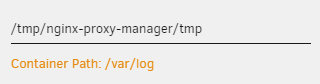
Hallo und gleich vielen Dank für die guten Erklärungen. Bisher habe ich folgende Container die in /tmp/ schrieben identifiziert und die Temporären Dateien auf den RAM umgeleitet: linuxserver/nextcloud (schreibt bei mir am häufigsten) dlandon/logitechmediaserver linuxserver/unifi-controller diyhue/core Das klappt auch bei allen Dateien welche in /tmp/ geschrieben gut. Sehe gerade auch, dass mgutt noch einmal darauf hingewiesen hat, dass man wirklich nur "/tmp" eines Containers in eine RAM-Disk packt. Dies deckt sich mit meinen Erfahrungen für /var/log/ - ist aber zum Glück nichts kaputt gegangen: Bei Dateien in /var/log/ verstehe ich das Muster des host path nicht wirklich. Während für den LMS diese Einstellung ohne Probleme funktioniert: Läuft das gleiche Schema bei OnlyOffice in Probleme, egal was ich probiere, da der Container hier hängt: Starting RabbitMQ Messaging Server rabbitmq-server 2021-08-27 09:08:12.530607232 +0200 /var/lib/docker/overlay2/*/merged/var/log/rabbitmq/[email protected] 2021-08-27 09:08:12.530607232 +0200 /var/lib/docker/overlay2/*/diff/var/log/rabbitmq/[email protected] Da dieser Docker aber nicht so häufig auf die SSD schreibt lass ich die Versuche auch /var/log umzuleiten. mgutt Lösung für den proxy sieht ja z.B. so aus - also landet alles nicht wie beim LMS im Ordner /logs sondern in /tmp in spezifischen Docker Ordner im RAM: Wenn ich das richtig verstehe ist bei /var/log das Einschneidende, die richtige Zielordner oder Ordnerstruktur im /tmp/ abzubilden oder? Grüße Gilladur