binhex
Community Developer
-
Joined
-
Last visited
Everything posted by binhex
-
It's there now, please pull down at your convienience.
-
That doesnt look like corruption to me, that sounds like it's running a database migration, if however you interrupted that by restrting the container then you may well now have a corrupt database, follow Q4:- https://github.com/binhex/documentation/blob/master/docker/faq/plex.md
-
Ive just flagged it out of date on AUR, hopefully that will trigger the upstream package to be updated.
-
Sorry, nope, i only include latest releases to keep support down to a minimum.
-
Well if there was an update, which by the look of it there was, then the packs may not be compatible with the latest version, you have two options, roll back tothe previous verion and stick with that, or talk to the pack developer and get them to update it to be compatible with the latest version of minecraft (recommended action).
-
Indeed!, not sure how i missed that!, fixed in 3.0.1 (just pushed).
-
Indeed, as i just stated in the other plex support thread - As the email states, if you are using Docker then it's a No-Op, the problem is mine, and possibly it's even a No-Op for me too as i use AUR upstream, so as long as AUR fix any packing issues then we are all good :-)
-
As the email states, if you are using Docker then it's a No-Op, the problem is mine, and possibly it's even a No-Op for me too as i use AUR upstream, so as long as AUR fix any packing issues then we are all good :-)
-
yep that would definitely break the container, the Extra Parameters is for Docker extra parameters NOT the application running in the container. So i have just added another env var for you which will allow you to do what you want, please pull down the latest image (just built) and then follow Q8:- https://github.com/binhex/documentation/blob/master/docker/faq/unraid.md The variable name is ADDITIONAL_PARAMETERS and the value in your case will be --tokenExpirationTime XXh where XX = the number of hours you want the token to last.
-
Im not exacly sure where you are adding this, i do no see a advanced tab in the filebrowser web ui, screenshot please.
-
Issue resolved, please pull down the latest image.
-
It is unsupported, I would recommend switching to the preclear plugin.
-
It's fully automated, no worries and as your probably have seen a new image has been built.
-
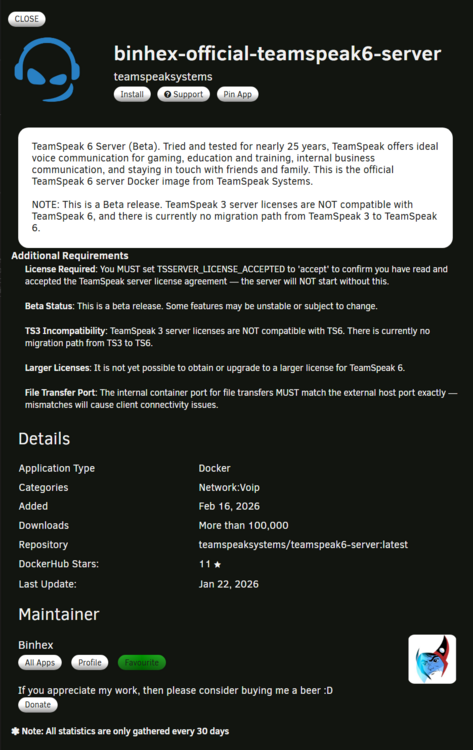
Hi all, quick update, i decided to create an unraid template for the official teakspeak v6 server docker image, feel free to use the one above or mine (has more options defined and fixes the permissions issue): Search CA for: binhex-official-teamspeak6-server
-
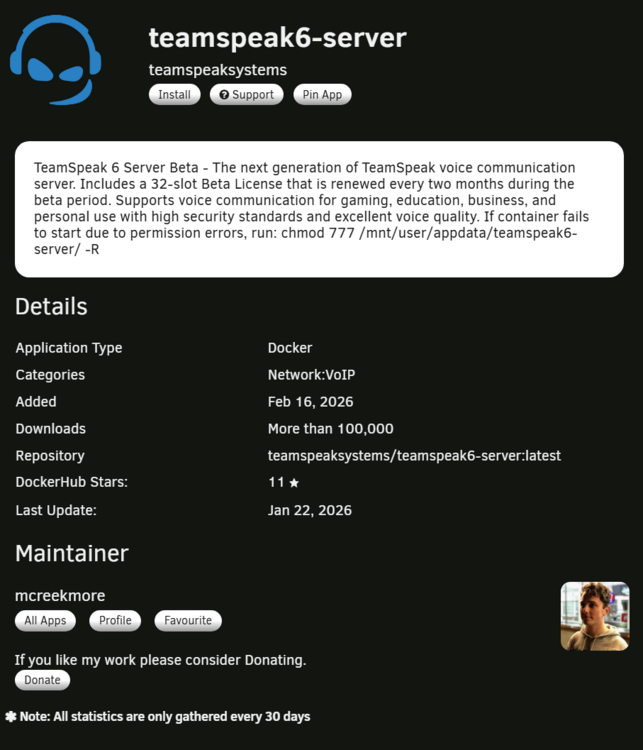
Whilst there is a docker image for TeamSpeak Server created by the TeamSpeak dev's, there is no public availability to the actual binaries to get this running in a custom image, such as this one. So your best option right now is to use the following from CA, which is simply a unraid template that references the TeamSpeak official v6 server image:
-
Hi, i replicated the issue, it was due to the introduction of the toggle to enable/disable authentication, this has now been fixed, please pull down the latest image and try again with the default credentials.
-
I've just rebuilt the image, please pull down and see if that fixes the isse.
-
Yeah im going to put this in the template somewhere, forgot to do it, for now i will paste it here (its in the README.md too): Username:- admin Password:- filebrowser Ensure you change it once logged in (you can change your password in the UI).
-
Reserved
-
Overview: Support for Docker image arch-filebrowser in the binhex repo. Application: seerr - https://github.com/filebrowser/filebrowser Docker Hub: https://hub.docker.com/r/binhex/arch-filebrowser GitHub: https://github.com/binhex/arch-filebrowser Documentation: https://github.com/binhex/documentation If you appreciate my work, then please consider buying me a beer 😁 For other Docker support threads and requests, news and Docker template support for the binhex repository please use the "General" thread here
-
You can put /config wherever you want, i am storing my config on my cache drive /mnt/cache/appdata/config/seerr
-
This is not the official docker image, if you want to use the official docker image then it's the one in CA marked with the 'Official' graphic.
-
Arch repo is pretty good at keeping up to date, so as soon as plex release support for it then it will be build and available, do keep in mind though you will need all your ducks in a row for this to work, so you will need to have kernel support for battlemage (unraid issue), driver support (community issue), and finally the plex support (as mentioned).
-
What i suspect is happening is slskd is crashing/hanging due to the previous issue i just posted, thus when the incoming port is assigned to slskd and deluge is also using the same port then slskd crashes.
-
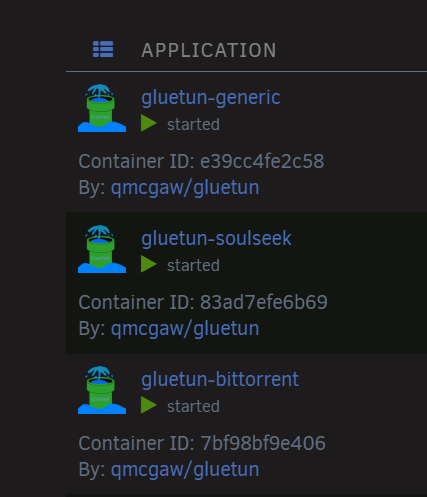
First thought, are you trying to run slskd inside of the same gluetun container network as deluge?, if so that will not work, you cannot have multiple applications sharing a single incoming port, instead you will need to create another glutun container specifically for slskd, i do exactly this, this is what i currently have setup: So as you can see i have three containers running, gluetun-generic - for all the containers that do not require an incoming port, which is the vast majority of containers, e.g. sonarr, radarr, jackett, prowlarr, etc gluetun-soulseek - as the name inplies this is specifically for soulseek containers, such as nicotine+ and slskd, do note though again you cannot run both nicotine+ and slskd in the same gluetun container network gluetun-bittorrent - again im pretty sure you can guess what this is used for, again i can only run a single bittorrent client in this gluetun container network, running deluge and qbittorrent would not wok. The golden rule - You need 1 gluetun container for each application that requires an incoming port. p.s. I could slim this down to just two, bittorrent and soulseek and lump the containers that only require outbound (generic) into either one, but i prefer the separation and PIA are relatively generous with their concurrent connections.