





rorton
Members
-
Joined
-
Last visited
Everything posted by rorton
-
further update, i can get it to happen when i disconnect a VNC session, as soon as i try to reconnect - no good when this happens, i don't have the qemu-system-x86_64: warning: guest updated active QH at the end in the VM log...
-
VM is on a 500gb NVME drive, and 36gb used of the disk, so loads of space left. i created a 50GB disk, and looking on the windows VM, 31.5gb free
-
Clean install of Win10 Pro - latest ISO from Microsoft All installs OK, activates, drivers on correctly, done a few reboots to make sure its all good. Then after about 10 mins of leaving it, i cant reconnect to it - the VNC session disconnects, and i cant ping it, or connect by RDP or anything - the only thing i can do is force restart it. It then stays ok for a bit, then carries on My VM Log is below, and i keep getting these qemu-system-x86_64: warning: guest updated active QH at the end, which im guessing is the problem. I thought there were problems with how i built the VM, as this started when i built my first yesterday, so i trashed it, rebuilt it, and its still the same Any ideas? thanks -no-hpet \ -no-shutdown \ -boot strict=on \ -device ich9-usb-ehci1,id=usb,bus=pci.0,addr=0x7.0x7 \ -device ich9-usb-uhci1,masterbus=usb.0,firstport=0,bus=pci.0,multifunction=on,addr=0x7 \ -device ich9-usb-uhci2,masterbus=usb.0,firstport=2,bus=pci.0,addr=0x7.0x1 \ -device ich9-usb-uhci3,masterbus=usb.0,firstport=4,bus=pci.0,addr=0x7.0x2 \ -device virtio-serial-pci,id=virtio-serial0,bus=pci.0,addr=0x4 \ -drive 'file=/mnt/cache/vms/Windows 10/vdisk1.img,format=raw,if=none,id=drive-virtio-disk2,cache=writeback' \ -device virtio-blk-pci,scsi=off,bus=pci.0,addr=0x5,drive=drive-virtio-disk2,id=virtio-disk2,bootindex=1,write-cache=on \ -drive file=/mnt/user/isos/Win10_1903_V2_English_x64.iso,format=raw,if=none,id=drive-ide0-0-0,readonly=on \ -device ide-cd,bus=ide.0,unit=0,drive=drive-ide0-0-0,id=ide0-0-0,bootindex=2 \ -drive file=/mnt/user/isos/virtio-win-0.1.160-1.iso,format=raw,if=none,id=drive-ide0-0-1,readonly=on \ -device ide-cd,bus=ide.0,unit=1,drive=drive-ide0-0-1,id=ide0-0-1 \ -netdev tap,fd=28,id=hostnet0,vhost=on,vhostfd=29 \ -device virtio-net-pci,netdev=hostnet0,id=net0,mac=52:54:00:1b:f5:e4,bus=pci.0,addr=0x3 \ -chardev pty,id=charserial0 \ -device isa-serial,chardev=charserial0,id=serial0 \ -chardev socket,id=charchannel0,fd=30,server,nowait \ -device virtserialport,bus=virtio-serial0.0,nr=1,chardev=charchannel0,id=channel0,name=org.qemu.guest_agent.0 \ -device usb-tablet,id=input0,bus=usb.0,port=1 \ -vnc 0.0.0.0:1,websocket=5701 \ -k en-us \ -device qxl-vga,id=video0,ram_size=67108864,vram_size=67108864,vram64_size_mb=0,vgamem_mb=16,max_outputs=1,bus=pci.0,addr=0x2 \ -device virtio-balloon-pci,id=balloon0,bus=pci.0,addr=0x6 \ -sandbox on,obsolete=deny,elevateprivileges=deny,spawn=deny,resourcecontrol=deny \ -msg timestamp=on 2019-10-24 10:09:56.697+0000: Domain id=13 is tainted: high-privileges 2019-10-24 10:09:56.697+0000: Domain id=13 is tainted: host-cpu char device redirected to /dev/pts/1 (label charserial0) 2019-10-24T10:18:01.221797Z qemu-system-x86_64: warning: guest updated active QH 2019-10-24T10:22:00.463133Z qemu-system-x86_64: warning: guest updated active QH 2019-10-24T10:23:17.937838Z qemu-system-x86_64: warning: guest updated active QH 2019-10-24T10:41:25.024489Z qemu-system-x86_64: warning: guest updated active QH 2019-10-24T10:43:24.756554Z qemu-system-x86_64: warning: guest updated active QH 2019-10-24T10:48:45.270993Z qemu-system-x86_64: warning: guest updated active QH 2019-10-24T10:49:44.660416Z qemu-system-x86_64: warning: guest updated active QH 2019-10-24T10:50:05.738320Z qemu-system-x86_64: warning: guest updated active QH 2019-10-24T10:50:26.487107Z qemu-system-x86_64: warning: guest updated active QH 2019-10-24T11:00:09.811881Z qemu-system-x86_64: warning: guest updated active QH
-
top job, worked perfectly thank you at least i can automate the backup of both vm's now - are the extensions interchangeable then? It was a disk image i grabbed from the librenms website so remember i had to do some converting with it.
-
ah perfect thanks so <devices> <emulator>/usr/local/sbin/qemu</emulator> <disk type='file' device='disk'> <driver name='qemu' type='vmdk' cache='writeback'/> <source file='/mnt/cache/vms/librenms/librenms.vmdk'/> <backingStore/> <target dev='hdc' bus='sata'/> <boot order='1'/> <alias name='sata0-0-2'/> So do i need to change my type to something other than vmdk? or leave that, and just rename the file to have .img extension, and change the same in the source file path above?
-
Does anyone have a copy script that will work like this... Existing share on an unassigned drive Want to back this up to the array daily (so schedule a user script) Would like it to look at the initial backup that was made, and then just append to keep it up to date. I have all my mp3's on a SSD for fast reading from my Mac in iTunes, plus sonos around the house, but would like them on the array too incase the SSD dies.
-
just got this running today - great script! One question - one of my vis has a .vmdk extension instead of a .img as such it won't backup... warning: /mnt/cache/vms/librenms/librenms.vmdk of LibreNMS is not a vdisk. skipping. Is there a way to include different extensions?
-
thanks for this - works perfectly
-
Seems OK now, looking in the log, it was moaning about not getting the little graphic so i think it stopped the whole install - i deleted it, reinstalled, and it seems to be working...

-
anyone using this on 6.6.0 its not installed after upgrading, and just shows in the tab titled plugin file installed errors
-
read a few posts on reddit about this too, few ppl on there with the same problem. the new firmware just released was supposed to fix it but hasn't - people have got onto Crucial support and they say its with engineering. I was waiting on an online chat, but dropped the connection after i read this - will wait for next firmware release
-
I think i marked it as solved when jonnie black said its not an unraid issue, its a firmware problem, and to wait for new firmware. Happy to unmark as solved, but not sure anyone may be able to help apart from Crucial with correct firmware. Wonder if its worth a few of us emailing crucial, perhaps they are not aware of the issue!?
-
has it fixed the issue?
-
Ive deleted the plugin marked as bad, and then reinstalled it from community applications, and its working now, odd.. Still have the issue with the image not appearing that needs permission change (cant remember what it was)
-
I’ve just upgraded to 6.5.3 and plugin wont run now un 12 20:08:23 Nas root: plugin: skipping: /boot/packages/net-snmp-5.7.3-x86_64-4.txz already exists Jun 12 20:08:23 Nas root: plugin: running: /boot/packages/net-snmp-5.7.3-x86_64-4.txz Jun 12 20:08:23 Nas root: Jun 12 20:08:23 Nas root: +============================================================================== Jun 12 20:08:23 Nas root: | Installing new package /boot/packages/net-snmp-5.7.3-x86_64-4.txz Jun 12 20:08:23 Nas root: +============================================================================== Jun 12 20:08:23 Nas root: Jun 12 20:08:23 Nas root: Verifying package net-snmp-5.7.3-x86_64-4.txz. Jun 12 20:08:23 Nas root: Installing package net-snmp-5.7.3-x86_64-4.txz: Jun 12 20:08:23 Nas root: PACKAGE DESCRIPTION: Jun 12 20:08:23 Nas root: # net-snmp (Simple Network Management Protocol tools) Jun 12 20:08:23 Nas root: # Jun 12 20:08:23 Nas root: # Various tools relating to the Simple Network Management Protocol: Jun 12 20:08:23 Nas root: # Jun 12 20:08:23 Nas root: # An extensible agent Jun 12 20:08:23 Nas root: # An SNMP library Jun 12 20:08:23 Nas root: # Tools to request or set information from SNMP agents Jun 12 20:08:23 Nas root: # Tools to generate and handle SNMP traps Jun 12 20:08:23 Nas root: # A version of the UNIX 'netstat' command using SNMP Jun 12 20:08:23 Nas root: # A graphical Perl/Tk/SNMP based mib browser Jun 12 20:08:23 Nas root: # Jun 12 20:08:24 Nas root: Executing install script for net-snmp-5.7.3-x86_64-4.txz. Jun 12 20:08:24 Nas root: Package net-snmp-5.7.3-x86_64-4.txz installed. Jun 12 20:08:24 Nas root: Jun 12 20:08:24 Nas root: Jun 12 20:08:24 Nas root: plugin: creating: /usr/local/emhttp/plugins/snmp/snmp.png - downloading from URL https://raw.githubusercontent.com/coppit/unraid-snmp/master/snmp.png Jun 12 20:08:34 Nas root: plugin: downloading: https://raw.githubusercontent.com/coppit/unraid-snmp/master/snmp.png ...#015plugin: downloading: https://raw.githubusercontent.com/coppit/unraid-snmp/master/snmp.png ... failed (Network failure) Jun 12 20:08:34 Nas root: plugin: wget: https://raw.githubusercontent.com/coppit/unraid-snmp/master/snmp.png download failure (Network failure) Jun 12 20:0
-
great stuff thanks - i saw another model of Crucial SSD on their site, and there is an app you can install in your PC too, run the app, detects the drive, and downloads the firmware, so looks like there are options, My box is a bit hidden where its located, so i have stuff to move to get to it, would have been great to do it via the CLI, but if i have to pull the drive or similar, no hardship.
-
thanks, glad its not a stuffed drive - how do we update drive firmwares - can that be done from inside unraid?
-
I have a new SSD as a cache drive, and just started to get alerts (had them for 2 days so far) First alert is: Event: unRAID Cache disk SMART health [197] Subject: Warning [NAS] - current pending sector is 1 Description: CT250MX500SSD1_1803E10AC5FE (sdf) Importance: warning then - 20 mins later, a 'clear' alert Event: unRAID Cache disk SMART message [197] Subject: Notice [NAS] - current pending sector returned to normal value Description: CT250MX500SSD1_1803E10AC5FE (sdf) Importance: normal My Trim is schedules to run daily at 04:55 Should i be worried, the SSD parameters are not fully populated in the smartdb -its a brand new Crucial MX500 drive, so assuming that smart needs to be updated.
-
THANKYOU followed your points, and got it working - i need to read/play a bit with the vm stuff i think. I didn't have the disk set to sata, it was set to virtio.
-
tried that, still the same - no ideas why i have a disk setup, this is the first time ive messed about with the VM side of things, so really don't know how it works. I assumed that the vmdk was the equivalent of an ISO, and i needed to set it up like that Are you saying that the vmdk is the replacement for the .img file and should sit in my vm disks folders?
-
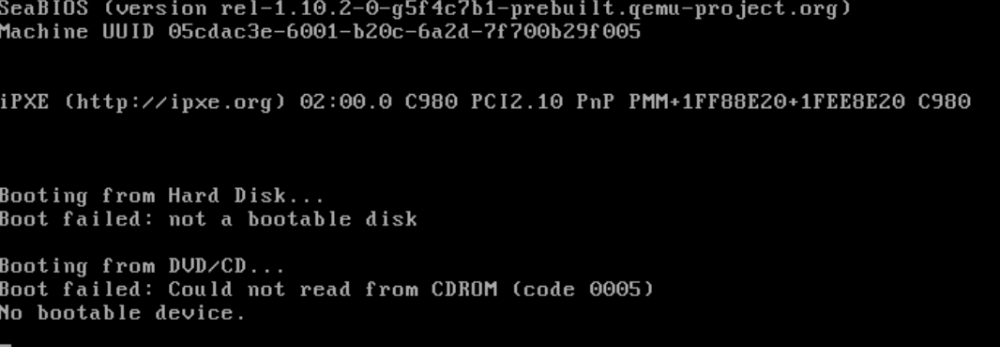
thanks, wasn't aware of the advanced tab! so used that, and i get a diff BIOS boot now: Im guessing this is an issue with the VMDK file? my xml for the vm is: <domain type='kvm' id='31'> <name>Libre</name> <uuid>05cdac3e-6001-b20c-6a2d-7f700b29f005</uuid> <metadata> <vmtemplate xmlns="unraid" name="Linux" icon="linux.png" os="linux"/> </metadata> <memory unit='KiB'>524288</memory> <currentMemory unit='KiB'>524288</currentMemory> <memoryBacking> <nosharepages/> </memoryBacking> <vcpu placement='static'>1</vcpu> <cputune> <vcpupin vcpu='0' cpuset='0'/> </cputune> <resource> <partition>/machine</partition> </resource> <os> <type arch='x86_64' machine='pc-q35-2.10'>hvm</type> </os> <features> <acpi/> <apic/> </features> <cpu mode='host-passthrough' check='none'> <topology sockets='1' cores='1' threads='1'/> </cpu> <clock offset='utc'> <timer name='rtc' tickpolicy='catchup'/> <timer name='pit' tickpolicy='delay'/> <timer name='hpet' present='no'/> </clock> <on_poweroff>destroy</on_poweroff> <on_reboot>restart</on_reboot> <on_crash>restart</on_crash> <devices> <emulator>/usr/local/sbin/qemu</emulator> <disk type='file' device='disk'> <driver name='qemu' type='raw' cache='writeback'/> <source file='/mnt/cache/vms/Libre/vdisk1.img'/> <backingStore/> <target dev='hdc' bus='virtio'/> <boot order='1'/> <alias name='virtio-disk2'/> <address type='pci' domain='0x0000' bus='0x04' slot='0x00' function='0x0'/> </disk> <disk type='file' device='cdrom'> <driver name='qemu' type='raw'/> <source file='/mnt/user/isos/librenms_ubuntu_1604.vmdk'/> <backingStore/> <target dev='hda' bus='sata'/> <readonly/> <boot order='2'/> <alias name='sata0-0-0'/> <address type='drive' controller='0' bus='0' target='0' unit='0'/> </disk> <controller type='usb' index='0' model='ich9-ehci1'> <alias name='usb'/> <address type='pci' domain='0x0000' bus='0x00' slot='0x07' function='0x7'/> </controller> <controller type='usb' index='0' model='ich9-uhci1'> <alias name='usb'/> <master startport='0'/> <address type='pci' domain='0x0000' bus='0x00' slot='0x07' function='0x0' multifunction='on'/> </controller> <controller type='usb' index='0' model='ich9-uhci2'> <alias name='usb'/> <master startport='2'/> <address type='pci' domain='0x0000' bus='0x00' slot='0x07' function='0x1'/> </controller> <controller type='usb' index='0' model='ich9-uhci3'> <alias name='usb'/> <master startport='4'/> <address type='pci' domain='0x0000' bus='0x00' slot='0x07' function='0x2'/> </controller> <controller type='sata' index='0'> <alias name='ide'/> <address type='pci' domain='0x0000' bus='0x00' slot='0x1f' function='0x2'/> </controller> <controller type='pci' index='0' model='pcie-root'> <alias name='pcie.0'/> </controller> <controller type='virtio-serial' index='0'> <alias name='virtio-serial0'/> <address type='pci' domain='0x0000' bus='0x03' slot='0x00' function='0x0'/> </controller> <controller type='pci' index='1' model='pcie-root-port'> <model name='pcie-root-port'/> <target chassis='1' port='0x10'/> <alias name='pci.1'/> <address type='pci' domain='0x0000' bus='0x00' slot='0x02' function='0x0' multifunction='on'/> </controller> <controller type='pci' index='2' model='pcie-root-port'> <model name='pcie-root-port'/> <target chassis='2' port='0x11'/> <alias name='pci.2'/> <address type='pci' domain='0x0000' bus='0x00' slot='0x02' function='0x1'/> </controller> <controller type='pci' index='3' model='pcie-root-port'> <model name='pcie-root-port'/> <target chassis='3' port='0x12'/> <alias name='pci.3'/> <address type='pci' domain='0x0000' bus='0x00' slot='0x02' function='0x2'/> </controller> <controller type='pci' index='4' model='pcie-root-port'> <model name='pcie-root-port'/> <target chassis='4' port='0x13'/> <alias name='pci.4'/> <address type='pci' domain='0x0000' bus='0x00' slot='0x02' function='0x3'/> </controller> <controller type='pci' index='5' model='pcie-root-port'> <model name='pcie-root-port'/> <target chassis='5' port='0x14'/> <alias name='pci.5'/> <address type='pci' domain='0x0000' bus='0x00' slot='0x02' function='0x4'/> </controller> <controller type='pci' index='6' model='pcie-root-port'> <model name='pcie-root-port'/> <target chassis='6' port='0x15'/> <alias name='pci.6'/> <address type='pci' domain='0x0000' bus='0x00' slot='0x02' function='0x5'/> </controller> <filesystem type='mount' accessmode='passthrough'> <source dir='/mnt/user/data/'/> <target dir='data'/> <alias name='fs0'/> <address type='pci' domain='0x0000' bus='0x01' slot='0x00' function='0x0'/> </filesystem> <interface type='bridge'> <mac address='52:54:00:82:46:71'/> <source bridge='virbr0'/> <target dev='vnet0'/> <model type='virtio'/> <alias name='net0'/> <address type='pci' domain='0x0000' bus='0x02' slot='0x00' function='0x0'/> </interface> <serial type='pty'> <source path='/dev/pts/0'/> <target port='0'/> <alias name='serial0'/> </serial> <console type='pty' tty='/dev/pts/0'> <source path='/dev/pts/0'/> <target type='serial' port='0'/> <alias name='serial0'/> </console> <channel type='unix'> <source mode='bind' path='/var/lib/libvirt/qemu/channel/target/domain-31-Libre/org.qemu.guest_agent.0'/> <target type='virtio' name='org.qemu.guest_agent.0' state='disconnected'/> <alias name='channel0'/> <address type='virtio-serial' controller='0' bus='0' port='1'/> </channel> <input type='tablet' bus='usb'> <alias name='input0'/> <address type='usb' bus='0' port='1'/> </input> <input type='mouse' bus='ps2'> <alias name='input1'/> </input> <input type='keyboard' bus='ps2'> <alias name='input2'/> </input> <graphics type='vnc' port='5900' autoport='yes' websocket='5700' listen='0.0.0.0' keymap='en-us'> <listen type='address' address='0.0.0.0'/> </graphics> <video> <model type='qxl' ram='65536' vram='65536' vgamem='16384' heads='1' primary='yes'/> <alias name='video0'/> <address type='pci' domain='0x0000' bus='0x00' slot='0x01' function='0x0'/> </video> <memballoon model='virtio'> <alias name='balloon0'/> <address type='pci' domain='0x0000' bus='0x05' slot='0x00' function='0x0'/> </memballoon> </devices> <seclabel type='dynamic' model='dac' relabel='yes'> <label>+0:+100</label> <imagelabel>+0:+100</imagelabel> </seclabel> </domain>
-
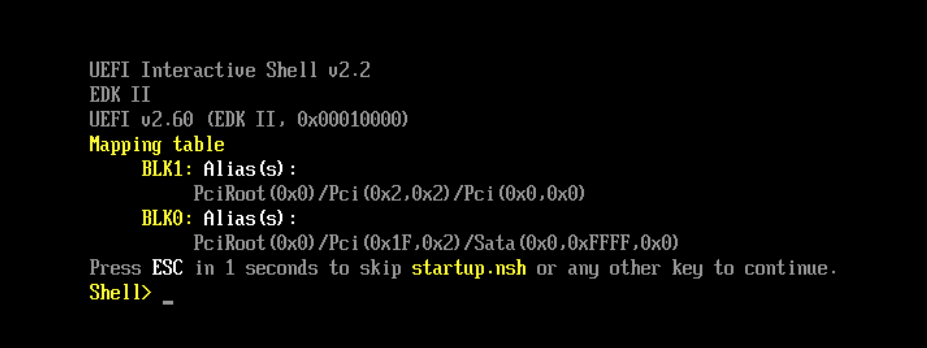
thanks i just tried, and i get this far: Image here /mnt/cache/vms/LibreNMS/vdisk1.img ISO here /mnt/user/isos/librenms_centos_7.vmdk
-
I found some software (LibreNMS) id like to try in a VM There is a vmdk image supplied https://docs.librenms.org/#Installation/CentOS-image/ Is it possible to convert this image to run in KVM?
-
No worries, looks great from what you’ve managed to pull together so far thanks for the tip on the save/apply thing too. Been a long time unraid user and only really used it for “a bit of storage” and a couple of download dockers, but found some time to play with it a bit more recently
-
hi, just playing with this now. Looks good i have a vlan that is the other side of my firewall, looking at logs on firewall i got some blocked traffic on UDP23 (its pinging) So, i needed to edit the template and add UDP23 to the container template, which ive done, but as soon as i did that and applied, the app rebuilt, and so i have to go through the initial config again, and wiped all my settings out! Maybe need to have a look at this, cause if you update the template, it will clear everything out and make you start again



