





mattie112
Members
-
Joined
-
Last visited
Everything posted by mattie112
-
A 502 error is usually that NPM is not able to (correctly) reach the target. You can try something to debug it: docker exec -it NginxProxyManager bash ping <ip-of-your-container> nc <ip-of-your-container> <port> and then type "GET /" Just some commands to see if it can indeed request something from the target.
-
Hm sorry I don't have a clue perhaps someone else. I assume the container has already been restarted? You can confirm if the directory is writeable for the uploaded files (although the message looks like it already stops before that but I don't know the source). Or perhaps check the paperless github to submit a bug report there.
-
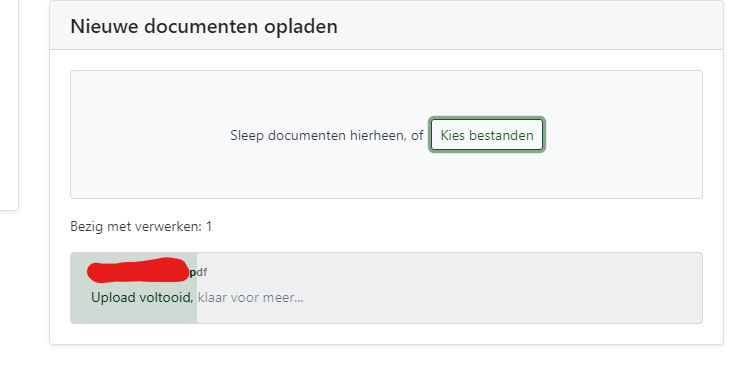
A vlan should have no effect, a reverse proxy might do something with uploads. You also never see the "Upload completed"?
-
For wildcard certificates you MUST use DNS verification, did you set that up correctly?
-
Allright that's fine then you can use the custom certificate option from my screenshot a couple of posts back. edit: And just to confirm, I can contact :443 on your ip but not :80 (timeout) so I think it is blocked by your provider or perhaps your router has the web UI on port 80 and therefore no port forward?
-
Allright that is looking good! Can you share your external IP (or host) then I can try to see if it works or not. It could very well be that your provider blocks port 80 ven though you can 'open' it.
-
How is your setup? You have NPM to port 8080? And your router forwarded to unraid-ip:8080? Or do you have it in bridge mode? What exactly do you want to check with nmap? To see if the correct port is open? You should be able to do `netstat -tulpn` on your Unraid. Or simply go (perferalby external) to http://your-external-ip you should see a "congratulations NPM" page, if not 80 is not forwarded/open and then letsencrypt won't work. Perhaps your provider blocks 80? But yeah if for any reason you only have 443 you can still manually add DNS certificates and those should work. (or try out the letsencrypt DNS based verification but I have no experience with that so I have no idea how that works)
-
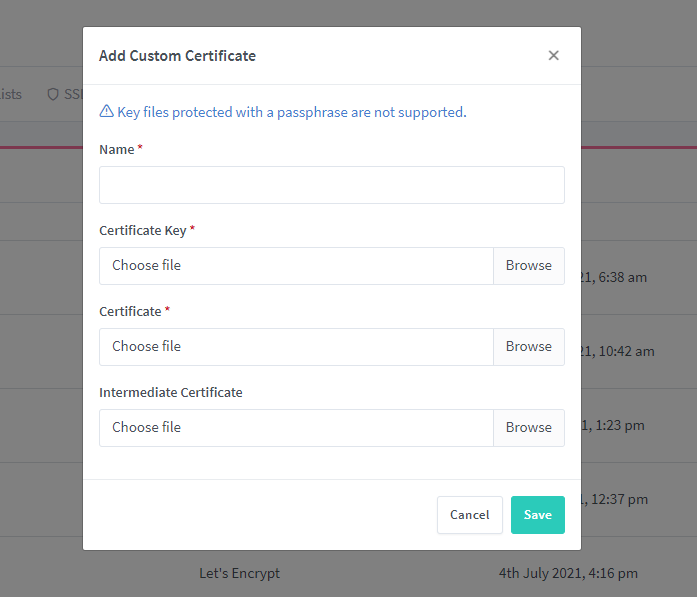
You can add your own certificates. Just buy them wherever you want and upload them in the UI: Just don't forget you need to renew them manually.... We can also try to debug your Letsencrypt issues. I have 0 problems with letsencrypt as long as port 80 is open (it needs to do the challenges over http).
-
Are you connecting directly through the port of paperless or a reverse proxy? I'm not sure but perhaps check the settings could be that it is disabled for your account (but I'm no expert so I'm not sure if that exists).
-
And what container did not work? I use sameersbn/redis and it works fine as far as I can tell.
-
It seems like you need to run a Tika and/or Gotenberg server and then change some environment variables in your paperless container. What issues do you have? https://paperless-ng.readthedocs.io/en/latest/configuration.html#tika-settings
-
Yeah I thought something like that, most consumer routers normally work out of the box (although the how might be a bit unexpected) but most advanced require some config. I have a Mikrotik and that also took some trying to get it to work. You might want to check https://www.watchguard.com/help/docs/help-center/en-US/Content/en-US/Fireware/nat/nat_loopback_static_c.html On my router it was enough to specify a "dst address" on my NAT rules (instead of not filling that in) and a masquerade rule but yours might need something different. If you just want to know if everything works you can either add a static DNS in your router (to your local IP) or your pc HOSTS file (/etc/hosts or c:\windows\system32\drivers\etc\hosts).
-
Guess we are famous now
-
What router do you have? You can try to lookup "hairpin nat" for your router. Or perhaps you can add a static DNS entry in your router your.server.dns -> 192.x.x.x So that it always resolves to an internal IP.
-
If your DNS is resolving to cloudflare are you 100% sure the '/config/letsencrypt-acme-challenge' is also forwarded correctly? Letsencrypt needs to contact your server (over http) to verify the signature.
-
And you can resolve your domain correctly? Both ipv4 and ipv6? It looks like it is doing a http challenge but that fails so most likely letsencrypt cannot reach your domain to verify.
-
Allright, wel at least there is a work-around for now by cropping
-
Is there any info on the template engine that is used? It looks like that it at least support PHP but it also has some elements for UI fields? (I'm trying to edit https://github.com/kubedzero/unraid-snmp/blob/main/source/usr/local/emhttp/plugins/snmp/snmp.page)
-
Does it not work even with that error? I also did see this error a few times but I am not missing anything it seems. But then perhaps it differs from phone to phone?
-
Oh wow the documentation is really terrible / non existing but helping at other plugins works So: I have managed to trigger a file of my own when submitting the form (might need to implement the current 'write settings' flow or perhaps also all the update file). So yeah now that I am in PHP context I can really do anything I need. I can write files and restart the service for example. First version might be a bit rough as I have no idea what the expected flow is but I think I can at least create something that would function. I will create a PR if I have something that works
-
If you want to have it listen to 80/443 you need to change the container itself. When using bridge network mode there is no such thing as "port mapping" so whatever you do it still will be 8080 But: I also needed 80/443 so I forked this project and change the ports so you can use that
-
Ah yes thanks for the suggestions, I was thinking of rebuilding/reinstalling the plugin after changes but I can just mount the 'installed' directory and work from there. I will look into this this weekend Might first go for a version to just change the snmp community or something to keep it simple And I now also understand the 'unsafe temperature'. I thought this was a setting that needed to be written to the snmpd.conf so that was why I was so confused about "where does he write the conf file". It is simply never written
-
@kubed_zero I'm looking into editing the plugin and so far I managed to add a text field on the settings, compile and install the plugin and see that the value is written to /boot/config/plugins/snmp/snmp.cfg So here come my (noob) questions: How / when is this file used? I see that on install it copies /usr/local/emhttp/plugins/snmp/snmpd.conf to /etc/snmp/snmpd.conf but I don't see this file mentioned? When is this file created? Is a plugin "installed" again on boot? Do the current settings work? (just to know where to look). I would assume that the doinst.sh should overwrite the snmpd.conf with whatever exists in /boot/config/plugins/snmp/snmp.cfg (and also when saving the settings). When saving the settings I see a form submit to '/update.php'. Is this an unraid file/feature? I don't see it in this repo. Is there any way to quickly test things? It takes some time to compile & install the plugin. Sorry for the questions but this is for me the quickest way to help I can find out a lot but I need some pointers before I spend an entire day and only get frustrated
-
Heh that's funny, after removing the plugin this file remained on the filesystem. I manually removed the file, then reinstalled the plugin and yes it is now /etc/snmp/snmpd.conf So yeah: a reboot would also fix this I guess Thanks and I will look into how things work with Unraid plugins to see if I can add somekind of config options to the UI (I will also be feeding it some custom config for snmp v3 as everything in my network uses that). But for now I can overwrite the conf file on boot as suggested.
-
Yes thank you I understand that, however the snmpd process is not using that file, it is using `/usr/local/emhttp/plugins/snmp/snmpd.conf` Te /etc/rc.d/rc.snmpd contains: #!/bin/sh # # rc.snmpd This shell script takes care of starting and stopping # the net-snmp SNMP daemon OPTIONS="-LF w /var/log/snmpd.log -A -p /var/run/snmpd -a" start() { if [ -x /usr/sbin/snmpd -a -f /usr/local/emhttp/plugins/snmp/snmpd.conf ]; then echo -n "Starting snmpd: " /usr/sbin/snmpd $OPTIONS -c /usr/local/emhttp/plugins/snmp/snmpd.conf echo " /usr/sbin/snmpd $OPTIONS -c /usr/local/emhttp/plugins/snmp/snmpd.conf" fi } stop() { # Stop daemons. COUNT=0 echo -n "Shutting down snmpd: " while `killall snmpd 2>/dev/null`; do echo -n "." sleep 1 COUNT=$((COUNT+1)) if [ $COUNT -ge 30 ]; then killall -9 snmpd sleep 1 break fi done echo " DONE" } # See how we were called. case "$1" in start) start ;; stop) stop ;; restart|reload) stop start ;; condrestart) if [ -f /var/run/snmpd ]; then stop start fi ;; *) echo $"Usage: $0 {start|stop|restart|condrestart}" ;; esac

