Lolight
Members
-
Joined
Everything posted by Lolight
-
The following drives were recently acquired from eBay as new old stock (NOS), still sealed in their original retail packaging. Part numbers (P/N) and copyright years are listed exactly as they appear on the packaging. Note: The copyright year is not necessarily the exact year of production but is close enough to serve as a reliable reference in the absence of other evidence about the manufacturing date when shopping online. PNY Attache Optima Pro -- 4 GB, USB 2.0 P/N: P-FD4GBHSP-FS, Made in USA Year: 2007 GUID: YES Controller: Phison PS2231 (PS2251-31) Possible Memory Chip(s): Toshiba TH58NVG5D4CTG20, 70nm Memory Type: MLC Flash ID: 98D585A5 6A12 Chip F/W: 01.08.10 Firmware Date: 2007-07-11 VID: 154B PID: 0015 Physical Disk Capacity: 4 GB USB Version: 2.00 Declared Power: 200 mA eBay item number: 366476105606 PNY Attache Optima Pro -- 4 GB, USB 2.0 P/N: P-FD4GBHSP-FS, Made in China Year: 2007 GUID: YES Controller: Phison PS2231 (PS2251-31) Possible Memory Chip(s): Toshiba TC58NVG5D1DTG20, 56nm Memory Type: MLC Flash ID: 98D594BA F413 Chip F/W: 01.08.10 Firmware Date: 2007-07-11 VID: 0930 PID: 6545 Physical Disk Capacity: 4 GB USB Version: 2.00 Declared Power: 200 mA Write: 12 MB/s, Read: 18 MB/s Toshiba Transmemory -- 4 GB, USB 2.0 P/N: USB-4GTR - in the U.S., U2K-004GT(A) - globally. Made in China Year: 2007 GUID: YES (The initial scan produced the false positive "No valid GUID" - yet the licensing server accepted the drive without issues.) Controller: Phison PS2231 (PS2251-31) Possible Memory Chip(s): Toshiba TH58NVG5D1DTG20, 56nm Memory Type: MLC Flash ID: 98D594BA 7413 Chip F/W: 01.0A.10 Firmware Date: 2007-09-29 VID: 0930 PID: 6545 Manufacturer: TOSHIBA Product: TransMemory Physical Disk Capacity: 4 GB USB Version: 2.00 Declared Power: 200 mA Write: 12 MB/s, Read: 18 MB/s eBay item number: 397757648737 PNY Attache -- 4 GB, USB 2.0 P/N: P-FD4GBATT2-FS, Made in China Year: 2008 GUID: YES Controller: Phison PS2233 (PS2251-33) Possible Memory Chip(s): Toshiba TH58NVG5D2ETA20, 43nm Memory Type: MLC Flash ID: 98D59432 7654 Chip F/W: 01.02.10 Firmware Date: 2008-07-01 VID: 0930 PID: 6545 Physical Disk Capacity: 4 GB USB Version: 2.00 Declared Power: 200 mA Write: 6 MB/s, Read: 20 MB/s Kingston Datatraveler -- 4 GB, USB 2.0 P/N: DTI/4GB, Made in China Year: 2008 GUID: YES Controller: SkyMedi SK6211 BA Possible Memory Chip(s): Intel-Micron JS29F32G08AAMD1, 34nm Memory Type: MLC Flash ID: 89D7943E 84 Flash CE: 1 VID: 0951 PID: 1603 Manufacturer: Kingston Product: DataTraveler 2.0 Physical Disk Capacity: 4 GB USB Version: 2.00 Declared Power: 200 mA Write: 5 MB/s, Read: 18 MB/s Current Ebay availability: 2009 vs the referenced 2008, same P/N (possibly a different NAND/controller combo) - eBay item number: 406690595569 2009 Lexar Jumpdrive Twistturn -- 4 GB, USB 2.0 P/N: JDTT4GABTP Rev. A, Made in China Year: 2009 GUID: YES Controller: Silicon Motion SM3252 C Possible Memory Chip(s): Micron MT29F32G08CBAAA, 34nm Memory Type: MLC Flash ID: 2CD7943E Chip F/W: ISP 090709-nIbr VID: 05DC PID: A764 Physical Disk Capacity: 4 GB USB Version: 2.00 Declared Power: 100 mA Write: 7 MB/s, Read: 18 MB/s
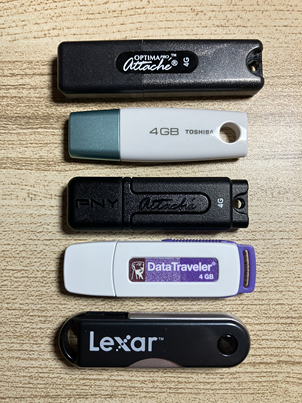
-
This guide needs to be revised as well. The Spaceinvader's video is still there. In the "Rules of thumb for replacement" section. Buy USB drives from reputable retailers and avoid auction sites and unknown sellers. Be cautious of counterfeit products, even from well-known brands. There's one important nuance. Ebay is an incredible source for the remaining new old-stock which are nearly indestructible. Those are large node MLC-based USB drives from 2007 to 2011 (great for older boards and non-UEFI boot). They're still sealed in the original retail packaging. Counterfeiting was almost non-existent at the time. Today, well-known brands are the most commonly counterfeited.
-
Tools used: Flash Drive Information Extractor and ChipGenius -- for the flash chip and controller info. H2testw (2 passes) -- to test overall functionality and writing/reading speeds. Unraid USB creator -- for the GUID status pre-check (it doesn't check live with the licensing server) Also added the likely year of manufacture and flash chip node size. Note: The Unraid USB Creator can be picky -- it may incorrectly flag some drives as having "No valid GUID" due to the non-standard length of their serial numbers. The non-standard length should not be a problem when registering with the licensing server. In the case of a completely missing serial number, running a vendor-specific tools like AlcorMP, JetFlash Online Recovery etc might resolve the issue. Transcend JetFlash V10 - 8 GB, USB 2.0 Year: ~2008 GUID: NO --> YES (Fixed via JetFlash Online Recovery -- a free tool developed by Transcend). Controller: Alcor AU6986 Possible Memory Chip(s): Samsung K9HCG08U1M, 51nm Memory Type: MLC Flash ID: ECD755B6 78EC Flash Channels: Dual Chip Code: 0xBC07 Chip F/W: 2103 VID: 058F PID: 6387 Manufacturer: JetFlash Physical Disk Capacity: 16 GB USB Version: 2.00 Declared Power: 100 mA Write: 11 MB/s, Read: 22 MB/s eBay Item #: 335738602703 Transcend JetFlash 600 - 16 GB, USB 2.0 Year: ~2011 GUID: NO --> YES (Fixed via JetFlash Online Recovery -- a free tool developed by Transcend). Controller: Alcor AU6998 Possible Memory Chip(s): Samsung K9LCG08U0A, 27nm Memory Type: MLC Flash ID: ECDED57A 5843 Flash Channels: Dual Chip Code: 0xCD03 Chip F/W: 3506 VID: 8564 PID: 1000 Manufacturer: JetFlash Physical Disk Capacity: 16 GB USB Version: 2.00 Declared Power: 100 mA Write: 19 MB/s, Read: 23.5 MB/s Mushkin Prospector - 16 GB, USB 2.0 Year: 2012 GUID: YES Controller: Phison PS2251-61 (PS2261) Possible Memory Chip(s): Toshiba TC58NVG6D2GTA00, 24nm Memory Type: MLC Flash ID: 98DE9482 7656 Chip F/W: 03.08.10 Firmware Date: 2012-03-07 VID: 13FE PID: 3E00 Manufacturer: MUSHKIN Product: MKNUFDPR16GB Physical Disk Capacity: 16 GB USB Version: 2.00 Declared Power: 200 mA Write: 13 MB/s, Read: 18 MB/s A Trade show giveaway - 2 GB, USB 2.0 Year: ~2011 GUID: YES Controller: Alcor SC708AN / AU6987AN Possible Memory Chip(s): Toshiba TC58NVG4D2HTA00, 24nm Memory Type: MLC Flash ID: 98D58432 7256 Chip F/W: E403 VID: 058F PID: 6387 Manufacturer: Generic Physical Disk Capacity: 2 GB USB Version: 2.00 Declared Power: 0 mA The drive is fully functional - looks like a firmware programming oversight. Write: 5 MB/s, Read: 16.5 MB/s Generic (metal casing) - 8 GB, USB 2.0 Year: ~ 2020 GUID: NO --> YES (Fixed via ChipsBank UMPTool by scanning the drive on default settings) Controller: ChipsBank CBM2199E Possible Memory Chip(s): Samsung K9GCGD8D0A, 21nm (likely surplus leftover NAND from 2011-12 production runs) Memory Type: MLC Flash ID: ECDEA47A 68C4 Flash CE: 1 Firmware Date: 2019-11-11 VID: ABCD PID: 1234 Manufacturer: General Product: UDisk Physical Disk Capacity: 8 GB USB Version: 2.00 Declared Power: 100 mA Write: 5 MB/s, Read: 28.5 MB/s
-
^^ Flash ID: 983E9803 76E4 KIOXIA (formerly Toshiba) BiCS5 3D TLC NAND chip Just learned something new: "In modern 3D NAND like BiCS5, the "node size" (or process node/lithography) isn't quoted in the traditional planar 2D sense (e.g., "10 nm" or "15 nm" class), because scaling happens primarily vertically through layer count rather than shrinking the horizontal cell dimensions as aggressively."
-
Thank you for posting. It's a good idea to mention the place and purchase date if available. I think the format can be improved by only keeping the most relevant info. Like the Brand Name/Model, USB interface, capacity in GB, date of puchase and/or date-related markings on the packaging if present, also the P/N and related markings from the back of packaging if just purchased. VID/PID, plus NAND ID and its interpretation by Google, Gemini, Grok, ChatGPT etc to get a confirmation on the reported NAND's type and process node size in nm. Also declared power or MaxPower. Your notes provide very interesting feedback on the drive's behavior in the actual Unraid machine, confirming that the USB 3.XX interface should be avoided. I'll make a similar attempt in a day or two, by sharing readouts from my older drives from the MLC era.
-
That's a very good one, a steal for <20 Eur.
-
NAND Flash Types: Technical Breakdown and Relevance to Unraid Boot Drives This section explains the main NAND flash architectures used in USB drives and SSDs, focusing on their cell structure, historical timelines, key characteristics, and why they matter for Unraid's USB boot device. Unraid loads its OS into RAM and keeps most operations (including standard logging) in memory, resulting in infrequent writes to the USB boot drive -- mainly for config changes, updates, and shutdowns -- making cell interference resistance (to avoid bit-flips/corruption) and low heat signature (to minimize long-term wear in 24/7 operation) key factors for drive longevity and stability. 1. Planar MLC (Multi-Level Cell) – 2 bits per cell (4 voltage levels) Era: Approximately 2006-2015 in production. Best NOS targets are 2007-2010 -- the window where node sizes remained large enough to deliver maximum reliability while capacity was sufficient for current Unraid installations. No longer in production at consumer scale. Architecture: Cells laid flat on a silicon wafer at progressively shrinking node sizes. Unlike planar TLC, MLC's two-bit design meant node shrinking was less catastrophic -- wider voltage margins provided meaningful tolerance even as geometries tightened. Node size timeline (consumer USB drives): 2005–2006...............70 nm – 90 nm 2007.........................51 nm – 56 nm 2008–2009...............34 nm – 43 nm 2010.........................25 nm – 32 nm 2011–2012...............19 nm – 24 nm 2013–2015...............15 nm – 19 nm (final planar generations) Drives at 34nm and above represent the most reliable consumer MLC generations. Node size shrinks with each year -- earlier is better within the MLC era. Key characteristics: Interference: Four voltage levels with wide margins between states make bit-flips from neighboring cells rare -- even at smaller nodes. This is the fundamental reliability advantage of MLC over TLC and QLC. The controller managing MLC is handling a significantly less demanding error correction workload than any TLC or QLC equivalent. Heat: Low. Wide voltage margins mean the controller's error correction workload is minimal. Runs cool under sustained use and cooler still in Unraid's near-idle boot application. USB 2.0 power draw compounds this advantage -- MLC's inherent thermal efficiency combined with USB 2.0's lower power envelope makes this the coolest running category available outside of industrial SLC. Endurance: 1,500–5,000 P/E cycles in consumer products. Higher end at 34nm and above -- lower end at 19-25nm late-node variants. In Unraid's near-idle boot application even the lower end of this range represents effectively unlimited operational life. P/E cycle exhaustion is not a realistic failure mode for MLC in this application. Unraid fit: Excellent -- the best consumer option outside of industrial SLC and the most practical recommendation given current market conditions. NOS drives from 2007–2010 with 34–56nm nodes are the primary target. Sealed examples surface on eBay periodically at $10–25 -- verify with ChipGenius on arrival. Check the USB Flash section of this forum for confirmed MLC models with documented component output before purchasing. 2. Planar TLC (Triple-Level Cell) – 3 bits per cell (8 voltage levels) Era: ~ 2011-2019 in consumer USB drives (declining from 2017 onward as 3D TLC took over) Architecture: Same flat layout as planar MLC but storing 3 bits per cell, combined with continued aggressive node shrinking to 15nm and below. This compounded both density and reliability problems simultaneously -- more bits per cell demanding tighter voltage margins, at geometries where those margins were already compromised by physical cell size. Key characteristics: Interference: Cells shrunk to 15-19nm leave extremely thin barriers between neighbors. Charge leakage between cells -- primarily a quantum tunneling and long-term retention loss phenomenon rather than a thermal effect -- is the dominant data corruption mechanism. This is a passive process that continues regardless of whether the drive is being written to. A drive that reads correctly today may accumulate sufficient charge leakage to fail after months of always-on uptime. Heat: Higher than MLC under equivalent workloads due to more complex controller error management at marginal voltage states. Not as severe as QLC but meaningfully worse than MLC or large-node planar TLC from earlier in the era. Endurance: 300 - 1,000 P/E cycles in practice. Lower end at 15nm and below -- upper end only at early large-node 19nm+ variants. Substantially lower than the MLC range it replaced and the 3D TLC that followed it. Unraid fit: Avoid. Drives from this era are prone to silent, gradual data corruption over months of uptime. A drive that reads correctly today may fail to boot after a year of Unraid use. 3. 3D TLC (Triple-Level Cell) -- 3 bits per cell (8 voltage levels) Era: Displacing planar TLC in consumer USB drives gradually through 2019–2022. Planar TLC assembled stock remains in retail circulation -- purchase date alone does not confirm 3D TLC. Verify via ChipGenius or buy only from manufacturers that document 3D NAND explicitly. Architecture: Cells stacked vertically rather than shrunk horizontally -- density achieved by building upward rather than inward. Layer counts started at 24-32 and now exceed 100 in current production. This was the industry's direct response to the reliability ceiling late-node planar TLC had reached. Key characteristics: Interference: Vertical stacking puts physical distance between adjacent cell strings, significantly reducing coupling compared to planar designs. Heat: Moderate - USB 2.0, High - USB 3.x The larger 3D die footprint dissipates heat better than late-node planar TLC -- but form factor matters as much as NAND type. A compact plastic USB 3.x drive runs significantly hotter than a full-size metal-bodied drive with identical NAND. Endurance: Overlaps with low-range consumer MLC at the high end but doesn't match large-node MLC at its best. In Unraid's near-idle boot application endurance is largely irrelevant -- idle heat and controller quality are the dominant reliability variables. Unraid fit: Good -- with conditions. The practical choice when NOS MLC or industrial options are unavailable. Use full-size metal body, USB 2.0 port where possible, authorized retail only. The Bar Plus is the ceiling of the consumer 3D TLC category for this application -- and real-world always-on failure reports confirm even that ceiling has documented limitations 4. 3D QLC (Quad-Level Cell) -- 4 bits per cell (16 voltage levels) Era: Widespread in consumer USB drives from approximately 2020 to present. The dominant NAND type in the cheapest currently available drives. Architecture: Vertically stacked cells storing 4 bits per cell. Exclusively 3D -- there is no planar QLC. Optimized entirely for density at the expense of every reliability margin. Key characteristics: Interference: 16 voltage states packed into a single cell leave microscopic margins between levels. Minor charge coupling from a nearby write can shift a cell by one state, silently corrupting data without triggering an immediate error. Silent bit-rot is a characteristic failure mode rather than an edge case. Heat: Highest of any consumer NAND type. LDPC error correction runs continuously regardless of user I/O -- compensating for QLC's inherently marginal voltage states keeps the controller significantly warmer than MLC or TLC equivalents even at complete idle. This is not activity-dependent heat. It does not stop. Endurance: 100–300 P/E cycles in practice -- the lowest of any consumer NAND type. In a high-write application this matters enormously. In Unraid's near-idle boot application P/E exhaustion is less likely than controller or thermal failure first. Capacity note: QLC dies are not economically produced below 128GB. Any QLC-based drive at 64GB or below is almost certainly a cheap generic, a counterfeit, or built from down-binned rejected NAND from higher capacity production runs -- combining QLC's inherent weaknesses with pre-existing manufacturing defects. Unraid fit: Avoid entirely. The continuous idle heat generation and controller stress make QLC actively unsuitable for always-on boot duty regardless of capacity, brand, or price paid. Practical Consumer USB drive ranking for Unraid boot use: Best: Planar MLC NOS from 2007-2010 (34-56nm nodes). Large P/E budget (~5,000 cycles), wide voltage margins that minimize controller workload, and no TRIM dependency. Will outlast the server hardware in near-idle boot duty. Acceptable for new purchases: 3D TLC from a reputable manufacturer, full-size metal body, USB 2.0 port. Sufficient P/E budget (1,000-3,000 cycles) and modern controllers with better wear management than their planar-era predecessors. Authorized retail only. Backups non-negotiable. Avoid: Planar TLC (any era) -- thin P/E budget consumed by background controller activity independent of Unraid's writes. Late-node 15nm is particularly poor. Early-node 19-24nm is mediocre but survivable with a quality controller. Avoid: Any QLC. Avoid: Counterfeits and cheap generics regardless of stated NAND type. Avoid: USB 3.x drives in USB 3.x ports -- lower power draw of USB 2.0 operation meaningfully reduces thermal stress in always-on duty. USB Flash Drive Mirrored Boot Pool -- Confirmed Supported Configuration (Unraid 7.3) Unraid 7.3's boot pool architecture supports USB flash drives and USB DOMs as boot pool members. This means a mirrored boot pool providing redundancy against single drive failure is achievable using USB hardware without consuming any internal drive slots, SATA ports, or M.2 slots. License slot consumption note: Each USB drive in a mirrored boot pool counts toward your license's drive allocation regardless of whether the dedicated boot pool option is used. Two drives in a mirrored USB boot pool consume two license slots. Users on Basic or Starter licenses who already have an existing cache NVMe or cache pool should be aware that incorporating the boot partition into that existing drive or pool -- rather than adding dedicated USB boot pool members -- avoids any additional license slot consumption entirely. The mirrored USB boot pool configuration is most practical for Unleashed and legacy Unlimited license holders where the drive count ceiling doesn't apply. How It Works The configuration has two variants depending on licensing method. With TPM licensing: Drive 1 -- USB flash drive or DOM, 8GB minimum, boot pool member Drive 2 -- USB flash drive or DOM, 8GB minimum, boot pool member License -- stored on motherboard TPM chip, USB drive removed entirely With USB licensing (no TPM available): Drive 1 -- USB flash drive or DOM, 8GB minimum, boot pool member Drive 2 -- USB flash drive or DOM, 8GB minimum, boot pool member Drive 3 -- existing USB license drive, with no size restrictions, holds the license key as before In both variants the two boot pool drives form a ZFS mirror. If either fails the system continues booting from the surviving drive. In the USB licensing variant the license drive remains completely separate from the boot pool -- it is never partitioned or reformatted and requires no changes from the current setup. The Minimum Size Requirement Boot pool member devices must be 8GB or larger when used as dedicated boot pool members. The license drive is not subject to this restriction and can remain whatever size it currently is. The NAND Quality Consideration The 8GB minimum requirement meaningfully improves the hardware selection picture for this configuration compared to beta.1's 16GB minimum. The optimal USB drives documented in this guide -- NOS MLC from 2007-2010 at 34-56nm nodes -- are typically 4GB or 8GB. The 4GB drives remain ineligible. The 8GB drives from the same era are now viable boot pool candidates -- and represent the best available NAND for this application at any price point. Verified 8GB NOS MLC drives from the optimal era should be the first target for anyone building a mirrored USB boot pool. For users unable to source verified 8GB NOS MLC drives the same NAND verification discipline that governs all USB drive selection applies. Target verified 3D TLC or better from a reputable manufacturer. Use ChipGenius or Flash Drive Information Extractor to confirm NAND type before committing any drive to boot pool duty. Avoid unverified budget drives regardless of stated specifications. Industrial USB DOMs at 8GB or above -- from ATP, Innodisk, or Swissbit — are the optimal new-purchase choice for boot pool members where budget allows. Their MLC or SLC NAND, documented specifications, and internal header mounting make them the most reliable available new-purchase option for this role. Note that verified 8GB NOS MLC consumer drives from the optimal era deliver superior node geometry to most currently available industrial DOMs at lower cost -- the industrial option's advantage is supply chain confidence and new-from-distributor provenance rather than NAND quality superiority. The License Drive Remains Unchanged The existing license USB drive continues operating exactly as before -- no reformatting, no migration, no minimum size requirement beyond Unraid's standard 4GB minimum. For users currently running a 4GB or 8GB MLC drive as their boot and license device that drive stays in place as the license holder while the two new boot pool drives handle the actual boot process. The 4GB NOS MLC drives that are ineligible for boot pool membership due to the minimum size requirement are specifically well suited for the permanent license holder role -- their optimal NAND quality makes them ideal for the always-on always-present function they now occupy. Hardware Agnosticism Fully Preserved Unlike internal NVMe boot this configuration maintains complete hardware portability. All three USB drives physically move to any replacement hardware. No M.2 slot availability required. No TPM compatibility required. No EFI boot entry management. No GRUB module installation. The disaster recovery scenario — move drives to any available hardware and boot -- works identically to traditional USB boot. For Users With Internal USB Headers Both USB DOMs and standard USB flash drives can connect to internal motherboard USB headers -- DOMs natively, standard flash drives via an inexpensive 9-pin to USB-A adapter or adapter cable available for $5-10. Either approach physically protects the boot pool drives from accidental contact while consuming no external ports. Two drives on internal headers as the boot pool mirror plus the existing license drive on an external rear port is the cleanest available configuration -- redundant boot, physically protected drives, no internal slots consumed, full hardware agnosticism preserved. Industrial USB DOMs remain the optimal choice for internal header mounting due to their verified NAND specifications and industrial-grade construction. Standard flash drives on 9-pin adapters are a practical, accessible or sometime even superior alternative where DOM sourcing or budget is a constraint -- NAND type verification via ChipGenius applies regardless of which approach is used. Combined with TPM licensing if available the internal header configuration eliminates the external USB drive entirely while maintaining full boot redundancy. Practical USB Mirrored Boot Pool Recommendations Best: Two ATP, Innodisk, or Swissbit industrial USB DOMs at 8GB or above on internal headers. Verified SLC, pSLC or MLC NAND, documented specifications, physical protection. Existing license drive remains or TPM licensing used instead. Good: Two verified 3D TLC USB flash drives at 8GB or above from Samsung, Kingston, or Transcend -- ChipGenius confirmed NAND type before purchase. Full-size metal body preferred for thermal management. Can be mounted internally via inexpensive 9-pin to USB-A adapter for physical protection. Existing license drive remains as is. Avoid: Unverified budget drives at any capacity. The boot pool's always-on duty makes NAND quality as important here as in any other Unraid boot device role. Note on existing small MLC drives: The 4GB MLC drive is too small for boot pool membership but remains the optimal license holder. Keep it in place unchanged -- its role shifts from boot device to license anchor while the boot pool handles actual boot duty. The Bottom Line For most existing Unraid users the migration path requires no changes to current hardware beyond adding two new USB drives. The existing license drive stays. The boot pool adds redundancy that USB boot has never previously had. No internal slots consumed. No TPM required. No NAND quality complexity beyond the existing USB drive selection guidance this guide already provides. This configuration was not mentioned in the 7.3 promotional materials or tutorial videos. It was confirmed through community questioning in the beta forum thread. Consider it the most accessible redundant boot option available in 7.3 -- achievable with two USB drives costing a few dollars each and hardware most Unraid users already own. Internal Boot Device Selection -- The Same Physics, Higher Stakes (Unraid 7.3.x) Unraid 7.3 introduced internal boot -- the ability to boot from an NVMe, SSD, or eMMC instead of a USB flash drive. The 7.3 release notes acknowledge directly that "manufacturers have quietly shifted to cheaper NAND, endurance ratings have dropped, and flash failures have become more common" as the motivation for this change. This is the correct diagnosis of the USB failure cause. What the release notes do not address is that the same NAND quality variable applies directly to internal boot device selection. The hardware choice made at boot device selection determines whether internal boot delivers its reliability premise -- or reproduces the same failure in a form factor where the consequences are larger. Understanding Internal Boot Failure Consequences A failed USB boot drive loses OS configuration. Recovery involves replacing the drive and restoring configuration from backup -- disruptive but bounded in scope. An NVMe in combined boot plus cache pool duty -- the most common internal boot deployment pattern -- loses OS configuration and all cached data simultaneously in a single failure event. AppData, Docker configurations, VM images, and any data resident in the cache pool at the time of failure are all lost together. Understanding this failure scope helps calibrate the hardware selection decision that follows. The right NVMe choice can make internal boot genuinely more reliable than USB. The wrong choice expands the failure scope without improving the failure probability. NAND Type Hierarchy For NVMe Internal Boot The same NAND type hierarchy that governs USB boot device selection applies to NVMe selection -- with different capacity thresholds reflecting NVMe market economics. Optimal: Intel Optane M.2 Optane is not NAND flash. It uses 3D XPoint technology -- a fundamentally different storage mechanism with no floating gates and no charge leakage physics. The controller has essentially no idle maintenance workload -- it does not need to continuously scan cells, measure charge states, correct errors, or refresh drifting cells. In always-on near-idle Unraid boot duty this means near-zero idle controller heat regardless of how long the drive has been running. Intel discontinued Optane in 2022. The M.2 form factor devices -- 16GB to 32GB capacities -- are available NOS and used on eBay at $15-30. Either capacity is more than sufficient for Unraid boot duty since Unraid runs from RAM. Verify the specific model before purchasing -- not all Optane M.2 devices use the same interface. The Optane H10 is a hybrid device combining Optane and QLC NAND -- avoid it. The Optane Memory M10 and P1600X are pure Optane and the correct targets. Optane combined with TPM licensing eliminates USB dependency entirely while providing the best possible always-on boot device characteristics. This is the architecturally optimal internal boot configuration. Current implementation note -- license drive allocation Internal boot devices count toward your license's drive allocation. This applies regardless of whether you use the split boot pool or the dedicated boot pool option. Dedicated boot pool resolves the architectural split -- a drive used purely for boot no longer requires a forced data partition -- but the drive still consumes one license slot. Dedicated boot devices still count for licensing with no current plans to change this. Who this affects in practice: Most users migrating to internal boot will incorporate the boot partition into their existing cache NVMe or cache pool. That configuration consumes no additional license slots -- the cache drive was already counted before migration. Nothing changes in their slot allocation. The users specifically affected are those following the guide's most technically sound recommendations -- a dedicated Optane drive for boot, or a mirrored USB boot pool for redundancy without consuming internal slots. These configurations add one or two new devices to the license count respectively. The practical consequence by license tier: Unleashed, Lifetime and legacy Pro -- unaffected, no drive count ceiling applies. Starter, Legacy Basic -- 6 attached devices maximum. Legacy Plus -- 12 devices maximum. A dedicated Optane boot drive consumes one slot, mirrored Optane boot pool -- two slots. A mirrored USB boot pool consumes two slots. Users on Starter or Basic licenses with 5 or 6 drives already assigned have no migration path to these configurations without either removing a data drive or upgrading their license. The entry licenses are the most penalized by dedicated boot device slot consumption. Classic USB boot consumes zero drive slots from your license. Every internal boot configuration consumes one or two. On a Starter, legacy Basic or legacy Plus license that difference is real money. Good: 3D TLC from verified manufacturers 3D TLC NVMe from Samsung, WD, Crucial or similar is the best practical consumer option when Optane is unavailable. Samsung 980, WD SN770, and Crucial P3 at capacities below 500GB are verified 3D TLC. Above 500GB the probability of QLC increases significantly depending on manufacturer and SKU -- verify before purchasing via latest reviews if available. The same controller quality caveat applies as in the USB section -- a verified 3D TLC drive from an established manufacturer with a known controller is meaningfully better than an unverified drive claiming equivalent specifications. Avoid: QLC NVMe at any capacity Consumer NVMe drives at 500GB and above from budget manufacturers are overwhelmingly QLC. At 1TB and above QLC is essentially universal outside of explicitly pro-grade drives. The same continuous idle controller heat that makes QLC USB drives unsuitable for always-on boot duty applies identically to QLC NVMe -- and in a combined boot plus cache role the failure scope expands to include cached data alongside OS configuration. The capacity threshold where QLC becomes the likely NAND type is lower for NVMe than for USB -- budget NVMe at 256GB is already at risk depending on manufacturer. Verify with manufacturer documentation (not reliable) or latest online hardware reports before committing any NVMe to internal boot duty. Mirrored NVMe Boot Pool -- Sequential And Correlated Failure Risks A mirrored NVMe boot pool addresses random independent failure -- if one drive fails unexpectedly the other continues operating. This is the redundancy the mirror is designed to provide and it works as intended for that specific failure mode. Two additional failure risks apply that mirroring alone does not address. The sequential failure window -- when one drive fails after years of always-on thermal stress the remaining drive is at a similar degradation level from identical conditions. During the rebuild window -- before a replacement arrives and the mirror completes -- the degraded single drive carries both boot and cache data. The probability of the second drive failing during that window is meaningfully higher for thermally stressed hardware approaching end of life. The NAND type determines how wide that window is and how risky it becomes -- which is why hardware selection remains relevant even with a mirrored configuration. The correlated failure risk -- drives from the same production batch share manufacturing tolerances, firmware versions, and wear leveling algorithms. A firmware bug that causes one drive to fail will cause the other to fail on the same timeline -- sometimes simultaneously. A documented real-world example: a firmware defect caused certain enterprise SSDs to brick themselves at exactly 32,768 hours of operation -- mirrored pairs failed at the same moment, rendering the redundancy completely useless. Wear leveling synchronization compounds this -- two identical drives receiving identical write patterns will approach their endurance limits simultaneously. The mitigation for correlated failure is straightforward -- mix brands or models in any mirrored boot pool. A Samsung 980 mirrored with a WD SN770 uses different controllers, different firmware, and different NAND from different manufacturers. The probability of a shared defect approaches zero. If identical drives are unavoidable purchase them from different vendors at different times to ensure different production batches. This diversification principle applies equally to USB flash drive mirrored boot pools -- two drives of identical make and model from the same purchase share the same correlated failure risks as identical NVMe drives. The Hardware Agnosticism Trade-off Internal boot introduces a hardware dependency that USB boot does not have. A USB boot drive physically moves between any machine with a USB port -- no BIOS configuration, no M.2 slot requirement, no EFI boot entry management. In a disaster recovery scenario where replacement hardware is whatever is immediately available this flexibility has genuine practical value. TPM licensing compounds the dependency -- the license is tied to a specific motherboard's TPM chip rather than a portable physical device. Moving to emergency replacement hardware requires both M.2 slot availability and TPM compatibility simultaneously. Users who prioritize hardware agnosticism and disaster recovery flexibility should weigh this dependency against the physical connector robustness that internal boot provides. A quality MLC USB drive in traditional USB boot configuration already achieves the reliability standard internal boot is designed to reach -- for users running legacy drives that have proven reliable, migration may offer less incremental benefit than the hardware dependency cost warrants. Internal boot's reliability advantage over USB boot materializes when the NVMe hardware selected is genuinely superior to the USB drive being replaced. The NAND quality awareness this guide provides is what makes that determination possible. Practical Internal Boot Recommendations: Best: Intel Optane M.2 16-32GB with TPM licensing. Optimal technology for always-on near-idle duty, complete USB elimination, effectively unlimited endurance. Available NOS/used at $15-30. Good: 3D TLC NVMe from Samsung, WD, Crucial etc. -- verified manufacturer documentation, backed by latest online reviews confirming 3D TLC. Combined with USB licensing if TPM unavailable, TPM licensing if available. Avoid: Any QLC NVMe regardless of capacity, brand, or price. The continuous idle controller heat, high write amplification and expanded failure scope in combined boot plus cache duty make QLC unsuitable for this role. Avoid: Unverified budget NVMe at any capacity. Apply the same counterfeit and undisclosed NAND type caution that governs USB drive purchasing. Evaluate for your situation: Internal boot with USB licensing -- the USB drive remains required, the boot architecture gains complexity, and the reliability improvement depends entirely on the NVMe hardware selected. Users with functional high quality USB drives running reliably may find their existing configuration already represents the reliability standard this feature is designed to achieve. License allocation note: The internal boot device(s) currently counts toward your license's drive allocation. Verify available slots before migrating, particularly on Starter, Legacy Basic and Legacy Plus licenses. TPM Implementation -- Stability Varies By Type (Unraid 7.3) TPM licensing anchors your Unraid license to a hardware identifier the same way USB licensing anchors it to the drive's GUID. What the promotional materials don't address is that not all TPM implementations provide the same identifier stability -- and the type of TPM your motherboard uses determines whether the licensing anchor is as reliable as the feature implies. Two distinct TPM implementations exist with meaningfully different reliability characteristics for license anchoring. dTPM -- Discrete TPM A physical dedicated chip -- either soldered to the motherboard or installed via an add-on header module. The TPM functionality runs in its own dedicated silicon entirely independent of the CPU and chipset. Its identifier is burned at manufacture and stored in the chip's own non-volatile memory. For Unraid licensing this means the identifier persists regardless of BIOS updates, CMOS clears, SPI flash reflashing, or other system maintenance events. A dTPM module can also be physically moved between compatible motherboards in some configurations -- carrying its identifier with it similarly to how a USB drive carries its GUID. dTPM is the more reliable implementation for license anchoring. It is also the less common one -- most modern consumer motherboards ship without a discrete module installed even when a header is present. fTPM -- Firmware TPM Not a physical chip. A TPM implementation running as firmware within the CPU's secure execution environment -- AMD's Platform Security Processor or Intel's Platform Trust Technology. The TPM state is stored in a dedicated region of the motherboard's SPI flash -- the same flash that stores the BIOS firmware. This is the default TPM implementation on the vast majority of modern consumer motherboards. Most users migrating to Unraid TPM licensing will be using fTPM without necessarily knowing it. The reliability concern for license anchoring is specific and documented. fTPM state stored in SPI flash is vulnerable to events that dTPM is immune to. BIOS updates -- the most common trigger. Some BIOS updates clear or reset fTPM state as part of the firmware update process. AMD Ryzen platforms have documented fTPM disruption on certain BIOS updates. Intel 13th and 14th generation users receiving microcode stability updates face the same risk. A BIOS update that resets fTPM state changes the TPM identifier -- triggering a license mismatch that requires a transfer. CMOS clears -- resetting BIOS to defaults or clearing CMOS can reset fTPM state on some motherboard implementations. A user who clears CMOS while troubleshooting a boot problem may inadvertently trigger a license mismatch. Motherboard failure -- fTPM state exists in the failed board's SPI flash and is not recoverable. A dTPM module removed from the failed board carries its state to replacement hardware. An fTPM's state is lost with the board. The License Transfer Budget Implication The documented USB license transfer allowance -- one self-service transfer per year via the automated system, additional transfers requiring support contact -- was designed around deliberate hardware changes. Users considering fTPM licensing on platforms with frequent BIOS updates should verify the transfer terms with Unraid support before migrating -- particularly if their hardware or update practices make involuntary fTPM resets a realistic possibility. Identifying Your TPM Type In Windows --> Device Manager --> Security Devices --> Trusted Platform Module shows the manufacturer. AMD, Intel or Standard as manufacturer indicates fTPM. A dedicated chip manufacturer indicates dTPM. In BIOS -- Security or Trusted Computing settings typically show AMD fTPM, AMD PSP, Intel PTT, or Intel TXT for firmware implementations versus a specific TPM version number for discrete modules. In Unraid --> Tools --> System Devices shows TPM information after enabling it in BIOS. Practical TPM Recommendations Most stable for licensing: A dTPM discrete module installed in the motherboard's TPM header. Identifier persists through BIOS updates and maintenance events. Recommended for users who update BIOS frequently or who have experienced fTPM instability on their specific platform. Acceptable for most users: fTPM on platforms with infrequent BIOS update histories. Understand that BIOS updates carry a risk of fTPM state reset. Keep a record of your current license state before performing BIOS updates. Avoid clearing CMOS unnecessarily. Verify before migrating: Whether your board uses fTPM or dTPM, and whether your specific BIOS update history has produced fTPM resets on your platform. AMD Ryzen users in particular should check community reports for their specific motherboard model before committing to fTPM licensing. Legacy hardware without TPM: USB licensing continues working exactly as before. Internal boot remains available with USB licensing -- the USB drive stays required for license validation. No TPM header or module purchase is necessary unless TPM licensing is specifically desired. Note on header availability: Many modern motherboards have a TPM header physically present but ship without a module installed. Installing an inexpensive dTPM module in that header -- typically $10-20 -- provides the more stable implementation where fTPM instability is a concern. Verify your specific motherboard's header pinout before purchasing -- 14-pin and 20-pin headers are not interchangeable. PCIe Lane Sharing -- Verify Before Migrating Consumer motherboards frequently share PCIe lanes between NVMe slots and SATA ports through the chipset. Adding a dedicated NVMe boot drive to a secondary or tertiary M.2 slot can silently disable SATA ports currently in use or downgrade their bandwidth -- without any obvious warning during the migration process. This is not a theoretical risk. Consumer motherboard architecture commonly routes NVMe slots 2 and 3 through the chipset rather than directly to the CPU. Populating these slots can disable SATA ports 5 and 6 on the same chipset lanes, or force remaining SATA connections into reduced bandwidth modes. Before committing any NVMe slot to internal boot duty: Consult your motherboard manual's M.2 and SATA compatibility matrix -- typically found in a table showing which ports become unavailable when specific slots are populated Verify that no currently active SATA data drives share lanes with the intended boot slot Confirm the slot's direct CPU versus chipset connection -- only slot 1 connects directly to the CPU on most consumer boards This verification takes five minutes and prevents a migration that silently degrades or disables existing storage connections.
-
Quick Reference -- Start Here This guide covers Unraid boot device selection across USB and internal NVMe configurations. If you read nothing else, read this section. Your situation in one question: Are you considering migrating to internal boot, or selecting a USB boot drive? If you are considering internal boot migration The reliability case for internal boot is real -- but it depends entirely on the hardware selected and how it is deployed. The most common deployment pattern -- incorporating the boot partition into an existing cache NVMe -- expands the failure scope significantly compared to USB boot. A failed USB boot drive loses OS configuration. Recovery is disruptive but bounded -- replace the drive, restore configuration from backup, done. A failed NVMe in combined boot plus cache duty loses OS configuration and all cached data simultaneously. AppData, Docker configurations, VM images, and everything resident in the cache pool at failure are gone together. If you are deploying internal boot on a dedicated drive separate from cache, this risk does not apply. If you are incorporating the boot partition into your existing cache drive or pool, understand this failure scope before migrating. TPM licensing introduces a second risk layer that USB licensing does not have. Most modern motherboards use fTPM -- firmware TPM running inside the CPU rather than a dedicated physical chip. fTPM state is stored in the motherboard's SPI flash alongside the BIOS firmware. BIOS updates, Intel microcode updates, AMD platform firmware updates, and CMOS clears can all reset fTPM state -- changing the TPM identifier and triggering a license mismatch requiring a transfer. A USB drive carries its GUID through any system event. An fTPM identifier can change without warning during routine maintenance. If your motherboard has a physical TPM header, a discrete dTPM module at $10-20 eliminates this vulnerability. If you are relying on fTPM, verify your specific platform's BIOS update history for fTPM resets before migrating. The hardware agnosticism tradeoff. A USB boot drive moves to any replacement hardware in a disaster recovery scenario -- no BIOS configuration, no M.2 slot requirement, no EFI boot entry management. Internal boot with TPM licensing ties you to M.2 slot availability and TPM compatibility on replacement hardware simultaneously. For the full internal boot hardware selection guide including NVMe NAND type recommendations and mirrored pool failure risks, see the post below. If you are selecting a USB boot drive Most USB drives implement a hardware read-only protection mode in their controllers -- when the drive detects imminent failure it locks itself read-only rather than allowing further writes that could corrupt existing data. The result is a drive that can no longer boot the system but preserves the configuration in a fully readable state for immediate recovery. Insert a replacement drive, copy the config folder, boot. The failure that felt catastrophic resolves in minutes with zero data loss. This self-preservation behavior is not as standardized in NVMe drives. When used in combined boot and cache configurations a failing NVMe is less likely to protect the data it shares with the OS partition. Three rules cover most USB purchase decision situations: Avoid: Planar TLC, any QLC, USB 3.x drives in USB 3.x ports, unverified budget drives, SanDisk (proprietary controllers). Target: Planar MLC from 2007-2010 if you can find it. Verified 3D TLC from Samsung, Kingston, or Transcend if you cannot. Industrial MLC or SLC if budget allows. Verify before committing: Use ChipGenius or Flash Drive Information Extractor to confirm NAND type (5 second check) Do not assume based on brand or purchase date alone. 🚨🚨The single best current purchase available anywhere: 🚨🚨 64GB Innodisk 3ME industrial USB drive -- eBay item 326046070546 -- currently $3.99 P/N: DEUA1-64GI61BW1SC Industrial MLC, 3,000 P/E cycles, 60-bit ECC, 30μ gold contacts, power-fail firmware, metal housing, S.M.A.R.T. capable* Confirmed Toshiba MLC NAND via Flash ID decode on purchased units. This is surplus liquidation stock from a commercial fleet application. MLC NAND production is being phased out across the industry. When this listing stock is gone it will not be replaced at the same price. If you have an unused USB 2.0 drive from a quality brand sitting in a drawer from 2006-2012, verify it with ChipGenius before spending anything. You may already own the right answer. For the full USB drive selection guide including NAND transition timeline, identification tools, and NOS MLC sourcing, see the post below. Redundant boot without consuming internal slots Unraid 7.3 also supports a mirrored USB boot pool -- two USB drives forming a ZFS mirror providing redundancy against single drive failure, consuming zero internal slots. This configuration exists. It was not prominently documented in the 7.3 release materials. Two industrial USB drives at $4 each on internal headers via inexpensive adapters provides redundant boot with complete hardware portability and zero slot consumption. For full configuration details see the post below. Note Layout was AI-assisted. Technical content was verified through primary sources, manufacturer documentation, and ChipGenius obtained data. Corrections, comments and criticism welcome. *Innodisk USB Drive 3ME -- iTracker Health Monitoring: Confirmed The Innodisk 3ME (DEUA1-64GI61BW1SC) drive health monitoring available via Innodisk’s proprietary iTracker utility -- vendor-specific S.M.A.R.T. like metrics such as health percentage and erase count; not standard ATA S.M.A.R.T. Confirmed attributes surfaced by iTracker on purchased units from the eBay surplus listing: Health percentage -- 99.93% on all tested units confirming factory-new condition Average erase count -- 2 across all units, consistent with production bench testing baseline Firmware version -- O0917v1 Controller -- SM3261 Capacity -- 60.46 GB usable on all 64GB units Individual anti-static packaging and identical erase counts across the batch confirm these are brand new drives that were never deployed. iTracker is available directly from Innodisk support on request. Reference the drive's part number DEUA1-64GI61BW1SC and the SM3261 controller when requesting the utility. If unwilling to deal with Innodisk web support feel free to send me a PM -- I'm happy to share my copy of iTracker Identifying NAND Flash Type To determine the NAND flash type (along with other details like controller and capacity), use these free utilities: ChipGenius: A simple tool for extracting drive information. Flash Drive Information Extractor by ANTSpec: Provides more detailed specs in most cases. Notes on Identification: These tools typically identify basic NAND types (e.g., MLC, TLC, QLC). Distinguishing 3D TLC from planar TLC requires decoding the Flash ID and researching the NAND chip's specifications online (e.g., via manufacturer datasheets). If unwilling to research further: do not assume "TLC" means "3D TLC" based on purchase date alone — planar TLC stock from 2018–2020 production remains in retail circulation today. The only safe shortcut is buying a drive with manufacturer-confirmed 3D NAND (such as the Samsung BAR Plus, which explicitly documents V-NAND) and verifying with ChipGenius on arrival. SanDisk Exception: These utilities do not fully read SanDisk drives due to their proprietary controllers. Given SanDisk's documented GUID uncertainty this is largely academic -- SanDisk drives are not recommended for Unraid boot duty regardless of what verification reveals. Linux users: The equivalent verification path uses lsusb -v -d VID:PID to retrieve controller and device identifiers. This provides less complete information than ChipGenius -- NAND type is not directly reported and requires cross-referencing the controller and device strings against community databases. If Windows access is available even temporarily -- a friend's machine, a dual boot, a Windows VM -- ChipGenius verification is significantly more reliable and produces definitive results in seconds. The Linux path works but requires additional research steps to reach the same conclusions. If shopping for New-Old-Stock (NOS) drives, target production years 2006-2009 for higher reliability These years used MLC NAND with larger node sizes, offering better endurance. NAND Transition Timeline: 4 -16 GB Consumer USB Flash Drives 2007 -- 100% MLC. No TLC from any manufacturer in any consumer product. Toshiba/SanDisk: 70nm → 56nm transition completed H1 2007. 56nm MLC dominant by year end. Largest cells of any major supplier -- best raw charge retention and endurance of the consumer era. Samsung: 51nm MLC entered mass production April 2007, transitioning from 60nm. Samsung USB drives of 2007 shipped with 51–60nm MLC. IMFT (Intel/Micron): 50nm MLC in shipping USB drives (Kingston DataTraveler, Lexar JumpDrive). Solid endurance at this node. Hynix: 48–51nm MLC. Comparable to Samsung and IMFT 50nm parts in practical endurance. Excellent NOS target year across all brands. 2008 -- 100% MLC. Major node transitions mid-year across all suppliers, but no TLC in any consumer USB product. Toshiba/SanDisk: 56nm → 43nm mid-year. 43nm MLC dominant by H2 2008. Still excellent endurance territory. Samsung: 51nm → 40nm transition. 40nm Samsung MLC in shipping USB drives by H2 2008. IMFT: 34nm IMFT NAND began production in 2008, with drives using this node (Kingston, Lexar) appearing in the market from late 2008 onward. Hynix: 41-48nm MLC, transitioning toward 32nm by late 2008. The node spread in 2008 is significant: a Toshiba-based drive is 43–56nm; a Samsung-based drive is 40–51nm; an IMFT-based drive from late 2008 could already be 34nm. All are MLC, all suitable for Unraid -- but cell size and endurance vary meaningfully. 2009 -- TLC debuts exclusively at 16GB+. First year of cell-type divergence between manufacturers. Toshiba/SanDisk: 43nm → 32nm MLC in 4–8GB. Toshiba and SanDisk introduced TLC NAND chips in 2009 — appearing only in select Cruzer 16GB+ budget lines. First consumer TLC product anywhere. Samsung: 40nm → 32nm MLC in shipping 4–16GB drives. IMFT: 34nm MLC throughout 2009. Zero TLC. All Kingston and Lexar USB drives were MLC regardless of capacity. Hynix: 32–41nm MLC. No consumer TLC production. 4–8GB: ~100% MLC across all manufacturers. 16GB: MLC dominant; TLC appearing only in Toshiba/SanDisk budget lines. 2010 -- Samsung enters TLC production; 16GB becomes the primary intermix battleground. Toshiba/SanDisk: 32nm → 24nm MLC in 4 – 8GB. TLC expanding across more 16GB budget SKUs. 24nm MLC entering production Q3 2010 — appearing in shipping drives by late 2010/early 2011. Samsung: Began mass-producing TLC in 2010. Own-brand 16GB budget lines began using TLC. 32nm MLC still in 4–8GB Samsung drives. IMFT: 34nm → 25nm MLC. 25nm NAND entered mass production in 2010 and began appearing in Kingston and Lexar USB drives. MLC-only - produced no consumer TLC at the 25nm node. Hynix: 26–32nm MLC. No consumer TLC. 4GB: ~100% MLC. 8GB: MLC dominant; TLC only in Samsung and Toshiba/SanDisk own-brand budget lines. 16GB: Rapidly intermixing -- TLC dominant in vertically integrated brands; MLC persisting in third-party brands sourcing from IMFT or Hynix. 2011–2012 -- The inflection point. Toshiba/SanDisk's 19nm node hits volume production January 2012, producing MLC and TLC simultaneously. From this node onward across all manufacturers, cell type cannot be assumed — it must be verified. Toshiba/SanDisk: 24nm → 19nm. Both MLC and TLC variants from the same process. 16GB predominantly TLC across all brands including third-party holdouts by end of 2012. 8GB rapidly intermixing. Samsung: 32nm → 27nm → 21nm. TLC spreading from 16GB into 8GB own-brand budget lines through 2012. Samsung's CTF architecture meant MLC and TLC diverged at the firmware/programming level rather than requiring different fab processes. IMFT: 25nm → 20nm MLC. Kingston and Lexar drives remained MLC at 4–8GB through 2011–2012. IMFT did not ship consumer TLC for USB drives at scale during this period. Hynix: 20–26 MLC. No significant consumer TLC from Hynix in this window. 4GB: Predominantly MLC -- 19nm TLC die sizes still uneconomical for 4GB. 8GB: Rapidly intermixing -- TLC dominant in own-brand and white-label; MLC persisting in IMFT-sourced and Hynix-sourced drives. 16GB: ~80–90% TLC across all mainstream brands by end of 2012. 2013–2014 -- TLC completes its takeover of 16GB and 8GB; 4GB turns. Toshiba/SanDisk: 19nm TLC dominant in 8-16GB. 15nm MLC production April 2014; 15nm TLC June 2014. 15nm TLC die sizes finally make 4GB economical for TLC. Older MLC fabs serving 4GB begin retiring. Samsung: 21nm → 16nm CTF. TLC universal in Samsung own-brand 8GB+ lines by 2013. IMFT/Micron: 20nm → 16nm. Consumer USB partners (Kingston, Lexar) begin transitioning entry-level 8GB+ to TLC at 16nm. 4GB IMFT-sourced drives hold MLC longest of any supplier combination. Hynix: 20nm → 16nm MLC, TLC following at same node. Transitioning entry-level 8GB lines to TLC through 2014. 2013 is the watershed for 8GB and 16GB. 2014 is the equivalent for 4GB. After 2014, MLC in any consumer USB drive requires explicit verification. 2015–2017 -- Full TLC standardization at the worst planar nodes across all manufacturers.
-
@SpencerJ Thank you!!
-
@SpencerJ May I ask you please to create a new category called "Boot Devices". With a couple of sub-forums labeled something like "USB Flash", or "Legacy booting" for USB sticks and another one labeled "New Internal Booting" for the newly developed method. They need to be kept separated. I think it would be great to have a specific place to discuss and share flash drives readouts, like the one shared by @NoRaid99 above. As you've mentioned in your prior post, manufacturers continue to degrade quality. I think it's time for us as a community to start talking about this in a way that would be supported by objective evidence. By sharing a given USB Flash hardware profile from a specific time period, not just a model name/number. Known hardware = known quality. You're absolutely correct in your description of the evolving market where model designations stay the same while the actual hardware goes through multiple changes. We'll have to develop a specific simple reporting template, starting with the year of production, as stated on the back of the packaging (if just purchased). That alone would create a much better reference point.
-
Thank you for sharing the readout! It's a solid Unraid boot drive. NAND Node - MLC 16nm (Micron L95B) It's a very thin MLC node which is not that great for long-term reliability, but still should be more reliable compared to any modern cheap consumer drive, especially those based on QLC. Controller - Alcor AU6989SN-GT. It features 72-bit /1KB BCH ECC engine which is expected for a thin NAND node. These controllers sometime have a "creative" factory formatting - it's recommended to wipe it clean with rufus or SD Card formatter before installing Unraid.
-
Spent some time looking into the USB DOM (Disk-On-Module) @SpencerJ Why isn't it the highly recommended, go-to booting device? I don't understand why it hasn't been mentioned anywhere in the Unraid docs? It should be promoted as the preferred booting device. I see just few posts on this forum and that's it. I used to think that it's kinda of an exotic device with some complex install steps reserved only for the tinkerers. Because it is nowhere to be found in the docs and/or discussed on the forum, or anywhere else. In reality - all installation steps for the DOM are exactly the same as with the regular USB stick. As an extra all you need is the adapter cable for the initial Unraid burn. After the install It plugs into the motherboard's USB header instead of an external USB port. That's all. The 8GB USB DOM (2.54mm) sounds like the absolutely perfect, super-reliable, tailored for the Unraid environment booting solution. Also very affordable. There's no need to overspend on the more expensive industrial USB flash sticks. The DOM and the cable altogether - $25 shipped on ebay. It checks all boxes: Unique GUID MLC Industrial NAND Power protection SMI controller with global wear leveling 19-30 TBW endurance 85°C heat resistance It's designed to be plugged in and left on for 10+ years. On ebay search for the 9-Pin USB Motherboard Male Header to Single USB 2.0 Type A Male Cable and 8GB 9-Pin USB Flash Drive Disk On Module DOM (Big 9-pin)
-
@Veah I've made an attempt in the form of the "USB Flash Primer" thread. Frankly, I don't see much of interest. Apparently, everyone is so hyped and hopeful that the new internal boot option would magically eliminate every reliability concern associated with the USB licensing model that they decided there was no need to care about their existing USB boot devices.
-
Some reporting problems and others of not having issues is the key. Precisely because of the continuously cheapening and degrading quality of the consumer oriented USB drives. But that's exactly why Limetech should have paid much more attention to the NAND trends and kept the users advised. The alternative boot method is very welcome. But it's unclear at this point if it will not bring its own set of problems. It might actually create the exact same situation, but now with counterfeit and low quality NVMe's being written to on the regular bases unlike the solely dedicated to the OS USB flash. I think the best advice in this situation should be the following. Stay away from the most often counterfeited brands like Sandisk, Samsung, Kingston, HP/Sony unless purchased at the brick-n-mortar store. Amazon is not safe! Instead, look for the safer in that regard Transcend and PNY. Even better, do spend a little more and buy the still reasonably priced industrial brands like Kanguru which is thankfully has already been listed at the beginning of this thread. If you're a bargain hunter you might want to check ebay where you can periodically find some great examples of the new-old-stock from the bygone era that will outlast the best non-industrial flash drives of today. (but that's its own huge topic). Don't do that unless you know exactly what to look for. Stay with the USB 2.0 and USB 2.0 only - for both the drive and the port. Though, no choice with Kanguru - USB 3.X only, but at least they do have a stable Bill of Materials and use a quality, cool running controller, the part that produces all that heat. Another option is to obtain USB reader that is known to have a GUID and use it with an industrial or high endurance MicroSD. USB DOM is another option. I haven't looked into that yet. All these options have already been discussed in some scattered form on this side and everywhere else. What Limetech should have done is to organize that info into an easily read and comprehensible to newbies guide. Instead of keeping the just deleted video up for years, allowing the unsuspecting newbies, and even veterans to fall into the trap of counterfeited products, or if even genuine, still unknowingly buying the low quality NAND combined with overheating USB 3.X No wonder the USB boot has earned such an abysmal reputation in the community. I understand that Limetech didn't have much capacity to spare in the prior years, but now with the increased hiring I'd think they can find some capacity to look into the topic and create an easy read "official" guide. Also, as a community, I thing we should start another thread(s) dedicated to the topics I've mentioned above. Like "Industrial USB flash" , "Old Tech finds on ebay", "MicroSD readers with GUID", "USB DOM" etc. Where the users can share their findings and also post readouts lifted from their devices, like the type of NAND, Chip P/N, Controller P/N, Max Current and year of production if purchased new-old-stock. All very useful information that would be very helpful to others in choosing the higher quality of product. Quality as in potential longevity of a particular model. I have a few examples of the newer and older USB sticks. I have already posted an example of a simple readout in this thread. I will post more detailed readouts later when I have time, sometime closer to the end of the next month. But if someone here is willing to do that sooner, I can reference the tools that can be used in lifting that info. The tools for the NAND, controller and Max Current information: ChipGenius and Flash Drive Information Extractor. Also the H2testw (write and read enabled) is useful for detecting fakes and assessing general writing and reading performances and reliability.
-
@SpencerJ It looks like you've removed your post regarding the plans to update or remake the the Spaceinvader's video "Testing to find the best flash drive". So it's not in the plans anymore? And if it's not then, at the very list, please update your recommendation at the start of this thread to not follow the outdated video or simply remove it. I'm sorry for maybe sounding too harsh, but the testing criteria doesn't reflect the Unraid's environment and doesn't provide any good advice. Today it has become useless or even worse, misleading. It needs to be updated, or removed. I'd say that the fact that the video in this thread is still up and being recommended as a valid guide on the selection of a reliable boot drive does a great dis-service to the existing users and new-comers. I find it surprising that Limetech seems still to be oblivious to the situation even at this point and rather concentrating on the releasing of the new internal boot option. Users need a better official guidance on the USB flash drive selection. Having another choice for a boot drive is great, but it doesn't mean that the USB boot will or should go away anytime soon, at least I hope it wont. Especially considering the presently skyrocketing flash memory prices, equally troublesome proliferation of NVMe SSD fakes and increasingly fragile modern NAND.
-
Would you be willing to take a readout from your stick(s)? You could use Chipgenious and Flash Drive Information Extractor - very simple apps to get relevant information.
-
Those industrial types are built like tanks but cost big bucks. If the price is no object, why not. For the price-conscious of us there are still ample opportunities to score a real reliable MLC-based new old-stock on ebay for a very reasonable price. Just need to know what to look for. In general, just about every consumer flash stick produced before 2012 was built with MLC NAND. The big downgrade had started around 2011-12 and continued through 2013 when just about every manufacturer of consumer sticks converted to the much cheaper but inferior TLC. It's better to narrow the search to specific famous brands and models while staying within the 2006-2010 productions years. For the most part it's pretty easy to tell the year of manufacture by looking at the copyright year printed on the packaging.
-
There's more to it than just the material of the plug. All modern USB drives are made with cheap NAND and generally run much hotter than the old ones. Old as in the pre-2010. The USB 2.0 ones tend to run cooler, but still it all depends on the design, NAND and controller used. The plastic plug ones are probably the junkiest of them all. And I'm not even mentioning counterfeits. The best bet for a reliable USB drive is to try to find an new old-stock from the pre-2012 production era on places like ebay. I just looked and found a few promising, judged by Brand, model, capacity, approximate DOM, reports of components from teardowns, listings. I can post the links if anyone interested.
-
You're exactly right. Assuming the stick was made and purchased around 2007, it likely contains a large-node MLC flash chip—either 70nm or 56nm—paired with a low-power, thermally efficient controller Those are indestructible in the Unraid environment. No wonder they're still running in your machines.
-
Hello, Yahoo (🤬) has recently revoked access to my email that I've used to create this forum account. Obviously I'm still able to log into this forum for now. But it creates an uncertainty that might not allow me to re-log in the case if I ever need to receive an email confirmation for security reasons. The forum account settings by default don't allow me to edit the attached email account. May I ask for the administrator's help here? Thank you.
-
It's a tricky situation... It might be a far better choice to go with an older, no-brand or lesser-known brand USB 2.0 drive. As compared to a freshly purchased (especially if shopping online) drive of a well-known brand/model - those are counterfeited the most. Make sure to go with USB 2.0 and not USB 3.X - it's not easy to find them anymore.
-
Fakes are not all the same. The absence of a GUID is a sure sign of a fake and will be immediately detected. But they also come in many other different flavors as is the case with duplicate GUIDs when batches of hundreds or even thousands of drives contain the exact same GUID. In that case you won't even know that you gotten one if you happened to be the first user to have registered such a USB with Unraid.
-
Thanks. But the biggest problem here is that the make/model info sharing is not helpful anymore in determining the quality of a USB drive since the markets all over the world are flooded with fakes.
-
Sorry but I have to disagree. As I've stated before in this very thread... The referenced USB-related test video by SpaceInvaderOne is very outdated, performed with unrelated to the Unraid's environment methodology and therefore neither helpful or awesome. It's actually rather misleading in view of all information that has become available since its publishing date. I've stated my reasons before and not going to repeat them again on why that video test is simply "no good". I've commented before that the USB video is in the urgent need of an update. And now seeing that SpencerJ is planning a re-make! 👍 👏
-
Yeah, the feature sets look slightly different due to editing inconsistency. But in reality they're exactly the same across the tiers. At least as far as I know...