s11
Members
-
Joined
-
Last visited
Everything posted by s11
-
Hallo :) Genau, ich konnte es lösen indem ich im Bios die Sata Schnittstellen mit Hotplug=Disabled gesetzt habe. Ansonsten hätte ich aber noch den Kernel Boot Param gesetzt: ahci.mobile_lpm_policy=3 https://forums.unraid.net/topic/108966-strom-sparen-mit-powertop-stromverbrauch-von-unraid-verbessern/page/47/#findComment-1622876 Dann hätte ich geschaut ob es damit klappt. Hmm sonst könnte man noch versuchen das Bios vom Dell Board so hinzubiegen, dass du dort die Hotswapfunktion auf disabled setzen kannst. Aber ich weiß nicht ob es dafür gute Tools gibt. Ich habe ähnliches hier auf meinem Gigabyte Board gemacht, um die Powerlimits mit einer Xeon CPU wieder einstellen zu können bzw. das verweigert das Board regulär. Dafür habe ich dieses Tool hier genommen https://github.com/BoringBoredom/UEFI-Editor (ich weiß aber nicht ob Dell auf ein AMI Bios von der Stange hat) und mit flahrom geflasht. Aber das würde ich erst mal als sehr experimentell ansehen ;)
-
Hallo :) Ich weiß nicht wie sich das mit dem Github Issue verhält, aber bei mir war es definitiv messbar bzw. vor dem Unraid/Kernel update war das Setzen link_power_management_policy=med_power_with_dipm durch powertop problemlos möglich -> sata power management in powertop = good . Dadurch wurde C7 möglich. Verbrauch Idle ~11 Watt Nach dem Update war das Setzen nicht mehr möglich -> sata power management in powertop = bad . Dadurch wurde nur C2 möglich. Verbrauch Idle ~13-14 Watt Also gemerkt habe ich es hier schon ;)
-
Ah ok. Ja ich komme hier auch maximal auf C7 bzw. das liegt hier auch ein der PCIe Karte. Ich habe hier allerdings einen Adapter drinne, welcher mir die x16 Lanes aufteilt -> https://www.amazon.com.be/-/en/Bewinner-Expansion-Compatible-Double-Personal/dp/B0BMWS83R9 Ohne die Karte wird es hier auch C10. Ich denke damit muss man sich dann abfinden bzw. das viele PCI(e) Karten keine tiefen C-States zulassen bzw. in diesem Fall sind es wohl auch die NVMe's die über die Karte direkt durchgeschliffen werden. PowerTop 2.16 habe ich hier noch nicht laufen. Ach so, um eine schnelle Analyse zu erhalten kann man auch einfach mal die Ausgaben von dmesg und/oder lspci einer KI reindrücken ;) So lange da nichts empfindliches an Daten drinne steht (bzw. sollte eigentlich nicht) erhält man so recht schnell gute Anhaltspunkte. Zumindest war es bei mir vorhin so.
-
Update: In Powertop sieht nun wieder alles gut aus hier 😀 Zuvor konnte Powertop das Sata PowerManagement nicht korrekt setzen bzw. nur: link_power_management_policy: max_performance Das ganze war im KernelLog ersichtlich per dmesg: 0.737130] ata1: SATA max UDMA/133 abar m2048@0xa1715000 port 0xa1715100 irq 134 lpm-pol 1 ext Die Sata Hosts wurden als extern (Das ext am Ende der Zeile) behandelt, da ich diese im Bios mit Hotplug=enabled gesetzt hatte. Im älteren Kernel war die Policy für das PowerManagement und external Sata Hosts wohl nicht ganz so restriktiv. Nach umsetzen im Bios auf disabled kann powertop nun wieder /sys/class/scsi_host/host.../link_power_management_policy: med_power_with_dipm setzen. Somit sollte sich das erledigt haben bzw. das Problem waren hier zumindest Bioseinstellungen.
-
Hmm, das gleiche bei mir seit Update auf 7.3: Bad Enable SATA link power management for host2 Bad Enable SATA link power management for host3 Bad Enable SATA link power management for host0 Bad Enable SATA link power management for host1 Und als C-State wird nur noch Level 2 erreicht und nicht mehr 6 oder 7 wie davor. Mal gucken.
-
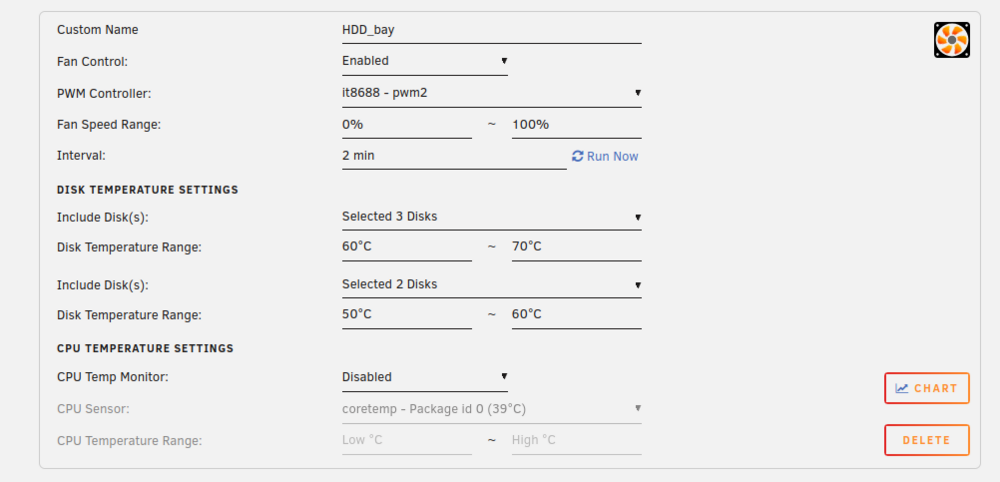
Hi 😀 Maybe another feature request: Would it be possible to have multiple disk temperature settings per fan? Which looks like (maybe more generic so not 2 settings limited like I did in this mock🫠): Because I have e.g. the situation that a specific fan is cooling two different types of storage so HDD and SSD😉 Greetings
-
Not a problem :) Im looking forward 👍 I thought about creating a PR but unfortunately I felt not that familiar with SmartAttibutes and if there are standards for different types of drives, so if its always right to have Temperature_Celsius for HDDs or Airflow_Temperature_Cel for Sata SSDs.
-
Hi :) Yes the [M2_bay_right_side] and [M2_bay_left_side] PWM values are totally fine because I configured it like that so the fan should not spin. This is all right :) It was just the issue with my HDD_bay where I have no HDD drives but SSD drives😉 It seems the awk command used in your plugin is not able to parse the smart attribute by its name correctly. I created a more or less detailed issue in your repository -> https://github.com/ck9393/fanctrlplus/issues/23#issue-3265817330
-
Hi :) Thank you for this plugin, which also recognizes my nvme temps correctly compared to the autofan plugin. But unfortunately it doesn't recognize my array data disk temps (the HDD bay): Jul 23 01:12:40 nas fanctrlplus: [M2_bay_right_side] Temp=33°C → PWM=0 → RPM=0 Jul 23 01:12:40 nas fanctrlplus: [HDD_bay] Temp=0°C → PWM=0 → RPM=0 Jul 23 01:12:40 nas fanctrlplus: [M2_bay_left_side] Temp=28°C → PWM=0 → RPM=0
-
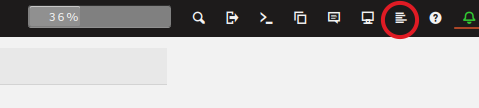
Hi 🙂 Yes you asking the right question. I like and hate Unraid. it feels so unpolished in many ways. No general information panel or view or some generic automatic integration for plugins and show related log information😮💨 Anyway to answer your question: You will find those log outputs when you enable autofan and then take a look at syslog. You will find recent syslogs in top right menu here -> Or in the "Tools" section here -> Or on command line you can filter for logs like e.g.: less /var/log/syslog.2 | grep autofan

-
I have also issues with this plugin. Got currently some alerts like: BLAKE3 hash key mismatch, /mnt/.../fileA.txt 1e3f8cf2153ccfe4ed87a42e7d2508ada78dfe7fba6da3ed75c292eb9fa4236e /mnt/.../fileB.txt is corrupted ... Looks like the tool compares the wrong file hashes 😑The files itself are fine and valid. I think for me the best option would be to just change the FS of the array to btrfs where I have the scrubbing possibility. So you don't need to relay on plugins.
-
Regarding Autofan I have again some issues with unraid 7.1.4. Maybe it was also before the case. It seems like the temp of "nvmeXnX" drives is not correctly detected. For my sata ssd drives temp retrieving works. In the logs I can only see 0C for the nvme drives: autofan: Highest disk temp is 0C, adjusting fan speed from: FULL (100% @ 4753rpm) to: OFF (0% @ 0rpm) autofan: Highest disk temp is 0C, adjusting fan speed from: FULL (100% @ 5000rpm) to: OFF (0% @ 0rpm) autofan: Highest disk temp is 27C, adjusting fan speed from: FULL (100% @ 2227rpm) to: OFF (0% @ 0rpm)
-
Regarding the Autofan plugin -> For me it works again after update to Unraid 7.1.3 🙂
-
Good fix 👍 I guess it was right or the data was given when the nvme temps were set explicit but to get values implicit it was necessary to use the unraid get_nvme_info method or your own impl using nvme id-ctrl command.
-
Ok, thanks for your answer. Yes you should be right regarding the HBA card but, I guess to be 100% sure I have to repeat it, I tried it also without the card and got deeper states. I can not imagine that the reason for that are the two WDSN850X which I assembled on the card, but Im not that sure about it. Concerning the gigabyte support I had a request for them too and I received not an adequate response or at least a helpful one. It was regarding missing aptio bios options for the cpu power limits which I had with the initial bios version but vanished in current F2/F4 version. In the end I patched the F4 bios myself and brought back those options. But good to know that there might be no solution for the nvme compatibility 🫠
-
True. You are right. So when I set the value explicit it is stored in hotTemp and it works correctly in disk location-> https://github.com/unraid/webgui/blob/master/emhttp/plugins/dynamix/DeviceInfo.page#L1380 Without it seems to be always retrieved and calculated by get_nvme_info -> https://github.com/unraid/webgui/blob/master/emhttp/plugins/dynamix/include/Wrappers.php#L180 Which is also used in those settings as placeholder via makeTemp -> https://github.com/unraid/webgui/blob/master/emhttp/plugins/dynamix/DeviceInfo.page#L113 But thank you anyway for all the effort especially when you think about the non documented tangled unraid code🥶 I have to click the donate button
-
Hi Thank you a lot for the improvements. But I guess there is one circumstance not taken into account or when I read it in the code commits correctly. Because there is also a separate setting for hot and max temps just for nvme drives. I don't know if its retrievable via the global var scope. Its located in UI code here -> https://github.com/unraid/webgui/blob/9126eb419ac67e8fac12ff4ddba82885a91038c6/emhttp/plugins/dynamix/nchan/update_2#L180C5-L180C12 You can find it in the unraid UI not in global disk settings but in smart settings of an nvme drive only:

-
Hello I have a question regarding the retrieving of the hot and max temps for specific drives. For me it looks like the plugin is "just" getting the information of those temps from the global disk setting "Default ... disk temperature threshold". Issue is currently for me, that I have also configured different temps for nvme and ssd drives which are stored in different unraid attributes like "Default ... SSD temperature threshold" or for nvme drives "... NVME temperature threshold" directly in smart settings. Unfortunately, this leads to the issue that my nvme and ssd drives are mostly give me warnings because of the warning temps for usual hdds. It would be great if the plugin could retrieve the correct temps for a specific drive type
-
Hi Very nice build. I have maybe two questions: Were you able to reach a deeper c state than c7 with the PH43B PCIe adapter? Did you get an answer from gigabyte regarding the non working 8TB nvme with the onboard interface? Thanks
-
Hello, I know this plugin is integrated now into unraid 7 and I hope I can ask a question about a function anyway in this thread. So regarding "copy jobs" is it intended that those jobs in the queue are not running in the background e.g. when you logout from the UI? For me this is a dangerous behavior and not well designed into the "File Manager". I was starting a copy job from an USB drive which was directly plugged into my unraid server and I thought, while I was logged out from UI, all the copy jobs in the queue were executed and done while I was away. But when I logged back again into the UI nothing happened and when I then reopened a "File Manager" tab/window the remaining jobs, that I thought were finished, starting out of thin air. Is this intended? Because it is not good at all.
-
@Jensus11 Ah interessant. Ich habe auch Lüfter verbaut, allerdings nur für die HDDs und wenn diese laufen. Ansonsten sind die Lüfter auch aus bzw. bei meiner Messung waren sie aus. Sonst habe ich keine Lüfter bzw. auch keinen CPU Lüfter, da diese passiv gekühlt wird.
-
@Jensus11 Oder liefen/laufen bei dir noch Lüfter mit? Diese ziehen ja auch das eine oder andere Wättchen😉 Der Grund für die PicoPSU ist bei mir Hauptsächlich der geringe Platzverbrauch. Damit kann das Gehäuse schön klein ausfallen und 4 HDD/SSDs sollten damit ohne viel Probleme zu betreiben sein, was für mich zumindest ausreichend ist.
-
Oh oh Hallo🙂 Ich bin wohl schon etwas spät mit meiner Antwort😅 Genau, die Messungen von mir habe/hatte ich alle im "Idle" vorgenommen bzw. heißt: HDDs waren beide im Spindown, ContainerRuntime (Docker) sowie Virtualisierung (Genau Qemu(prozess qemu-system...) ist hier der Hypervisor für die Emulation bzw. mit KVM Erweiterung auch Virtualisierung) war ausgeschaltet. Ansonsten gab es auch keine weiteren Zugriffe über die UI, Shares usw. oder sonstige Hardwarebelastungen bzw. Auslastungen. Ich könnte mir auch vorstellen, dass die PicoPSU hier eventuell den größten Effekt hat bzw. im Vergleich. Hmm NVMe denke ich eher weniger, HDDs bin ich mir nicht sicher😅 Genau, die CPU ist mit dem T Modell hier auch etwas begrenzter unterwegs bzw. ich gehe mal davon aus. Von den BIOS Einstellungen her, habe ich mich u.a. hieran orientiert @mr_cg -> Des Weiteren habe ich noch Schnittstellen bzw. Controller abgeschaltet, welche ich nicht benötige. Leider kann ich aktuell nicht nachschauen, welche Einstellungen ich genau vorgenommen hatte bzw. ich kann es später einmal nachreichen, da ich auf andere Hardware umsteige😅 Obwohl so viel anders ist es dann doch nicht, da es nur das kleine mITX Board WU2 ist bzw. mit sehr ähnlichen/identischen BIOS Einstellungen.
-
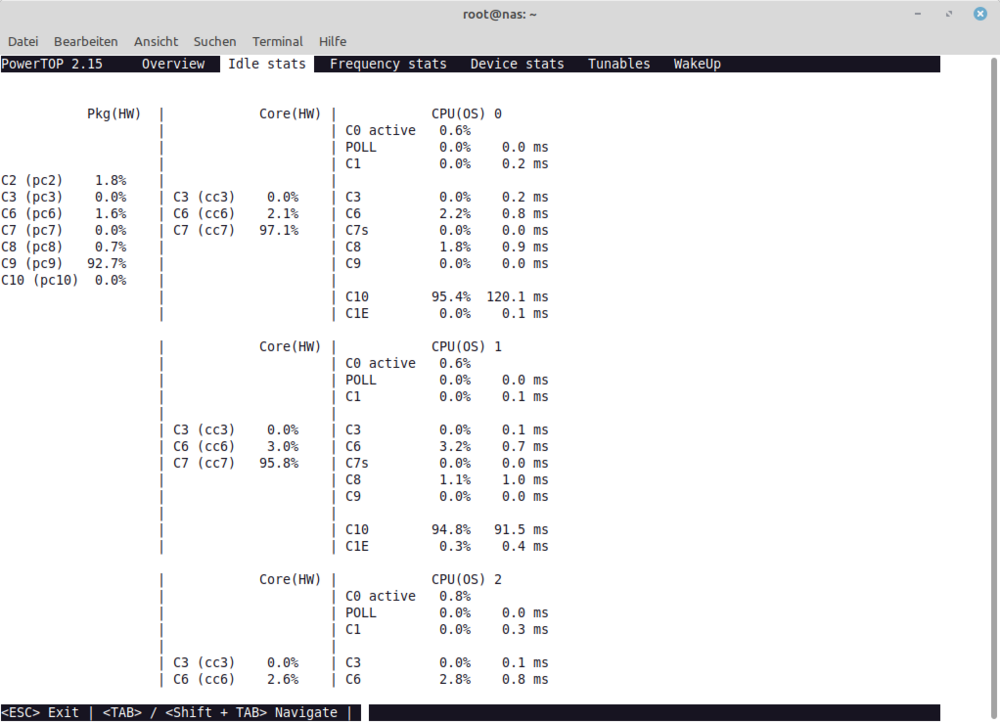
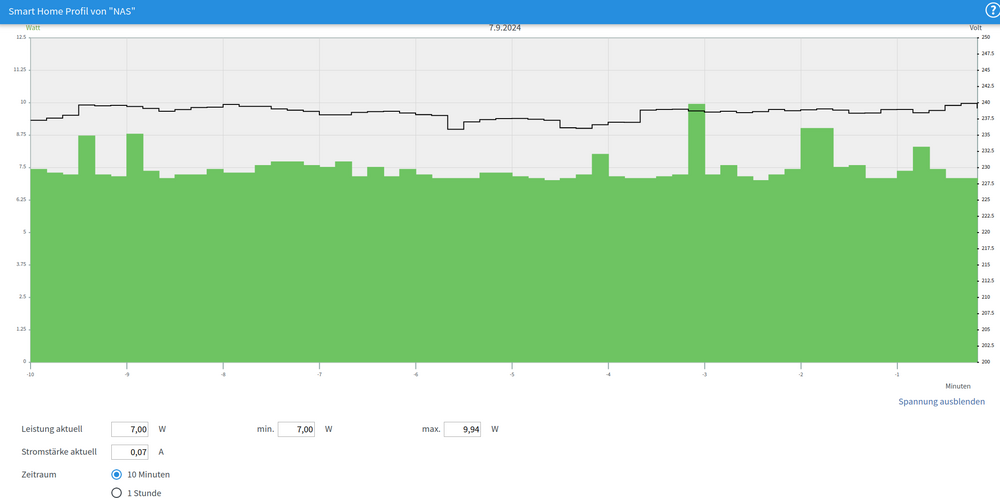
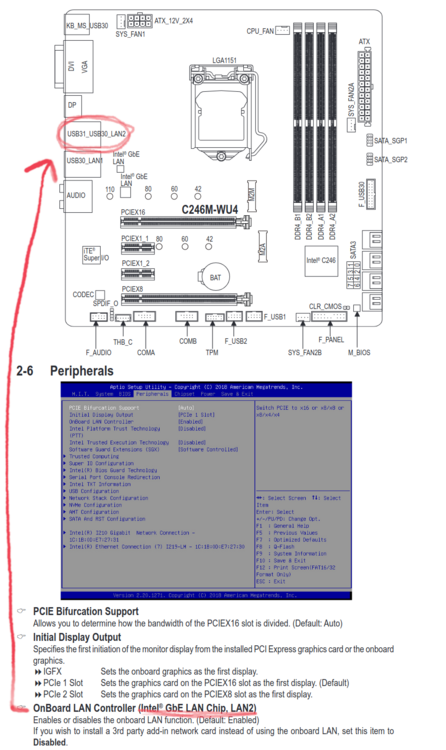
Hallo, entschuldigung für die Wiederbelebung des alten Themas. Ich bin nun nach ca. 2 Jahren auch mal endlich dazu gekommen mein NAS aufzusetzen. Ebenfalls mit einem C246m-wu4. Folgendes läuft bei mir: CPU: i3-8100t MB: C246m-wu4 RAM: 16GB Kingston Server Premier DDR4-2666 x 2 -> 32GB insgesamt NVMe: Samsung SSD 970 EVO Plus 1TB x 2 SSD: ATA WD Red SA500 HDD: ATA WD Red Pro 10TB x 2 USB: USB2 SanDisk Cruzer 16GB FAN: 2 x Noctua NF-A4x10 PWM, 1 x NF-A6x25 PWM, 1 x NF-A9 PWM PSU: PicoPSU-150-XT + Leicke 150W Mit diversen Einstellungen erreiche ich ebenfalls, bei einem HDD Spindown und Lüfter die dann auf 0 RPM gehen, einen Package C State C9 mit ca. 7 Watt Verbrauch. Was ich in den BIOS Einstellungen etwas komisch finde bzw. vielleicht interpretiere ich hier etwas falsch: Ich habe u.a. den MB LAN Controller disabled also das Chipset LAN läuft noch. Das heißt ich habe LAN/externes USB in der linken Buchse stecken. Beim WU2 ist es ja umgedreht. Nun ist ja im Handbuch des WU4 folgende Abbildung: So wie ich es sehe, ist die quasi linke Buchse LAN2 welches ich auch disabled habe. Das Ding ist nur, dass dies genau die Buchse ist, welche funktioniert und LAN1 nicht. Obwohl dies im BIOS enabled ist. Ist das ein Fehler im Handbuch? Kann das jemand nachvollziehen? ------------------------- Kurzer Nachtrag: Ich konnte das Verhalten im BIOS noch nicht wirklich nachvollziehen bzw. den potentiellen Fehler im Handbuch. Dafür erreiche ich nun auch C10. Dies war möglich, nachdem ich den OnBoard LAN Controller enabled habe und den vom Chipsatz disabled. Bei mir steckt der RJ45 in LAN1. Vom Verbrauch gab es allerdings keine Unterschiede bzw. bei 7 Watt ist Schluss