





steve1977
Members
-
Joined
-
Last visited
Everything posted by steve1977
-
Thanks for your quick response. Let me go ahead with ZFS then. A few for follow-ups that I get it right: 1) Mover indeed may be the easiest. I would need to stop docker and VM before doing so? Worried that some r/w takes place during "mover" activity. 2) I'd like to mirror the NVME disk(s). Anything I'd need to keep it mind or just set it up as a RAIDZ1 pool? 3) I only have one NVME disk now, but I will buy another one. Needs to be same size, but can be a different model/speed? 4) Eventually, I may upgrade to a total of 4 or even 6 NVME disks (in total). Besides the joy of tinkering, is there any benefit to separate appdata/docker, download/cache, and VM files to separate disks? Right now, I have all three of it on one NVME (currently XFS without mirror, to be changed to ZFS with mirror). If I were to go to 4 or 6 NVME disks some time in the future, would I set them all up as ZFS? Anything I should keep in mind when setting up the first pool now?
-
Thanks for your quick response. Super helpful. Seems quite easy to get done. A few follow-ups: 1) Is there no cable that allows me to connect directly from the HBA with one-connect to one-connect (rather than going 4 to 1)? Not sure whether this is clear what's in my mind. If I looked at standard HBA cards like the 9300-8i (for 8 disks), they have 2 connections. So ideally I can do from these 2 connects to two connections on the backpane. Rather than having one cable from the HBA with 1-to-4 and yet another with 4-to-1 to go to the backplane. 2) The cable you showed above would allow me to connect the back plane to the mobo. I'd neeed another cable though if I were to connect to the back plane? 3) I am not 100% clear whether my X299-A really supports 8 SATA disks or whether I "lost" some by having connected NVME disks and whatever else to it? So maybe to be safe, it may be easier to connect 4 disks to the mobo and 8 disks to a HBA card. Assume HBA cards and direct mobo connection is equally performant? 4) Does it make a difference whether I connect the HBA-8i card to a 16x, 8x or 4x PCI port? Assuming I will connect 8 SATA disks to it? Thanks a lot in advance for your help! I am getting ready for the new built!
-
The JMCD-12S4 case supports 12 SATA disks via a backplane. Any experience how to set this up well? My mobo (X299-A) supports 8 SATA disks. So, I will for sure require an HBA disk. Question is whether I buy one 8i-card, two 8i card, or on 16i card. Depending how I connect from mobo/hba to the backplane and what's most performant. Also curious what cables I'd need. Any thoughts appreciated!!!
-
What made you @joker1319 chose the 9500 over the 9200? The 9500 seems substantially more expensive. From what I see online, it seems the 9500 also supports NVME devices (which I don't need). Any other advantage beyond newer always feels better?
-
Thanks Thanks @SimonHampel and @spasmonaut for your quick responses. Very helfpul! I always hit the button to go with a Meshify. I now changed my view though. I realized there is a totally different option. Below has a much smaller form factor and also seems to have at least as good (likely even better) cooling. There are a few others out there with similar size and specs. This seems like the best way for me to go. Not as nice as thye Meshify, but still seems nice & clean (and smaller). https://www.alibaba.com/product-detail/Fanlong-12-bay-half-height-NAS_1600905481914.html Any thoughts? Anything I am overlooking?
-
I currently have an NVME device as cache/pool device that hosts my VM and also my appdata / docker. I use mover to move download files to the array once per day. The disk is formatte as XFS. It works flawless and there is per se no need for change. I feel like tinkering a bit and making some further improvement. I am thinking to buy a second NVME to mirror / backup my current cache device. Assume this should be quite easy. A few questions: Would this work with my XFS drive or would I need to use ZFS or BFRS for this? If so, is ZFS or BRFS suggested? Is conversion as easy as copying the files from the XFS disk to another ZFS disk? Thanks for your help!
-
I am aware it is not recommended to use USB bay enclosures in an array. Reality is thought that I have too many disks and need to find some way to figure it out. My "internal disks" are part of an array, which works well. I am currently connecting the USB disks individually as unassigned devices. This works very well for me. Only issue for me is that they are not part of the user shares. But overall, it is ok like this. With multi-pool now being supported, I am thinking whether it is worth to rethink my current setup. My array will stay the same, but I am wondering whether something else for me to to do with the disks in the USB enclosure: 1) The most incremental change would be to mount the disks in the enclosure as individual pool devices rather than unassigned devices. This would make them part of the user share. Anything bad about this change? Would this negatively impact array performance? 2) A bigger change would be to make the disks inside the array as a multi-disk pool. Would this be possible or has the same issues as having an array in an usb enclosure? 3) Or has technology advanced so much that I can now even have an array that mixes internal disks with disks in an USB enclosure? Thanks for any thoughts you may have!
-
I’m trying to get 15 disks and a water cooler in the define 7 (not xl). I know it will be very tight. I’m wondering whether the define 7 allows two disks at the back pane of the disk area (like the xl does)? If so, I could mount the radiator in the front and should still be able to squeeze in 15 disks with solid air circulation.
-
I am facing the same questions, so let me build on this thread rather than opening a new one. Would love to hear from some folks who have fractal cases for unraid use: 1) Meshify 2 vs Define 7 - what are the pros and cons of the two options? 2) Normal vs XL - I know many will suggest XL. I’d still have a rather strong preference for a smaller case. Is the normal version even capable to carry 16 disks (3.5”). It seems somewhat unclear to me whether it can with the additional cases 3) 16 disks: how to even connect them. I need to check mobo, but assume the answer will be 6 or 8? What is the best card to connect the remainder card I’m not new to unraid. In fact been using it for 15-20 years. I used to have an antec 1200, but it never worked flawless. My current setup is stable and works well, but I’d like to find an even better and hopefully smaller setup.
-
Same issue for me. Can anyone confirm this is still working and/or what else we can try?
-
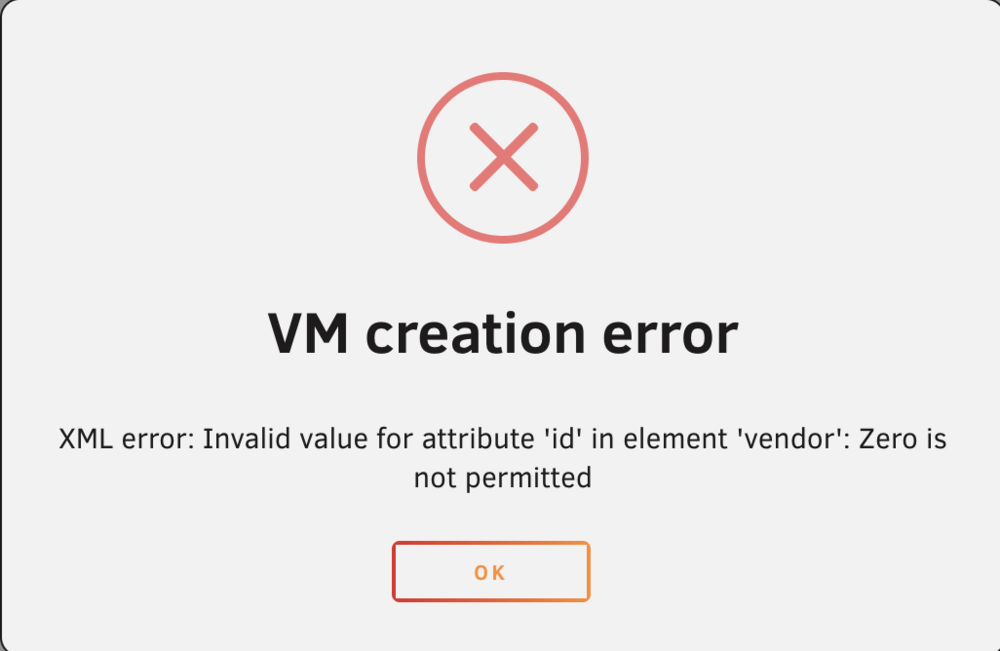
See below error message when selecting the usb port in the VM settings.
-
Any suggestion / idea how to assign a static IP to my Unraid VM to use it via wifi? How to set the static IP and what/where is the ipvtap? Configure the VM with a static IP address Configure the same IP address on the ipvtap interface, type: ip addr add IP-ADDRESS dev shim-wlan0
-
I am excited about Unraid now supporting wifi. I have set it up, but cannot get it to work for my VM. I like to access my VM over RDP, so will need to make the work-around work from the release note. I had already posted in the general forum, but assume this is better in the VM forum.
-
Seem someone else has the same issue. See forum post below. I tried the same (change from ide to sata) and indeed worked. However, I now see two D: drives and cannot eject any of them.
-
Thanks. Let me try. I installed the qemu-ga-x86_64 file, but still see "Requires guest agent installed". What worked is to install the quest tools. Is this needed?
-
I can manually mount the iso file in Windows. Does it make sense to do this and then install? Afterwards, I should anyways remove the virtio image?
-
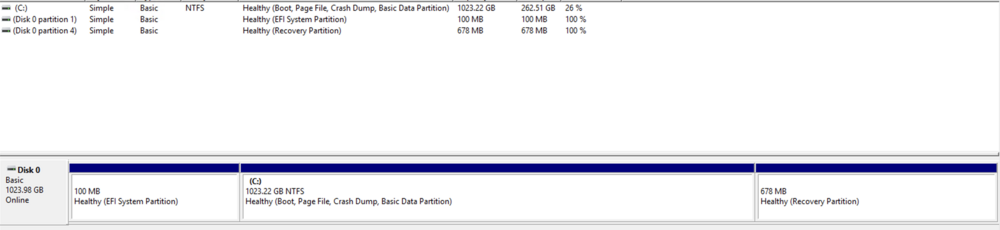
Attached a screenshot from disk management.
-
Just created a new VM with the same vdisk image. Unfortunately, still the same issue. So, it seems not a template issue, but rather a Windows issue? Mmh... Ah... One idea... Maybe I didn't set it up when I originally set up the VM? If that's the case, is it possible to do so ex-post?
-
Unfortunately, not showing up in the Windows File Explorer. Any idea what to do to trouble-shoot? Thanks!
-
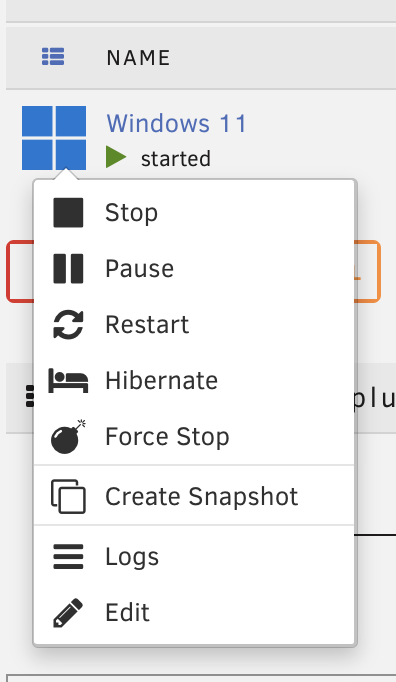
We are speaking about the same "VM restart"? See screenshot below. I have done this. Both with "restart" as well as "stop /start". Any other ideas?
-
One thing that always confused me is that this Unraid server has a /user and also a /user0 folder. And /addons, /remotes and /rootshare. I do believe that my other Unraid server has none of these? Could this issue be related?
-
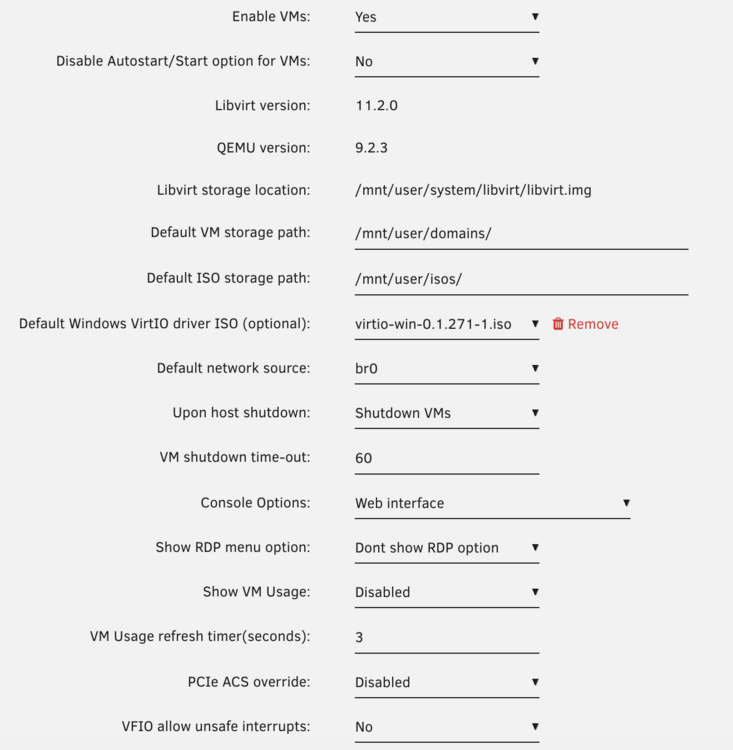
I had tried both 221 and 271. And also both mapped to /mnt/cache and mapped to /mnt/user. Below screenshot from my VM settings. Maybe something there?
-
I am trying to passthrough bluetooth to my VM. It seems that the bluetooth controller is part of a larger iommu group (together with various usb ports). Is this still possible and how to do it?
-
Yes, it is selectable. It used to be a different file (which also didn't work). I then upgraded to the latest version. I checked whetehr it can be selected. But unfortunately, none of these tries led to the virtio "disk" showing in Windows Explorer.
-
And to clarify my earlier post. The VM is actually running and running well. There are two potential iussues: 1) The IP doesn't show in the Unraid GUI (see my first post) 2) The virtio disk doesn't show up inside the Windows VM


