






SpaceInvaderOne
Community Developer
-
Joined
Everything posted by SpaceInvaderOne
-
Yes if you are still using 6.3 then that has qemu 2.7. We need 2.9 minimum for this guide to work so yes you will have to use an RC version for wait for the stable 6.4 release.
-
High Sierra 10.13 So now High Sierra is here its time for a new video. Things are a lot better for OSX VMs now. Since qemu 2.9 we don't need to use a patched clover. We can pass through the CPU frequency to the guest from the XML. This video although for High Sierra will also work for Sierra HOW TO INSTALL HIGH SIERRA OR SIERRA ON UNRAID Video how to create the install media is below. https://www.youtube.com/watch?v=BFPiK1Ggbks
-
please check your bus type is sata for the vdisk and not virtio
-
@binhex lol, damn you and always improving these great containers !! Should have the new guide video up by the weekend but I'm off to EGX 2017 on Thursday, so weekend may be Sunday night...well that's still the weekend
-
Yes I would remove the isolcpu, so append isolcpus=1,2,3,5,6,7 initrd=/bzroot putting it back to append initrd=/bzroot
-
Yes, isolcpu will isolate CPU cores from unRAID. But 'unRAID' doesn't just mean unRAID running its NAS duties. unRAID runs your Docker engine and VMs too. So yes the cores are Isolated from unRAID this way. So if cores 2,3,4 are isolated then that means unRAID cant use them itself when running Docker containers, Nas functions, VMs etc. It isn't so noticable for the VMs because of how the unRAID VM manager handles creating VMs as you only have the option to pin cores. However, when not using the template manager in KVM you can have the host handle the vcpus with the scheduler itself. You don't 'have' to pin cores. If you didn't unRAID would handle a VM in the same way it would a Docker container (that hasn't been pinned) unRAID vm manager makes you manually pin the vCPU cores as in 99% of cases this will give the best results. Anyway, even when you pin the vcps with the template it only pins the vcps. As you know it doesn't pin the emulator functions. You have to do this manually in the XML. So the problem can occur when you have isolated say 3 out of the 4 cores unRAID cant use them. So it's emulator functions will only be able to run on the non-isolated core remaining because that's all unRAID has access to. Had the cores not have been isolated unraid could have used all 4 cores to put that function where it sees best. Normally we pin the emulator function so it stays off cores. But when you have isolated cores it stays off those anyway, so there isn't any point pinning that function, unless you want to pin it back to the isolated cores. Another reason not to isolate cores is when the VM isn't running they are doing nothing. You may only be using a few docker containers now but later you may use something like plex and when it wants to transcode some streams, then one core wouldn't be enough. If all cores were free unRAID could then allow Plex to use more resources as it needs. However, if you didn't want it to, then you would pin it to only the cores you want it to use. To be honest with server tuning there is no right way. No one size fits all. You have to mess around with various things and find whats best for you. You say you have an audio lag when you plug USB devices in the server. So I assume that you have passed through a physical USB 3 controller to your VM? How do you mean an audio lag. Do you mean the sound windows makes when the device is plugged in is 'strange' then everything ok. Or when you plug in a USB device all the sound goes out of sync on the VM (such as a video playing etc) ? Also when you post bits of your XML. Best to just copy and paste it all in the post so people can see everything that's in the VM That way we can see if you are using your onboard motherboard sound or only your HDMI 1080ti sound and the USB pass through etc.
-
Hi no you dont need to disable hyperv for nvidia cards now. IMO dont isocpu cores on quad core servers. There are not enough cores for this. You can achieve what you want by careful pinning of containers and vms. However you are not pinning your containers correctly. This needs to be done in the extra parameters of the docker container template. You say you are leaving core 2 (1/5) for the future. Don't!! Worry about future the VMs when you come to set them up. Not now.! Anyway, will you ever run 2 vms at once or just one at a time? Get working what you have first... That core (1/5) is totally wasted. Because you have isocpu, three of your cores, they can only be used when you manually pin a process to them. The host can't touch them. The only process you have put on this core is emulatorpin. That is very light. So this core is idle really. Then unRAID and all your containers are on the first core (0/4). Your working that first core hard but giving that second core a day off Use both these cores for your containers, unraid and emulator pin. Now also to remember is when you have a normal bare metal windows pc and you want to play a game ( I am guessing you are a gamer from the 1080TI ! ) you wouldn't expect great performance if you were also running handbrake at the same time encoding video. You would stop that play the game and start that later. Same with unRAID VMs and Containers. We have to sometimes start and stop them. I mention about how to setup different profiles for containers so when gaming a container will use one core and when not it can use all cores. It was in the second video in the server tuning series that I did. May watch those for some ideas.
-
Hi, Guys here's a tutorial on how to build your own VM VPN router on unRAID. This will allow you to route any device in your home through a VPN while leaving others through your regular internet. Great if you want to run your tv through a VPN for geo locked services. Hope you find it useful
-
That would be most awesome
-
@DZMM yes add that to extra parameters now. I did a video a while back if want to look at it you will see at video 2 at 4minutes 10 seconds that part
-
@bedpan. You dont need to worry about the orphaned image it just means there is no docker template for that image. But to remove it just click it then click remove. This will remove the image yet leave your appdata complete so dont worry about that. Now to restore the docker container and all its settings we just have to goto the docker tab and click add container. then next to templates and you should see the old template saying my-plex etc and it will put back in the template and you can then edit it correctly.
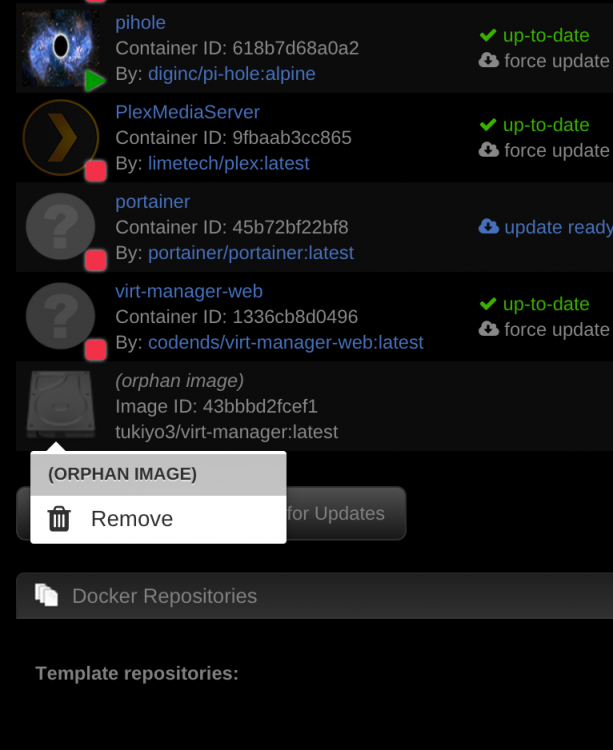
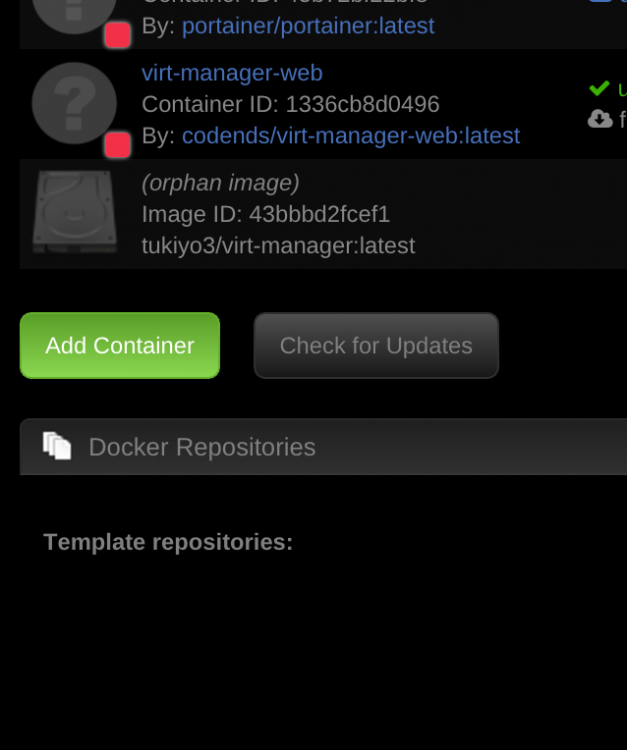
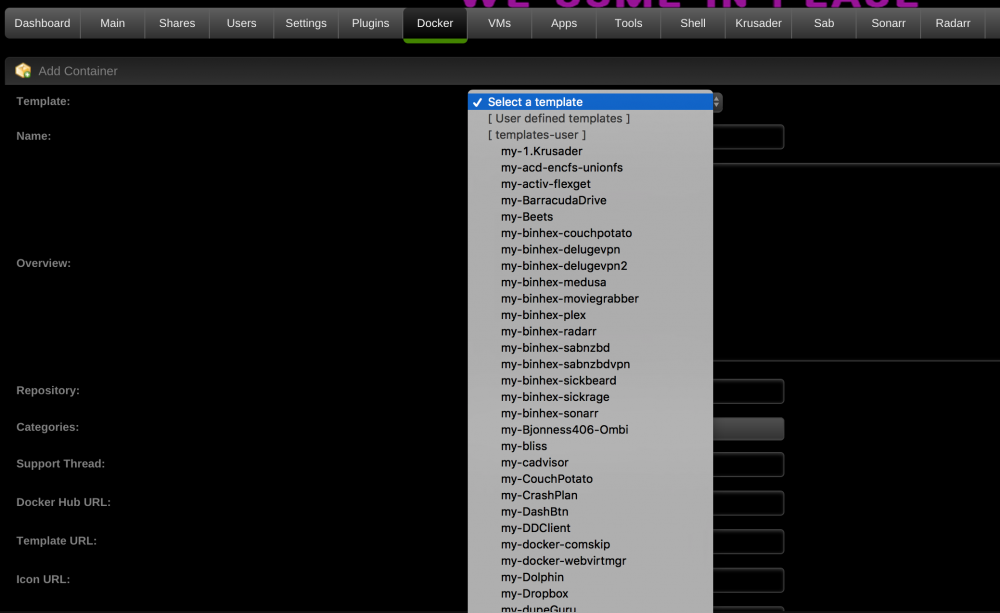
-
lol. It would look any stupider than how i spelt Apologise in that sonarr video
-
Here is a video I put together for how to install and configure Binhex's Sonarr container :
-
Hi, @entegral yes if you can see the grub boot loader then GPU pass through is working. When setting up a ubuntu VM from the template, it defaults to using bios type OVMF I would use bios type Seabios for Ubuntu. So make a new ubuntu VM and when making it go to the template and toggle advanced view in the top right then you can choose bios type and select Seabios. Give this a try
-
great work I have linked this to the op.
-
To check the iommu groups is really easy. Just goto tools system devices. Here i have 2 GPUs in my rig a 1080 (group 32) and a 750 ti (group 30). You will see each is in its own iommu group with its sound counterpart. If you have more than this in an iommu that your GPU is in passthrough will not work correctly. That's why I wanted to see yours when you have just the one GPU installed.

-
Um @CloseTurkeyThis is strange. You have a similar server to me with an x99 board and Nvidia GPU. If it's a black screen then it is going to be the vbios of the card. Something is wrong with the file. Maybe I edited it wrong as I was tired when I did it. Try editing a vbios yourself from techpowerup. What is the exact model of the gpu you are using. Also please post your iommu groups and device here. Another thing to try. Please make a new windows 10 vm with seabios as bios type and passthrough the romfile. I expect you will get the same result. But on the off chance the vbios you are using doesn't support UEFI boot that would cause a black screen when using ovmf. Also, your card is definitely a 980 not a 980ti as the 980 has 4 gigs of ram and 980 ti 6 gigs , the bios is different? Anyway heres another 980 bios. 980vbios Ps Contact Limetech and they will give you an extension on your trial
-
Well, it's for people who don't have OpenVPN already. Same as if you have a game on PS4 why would you want the same game on a gaming PC. They are both the same game so yes it is pointless having both. However one may be better than the other. The PC version will most likely have better graphics. Same with the OpenVPN. The router version will probably be far older and never updated. The dockerised version is regularly updated so you will always have an up to date version.
-
Hi @CloseTurkey When you used the techpowerup vbioses did you remove the Nvidia header as in my video I linked to you before? Please let me know what errors you have. Or does the vm just start and you have a black screen? Anyway, I have edited an Evga 980 4 gig vbios for you to try linked here. Give this a try. Your XML looks ok EVGA.GTX980.4096.rom
-
Hi. I have made a video about server tuning which covers isolating cores emulator pin and other topics here. Hope its useful.
-
Hi Guys I have made some videos about server tuning that cover Docker container resource management.
-
Try . <sound model='ac97'/> then use this driver for 98 https://www.dropbox.com/s/qogbpr96bqp8jvh/WDM_A400.exe.zip?dl=0 However using emulated sound card will not give you sound you can hear in the VM. I passed through an old PCI soundcard i got from eBay for my 98/95 VMs
-
Hi, I have had a read through your post. As @saarg says it is best to stub the device in the syslinux config. You will be able to edit the syslinux file from the main tab. Click main then flash. About half way down you will see the following default menu.c32 menu title Lime Technology, Inc. prompt 0 timeout 50 label unRAID OS menu default kernel /bzimage append initrd=/bzroot label unRAID OS GUI Mode kernel /bzimage append initrd=/bzroot,/bzroot-gui label unRAID OS Safe Mode (no plugins, no GUI) kernel /bzimage append initrd=/bzroot unraidsafemode label unRAID OS GUI Safe Mode (no plugins) kernel /bzimage append initrd=/bzroot,/bzroot-gui unraidsafemode label Memtest86+ kernel /memtest you need to add your device to be stubbed/isolated your device id is 1ade:3038 So we add this to the syslinux config vfio-pci.ids=1ade:3038 so syslinux should look like this default menu.c32 menu title Lime Technology, Inc. prompt 0 timeout 50 label unRAID OS menu default kernel /bzimage append vfio-pci.ids=1ade:3038 initrd=/bzroot label unRAID OS GUI Mode kernel /bzimage append initrd=/bzroot,/bzroot-gui label unRAID OS Safe Mode (no plugins, no GUI) kernel /bzimage append initrd=/bzroot unraidsafemode label unRAID OS GUI Safe Mode (no plugins) kernel /bzimage append initrd=/bzroot,/bzroot-gui unraidsafemode label Memtest86+ kernel /memtest If you have enabled acs override then the above syslinux will already have extra into it so you would add it after append pcie_acs_override=downstream vfio-pci.ids=1ade:3038 initrd=/bzroot After stubbing a reboot is required But I think your problem is due to the iommu groups. Please check the iommu group (group one your card is in) has only itself in that group. Please post the iommu groups here If other devices are present you will need to try and split them up. And if you haven't already you can try enabling the acs override I mentioned above. For this, go to settings, vm manager, (toggle Advanced view) then for, Enable PCIe ACS Override: select Yes Then reboot the server and see if the device is now in its own iommu group. Best of luck and please report back
-
I dont have a 980 vbios but i made a video a while back about how to get a working vbios without a second gpu.
-
your welcome. Glad it helped





