





Daen
Members
-
Joined
-
Last visited
Everything posted by Daen
-
Update (Nov 16) – stable for 57+ hours after changing the CPU governor Thanks JorgeB. Before the CPU swap I let the governor test run, and the result is clear: - cpufreq driver amd-pstate-epp, governor changed from powersave to performance on 14 Nov 08:17 (no reboot, persisted via the go file) - Uptime now 2 days 13:35, of which 57+ hours with the performance governor - No reset, the NVMe "Unsafe Shutdowns" counter is unchanged - Two full nights passed, including the ~04:00 idle window where the last crash happened - For comparison: before it was 1 to 2.7 h between resets, with the new board max. about 9.5 h Nothing else was changed: same 5700G, same Unraid 7.4.0 (kernel 6.18.60), BIOS 3646, Global C-state Control disabled, Power Supply Idle Control still Auto. So the trigger seems to be the powersave governor with amd-pstate-epp, i.e. the CPU dropping into deeper idle/power states. My question now: Does this point more to a software issue (kernel / amd-pstate power management changes in recent Unraid releases making idle states unstable on this platform), or to a degraded/marginal 5700G that only fails in certain low-power states? If it's the CPU, I assume it could get worse over time even with the performance governor – would you still recommend swapping it, or is running with the performance governor a reasonable long-term workaround? For now I'm keeping the performance governor and watching the unsafe shutdown counter. If it ever crashes again with performance, I'll swap the CPU.
-
Update (Nov 14) – single-component swap tests done, CPU is now the main suspect Thanks again JorgeB. Here is what I did since my last post. Each test swapped exactly ONE part, everything else stayed original: Test 1: new PSU – old RAM, old board, old CPU (5700G) → crash Test 2: new RAM – old PSU, old board, old CPU → crash Test 3: new motherboard (identical ROG STRIX B550-F, BIOS 3646) – old PSU, old RAM, old CPU → crash Every reset still logs: "Previous system reset reason [0x08000800]: an uncorrected error caused a data fabric sync flood event". Details from test 3 (new board, BIOS went from 2806 to 3646 with the swap): - Boot 13 Nov 18:31, crash between 03:55 and 04:08, so about 9.5 h uptime (before: 1 to 2.7 h between resets) - The crash happened at idle: the mirrored syslog ends with normal spin-down/SMART lines, mover finished instantly at 03:40. No MCE, no AER/PCIe, no NVMe errors. - Global C-state Control: Disabled. Power Supply Idle Control: still Auto (deliberately one change at a time). - NVMe (Samsung 970 EVO Plus 2TB, the only PCIe device, no add-in cards): SMART clean, 0 media errors, 0 error log entries, 2% used, 38–45 °C. Additional (free) test running since 14 Nov 08:17: The cpufreq driver was amd-pstate-epp with governor powersave. I switched all 16 threads to performance (persisted via the go file). Uptime so far without reset: [X] h. Next step: a Ryzen 7 5700X is ordered (I have a GPU, since it has no iGPU). With a non-G CPU, ECC should become active, so memory errors would finally be visible. Questions: 1. Given that PSU, RAM and board were each swapped individually and the crash stayed, would you agree the CPU (memory controller / fabric) is now the most likely cause? 2. Should I set Power Supply Idle Control to Typical Current Idle now, or keep it on Auto until the CPU swap so the tests stay clean? 3. After the 5700X swap, is there anything specific to check to confirm ECC is really active on this board? 4. One thing I still struggle to understand: apart from regular Unraid/kernel updates, nothing changed on this system for about 2 years, yet it became unstable twice (Aug 29 and Nov 11). Could a kernel update (e.g. amd-pstate behaviour, CPU microcode loaded by the kernel, or changed PCIe/NVMe power management) expose a CPU that was always marginal? Or does the single-swap result really point to the CPU having degraded on its own? 5. Could the NVMe (Samsung 970 EVO Plus, the only PCIe device) still be the trigger despite clean SMART, e.g. via APST/ASPM power state transitions? Would you test it by moving it to the CPU-connected M.2 slot or removing it before buying a replacement? Will report back after the CPU swap.
-
Update: the problem is back after 73 days. Timeline - For years the server ran without any issue and without any C-state workaround. - Aug 29: sudden series of hard crashes/freezes (see my first post). No hardware or setting changes before that. - Aug 30: following JorgeB's pointer to the Ryzen FAQ I set Global C-state Control = Disabled in the BIOS. - Aug 30 to Nov 11: completely stable, about 2.5 months, no crash, no reset. - Nov 11: the exact same symptom is back, from one day to the next. No hardware change and no BIOS/setting change since Aug 30. The only changes in between were regular software updates (Unraid update to 7.3.4, kernel 6.18.38 to 6.18.58, plus Docker container updates). What I see today (all of it on Unraid 7.3.4): - 5-6 unplanned resets between ~04:30 and 11:45 (boots logged at 09:13, 11:09, 11:45), also at night/idle - After EVERY reset the kernel logs: x86/amd: Previous system reset reason [0x08000800]: an uncorrected error caused a data fabric sync flood event - Still no MCE/EDAC/AER/NVMe errors. Syslog on flash ends abruptly, then "unclean shutdown detected" and XFS recovery - C-states confirmed off (no cpuidle states exposed) - Fresh SMART on all drives incl. NVMe: clean. Temps normal (CPU Tctl ~59 C, NVMe ~42 C). Board sensors (nct6798) readable, nothing obviously off - Same hardware as in my first post (incl. Corsair RM550x from 01/2023, no parity) - In August I already tested with Docker and both VMs fully stopped: still crashed at near-zero load After the resets today I updated Unraid 7.3.4 to 7.4.0. Since the update the server has been running for 40 minutes without a reset. That is too early to tell, because the longest uptime between two resets today was about 2 hours. I'll report back. Questions: 1. Does "data fabric sync flood" on a 5700G point more towards RAM, PSU or the CPU itself? Why would it appear suddenly after 2.5 stable months with the C-state workaround? 2. Should I additionally set "Power Supply Idle Control" to "Typical Current Idle"? 3. Is a BIOS update (still 2806 from 2022) worth trying on a headless server? 4. My plan if it resets again on 7.4.0: Memtest86+, then single-DIMM tests, then reseat/check PSU cables, then PSU swap. Anything you'd check first? Diagnostics attached. jarvis-diagnostics-20261111-1138.zip
-
I've verified that syslog mirroring to the flash drive is correctly configured and working — I checked /boot/logs/syslog-previous directly via SSH after the latest incident, and it writes continuously right up to the crash (no buffering/flush delay). However, it confirms the same pattern as before: the log simply stops mid-normal-operation with zero error, warning, or panic entries beforehand — even under this most recent freeze (system unresponsive, screen frozen at login prompt, no reaction to keyboard input, but CPU fan and drives still physically running). Diagnostics ZIP attached, generated immediately after this latest crash. jarvis-diagnostics-20260830-0926.zip
-
System: Motherboard: ASUS ROG STRIX B550-F GAMING, BIOS version 2806 (10/27/2022) CPU: AMD (k10temp detected) RAM: ECC PSU: Corsair RM550x (RMx Series), 550W, 80+ Gold, purchased 01/23/2023 Unraid version: Kernel 6.18.38-Unraid Array: 3 data disks (2x Seagate 10TB, 1x Toshiba 18TB), no parity drive (parity not present) Cache: Samsung 970 EVO Plus 2TB NVMe USB devices: boot stick (SanDisk Ultra), ConBee II (Zigbee, connected via powered USB extension cable per manufacturer recommendation), Raspberry Pi (RaspiMatic/HomeMatic), wireless USB keyboard Problem: Since this morning, repeated hard system crashes – 5 so far with automatic reboot afterward, 1 complete freeze with no automatic reboot (system still showed the login prompt but was unresponsive to any input, including the USB keyboard – no reaction, no Num Lock LED). Troubleshooting steps taken so far: Enabled local syslog mirroring (Settings → Syslog Server → Mirror to boot drive) – didn't help, since a hard crash gives no time to flush, and some crashes happened even before the OS fully started. Set up remote syslog via UDP to an external machine (Syslog Watcher), plus an artificial heartbeat every 15 sec via logger to pin down the exact crash timestamp. Log analysis across multiple incidents: in every case the log stops abruptly with no warning whatsoever – no kernel panic, no oom-killer, no WHEA/MCE/hardware error, no disk I/O errors. The last log lines are always completely normal operation (Docker network events, NFS, etc.). Controlled minimal-load test: array started, Docker AND both VMs fully stopped/disabled, no background processes (iotop confirmed no meaningful I/O load). Still crashed later — even under essentially zero load. Possibly related observation: the ConBee II (on usb 3-2, cdc_acm/ttyACM0) repeatedly and irregularly disconnects/reconnects, independent of the server crashes, despite being connected via a powered USB extension cable per manufacturer guidelines. USB stick backup: first copy attempt (Windows Explorer, drag & drop) hit a read error, resulting in an incomplete copy (~3MB difference). Second attempt using robocopy /MIR /R:3 /W:2 completed without errors (415/415 files, 0 failures) — suggests a one-off loose contact rather than a physically damaged stick. Security check performed: login history (/var/log/syslog) shows only successful logins from the local LAN, no suspicious/external IPs. An unfamiliar-looking plugin ("dwpython") turned out to have been installed since March 2025, not a new addition. Ports 80/443 are reachable from outside (intended for Nginx Proxy Manager with mTLS), port 22 (SSH) is closed from outside. Most recent incident (today, ~16:07) – different pattern: Unlike the previous 5 crashes (silent abort + automatic reboot), this one was a complete freeze with no reboot: CPU fan still spinning, hard drives audibly/physically still running, but the motherboard status LED was off, the screen showed a frozen login prompt, and there was no response to keyboard input (not even the Num Lock LED). Suspects considered so far, none confirmed: PSU aging/failure, despite being relatively young (2.5 years old) Unstable USB/board power delivery (supported by the ConBee symptom) RAM failure (though ECC should be logging this — no EDAC/MCE messages seen in the log so far) No IPMI/BMC available (consumer board), so no independent hardware log source for power events Question for the community: What further diagnostic steps would you recommend before I try swapping the PSU as a test?
-
Super Hinweis und Idee, leider ist es aber bereits auf enabled. Habe dennoch einmal alles angehalten, deaktiviert, gestartet und wieder angehalten und wieder aktiviert. Dann neu gestartet. Leider weiterhin kein zugriff von immich (br0 Netzwerk) auf die Datenbank redis und Postgres im bridge Netzwerk
-
Hallo zusammen, bis vor kurzem lief der immich-Container mit seiner Einrichtung im br0-Netzwerk problemlos. Der dazugehörige redis-Container läuft im bridge-Modus. Die Einrichtung war, wie gesagt, zu 100 % funktional. Vor zwei Tagen habe ich das Update von Unraid 6.12 auf Version 7 durchgeführt. Seitdem sind zwar beide Container gestartet, aber immich kann keine Verbindung zu redis aufbauen. Wenn ich redis ins br0-Netzwerk verschiebe, funktioniert es wieder – das möchte ich aber vermeiden. Hat jemand eine Idee, warum es plötzlich nicht mehr funktioniert? Das gleiche habe ich auch mit paperlessngx und dem dazugehörigen redis Container Viele Grüße
-
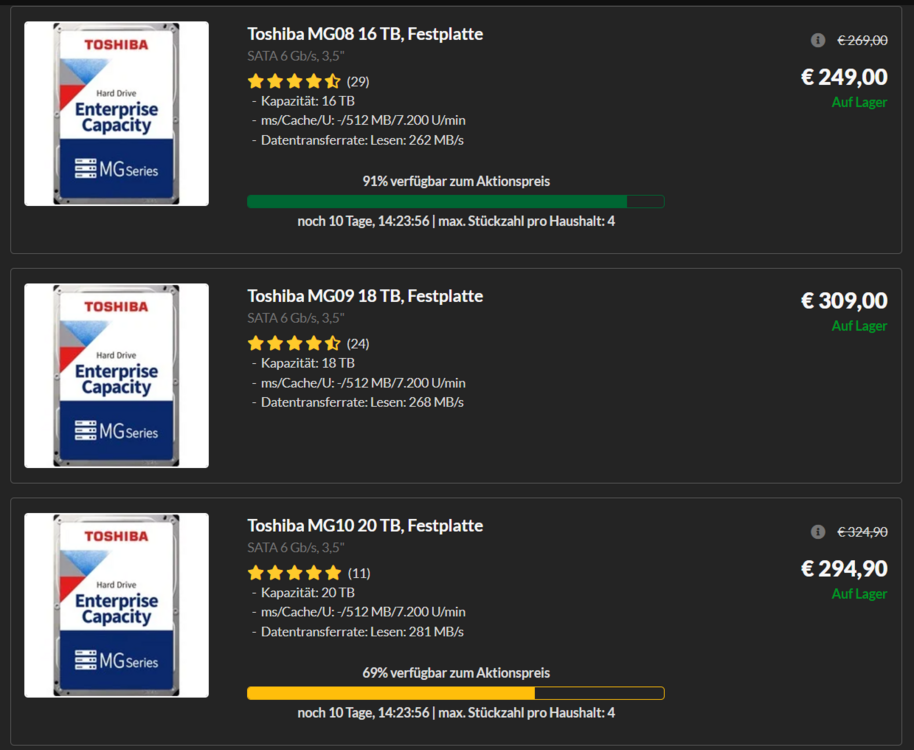
Hi, bei alternate gibt es gerade wieder die Toshiba HDD's zum etwas günstigeren Preis: 16 TB: https://www.alternate.de/Toshiba/MG08-16-TB-Festplatte/html/product/1722118 18TB: https://www.alternate.de/Toshiba/MG09-18-TB-Festplatte/html/product/1779876 20TB: https://www.alternate.de/Toshiba/MG10-20-TB-Festplatte/html/product/1877841 Grüße
-
Hi, Ich möchte per Userscript meinen Backupserver per WOL starten. Nun hatte ich gelesen, das es eigentlich in den Nerd Tools drin sein sollte. Nur finde ich nichts. Kann mir jemand eine andere Quelle geben? Vielen Dank
-
Hi, mal eine Frage, bei den Ports ist der Container Port jeweils leer?!
-
Hallo zusammen, ich habe eine Frage zum Öffnen zusätzlicher Ports in einem Container. Ich betreibe den ioBroker-Container im Netzwerk br0 mit einer separaten IP-Adresse. Nun benötige ich für einen Adapter den Port 1882, welcher standardmäßig nicht freigegeben ist. Das Hinzufügen eines Ports klappt leider nicht, da der Container-Port leer bleibt. In einem Versuch, das Problem zu lösen, habe ich den Netzwerktyp vorübergehend auf Bridge umgestellt, um dort Host- und Container-Port anzugeben. Danach habe ich das Netzwerk wieder auf br0 mit meiner IP-Adresse gesetzt, gespeichert und den Container neu gestartet. Leider wird der Port dennoch nicht geöffnet. Hat jemand eine Idee, woran das liegen könnte?


-
das ist gut, was war die lösung?
-
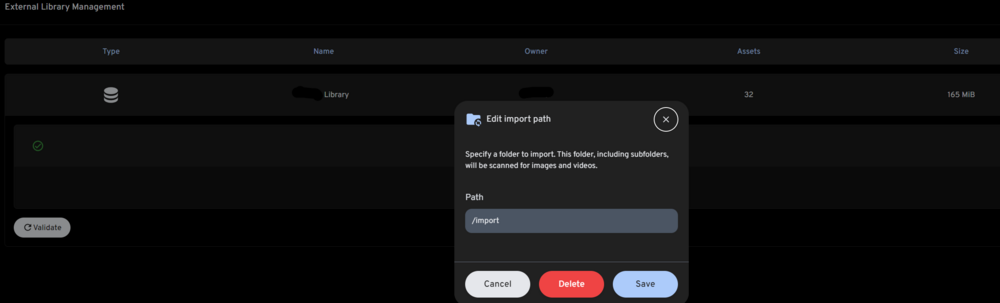
nimm mal den "/" unter Host Patch nach import raus und versuch es nochmal. hier meine Einstellung In immich,. unter Administration -> External Libraries dann so:

-
Oh man ja natürlich...... ich sollte zu später Stunde keine Updates mehr durchführen. Danke dir.
-
Guten Abend zusammen, ich wollte gerade meinen js-controller auf die aktuellste Version aktualisieren. Leider erhalte ich hier einen Fehler: root@123445536:/opt/iobroker# iobroker update Used repository: Stable (default) Adapter "admin" : 6.12.0 , installed 6.12.0 Adapter "alexa2" : 3.26.3 , installed 3.12.0 [Updatable] Adapter "backitup" : 2.8.7 , installed 2.8.7 Adapter "daikin" : 1.4.2 , installed 1.4.2 Adapter "daikin-cloud" : 0.3.0 , installed 0.3.0 Adapter "daswetter" : 3.1.10 , installed 3.1.10 Adapter "deconz" : 1.3.23 , installed 1.3.23 Adapter "denon" : 1.15.4 , installed 1.15.4 Adapter "discovery" : 4.2.0 , installed 4.2.0 Adapter "email" : 1.2.0 , installed 1.2.0 Adapter "feiertage" : 1.1.4 , installed 1.1.4 Adapter "history" : 3.0.1 , installed 3.0.1 Adapter "hm-rega" : 4.0.0 , installed 4.0.0 Adapter "hm-rpc" : 1.15.19 , installed 1.15.19 Adapter "ical" : 1.13.3 , installed 1.13.3 Adapter "icons-icons8" : 0.0.1 , installed 0.0.1 Adapter "icons-mfd-svg": 1.1.0 , installed 1.1.0 Adapter "icons-open-icon-library-png": 0.1.2, installed 0.1.2 Adapter "influxdb" : 3.2.0 , installed 3.2.0 Adapter "info" : 2.0.0 , installed 2.0.0 Adapter "javascript" : 7.1.6 , installed 6.1.4 [Updatable] Controller "js-controller": 5.0.16 , installed 4.0.24 [Updatable] Adapter "klf200" : 1.1.2 , installed 1.1.2 Adapter "lgtv" : 2.1.2 , installed 2.1.2 Adapter "mielecloudservice": 6.5.4, installed 6.5.4 Adapter "modbus" : 5.0.11 , installed 5.0.11 Adapter "mqtt" : 5.1.0 , installed 5.1.0 Adapter "myenergi" : 0.0.3 , installed 0.0.3 Adapter "node-red" : 4.0.3 , installed 4.0.3 Adapter "nuki-extended": 2.6.5 , installed 2.6.5 Adapter "openweathermap": 0.4.5 , installed 0.4.5 Adapter "ping" : 1.6.2 , installed 1.6.2 Adapter "plex" : 1.1.4 , installed 1.1.4 Adapter "plexconnect" : 0.0.7 , installed 0.0.7 Adapter "shelly" : 6.6.1 , installed 6.6.1 Adapter "simple-api" : 2.7.2 , installed 2.7.2 Adapter "socketio" : 6.6.0 , installed 6.6.0 Adapter "telegram" : 2.0.1 , installed 2.0.1 Adapter "terminal" : 1.0.0 , installed 1.0.0 Adapter "tesla-motors" : 1.3.2 , installed 1.3.2 Adapter "text2command" : 3.0.2 , installed 3.0.2 Adapter "vis" : 1.4.16 , installed 1.4.16 Adapter "vis-fancyswitch": 1.1.0 , installed 1.1.0 Adapter "vis-history" : 1.0.0 , installed 1.0.0 Adapter "vis-hqwidgets": 1.4.0 , installed 1.4.0 Adapter "vis-jqui-mfd" : 1.0.12 , installed 1.0.12 Adapter "vw-connect" : 0.0.67 , installed 0.0.67 Adapter "web" : 6.1.10 , installed 6.1.10 Adapter "ws" : 2.5.8 , installed 2.5.8 root@123445536:/opt/iobroker# iobroker update self Used repository: self Error: unknown repository is active - "self". Known: Stable (default), Beta (latest) Ich habe es bereits in der Konsole mit "iobroker fix" probiert, leider das gleiche Ergebnis. Jemand eine Idee? Viele Grüße
-
Guten Abend, ich habe seit heute ein Problem und zwar ist mein ioBroker zum zweiten Mal innerhalb von 24 Stunden nicht erreichbar. Über die Protokolldateien in unRAID habe ich folgende Meldung erhalten: /opt/scripts/iobroker_startup.sh: line 578: 124 Aborted gosu iobroker node node_modules/iobroker.js-controller/controller.js Container neu gestartet und dann geht es jetzt erstmal wieder, aber etwas besorgt bin ich schon. Node.js: v18.17.1 NPM: 9.6.7 Grüße
-
Hallo zusammen, ich habe eine Windows 10 VM, Diese soll täglich zu einer bestimmten Uhrzeit hochfahren und dann wieder nach einer bestimmten Zeit runterfahren. Kann mir hier jemand unter die Arme greifen? Oder ist das gar nicht so ohne weiteres möglich? VG
-
File Activity zeigt bei allen Platten etwas an, nur nicht bei der die immer wieder von alleine angeht. Alle Systemdateien etc. liegen doch auf dem USB Stick?
-
Also meine vorläufige Struktur ist: • SSD Cache 1 TB: Appdata (docker + VM) laufen hier drauf • 2 x 10 TB HDD (Plex Filme) • 1 x 18 TB ( ein paar Fotos und Backups von duplicati) Ich teste das mal mit "File Activity"
-
Guten Abend, ich habe eingestellt, dass die HDD's Arry nach 30 min runterfahren. Leider machen das nur 2 von 3. Wenn ich sie manuell runterfahre, geht sie sofort wieder an. Kann ich irgendwie herausbekommen, was genau die Festplatte "wach" hält bzw. welcher Dienst/Service die Platte nutzt? VG
-
Nabend zusammen, ich habe ein Problem bei welchem ich nicht weiterkomme. Der Container selber läuft. iobroker habe ich auch mit der influxdb 2 verbunden, Daten werden reingeschrieben alles super. Nun möchte ich grafana mit der influxdb 2 verbinden. Das klappt nicht bzw. es klappt nur wenn ich bei der Query Language Flux auswähle statt InfluxQL. Ich habe eine config Datei wie oben Beschrieben erstellt. Dennoch bekomme ich immer den Fehler "error reading InfluxDB. Status Code: 401" Hat jemand vielleicht eine Idee? Danke und viele Grüße
-
ok, danke euch
-
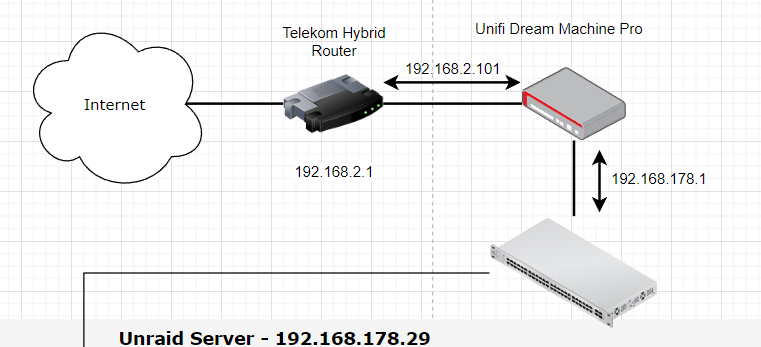
Sorry etwas arg verspätet. Meine Netzwerksituation sieht man auf dem Bild. Ich hatte im NGINX Proxy Manager mein Netz 192.168.178.0/24 auf allow. Der Fehler ist/war aber, dass ich das Netz des Routers bzw. die IP nicht auf auf allow gesetzt habe. Nachdem ich das gemacht habe, ging alles..... Rausgefunden habe ich das nur, weil ich den NGINX PM und vaultwarden im Docker auf einem Raspberry 4 installiert habe und diesen direkt an den Router..... war purer Zufall. Aber egal. Vielleicht gibt es ja noch einen ähnlichen und gefährlichen Amateuer wie mich und mein Beitrag hilft diesem hier
-
Hallo zusammen, ist es möglich bestimmte Festplatten mit dem runterfahren eines bestimmten Docker Container (Plex) so zu verknüpfen, das diese direkt mit ausgeht? VG
-
Ok ich habe es hinbekommen, ich führe das morgen/gleich mal ausführlicher aus. Oh man, was für eine "Geburt" 🥳