





Ockingshay
Members
-
Joined
-
Last visited
Everything posted by Ockingshay
-
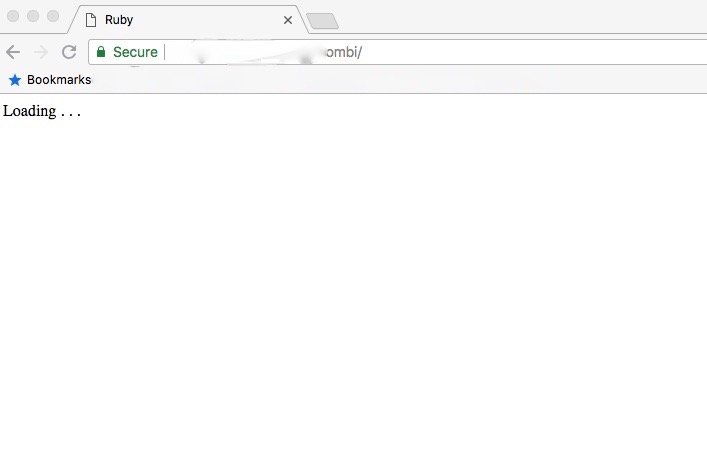
Thanks, i've done that and re-added radarr and ombi. radarr works and ombi is still getting white screen with loading what's this part, as it's not in tidusjar example on their GitHub: if ($http_referer ~* /ombi/) { rewrite ^/dist/(.*) $scheme://$host/ombi/dist/$1 permanent; }
-
I have been following this guide to setup reverse proxy: From here i have used their default.txt file for nginx: https://pastebin.com/vs2Dxgb3 and it has worked for radarr perfectly. I'm now trying to add ombi and clearly this config is different. I have set in ombi -> configuration -> customisation -> application URL to /ombi I have changed the ip addresses and ports to my docker config like so: location /ombi { return 301 $scheme://$host/ombi/; } location /ombi/ { proxy_pass http://192.168.0.3:3000; proxy_set_header Host $host; proxy_set_header X-Forwarded-Host $server_name; proxy_set_header X-Real-IP $remote_addr; proxy_set_header X-Forwarded-For $proxy_add_x_forwarded_for; proxy_set_header X-Forwarded-Ssl on; proxy_set_header X-Forwarded-Proto $scheme; proxy_read_timeout 90; proxy_redirect http://192.168.0.3:3000 https://$host; } Do i simply copy and paste that into the default.txt file and that's it? As i have tried this and all i get is "loading...." on a white screen why i try to launch the site.
-
I have eth0 and eth1 bonded for a few years now, so I haven’t changed anything since the GUI has been changed over the last few software upgrades. Note: array started When I load the page it shows all the configuration in “interface eth0” and under “interface eth1” it says “interface not configured”. For simplicity and confusion wouldn’t it be better to collapse the entire eth1 section and have in say green writing something like interface bonded with eth0? because it’s in orange writing as though there’s something wrong it may confuse people enough as it did for me to create a post.
-
If i try the extra parameter i get when it tries to start: Maybe my CPU is too old? EDIT: It actually looks to be a problem with my motherboard and it's onboard VGA. The problem i have is if i disable it, i lose IPMI, which as this server is locked under a stairs i need it for access. I can live without HW decoding, unless someone else has been successful at getting this to work with a supermicro mobo and xeon igpu. unRAID only gives me the matrox gpu onboard VGA if i try to set up a VM
-
Yeah, https://ark.intel.com/products/65726/Intel-Xeon-Processor-E3-1275-v2-8M-Cache-3_50-GHz suppose to, not ever tried it though. maybe I have to enable it in my mobo.
-
am i doing something wrong? i get this when i try these commands to enable HW decoding. My server is: Running 6.4rc14
-
Without going through all the setup if not worth it, is this an improvement on CPS?
-
Thanks squid, that's what I needed to know.
-
I do a weekly backup that includes the flash drive and just had the thought that if my USB dies i won't be able to access that backup as it's saved to a share. What's a good way of after completing just the flash backup it's sent to something like dropbox/another LAN? I would like it to only keep the latest backup, otherwise it could start to get quite large over time. what do other people do? cheers!
-
Does anyone on this docker have the resources folder as per this post? https://forums.plex.tv/discussion/comment/1331055/#Comment_1331055 Ive even tried enabling dlna and restarted the docker in the hope to see the profiles. Cheers
-
I also get the same and line 60 as well.
-
Well i've managed to get it to work. In both our cases we use the mappings /mnt/cache/*** where in your example you use /mnt/user/***. My docker apps are on a cache only share called "dockerapps" and i always use the nomenclature /mnt/cache/dockerapps/***. By changing it to /mnt/user/dockerapps/*** i got it to install correctly. All i need to do now is work out how to use it lol!
-
Is there a fix for the "waiting for sql issue? => Installing MySQL ... Installing MySQL system tables... OK Filling help tables... OK To start mysqld at boot time you have to copy support-files/mysql.server to the right place for your system PLEASE REMEMBER TO SET A PASSWORD FOR THE MySQL root USER ! To do so, start the server, then issue the following commands: /usr/bin/mysqladmin -u root password 'new-password' /usr/bin/mysqladmin -u root -h 2e0712e7dc93 password 'new-password' Alternatively you can run: /usr/bin/mysql_secure_installation which will also give you the option of removing the test databases and anonymous user created by default. This is strongly recommended for production servers. See the manual for more instructions. You can start the MySQL daemon with: cd /usr ; /usr/bin/mysqld_safe & You can test the MySQL daemon with mysql-test-run.pl cd /usr/mysql-test ; perl mysql-test-run.pl Please report any problems at http://bugs.mysql.com/ Waiting for MySQL to start... Waiting for MySQL to start... Waiting for MySQL to start... Waiting for MySQL to start... Waiting for MySQL to start... Waiting for MySQL to start... Waiting for MySQL to start... Waiting for MySQL to start... Waiting for MySQL to start... Waiting for MySQL to start... Waiting for MySQL to start... Waiting for MySQL to start... Waiting for MySQL to start... Waiting for MySQL to start... Waiting for MySQL to start... Waiting for MySQL to start... Waiting for MySQL to start... Waiting for MySQL to start... Waiting for MySQL to start... Waiting for MySQL to start... Waiting for MySQL to start... Waiting for MySQL to start... Waiting for MySQL to start... Waiting for MySQL to start... Waiting for MySQL to start... Waiting for MySQL to start... Waiting for MySQL to start... Waiting for MySQL to start... Waiting for MySQL to start... Waiting for MySQL to start... Waiting for MySQL to start...
-
in auto update section in settings i get the following text at the top of the page. Warning: file_get_contents(/usr/local/emhttp/plugins//README.md): failed to open stream: No such file or directory in /usr/local/emhttp/plugins/dynamix/include/DefaultPageLayout.php(292) : eval()'d code on line 34 Warning: file_get_contents(/usr/local/emhttp/plugins//README.md): failed to open stream: No such file or directory in /usr/local/emhttp/plugins/dynamix/include/DefaultPageLayout.php(292) : eval()'d code on line 34 Warning: file_get_contents(/usr/local/emhttp/plugins//README.md): failed to open stream: No such file or directory in /usr/local/emhttp/plugins/dynamix/include/DefaultPageLayout.php(292) : eval()'d code on line 34 Warning: file_get_contents(/usr/local/emhttp/plugins//README.md): failed to open stream: No such file or directory in /usr/local/emhttp/plugins/dynamix/include/DefaultPageLayout.php(292) : eval()'d code on line 34 Warning: file_get_contents(/usr/local/emhttp/plugins//README.md): failed to open stream: No such file or directory in /usr/local/emhttp/plugins/dynamix/include/DefaultPageLayout.php(292) : eval()'d code on line 34 Warning: file_get_contents(/usr/local/emhttp/plugins//README.md): failed to open stream: No such file or directory in /usr/local/emhttp/plugins/dynamix/include/DefaultPageLayout.php(292) : eval()'d code on line 34 I also have old, deleted ._plugins showing up. I have rebooted to see if it's what's stored in memory, but they are still there. I've deleted the previously installed plugins folder on my flash drive (which shows the offending plugins).
-
what format does it give for the cache disk though? If your test changed it maybe you need to explicitly set it back to what it should be? well, that was the odd thin...i did explicitly set it back to reiserfs Thanks for the quick replies though. Any maintenance time in my household is punishable by death!
-
well that was squeaky bum time! I had to physically disconnect the drives from the server and after it booted, it recognised the cache drive
-
no, definitely not.
-
well i set it manually in the GUI but it's still unmountable: Partition format: unknown Comments: File system status: Unmountable - No file system (32) File system type:reiserfs Array must be Stopped to change Log says the same: Apr 1 16:36:47 Ruby emhttp: mount error: No file system (32)
-
if i click on the device it shows: File system status: Unmountable - No file system (32) File system type is set to "Auto". I know it was RS. Would changing it from auto to RS work? Cache Partition size: 976.762.552 KB (K=1024) Partition format: unknown
-
I've just added 2 new drives in preparation for V6.2, one for parity and another to eventually turn my cache into a pool. After the reboot, out of curiosity to see if both drives could be seen i set cache to 2 devices and from the dropdown i could see the new drives. Thinking great, i set it back to 1 device and after seeing everything show as "green ball" & "configuration valid" i started the array. The problem though it seems is that the array cannot mount the existing cache drive. It's got a green ball next to it but it says it's unmountable. There is an option further down that says: Unmountable disk present: Cache • WDC_WD1003FZEX-00MK2A0_WD-WCC3F3EXPV8Y (sdc) Format will create a file system in all Unmountable disks, discarding all data currently on those disks. Yes I want to do this Now obviously i don't want to do that. I'm hoping that there is a flag that has been changed and i can on the CLI change it back, so that it believes it's still the genuine old cache. OR is there a way to mount the drive, by using that unmountable plugin to at least show the contents of the drive? I want to create a cache pool anyway, but i need some of the data off it first. I wasn't expecting that by simply changing things would make the changes permanent before i started the array. thanks
-
My log fills up pretty quickly as well. total 396 drwxr-xr-x 12 root root 540 Dec 13 04:40 ./ drwxr-xr-x 12 root root 280 Dec 1 23:19 ../ -rw-r--r-- 1 root root 196 Dec 18 16:55 apcupsd.events -rw-r--r-- 1 root root 198 Dec 13 04:40 apcupsd.events.1 -rw------- 1 root root 0 Dec 19 09:22 btmp -rw-r--r-- 1 root root 0 Dec 11 2014 cron -rw-r--r-- 1 root root 0 Dec 11 2014 debug -rw-rw-rw- 1 root root 53312 Dec 7 09:24 dmesg -rw-rw-rw- 1 root root 524 Dec 9 20:30 docker.log -rw-r--r-- 1 root root 0 Feb 14 2014 faillog -rw-r--r-- 1 root root 0 Dec 19 09:22 lastlog drwxr-xr-x 5 root root 120 Dec 7 09:26 libvirt/ -rw-r--r-- 1 root root 6100 Dec 19 00:20 maillog -rw-r--r-- 1 root root 0 Dec 11 2014 messages drwxr-xr-x 2 root root 40 May 16 2001 nfsd/ drwxr-xr-x 2 root root 3240 Dec 19 08:23 packages/ drwxr-xr-x 2 root root 240 Dec 19 08:23 plugins/ drwxr-xr-x 2 root root 60 Dec 19 08:23 removedèpackages/ drwxr-xr-x 2 root root 40 Oct 27 1998 removedèscripts/ drwxrwxrwx 2 root root 300 Dec 19 00:00 sa/ drwxr-xr-x 3 root root 100 Dec 7 09:24 samba/ drwxr-xr-x 2 root root 80 Dec 7 09:24 scripts/ -rw-r--r-- 1 root root 0 Dec 11 2014 secure drwxr-xr-x 3 root root 60 Dec 1 23:19 setup/ -rw-r--r-- 1 root root 0 Dec 11 2014 spooler -rw-r--r-- 1 root root 315484 Dec 19 09:26 syslog -rw-rw-r-- 1 root utmp 8064 Dec 19 09:22 wtmp du -sm /var/log/* 1 /var/log/apcupsd.events 1 /var/log/apcupsd.events.1 0 /var/log/btmp 0 /var/log/cron 0 /var/log/debug 1 /var/log/dmesg 1 /var/log/docker.log 0 /var/log/faillog 0 /var/log/lastlog 0 /var/log/libvirt 1 /var/log/maillog 0 /var/log/messages 0 /var/log/nfsd 2 /var/log/packages 0 /var/log/plugins 1 /var/log/removedèpackages 0 /var/log/removedèscripts 126 /var/log/sa 1 /var/log/samba 1 /var/log/scripts 0 /var/log/secure 0 /var/log/setup 0 /var/log/spooler 1 /var/log/syslog 1 /var/log/wtmp du -sm /var/log/sa/* 4 /var/log/sa/sa07 12 /var/log/sa/sa08 12 /var/log/sa/sa09 12 /var/log/sa/sa10 12 /var/log/sa/sa11 12 /var/log/sa/sa12 12 /var/log/sa/sa13 12 /var/log/sa/sa14 12 /var/log/sa/sa15 12 /var/log/sa/sa16 12 /var/log/sa/sa17 7 /var/log/sa/sa18 1 /var/log/sa/sa19
-
http://ejurgensen.github.io/forked-daapd/#using-remote That's the same link i posted I did get a little further though... 1) Launch remote app on iDevice 2) Settings -> Add an iTunes Library 3) Make sure this is left open at all times 4) Browse to your docker log location, in my example /mnt/cache/dockerapps/daapd/dbase_and_logs/forked-daapd.log 5) Launch Docker 6) Check log for: remote: Discovered remote 'iPad' (id F2BB4AC0....) at 192.168.0.251:57629...... 7) Create a plain text file with 2 lines. First line being the name that's been discovered. In my case iPad (no quote marks). Second line is the code that is displayed on the iDevice. 8 ) Name the file as iPad.remote (what you call it doesn't matter, but the extension has to be .remote) 9) Save that file to the folder that holds all your music. In my case /mnt/user/music 10) Restart Docker 11) ..... and this is where i'm now stuck. i get error: remote: Read Remote pairing data (name 'iPad', pin '9709') from /music/ipad.remote [2015-12-12 11:19:16] [ LOG] remote: Remote 'iPad' not known from mDNS, ignoring Then I found this post: https://github.com/jasonmc/forked-daapd/issues/41 So i got it working by pointing my /music mapping to a folder that was empty -> copied .remote file into there and it picked it up straight away
-
Thanks for this. Is anybody able to explain the process of getting remote to work? The FAQ: http://ejurgensen.github.io/forked-daapd/#using-remote i have tried, but i believe i need to use the part about "libraries on a network mount": http://ejurgensen.github.io/forked-daapd/#libraries-on-network-mounts but that makes no sense to me. thanks
-
Thanks for the latest base image update lonix, CP and PTP now work together again
-
Our baseimage updates once a month, next update this Friday, is this something that can wait that long ? Thanks lonix for the update What an odd little response lol
