MowMdown
Members
-
Joined
-
Last visited
Everything posted by MowMdown
-
Enable the syslog server so that logs will be retained after unraid goes unresponsive. Also I would still post diagnostics after a reboot to see if anything abnormal is being logged early on.
-
You have something very odd going on. can you post a screenshot of the MAIN page where the disks are assigned.
-
Please post diagnistics
-
Disk health appears fine, please post diagnostics
-
The syslog most likely
-
I’m not entirely sure, I’ve not personally experienced bad MCEs most I’ve seen have all been the corrected type
-
The error was reported as corrected which means the CPU handled it. I would reboot to clear the logs so FCP doesn't keep reporting it and then just monitor for future potential errors. Machine Check Events are hardware related errors so the only fix is usually CPU replacement if the errors are severe enough. This error is not.
-
Like Itimpi said, you might have something writing to /mnt/user/cache which would have created a folder named cache on the system somewhere. However to be safe disable docker service from the settings menu so you can at least get the array started for now. make sure no other folders named cache exist and if they do make sure you dont accidentally delete any data before removing/renaming them.
-
you have inadvertently created a share by the name "cache" you need to go into the /boot/config/shares folder and remove it/any that are not actually shares
-
I highly recommend you do not convert array disks to zfs filesystem. ZFS in the unraid array will cause really poor read/write performance as ZFS is not intended to be used in single device pools. If you are going to use ZFS you need to make a proper zfs pool.
-
just chmod 444 /usr/local/emhttp/plugins/dynamix.docker.manager/images/question.png for a temporary fix. this will prevent the file from being removed until next reboot
-
That is the default filesystem for pools. And while I havent tested it, you shouldn't have had to re-create the boot pool entirely, re-formatting the data partition to btrfs or zfs should have allowed you to add a 2nd slot and 2nd drive. You still would have at least had to have moved all the data from the data partition regardless
-
You run the usb creator tool on the new usb, install the same version of unraid, copy over your entire "config" folder from the old to the new. Boot urnaid, perform the license transfer and blacklist the old usb(license).
-
You can if you run a syslog server on the remote machine. Dont mirror to flash as that will wear it out faster and/or cause more issues if the USB is going bad.
-
something wierd happened where unraid tried to just mount /dev instead of /dev/nvme2n1p1 to /mnt/cache so it aborted. Sep 8 06:46:06 Morningstar emhttpd: mounting /mnt/cache Sep 8 06:46:06 Morningstar emhttpd: shcmd (99708): mkdir -m 0666 -p /mnt/cache Sep 8 06:46:06 Morningstar emhttpd: cache: btrfs verify devices Sep 8 06:46:06 Morningstar emhttpd: /sbin/btrfs filesystem show /dev/ 2>&1 Sep 8 06:46:07 Morningstar emhttpd: ERROR: not a valid btrfs filesystem: /dev Sep 8 06:46:07 Morningstar emhttpd: shcmd (99709): rmdir /mnt/cache Sep 8 06:46:07 Morningstar emhttpd: cache: mount error: wrong or no file system And clearly UD plugin mounted it just fine Sep 8 06:46:13 Morningstar unassigned.devices: Udev: Refresh udev info for /dev/nvme2n1. Sep 8 06:46:13 Morningstar unassigned.devices: Udev: Refresh udev info for /dev/disk/by-id/nvme-ORICO_UB202411210915-part1. Sep 8 06:46:13 Morningstar unassigned.devices: Partition found with the following attributes: serial_short='UB202411210915', device='/dev/nvme2n1p1', serial='ORICO_UB202411210915', uuid='1b7f0225-c41d-42c2-bb36-074355493b2a', part='1', disk='/dev/nvme2n', label='themachine', disk_label='themachine', array_disk='', fstype='btrfs', mountpoint='/mnt/disks/themachine', luks='', file_system='btrfs' ... Sep 8 06:46:13 Morningstar unassigned.devices: Mounting partition 'nvme2n1p1' at mountpoint '/mnt/disks/themachine'... Sep 8 06:46:13 Morningstar unassigned.devices: Mount cmd: /sbin/mount -t 'btrfs' -o rw,relatime,space_cache=v2 '/dev/nvme2n1p1' '/mnt/disks/themachine' Sep 8 06:46:13 Morningstar kernel: BTRFS: device label themachine devid 1 transid 605 /dev/nvme2n1p1 (259:4) scanned by mount (2372013) Sep 8 06:46:13 Morningstar kernel: BTRFS info (device nvme2n1p1): first mount of filesystem 1b7f0225-c41d-42c2-bb36-074355493b2a Sep 8 06:46:13 Morningstar kernel: BTRFS info (device nvme2n1p1): using crc32c (crc32c-lib) checksum algorithm Sep 8 06:46:13 Morningstar kernel: BTRFS info (device nvme2n1p1): enabling ssd optimizations Sep 8 06:46:13 Morningstar kernel: BTRFS info (device nvme2n1p1): turning on async discard Sep 8 06:46:13 Morningstar kernel: BTRFS info (device nvme2n1p1): enabling free space tree Sep 8 06:46:13 Morningstar unassigned.devices: Successfully mounted '/dev/nvme2n1p1' on '/mnt/disks/themachine'. I would just stop the array and start it back up again after unmounting the drive from UD. edit it appears you mounted it near the end of the logs so I assume it's working? Sep 9 11:30:50 Morningstar emhttpd: shcmd (99947): mkdir -m 0666 -p /mnt/cache Sep 9 11:30:50 Morningstar emhttpd: cache: btrfs verify devices Sep 9 11:30:50 Morningstar emhttpd: /sbin/btrfs filesystem show /dev/nvme2n1p1 2>&1 Sep 9 11:30:52 Morningstar emhttpd: Label: 'themachine' uuid: 1b7f0225-c41d-42c2-bb36-074355493b2a Sep 9 11:30:52 Morningstar emhttpd: #011Total devices 1 FS bytes used 144.00KiB Sep 9 11:30:52 Morningstar emhttpd: #011devid 1 size 953.87GiB used 3.02GiB path /dev/nvme2n1p1 Sep 9 11:30:52 Morningstar emhttpd: mounting: cache devices: 1 slots: 1 missing: 0 Sep 9 11:30:52 Morningstar emhttpd: shcmd (99948): mount -t btrfs -o noatime,nodiscard,space_cache=v2 /dev/nvme2n1p1 /mnt/cache Sep 9 11:30:52 Morningstar kernel: BTRFS: device label themachine devid 1 transid 608 /dev/nvme2n1p1 (259:4) scanned by mount (2559947) Sep 9 11:30:52 Morningstar nfsrahead[2559963]: skipping non-NFS device btrfs-6 Sep 9 11:30:52 Morningstar kernel: BTRFS info (device nvme2n1p1): first mount of filesystem 1b7f0225-c41d-42c2-bb36-074355493b2a Sep 9 11:30:52 Morningstar kernel: BTRFS info (device nvme2n1p1): using crc32c (crc32c-lib) checksum algorithm Sep 9 11:30:52 Morningstar kernel: BTRFS info (device nvme2n1p1): enabling ssd optimizations Sep 9 11:30:52 Morningstar kernel: BTRFS info (device nvme2n1p1): enabling free space tree Sep 9 11:30:52 Morningstar emhttpd: shcmd (99949): mount -o remount,discard=async /mnt/cache Sep 9 11:30:52 Morningstar emhttpd: update_pool_cfg: 30 cache 0 Sep 9 11:30:52 Morningstar kernel: BTRFS info (device nvme2n1p1 state M): turning on async discard
-
The Fix -> https://forums.unraid.net/topic/199925-missing-docker-icon-log-spam/#findComment-1633215
-
Yes but first you will want to move all your existing pool data too the array. As both disks will be formatted in the process. After all data has been moved to the array and you’ve backed up the boots config folder: Boot from the USB again, once booted I think you have to click on the internal boot pool and click on “remove pool”. Re-run the onboarding wizard from the tools menu and you will choose 2 disks and then boot + data mode and you only ideally should select between 8GB and 16GB for the boot partition. Once that’s done reboot so you boot from the internal pool You will now have an unformatted partition on your boot pool that you can create back into your “cache” pool and you can choose single or mirror(raid1) or stripe(raid0) (I would personally choose single which is more safe than stripe(raid0) and will give you a combined 1.5TB usable cache pool space. Since these drives aren’t the same size a mirror doesn’t make much sense.
-
Yeah it's possible and a safe bet.
-
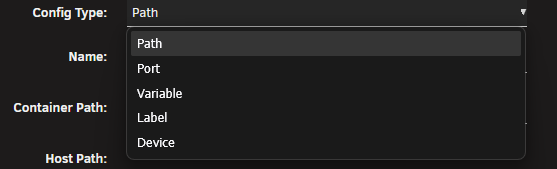
My guess is Datentrager is supposed to be "device" based on the English text. Alternatively you can add a device by clicking the "advanced view" toggle at the top right of the page and entering into the "extra parameters" field --device= followed by the device you are passing through like this:

-
Reed-Solomon is no problem for a modern CPU. But yes technically it's more computationally complex as the alternative is just XOR'ing the bits and no other math is involved. This is only really exacerbated when you have a full array of 28 drives. You can also use "Tools > New Config" then retain all drive assignments (check all boxes) and hit continue. Then back at the main page, move P2 disk to P1, and just start the array. Parity will not be valid because of this. Let the array run a parity-sync.
-
Ideally this test needs to be ran a minimum of 24 hours, however considering how much ram you have, longer may be necessary as you're needing to test 128GB.
-
Also I noticed you dedicated the whole 500GB drive for boot purposes. at most unraid itself currently only takes up a maximum of 6GB that leaves you 484GB of useless dead drive space. You should have made a boot mirror using the "boot + data option" then I would have selected to use 16GB for boot and that would have left you with about 1.5TB of usable space for pool purposes.
-
That is your only option you will have to move all data and simply replace the disk.
-
Make sure your Samsung drive is on the latest firmware. Also there are issues With SSDs dropping due to some power saver settings to fix that you need to append pcie_aspm=off to the boot parameters and reboot.
-
Eh I run 8 HDDs 4 SATA SSDs and 4 NVMEs and an Arc A310 gpu all on a shitty 500W EVGA bronze PSU (no power splitters)