MowMdown
Members
-
Joined
-
Last visited
Everything posted by MowMdown
-
Something weird is happening between NUT sending low batter alerts from your UPS and it might be what is causing your server to crash. Can you run your server in safe mode and see if the crashes happen?
-
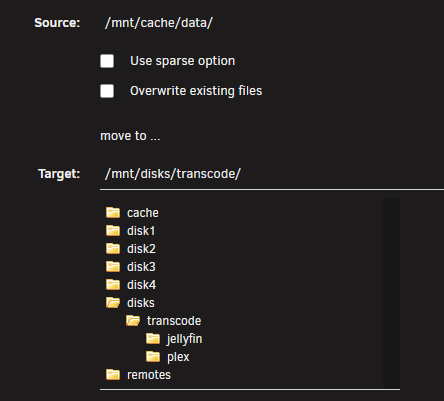
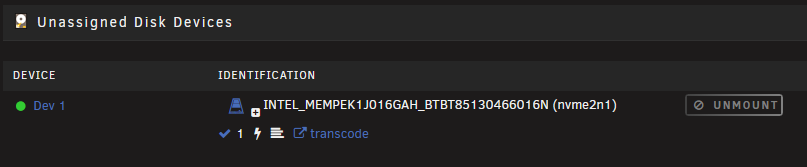
you can copy and move data to/from an unassigned devices
-
What’s the actual issue?
-
You’ll have to open a support ticket to find out why the USB has been blacklisted.
-
Make sure the disk shelf is powered on before unraid boots
-
It’s a known issue. It will be fixed in 7.3.3
-
There are no limitations other than, you can’t use an existing configuration with a trial.
-
It’s ok. I just wanted to let others know in case they update and get stuck.
-
I get stuck during boot on my ugreen dxp 2800 I get something like igc eth0 NETDEV WATCHDOG CPU 2 TIMEOUT and it has a counter that just increases indefinitly. Removing the .plg allows the system to boot normally. Specifically whatever process runs right after these lines in the boot sequence: Sep 3 21:42:56 ugreenRAID rc.wireless: Starting WiFi network... Sep 3 21:42:56 ugreenRAID rc.wireless: WiFi network... No Wifi present. Sep 3 21:42:56 ugreenRAID rc.messagebus: Starting System Message Bus... Sep 3 21:42:56 ugreenRAID rc.messagebus: /usr/bin/dbus-daemon --system Sep 3 21:42:56 ugreenRAID rc.messagebus: System Message Bus... Started. Sep 3 21:42:56 ugreenRAID rc.elogind: Starting Elogin daemon... Sep 3 21:42:56 ugreenRAID rc.elogind: /lib64/elogind/elogind --daemon Sep 3 21:42:57 ugreenRAID elogind-daemon[2061]: New seat seat0. Sep 3 21:42:57 ugreenRAID elogind-daemon[2061]: Watching system buttons on /dev/input/event6 (Power Button) Sep 3 21:42:57 ugreenRAID elogind-daemon[2061]: Watching system buttons on /dev/input/event5 (Power Button) Sep 3 21:42:57 ugreenRAID elogind-daemon[2061]: Watching system buttons on /dev/input/event4 (Sleep Button) Sep 3 21:42:57 ugreenRAID rc.elogind: Elogin daemon... Started. Sep 3 21:42:57 ugreenRAID rc.ip_forward: Activating IPv4 packet forwarding. Sep 3 21:42:57 ugreenRAID rc.ip_forward: Activating IPv6 packet forwarding. Sep 3 21:42:57 ugreenRAID rc.inetd: Starting Internet daemon... Sep 3 21:42:57 ugreenRAID rc.inetd: /usr/sbin/inetd Sep 3 21:42:57 ugreenRAID rc.inetd: Internet daemon... Started. Sep 3 21:42:57 ugreenRAID rc.sshd: Starting SSH server daemon... Sep 3 21:42:57 ugreenRAID dhcpcd[1927]: br0: Router Advertisement from fe80::9ea5:70ff:fe77:80d Sep 3 21:42:57 ugreenRAID rc.sshd: /usr/sbin/sshd Sep 3 21:42:57 ugreenRAID sshd[2199]: Server listening on fd5f:b92d:5a81:0:6e1f:f7ff:fee2:f0f8 port 22. Sep 3 21:42:57 ugreenRAID sshd[2199]: Server listening on fd5f:b92d:5a81::f02 port 22. Sep 3 21:42:57 ugreenRAID sshd[2199]: Server listening on 10.0.10.2 port 22. Sep 3 21:42:57 ugreenRAID dhcpcd-run-hooks: interface=br0, reason=BOUND6, protocol=dhcp6 Sep 3 21:42:57 ugreenRAID update_services: no queued job present Sep 3 21:42:57 ugreenRAID update_services: queue new job 1, wait for 20s <-----PROBLEM STARTS HERE -----> The odd thing is 7.4.0-b1 boots fine
-
FYI: Ugreen NAS LED drivers have been deprecated by Ich777 and as of 7.4.0-beta2 they will cause boot issues. Make sure to remove the driver plugin before rebooting.
-
Does this happen when the GPU is under significant load on the unraid system or when it's idle? If it occurs when the GPU is under heavy load it is probably the PSU having a problem supplying power to the GPU.
-
You seem to be running out of RAM as there are OOM events.
-
There is a factory reset plugin that will do exactly that. As for containers, you can just delete the docker.img and their corresponding folders under your appdata share
-
btrfs is detecting corruption on your cache pool. Recommended to run a 24 hour extended memtest. MemTest is only definitive if it finds an error. Your docker.img also appears to have some kind of issue(s) possibly related to the corruption, you will want to check all disk connections as well and then recreate the docker.img after doing a little research it appears that maybe the disk errors are just due to TRIM not being supported if your disks are connected to the system in a non-typical fashion?
-
You are going to want to take a visit over to the Plex Support Forums for help with this as it's not unraid related. My guess is your database is corrupt. If the Chuck PA script didnt work to repair the database, you will likely need to start over with a new one.
-
I dont see anything obvious logged other than your jetkvm device seems to have the usb connection reset. Do you recall messing with your JetKVM device? Enabling/disabling options that would essentially cause the USB connection to reset? I suggest running unraid in safe boot mode and keeping containers/VMs disabled for a few days to ensure it's not being caused by a rogue plugin or container/VM. If it can stay running as a basic NAS start enabling services 1 at a time, containers as well.
-
Look under /dev/dvb/ for "adapter0" or something, then you will pass that such as Value: /dev/dvb/adapter0:/dev/dvb/dapater0
-
Are these docker containers installed from the APPS tab? Clicking on them you can find their support links which will/should take you to the correct place to get help with those, this section of the forum is more general help with unraidOS. I also recommend checking the github pages for the containers as there may be documentation/context missing that you may need.
-
Just be aware that a boot drive only requires about a 16GB (to be safe for future upgrades) partition, the rest of the drive can be used normally for data in a pool. Unraid does not need to be dedicated a whole disk for boot.
-
please post diagnostics after crash, syslog server is continually wrote to log file so it doesnt need to flush. you need to make sure it's setup and logging to the share you selected and if you mirror to flash it will be wrote immediately to the flash device.
-
please post diagnostics in safe mode, what happens if you boot normally?
-
check the cables (power and data) and/or swap them with another disk and see if problem follows or stays with same disk.
-
Cache is just a pool name, not a function. Mirror them and use it for anything that needs protection and fast access like appdata, vm storage, etc. The boot partition will be separate and by default mirrored. (do not make the boot partition larger than 16GB unraid is only 2GB in size)
-
are you currently booted from the replacement USB?
-
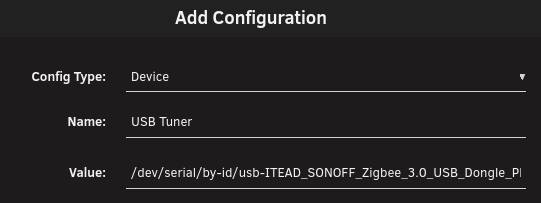
The best way to achieve this is by passing it via /dev/serial start by running ls /dev/serial/by-id /dev/serial/by-id# ls usb-ITEAD_SONOFF_Zigbee_3.0_USB_Dongle_Plus_V2_20221031181347-if00@ usb-Silicon_Labs_CP2102N_USB_to_UART_Bridge_Controller_b873a0061ea4eb1190412c259da30875-if00-port0@and you should see your USB device then all you have to do is edit the container template, click on "Add path port variable device" and punch it in like so (note you do NOT include the @ symbol at the end) Hit apply and it should appear inside the container Note: If this does not work sometimes linux expects the device to be identified as /dev/ttyUSB0 if that is necessary what you need to do is edit the device and append :/dev/ttyUSB0 to the end of the entry in the value field it would look like: usb-ITEAD_SONOFF_Zigbee_3.0_USB_Dongle_Plus_V2_20221031181347-if00:/dev/ttyUSB0