foo_fighter
Members
-
Joined
-
Last visited
Everything posted by foo_fighter
-
Mine's ~23-25W (UPS reading) when all of the drives are spun down(SSD and Coral USB are still running with Frigate), but I don't think there's anything really that I did. I do use AutoFan and powertop --auto and set the power mode to best efficiency. The only BIOS setting I made was to disable the 10g NIC, but I'm not sure if that even made a power difference.
-
-n or --dry-run
-
Did you install the driver?
-
3.3V Disable Pin?
-
Upgraded to version 30 from 29 and it went into maintenance mode. I had to use the tips below to manually get it out of maintenance:mode
-
Is it possible to implement a tab that is a pulldown menu of URLs? I don't have enough real estate for many tabs but would like to add quick short cuts to Immich, Syncthing, Paperless, Frigate, Nextclock and a bunch of other dockers on the tab menu for convenience.
-
Okay, just to confirm, let's say the old dataset contained 7 daily snapshots and 4 weekly snapshots. If there was a file that changed daily, all 11 versions the file would be accessible in the copied dataset? Or is only one version of that file from the last_snapshot available? Ah, it seems -R will replicate all snapshots up to the @last_snapshot.
-
If you remove the @last_snapshot, will it send the entire dataset including all snapshots?
-
Pre-clear using a USB3.0 port before adding it to your array. Then slowly convert over the other drives with unbalanced.
-
Do you have your HBA in IT mode?
-
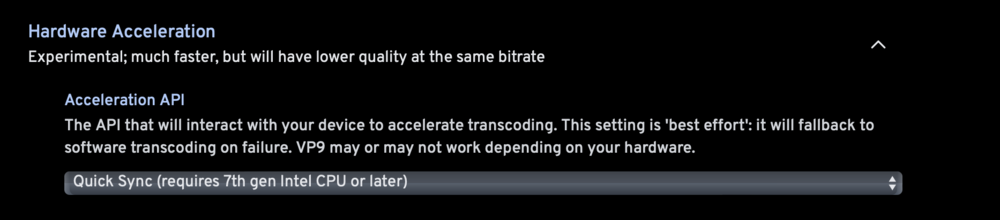
I switched to a different server but QuickSync seems to be working for me: Passed the GPU through.

-
This argument is malformed: --device='' See if you have either extra parameters that are incorrect. or extra container devices that are incorrect:


-
I'm just clicking on the container in the docker page to edit it. If you have a backups dir with the same .xml it would bring up in the URL: /UpdateContainer?xmlTemplate=edit:/boot/config/plugins/dockerMan/templates-user/backups/my-immich-1.xml for example but then actually use and save the edits to: /boot/config/plugins/dockerMan/templates-user/my-immich-1.xml so it does update the container with the new edits but then next time when you go it edit it again, it pulls the old .xml from the backups dir again without the edits. It was really bizarre until I figured out what was going on.
-
Each docker is its own separate container, you can execute commands within the container with docker -exec or you can map outside directories so the containers can see them. What exactly do you wish to accomplish?
-
Just one small correction. I meant that the echo commands go inside of the script, like the last line, so that you would know when the script itself ran and finished. The way you have it now, it will always output "Script 4 done" even if it didn't actually run as you probably noticed. But that's a minor fix and you are making good progress and improving and learning which is half of the fun.
-
Ah, sorry, I should have done a test case my self. The scripts are stored as a text file under the directory and they are not set to executable. Also spaces in script names or directory name are generally a bad practice. Use _ or - if needed. If you're comfortable with ssh and command line, you can copy or symlink them from a shell: cd /boot/config/plugins/user.scripts/scripts/00001/ ln -s script script.sh (this makes a symbolic link so that script.sh is the same as script....If you edit script.sh, it will edit script since script.sh is just a pointer to script) To make them excutable change the permissions (chmod +x script.sh) I would try with a test case first, in each test script, only put a simple command For example: #!/bin/bash echo "This is Script 1" # Add a newline echo "" then the next one: #!/bin/bash echo "This is Script 2" # Add a newline echo "" so when you run all 5 you should see on the output: This is Script 1 This is Script 2 ... This is Script 5 When that is working fine, symlink or copy the intended script. If you want to wait between scripts, you can use the sleep command between each script, but generally unless you have background commands in the script, each one will start and finish before moving on to the next: sleep 10m to wait 10 minutes, 1h for 1 hour etc.
-
It's exactly like the post says. You create 1 user script that calls the other 5: #!/bin/bash /boot/config/plugins/user.scripts/scripts/script1.sh /boot/config/plugins/user.scripts/scripts/script2.sh /boot/config/plugins/user.scripts/scripts/script3.sh /boot/config/plugins/user.scripts/scripts/script4.sh /boot/config/plugins/user.scripts/scripts/script5.sh That's it.
-
Ran into a strange problem with user templates. I wanted to save some backups of the configs so I created a backup dir under: /boot/config/plugins/dockerMan/templates-user Then I started seeing strange behavior like modifying the docker containers wouldn't stick. Turns out it was loading the .xml files from the backup dir which was unexpected. It would take the current settings and save them to /boot/config/plugins/dockerMan/templates-user but then when I reloaded it, it would get it from the backup dir. Took me a while to figure out what was going on. Is this intended behavior or a bug?
-
It's fine for a data drive, but not great for a parity drive.
-
Why do you need a docker? Have you tried using the user scripts plugin?
-
You have to install the drivers for the PCIe version I believe. For the template, you can see if it was saved under /boot/config/plugins/dockerman/user-templates
-
Thanks, that makes sense. I thought I tried localhost:3003, 127.0.0.1:3003 and 192.168.1.196:3003(Unraid IP address) but I was also in the middle of debugging the long start up times and was going back and forth with the noml version so I may not have had the right combo of docker release + ML settings. Anyway, it seems to be working fine for now and I hope they get the long start up/ permissions issues worked out soon.
-
Just had the same thing happen on V7.0B2. Never had it happen before. Next time I'll try closing all tabs before rebooting.
-
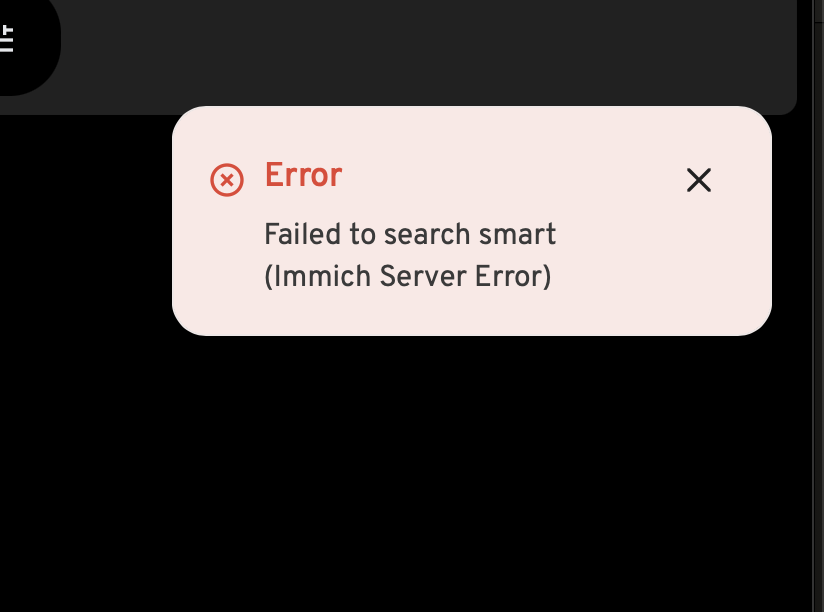
Quick update, setting to 0.0.0.0:3003 seems to have made it work for some reason: One more thing, even with openvino, my smart search isn't working. Is there way to turn off remote machine learning? I've set the IP to my machine, but it doesn't look like the ML server is running as part of the immich docker. I just want it to not even try to use the remote machine. [Nest] 731 - 07/12/2024, 12:50:19 PM ERROR [Api:Error: Machine learning request to "http://immich-machine-learning:3003" failed with Error: getaddrinfo ENOTFOUND immich-machine-learning at /app/immich/server/dist/repositories/machine-learning.repository.js:19:19 at process.processTicksAndRejections (node:internal/process/task_queues:95:5) at async MachineLearningRepository.predict (/app/immich/server/dist/repositories/machine-learning.repository.js:18:21) at async MachineLearningRepository.encodeText (/app/immich/server/dist/repositories/machine-learning.repository.js:47:26) at async SearchService.searchSmart (/app/immich/server/dist/services/search.service.js:97:27)~ob0ej2m8] Error: Machine learning request to "http://immich-machine-learning:3003" failed with Error: getaddrinfo ENOTFOUND immich-machine-learning


-
I actually didn't even think to wait, but after a very long time, it did eventually start up.