





mgutt
Moderators
-
Joined
-
Last visited
Everything posted by mgutt
-
Ich habe dann mal die jeweils populärsten Portale in einem angepinnten Thread im Hardware-Bereich verlinkt: https://forums.unraid.net/forum/105-nasserver-eigenbau-hardware/
-
Zur Einfachheit verweisen wir auf die populärsten Portale der jeweiligen deutschsprachigen Länder, auf denen Ihr gerne eure Komponenten anbieten dürft, in dem ihr in eurem Angebot/Anzeige im Titel das Wort "Unraid" ergänzt: Deutschland https://www.kleinanzeigen.de/s-unraid/k0 Österreich https://www.willhaben.at/iad/kaufen-und-verkaufen/marktplatz?keyword=unraid Schweiz https://www.tutti.ch/de/q/suche/?query=unraid
-
Halte ich für ziemlich Geldverschwendung. Andere Platten liegen bei 15 € pro TB: https://geizhals.de/?cat=hde7s&xf=1080_SATA+6Gb%2Fs~3772_3.5~8457_non-SMR Wie man sieht aktuell eine 12TB Seagate sogar nur für 10 € pro TB. Bei WD zahlst du viel für den Namen.
-
Ich habe übrigens fast nur noch Seagate Recertified verbaut. Nach 1 Jahr und 3 Monaten bisher bei 8 Platten keine Fehler.
-
Das kann der Mover nicht. Man könnte höchstens selbst was skripten, dass man aktuelle Dateien 1:1 auf den Secondary kopiert. Wenn die Datei schon auf dem Secondary liegt, überspringt der Mover die Datei.
-
Spontan hätte ich gesagt, dass man es bei Kleinanzeigen.de anbietet und wir können es ja dann in einem angepinnten Thread so verlinken: https://www.kleinanzeigen.de/s-unraid/k0 Wir weisen also daraufhin, dass man "unraid" in den Titel der Anzeige schreiben soll. In meinen Augen hat man da eine deutlich größere Zielgruppe und wir müssen nicht ständig schauen, ob ein Angebot abgelaufen ist.
-
Ich würde kein RAID1 machen, sondern nur zeitnah auf die USB SSD sichern (die dann ein eigener Pool ist oder was auch immer). USB halte ich nicht für zuverlässig genug, um es in einem RAID1 zu haben. Du darfst dir das auch nicht so vorstellen, dass die bei Verbindungsproblemen, dann immer problemlos aus dem RAID fliegt. Das kann durchaus mal mit einem Crash enden. Beobachte das mal. Wenn du Pech hast, hast der USB Controller bereits diese Fehler verursacht. Die Fehleranzahl gehen übrigens leider nie mehr auf Null. SMART merkt sich das für immer. Das ist insbesondere dann ärgerlich, wenn man den Datenträger weiterverkaufen möchte. Viele wollen den dann nicht kaufen, weil sie von einem möglichen Defekt ausgehen (ist natürlich Quatsch).
-
Ich mache es so: - Skript auf Server A sichert appdata von SSD (Primary) auf HDD (Secondary) mit 1 Tag Aufbewahrung - Skript auf Server B holt alles von Server A (nur von dessen HDDs) ab mit 14 Tagen Aufbewahrung Alternativ könnte man dieses reduzierte Skript auf Server A nehmen: #!/bin/bash # settings src_path="/mnt/cache/appdata" snapshot_name=".appdata_backup" # functions notify() { echo "$2" if [[ -f /usr/local/emhttp/webGui/scripts/notify ]]; then /usr/local/emhttp/webGui/scripts/notify -i "$([[ $2 == Error* ]] && echo alert || echo normal)" -s "$1 ($src_path)" -d "$2" -m "$2" fi } # temporarily stop containers to create snapshot of /mnt/cache/appdata docker_app_config_path=$(grep DOCKER_APP_CONFIG_PATH /boot/config/docker.cfg | grep -oP '[^"]+(?="$)') docker_sharename=$(basename "$docker_app_config_path") cache_mode=$(grep shareUseCache "/boot/config/shares/$docker_sharename.cfg" | grep -oP '(?<==")[^"]+(?=")') # source path must be the docker appdata share if [[ $src_path != */"$docker_sharename" ]]; then notify "Wrong appdata path!" "$src_path is not the unraid appdata path (sharename: $docker_sharename)!" exit fi # obtain list of running containers mapfile -t container_ids < <(docker container ls -q 2>/dev/null) if [[ ${#container_ids[@]} -eq 0 ]]; then notify "No containers found!" "It seems that no container is running, which could be stopped!" exit fi # appdata should be only on array OR pool appdata_paths=$(ls -d /mnt/*/"$docker_sharename" | grep -v -e /mnt/user/"$docker_sharename" -e /mnt/user0/"$docker_sharename") # should return /mnt/diskX OR /mnt/poolname if [[ $(echo "$appdata_paths" | wc -l) -gt 1 ]]; then notify "Backup probably inconsistent!" "Docker appdata files were found in too many locations (cache: $cache_mode, paths: ${appdata_paths//$'\n'/ })!" exit fi # snapshot must be /mnt/cache/appdata or /mnt/diskX/appdata if [[ $src_path == "/mnt/user/"* ]]; then notify "Backup causes long docker downtime!" "The source path $src_path needs to be /mnt/cache/$docker_sharename or /mnt/diskX/$docker_sharename to reduce downtime!" exit fi # echo stop containers echo "Stop containers:" if ! docker container stop "${container_ids[@]}"; then notify "Could not stop containers!" "The container ids ${container_ids[*]} could not be stopped!" sleep 30 docker container start "${container_ids[@]}" # try to start at least those which were stopped exit fi # obtain snapshot path snapshot_dirname=$(dirname "$src_path") snapshot_temp="$snapshot_dirname/.tmp.$snapshot_name" snapshot_path="$snapshot_dirname/$snapshot_name" # delete existing snapshot [[ -d "$snapshot_path" ]] && rm -r "$snapshot_path" # create snapshot if ! cp -a --reflink=always "$src_path" "$snapshot_temp" 2>/dev/null; then notify "Error creating snapshot!" "The source path $src_path maybe does not support reflink copies?!" rm -r "$snapshot_temp" else mv "$snapshot_temp" "$snapshot_path" echo "Created snapshot of $src_path to $snapshot_path" fi # start containers echo "Start containers (fast method):" docker container start "${container_ids[@]}" Es stoppt die Container, erstellt mit cp einen Snapshot von /appdata nach /.appdata_backup und startet die Container wieder. Bei der nächsten Ausführung löscht er /.appdata_backup wieder und erzeugt es wieder neu. Alternativ könnte man nach Abholung von /.appdata_backup das Verzeichnis löschen, aber da ich nur read-only Abholungen empfehle, würde ich einfach damit leben, dass es dauerhaft rumliegt. Eine Reflink-Kopie belegt ja nur dann mehr Speicherplatz, wenn sich die Dateien in appdata ändern. EDIT: Von appdata_backup in .appdata_backup geändert, damit Unraid keinen Share erstellt.
-
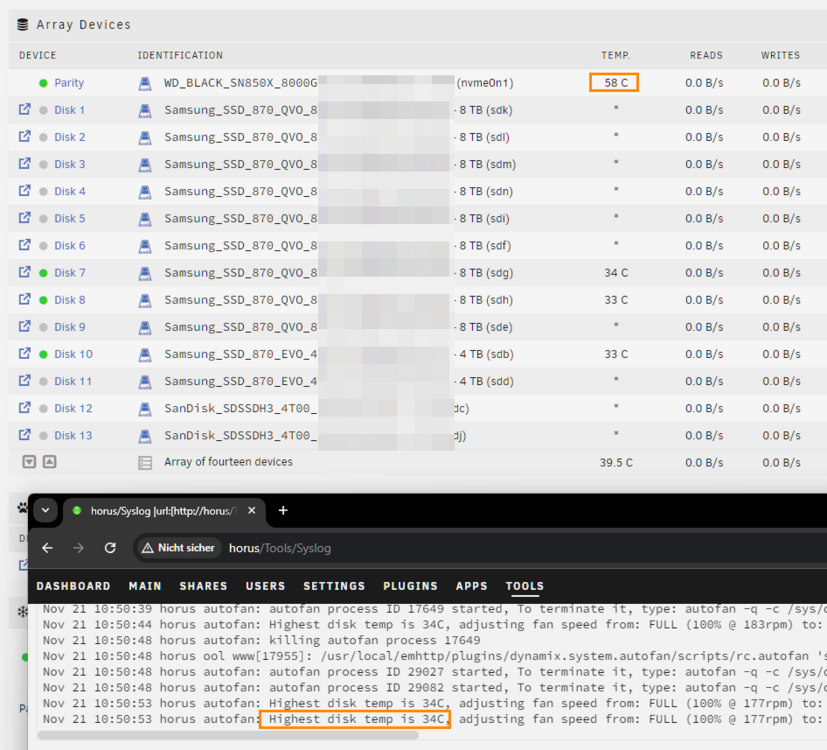
The plugin should display a warning and/or allow to use the CPU temp for fan control (I did not expect that it only uses the disk temps). For me it absolutely does not make sense to control the array fan only as it covers the incoming and outgoing air. If the BIOS sets the CPU fan to maximum, it does not make any difference if the hot air is not leaving the case. In addition: - the obtained speeds are false - the auto detection does not work correctly (to obtain the minimum pwm value, for me it was a way to low = fan stopped) - a comment field is missing to name the pwm controller / fan - it seems not to monitor the parity temp:
-
After several months without problems my server crashed this night with a similar error (shfs segfault error in combination with nfs): Nov 16 03:02:10 horus emhttpd: spinning down /dev/sde Nov 16 03:34:15 horus kernel: shfs[9050]: segfault at 10 ip 0000146e69c975c2 sp 0000146e69288c20 error 4 in libfuse3.so.3.12.0[146e69c93000+19000] likely on CPU 5 (core 5, socket 0) Nov 16 03:34:15 horus kernel: Code: f4 c8 ff ff 8b b3 08 01 00 00 85 f6 0f 85 46 01 00 00 4c 89 ee 48 89 df 45 31 ff e8 18 dc ff ff 4c 89 e7 45 31 e4 48 8b 40 20 <4c> 8b 68 10 e8 15 c2 ff ff 48 8d 4c 24 18 45 31 c0 31 d2 4c 89 ee Nov 16 03:34:15 horus kernel: ------------[ cut here ]------------ Nov 16 03:34:15 horus kernel: nfsd: non-standard errno: -103 Nov 16 03:34:15 horus kernel: WARNING: CPU: 5 PID: 5142 at fs/nfsd/vfs.c:111 nfserrno+0x45/0x51 [nfsd] Nov 16 03:34:15 horus kernel: Modules linked in: xfs nfsd auth_rpcgss oid_registry lockd grace sunrpc md_mod zfs(PO) zunicode(PO) zzstd(O) zlua(O) zavl(PO) icp(PO) zcommon(PO) znvpair(PO) spl(O) it87(O) hwmon_vid ip6table_filter ip6_tables iptable_filter ip_tables x_tables efivarfs bridge stp llc intel_rapl_msr intel_rapl_common x86_pkg_temp_thermal intel_powerclamp coretemp kvm_intel i915 kvm iosf_mbi drm_buddy ttm crct10dif_pclmul crc32_pclmul crc32c_intel drm_display_helper ghash_clmulni_intel sha512_ssse3 drm_kms_helper sha256_ssse3 sha1_ssse3 mei_pxp mei_hdcp gigabyte_wmi wmi_bmof aesni_intel drm crypto_simd igb cryptd i2c_algo_bit intel_gtt i2c_i801 agpgart rapl syscopyarea mpt3sas intel_cstate nvme i2c_smbus sysfillrect mei_me intel_uncore raid_class ahci libahci scsi_transport_sas intel_pch_thermal sysimgblt i2c_core nvme_core fb_sys_fops mei thermal fan video wmi backlight intel_pmc_core acpi_pad button unix Nov 16 03:34:15 horus kernel: CPU: 5 PID: 5142 Comm: nfsd Tainted: P O 6.1.106-Unraid #1 Nov 16 03:34:15 horus kernel: Hardware name: Gigabyte Technology Co., Ltd. C246N-WU2/C246N-WU2-CF, BIOS F4 12/21/2023 Nov 16 03:34:15 horus kernel: RIP: 0010:nfserrno+0x45/0x51 [nfsd] Nov 16 03:34:15 horus kernel: Code: c3 cc cc cc cc 48 ff c0 48 83 f8 26 75 e0 80 3d 41 b6 05 00 00 75 15 48 c7 c7 e6 6a 0f a1 c6 05 31 b6 05 00 01 e8 44 a2 fa df <0f> 0b b8 00 00 00 05 c3 cc cc cc cc 0f 1f 44 00 00 41 57 41 56 41 Nov 16 03:34:15 horus kernel: RSP: 0018:ffffc90001347bb8 EFLAGS: 00010286 Nov 16 03:34:15 horus kernel: RAX: 0000000000000000 RBX: 0000000000000000 RCX: 0000000000000003 Nov 16 03:34:15 horus kernel: RDX: 0000000000000002 RSI: 0000000000000003 RDI: 00000000ffffffff Nov 16 03:34:15 horus kernel: RBP: ffffc90001347d90 R08: 0000000000000000 R09: ffffffff82245fb0 Nov 16 03:34:15 horus kernel: R10: 00007fffffffffff R11: ffffffff8296fd6e R12: 000000000000000b Nov 16 03:34:15 horus kernel: R13: ffff88813662a4a0 R14: ffffffff82a1af40 R15: 000000000010011a Nov 16 03:34:15 horus kernel: FS: 0000000000000000(0000) GS:ffff88902e540000(0000) knlGS:0000000000000000 Nov 16 03:34:15 horus kernel: CS: 0010 DS: 0000 ES: 0000 CR0: 0000000080050033 Nov 16 03:34:15 horus kernel: CR2: 000000000052adc4 CR3: 000000000420a006 CR4: 00000000003706e0 Nov 16 03:34:15 horus kernel: DR0: 0000000000000000 DR1: 0000000000000000 DR2: 0000000000000000 Nov 16 03:34:15 horus kernel: DR3: 0000000000000000 DR6: 00000000fffe0ff0 DR7: 0000000000000400 Nov 16 03:34:15 horus kernel: Call Trace: Nov 16 03:34:15 horus kernel: <TASK> Nov 16 03:34:15 horus kernel: ? __warn+0xab/0x122 Nov 16 03:34:15 horus kernel: ? report_bug+0x109/0x17e Nov 16 03:34:15 horus kernel: ? nfserrno+0x45/0x51 [nfsd] Nov 16 03:34:15 horus kernel: ? handle_bug+0x41/0x6f Nov 16 03:34:15 horus kernel: ? exc_invalid_op+0x13/0x60 Nov 16 03:34:15 horus kernel: ? asm_exc_invalid_op+0x16/0x20 Nov 16 03:34:15 horus kernel: ? nfserrno+0x45/0x51 [nfsd] Nov 16 03:34:15 horus kernel: ? nfserrno+0x45/0x51 [nfsd] Nov 16 03:34:15 horus kernel: nfsd4_encode_fattr+0x12b6/0x131c [nfsd] Nov 16 03:34:15 horus kernel: ? slab_post_alloc_hook+0x4d/0x15e Nov 16 03:34:15 horus kernel: ? nfsd_setuser+0x18b/0x1ab [nfsd] Nov 16 03:34:15 horus kernel: ? nfsd_setuser_and_check_port+0x76/0xb4 [nfsd] Nov 16 03:34:15 horus kernel: ? nfsd_setuser_and_check_port+0x76/0xb4 [nfsd] Nov 16 03:34:15 horus kernel: nfsd4_encode_getattr+0x28/0x2e [nfsd] Nov 16 03:34:15 horus kernel: nfsd4_encode_operation+0xa6/0x20a [nfsd] Nov 16 03:34:15 horus kernel: nfsd4_proc_compound+0x1cc/0x57f [nfsd] Nov 16 03:34:15 horus kernel: nfsd_dispatch+0x1db/0x28f [nfsd] Nov 16 03:34:15 horus kernel: svc_process_common+0x300/0x511 [sunrpc] Nov 16 03:34:15 horus kernel: ? ktime_get+0x35/0x49 Nov 16 03:34:15 horus kernel: ? nfsd_svc+0x2cf/0x2cf [nfsd] Nov 16 03:34:15 horus kernel: ? nfsd_shutdown_threads+0x5b/0x5b [nfsd] Nov 16 03:34:15 horus kernel: svc_process+0xcc/0xe9 [sunrpc] Nov 16 03:34:15 horus kernel: nfsd+0x96/0x108 [nfsd] Nov 16 03:34:15 horus kernel: kthread+0xe4/0xef Nov 16 03:34:15 horus kernel: ? kthread_complete_and_exit+0x1b/0x1b Nov 16 03:34:15 horus kernel: ret_from_fork+0x1f/0x30 Nov 16 03:34:15 horus kernel: </TASK> Nov 16 03:34:15 horus kernel: ---[ end trace 0000000000000000 ]--- Nov 16 03:37:40 horus rpc.mountd[5153]: Cannot export /mnt/user/ShareA, possibly unsupported filesystem or fsid= required Nov 16 03:42:01 horus rpc.mountd[5153]: Cannot export /mnt/user/ShareB, possibly unsupported filesystem or fsid= required Nov 16 03:50:59 horus emhttpd: spinning down /dev/sdd I'm using NFS between two Unraid servers (heavy traffic all the time).
-
Yes. It has nothing to do with spin down. It influences the sata connection itself. "PM" stands for "Power Management": https://en.wikipedia.org/wiki/Aggressive_Link_Power_Management
-
Nein. Das Dateisystem weiß wie es die Hardlinks zu zählen hat. Jo. Du kannst dir mit "du" die reale Größe ausgeben lassen, sofern du alle Backups in einem ausliest. Dann skippt er Hardlinks. In deinem Fall so: du -d1 -h /mnt/user/BackUp/Name/Dokumente Wenn du "du" mit nur einem Backupordner prüfst, dann siehst du einen hohen Wert. Das ist exakt das was die GUI anzeigt. Anders kann das aber auch nicht angezeigt werden, weil man aus Sicht eines Hardlinks nicht wissen kann, welcher "älter" ist, weil der Zeitpunkt wann der Hardlink erzeugt wurde, nicht gespeichert wird. Dh wenn du die Größe des zweiten Backups ermittelst, weiß das Kommando nicht, dass es das zweite ist, sondern geht davon aus, dass es für sich alleine steht. Richtig kompliziert wird dann zb das zehnte Backup, wo ja diverse Hardlinks aus Backup 2 bis 9 drin stecken. Also alles nicht so einfach für den User darstellbar.
-
Wie hast du das ermittelt?
-
Nein. Das Skript sollte immer auf dem Remote ausgeführt werden, also abholen. Allerdings sollte man dabei root-Rechte auf dem Quellserver besitzen. Da man aber auf keinen Fall den Unraid root User remote nutzen sollte, empfehle ich den rsync Container zu verwenden um die entsprechenden Pfade nur read-only verfügbar und nur dessen SSH Port erreichbar zu machen. Grundregeln: - auf der Remote Maschine ausführen - keine /mnt/user Pfade nutzen (um Unraids Overhead zu umgehen) - rsync über SSH verbinden und nicht zb nicht per SMB oder sshfs gemountete Pfade verwenden Ich kann dir in dem Punkt nicht folgen was du nun wirklich machst, wenn es langsam ist. Das Skript von chatgpt ist ja nicht inkrementell?!
-
Did you test them separately? Maybe it is only one of the NVMe or maybe it is only because you are using the CPU M.2 Slot. Some people reported that chipset M.2 ports do not influence the C-States. If this would be the case, it could be a solution to use an M.2 to PCIe adapter.
-
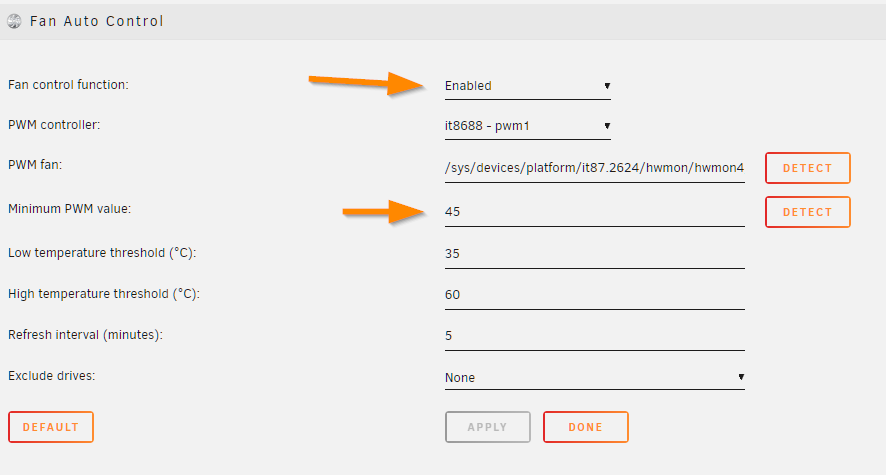
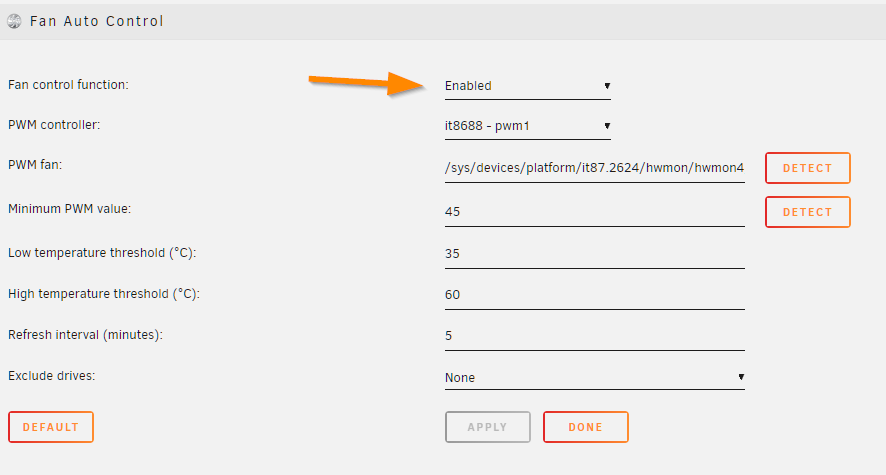
I really thank you for this hint. After I understood that I need to enable every PWM controller separately and after I found the minimum PWM value (the auto detection is bad), it works nicely. Only the displayed RPM is completely wrong (as these fans have a minimum RPM of 600 regarding Noctua): My settings:

-
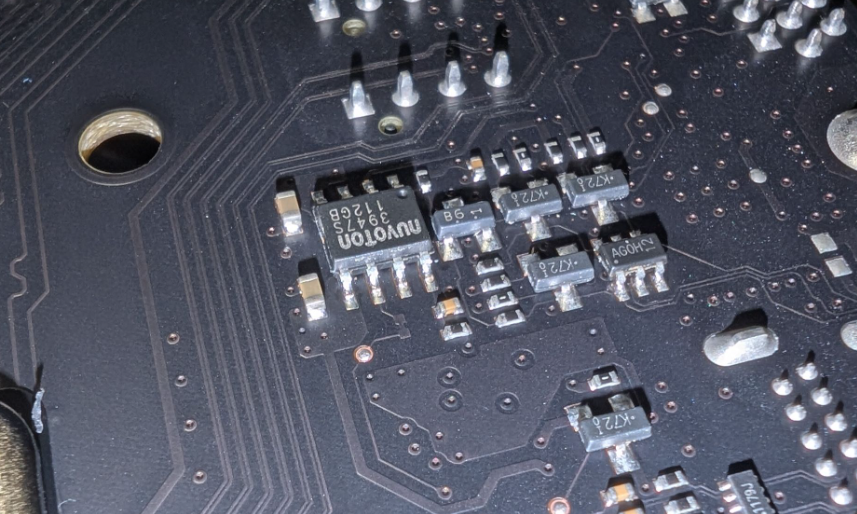
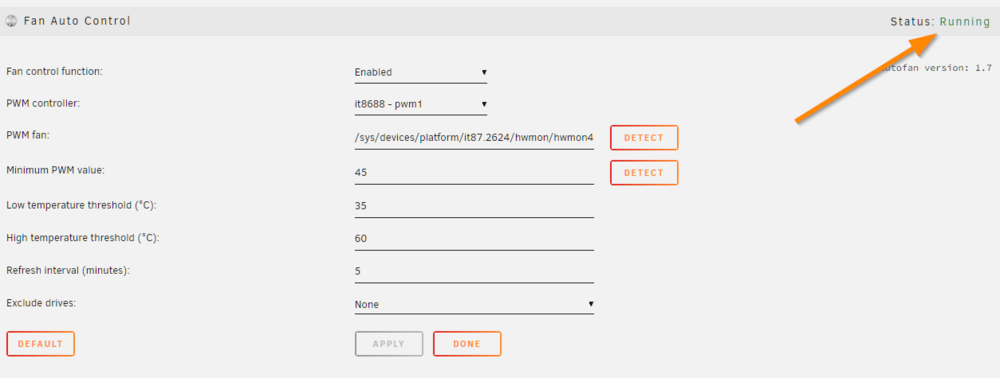
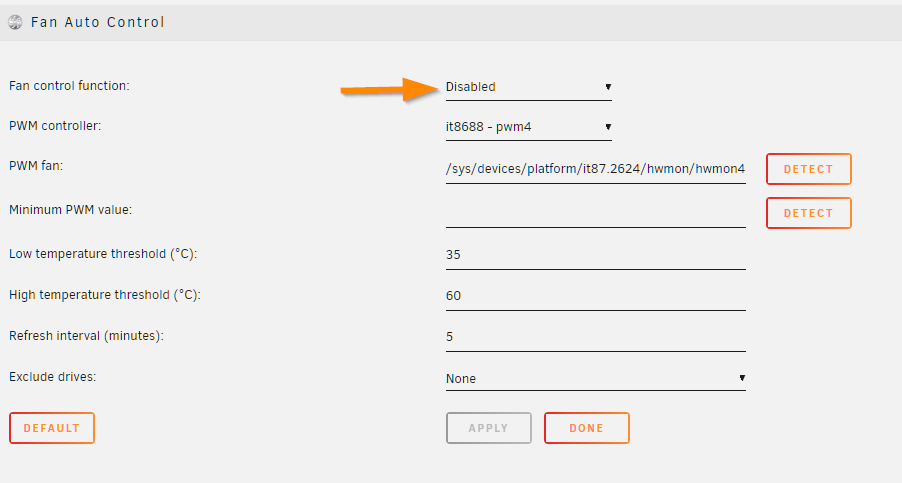
Und was hast du bei Dynamix Auto Fan Control eingestellt? Ich habe auch die Plugins installiert, aber bis auf dass ich die PWM Werte selbst getestet und eingestellt habe, habe ich nichts gemacht. Also auch keine Kommandos im Terminal ausgeführt oder so. Ich verwende ein Gigabyte C246N-WU2, welches mehrere Nuvoton 3947S (NCT3947S) verbaut hat: Das Auto Fan Control hat ja eine Erkennung für die Mindestdrehzahl, aber nach meiner Erfahrung taugt die überhaupt nichts. Daher habe ich zB 45 als Mindestwert ermittelt (42/43 war der Schwellwert nach meinen Tests) und es hat auch eine Weile gedauert bis ich verstanden habe, dass man jeden PWM einzeln "aktivieren" muss: Hier zB PWM4 deaktiviert: Auch die Anzeige im Dashboard ist meiner Ansicht nach falsch. Da wird zB angezeigt, dass ein Lüfter langsamer drehen würde: Und: Wenn die technischen Angaben von Noctua stimmen, dürften die sich alle nicht drehen, weil 600 rpm das Minimum sind. Aber das kann mir vom Prinzip egal sein, Hauptsache sie drehen sich immer.

-
Nur als zusätzliche Info. Hier war die selbe Fehlermeldung, aber defekter RAM die Ursache: https://community.frame.work/t/during-rsync-bug-bad-page-state-in-process/8363 https://askubuntu.com/a/1391051/227119
-
X4, weil der Chip mit X2 angebunden ist: https://www.asmedia.com.tw/product/45aYq54sP8Qh7WH8/58dYQ8bxZ4UR9wG5 Ansonsten würdest du ihn unnötig drosseln.
-
Won't survive the next update. Is this an already known issue?
-
Search for an existing issue at GitHub and if nothing is similar, open a new one. This is not related to unraid / container template. Of course you can tell us what the reason of this problem was after the npm dev answered.
-
And why are you then using the web terminal? From the first post: "close your Unraid WebGUI and wait 1 minute! (this closes many background jobs, which cost your energy, use your PC's terminal and "ssh root@tower" to monitor your C-States with powertop)" Some users had even hardware which did not allow deep c states as long an Ethernet cable was connected. They found it out after connecting a monitor and executing powertop locally. Do you see more than pkg C3? If not, again first post: "Powertop shows only C1, C2 and C3 Pgk-States - This happens if powertop does not recognize your CPU (happens for most AMD CPUs and recent Intel CPUs). Your CPU could still reach C9 or even C10, but powertop is not able to obtain this and shows only C3."
-
Simple answer: Not possible. One of your devices does not support sleep states, although it claims to do so (powertop enables only sleep states of devices which offer this setting). This won't help. You need to find the problematic device. This can be done be executing the commands in the first post line by line in the unraid terminal. After you find out which command causes the crash, we can try to find the specific device. Those aren't errors, only warnings. Can be ignored.
-
Everything is logged: Stopping, Snapshot Creation and Starting the containers. So check the logs.
-
SAS Expanders, failover power supplies, SAS Backplanes... I would not wonder if such a storage unit consumes 50 watts alone.





